
Vertical planters that will actually fit on your tiny balcony
Why Your Small Balcony Deserves a Vertical Garden
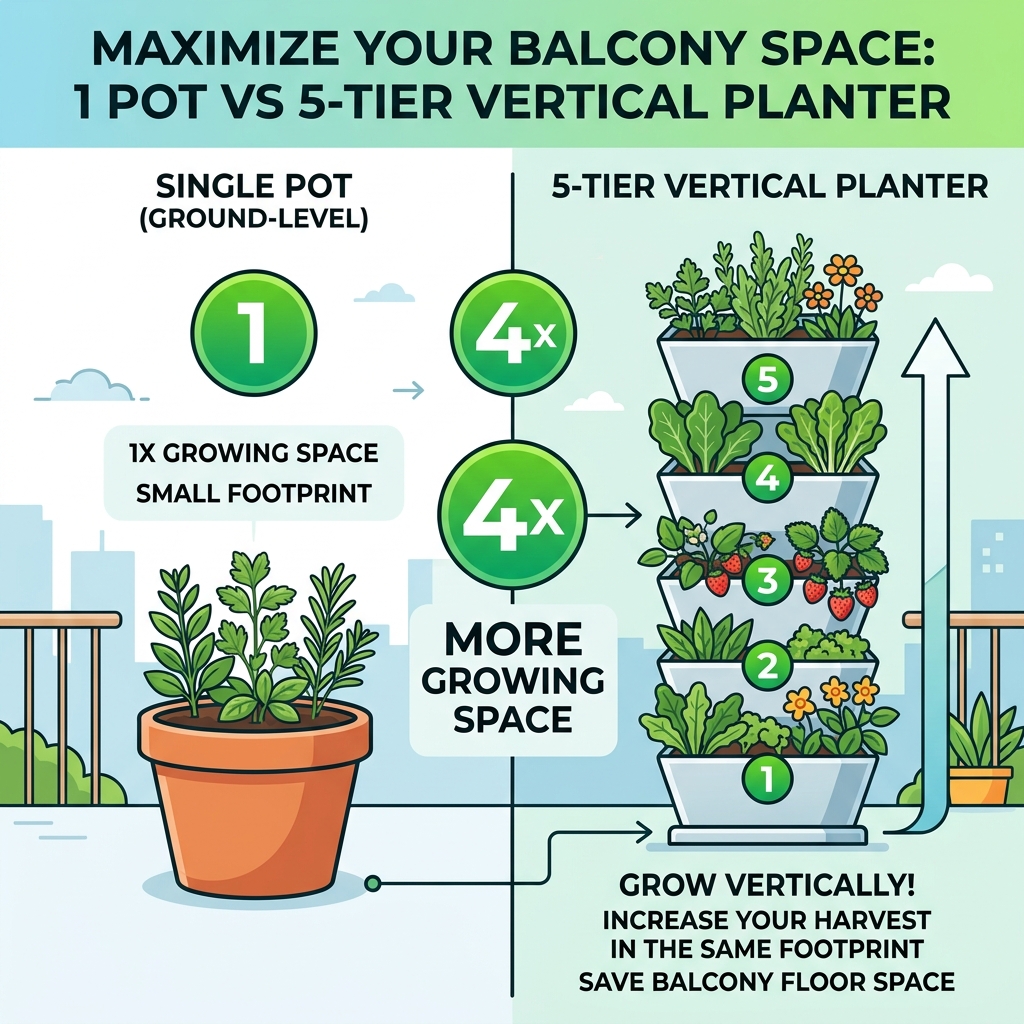
Vertical planters for balcony spaces are the smartest way to grow more plants without needing more floor space. Instead of spreading out, you grow up.
Here are the top vertical planters worth considering for a small balcony:
| Planter | Best For | Price Range |
|---|---|---|
| Mr. Stacky 5-Tier | Herbs, strawberries, flowers | ~$27 |
| Amazing Creation 5-Tier | General vegetables, herbs | ~$40 |
| GreenStalk 5-Tier | Serious growers, self-watering | ~$149 |
| GreenStalk 7-Tier | Maximum capacity, 42 plants | ~$169 |
| Plant Traps RailScapes | Railing-mounted, tool-free | Varies |
| Gronomics Cedar Vertical Garden | Aesthetics, durability | ~$385 |
| Garden Tower 2 | Composting + growing, 50 plants | ~$399 |
Most balconies are small. Really small. And a few pots on the floor barely scratches the surface of what’s possible.
The problem most urban gardeners face isn’t passion — it’s square footage. You want herbs for cooking, a strawberry plant, maybe some flowers. But your balcony floor disappears fast.
That’s exactly why vertical planters work so well. A single 5-tier stackable planter can hold herbs, greens, and flowers in roughly the same footprint as one regular pot. Some systems, like the GreenStalk 7-Tier, fit 42 plants in a 19-inch-wide space that’s only 56 inches tall.
The market has exploded with options — from budget-friendly stackable towers on Amazon to premium cedar builds with built-in drip irrigation. Knowing which one actually fits your balcony, your budget, and your gardening goals makes all the difference.
Terms related to vertical planters for balcony:
Why Vertical Planters for Balcony Gardening are a Game Changer
When we talk about vertical planters for balcony use, we aren’t just talking about a trendy aesthetic. We’re talking about a fundamental shift in how urban dwellers interact with nature. The primary benefit is, of course, space efficiency. By utilizing the “Z-axis” (height), you drastically reduce the footprint of your garden. A standard balcony might only fit four or five traditional pots before it feels cluttered; a vertical gardening system can house 50 plants in that same corner.
Beyond just saving floor space, vertical gardening offers several functional advantages:
- Visual Privacy: Strategically placed vertical towers or wall-mounted pockets act as a living screen, shielding you from nosy neighbors or street traffic.
- Ergonomic Gardening: No more kneeling on hard concrete! Tiered systems bring the plants to you, making it easier to prune, harvest, and check for pests.
- Air Pruning: Many modern vertical systems use breathable fabrics or specialized pocket designs. This encourages “air pruning,” where roots that reach the edge of the container stop growing and branch out internally, creating a much more robust and healthy root system than traditional plastic pots.
- Pest Protection: Elevating your plants keeps them away from ground-dwelling critters (though on a high-rise balcony, this is less about rabbits and more about keeping soil-borne pathogens at bay).
For a deeper dive into selecting the right setup for your specific environment, check out our guide on choosing the best vertical garden for balcony spaces.
Choosing the Best Vertical Planters for Balcony Layouts
Not all balconies are created equal. Some are long and narrow, others are recessed, and some are just tiny “Juliet” ledges. Choosing the right vertical planters for balcony setups depends entirely on your layout.

Tiered and Stackable Systems
These are the most popular for beginners. They usually consist of interlocking plastic tiers that stack on top of each other. They are excellent for corners.
Floor-to-Ceiling Poles
Systems like the Urban Planty use a pressure-lock telescopic stand that fits between your floor and ceiling (up to 2.85m or more with extensions). This is a “no-drill” dream for renters, allowing you to hang multiple pots in a spiral design that maximizes light exposure for every plant.
Fabric Pockets and Wall Units
If you have a sturdy wall, fabric pockets (like the Vigoroot 4-Tier) are fantastic. They are lightweight and “snug up” against the wall, taking up less than 10 inches of depth.
Comparison Table: Material Durability
| Material | Durability | Best For | Pros |
|---|---|---|---|
| Cedar | High (10+ years) | Permanent setups | Naturally rot-resistant, beautiful |
| Recycled Plastic | Medium-High | Most balconies | Lightweight, UV-resistant |
| Felt/Fabric | Medium (2-4 years) | High-yield greens | Excellent drainage, air pruning |
For more creative inspiration on how to arrange these, see our vertical balcony garden ideas.
Stackable Vertical Planters for Balcony Herbs and Strawberries
Stackable planters are the “bread and butter” of the vertical world. Products like the Mr. Stacky 5-Tier (a #2 Best Seller on Amazon) or the VIVOSUN 5-Tier are incredibly popular because they are affordable and effective.
These systems typically feature:
- 360-Degree Rotation: Many premium stackers, like the Garden Tower 2, can rotate fully. This is vital on a balcony where one side might be in deep shade while the other gets blasted by the sun.
- Strawberry Pockets: The scalloped edges of these tiers are specifically designed to let strawberry runners or trailing herbs hang down without breaking.
- Center-Hole Watering: Most stackables have a series of holes in the center of each tier. You water the top, and the internal “trickle-down” design ensures the bottom layers get a drink too.
If you’re a beginner, we recommend starting with a kit. Learn how to use a vertical planter starter kit to grow food fast to see immediate results.
Railing-Mounted and Tool-Free Floating Systems
If your balcony floor is truly non-existent, look to your railings. However, traditional railing pots often look clunky or “cheap.” This is where innovations like Plant Traps’ RailScapes come in.
These tool-free systems allow you to create a “floating garden” effect. They use patented clips that disappear once installed, letting you layer pots vertically along your railing. This mimics the lush, multi-leveled “European balcony vibe” often seen in cities like Paris or Prague. Because they require no tools, they are perfect for renters who want to avoid damaging the property.
For a full breakdown of railing options, read our balcony-railing-planters-a-comprehensive-guide.
Essential Features for High-Rise Gardening
Gardening on a balcony isn’t the same as gardening in a backyard. You have to deal with higher winds, weight limits, and the awkwardness of dragging a watering can through your living room. When shopping for vertical planters for balcony use, look for these specific features:
- Self-Watering Reservoirs: High-rise balconies can be wind tunnels that dry out soil in hours. Systems with a bottom reservoir (like the 2-gallon drawer in the Garden Tower 2) or a top-down distribution system (like GreenStalk) are lifesavers.
- UV-Resistant Materials: Cheap plastic will crack and fade after one summer in the sun. Look for food-grade, UV-stable HDPE plastic.
- Nutrient Leachate Collection: Some advanced planters collect “compost tea” or excess nutrient water in a bottom tray. You can pour this back into the top, ensuring no fertilizer goes to waste (and no messy water drips onto the neighbor below).
- Weight Considerations: A 50-plant tower filled with wet soil can weigh hundreds of pounds. Always check your balcony’s weight capacity and opt for lightweight potting mixes.
Choosing the Right Soil and Plants for Vertical Planters for Balcony Use
The biggest mistake we see? Using “garden soil” or “topsoil” in a vertical planter. It’s too heavy and compacts too easily, which eventually suffocates the roots.
Always use a high-quality potting mix. It’s designed to be light, airy, and moisture-retentive. For vertical towers, we recommend a mix that includes perlite or vermiculite to keep the structure open.
What to grow:
- Compact Herbs: Basil, chives, parsley, and cilantro thrive in 7-inch deep pockets. Check out these top seeds for your high-rise herb garden for inspiration.
- Leafy Greens: Lettuce, kale, and Swiss chard love vertical systems because they don’t need deep root space.
- Strawberries: The undisputed champions of vertical gardening.
- Flowers: Petunias and pansies add a splash of color that can trail down the sides of your tower.
Maintenance and Common Mistakes to Avoid
Even the best vertical planters for balcony use require a bit of TLC. Here’s how to keep your garden from turning into a vertical brown-thumb monument:
- Monitor Watering Frequency: Because vertical planters are exposed to air on all sides, they dry out faster than ground-level pots. In the heat of summer, you might need to water daily.
- Rotate Your Tower: If your planter isn’t on a spinning base, give it a quarter-turn every few days so all plants get equal sunlight.
- Watch the Wind: High-rise balconies can get fierce gusts. Ensure your tower is weighted at the bottom or secured to a railing.
- Prevent Soil Compaction: Over time, gravity pulls soil down. Some premium systems like the Garden Tower 2 use internal shelves to prevent the soil from packing down too tightly.
- Seasonal Care: In freezing climates, most plastic planters should be emptied or moved indoors to prevent the plastic from becoming brittle and cracking.
For more pro tips, see the ultimate guide to vertical garden maintenance tips and tricks.
Frequently Asked Questions about Balcony Vertical Planters
How do I prevent my vertical planter from blowing over in high winds?
Stability is key. Many stackable planters have a center hole where you can insert a piece of rebar or a PVC pipe that is anchored into a heavy base. For railing systems, ensure you are using tension-based clips or tool-free grippers that are rated for high-wind resistance.
Can I grow root vegetables like carrots in a vertical system?
Yes, but depth matters! A GreenStalk “Original” tier has 7-inch deep pockets, which is plenty for most radish varieties and shorter “Chantenay” style carrots. Avoid long, 12-inch Daikon radishes unless you have a specialized deep-pocket system.
Do vertical planters cause water damage to balcony floors?
They can if they don’t have a saucer or reservoir. Look for “balcony-friendly” models that include a drainage tray or a closed-loop watering system. This prevents “nutrient tea” from staining your concrete or dripping onto the balcony below you.
Conclusion
At Finance Lixo, we believe that a tiny balcony shouldn’t limit your big gardening dreams. Whether you choose a budget-friendly stackable tower or a high-end composting system, vertical planters for balcony use are the key to a sustainable, lush, and productive urban lifestyle. By growing up instead of out, you can turn a few square feet of concrete into a thriving sanctuary.
Ready to start? Start your dream garden with our Balcony Herb Garden Design guide and watch your thumb turn green in no time!
