
How to Start Your First Balcony Garden Without Losing Your Mind
Why Balcony Gardening Is the Best Thing You Can Do With a Few Square Feet
Gardening in balcony for beginners is more straightforward than most people expect — and you don’t need a backyard, a green thumb, or a big budget to get started.
Here’s a quick-start overview so you can get the essentials at a glance:
How to start balcony gardening as a beginner:
- Assess your space – Track sunlight hours, note wind exposure, and check your building’s weight and hanging restrictions
- Start small – Begin with 3-5 containers so you can learn how your balcony behaves without feeling overwhelmed
- Pick the right plants – Match plants to your light conditions (herbs and leafy greens work in most situations)
- Use the right soil – Always use a lightweight potting mix, never garden soil
- Water smart – Stick your finger an inch into the soil; if it’s dry, water thoroughly
- Go vertical – Use railings, walls, and tiered stands to multiply your growing space
- Keep up with basics – Check leaves for pests, prune regularly, and feed plants every 2-4 weeks during the growing season
That small concrete slab outside your apartment door? It has more potential than you think.
A lot of city dwellers stare at their empty balcony and assume gardening just isn’t for them — not enough space, not enough sun, too complicated. But the truth is, balconies are actually one of the best places to start gardening. You control the soil, you control the pots, and everything is right at eye level for easy care.
One gardener summed it up well: she started with just three containers and a single basil plant. Within a few weeks, she had cherry tomatoes, mint, and marigolds. That’s not a rare success story — it’s what happens when you start small and let yourself learn as you go.
This guide walks you through every step, from understanding your balcony’s unique conditions to choosing plants, containers, soil, and watering routines that actually work for small urban spaces.
Gardening in Balcony for Beginners: Assessing Your Microclimate
Before you run to the nearest nursery and buy every flower in sight, we need to talk about your balcony’s “microclimate.” Every balcony is a tiny ecosystem with its own specific rules. Factors like how high up you are, which direction you face, and how much wind hits your building will dictate what lives and what dies.
According to Balcony Gardening for Beginners: The Complete Guide to Growing Plants in Small Spaces – Urban Gardening Ideas, the most common mistake is fighting against your environment. If you have a shady, wind-swept balcony, trying to grow sun-loving, delicate hibiscus will only lead to heartbreak.
Start by checking your building regulations. Some leases strictly forbid hanging planters over the edge of railings (for safety) or drilling into exterior walls. You also need to consider weight. While most modern balconies are sturdy, wet soil is surprisingly heavy. A large 32-gallon planter can weigh hundreds of pounds once saturated with water. For a deep dive into these initial steps, check out our Quick and Easy Beginner’s Guide to Balcony Gardening.
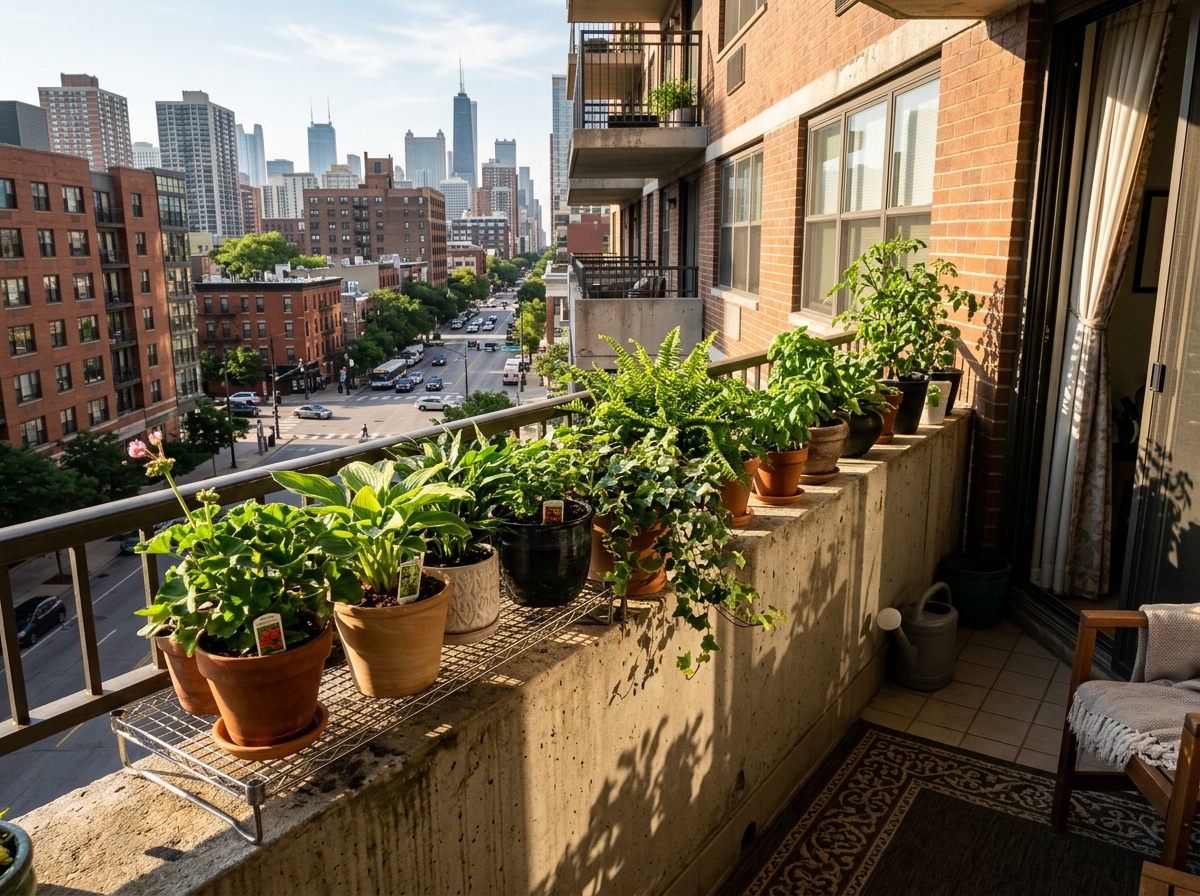
Understanding Sunlight Needs for Balcony Plants
Sunlight is the fuel for your garden. To be successful at gardening in balcony for beginners, you must track the sun’s path for at least one full day. Use a compass or a phone app to see which way your balcony faces:
- South-facing: This is the “gold standard” for vegetables. You’ll likely get 6+ hours of direct sun, perfect for tomatoes, peppers, and basil.
- West-facing: You get intense, hot afternoon sun. This can actually be too much for some plants, so you might need heat-tolerant varieties or light shading.
- East-facing: You get gentle morning sun. This is ideal for leafy greens like lettuce and many flowering plants that don’t like to bake in the afternoon heat.
- North-facing: Mostly shade. Don’t worry, you can still garden! Focus on ferns, hostas, and shade-tolerant herbs like mint or parsley.
For more details on matching species to light, see our guide on Understanding Sunlight Needs for Balcony Plants.
Managing Wind and Weight Restrictions
Wind is the silent killer of balcony plants. High-rise balconies often experience “tunneling” effects where wind speeds are much higher than at ground level. This dries out soil in hours and can snap tall, leggy plants. If your balcony is windy, invest in heavy pots (like resin or thick plastic) that won’t blow over, or use privacy screens as windbreaks.
Regarding weight, always place your heaviest pots near the building’s structural walls or load-bearing beams rather than right at the edge of the slab. Using lightweight materials like fiberglass or fabric grow bags can help stay within safety limits. For more on navigating these urban challenges, read our Urban Dweller’s Guide to Balcony Gardening.
Choosing the Right Plants and Containers
Once you know your light and wind conditions, it’s time for the fun part: shopping. But wait! Don’t just buy what looks pretty. You need to choose containers that provide enough “root room” and plants that are known to thrive in confined spaces.
Best Plants for Gardening in Balcony for Beginners
If you are just starting out, we recommend the “Big Five” of beginner balcony plants:
- Cherry Tomatoes: Look for “determinate” or “patio” varieties. They stay compact and produce clusters of fruit without needing a 6-foot trellis.
- Basil: The ultimate herb. It loves the sun and tells you exactly when it’s thirsty by drooping slightly.
- Mint: Nearly indestructible. Just keep it in its own pot, or it will take over everything else!
- Lettuce/Spinach: Perfect for partial shade and can be harvested leaf-by-leaf for weeks.
- Marigolds: These hardy flowers add color and help deter certain pests naturally.
For a complete list of what will work for your specific space, browse our Top Plants for Your Balcony: A Selection Guide.
Selecting Containers for Small Spaces
Your choice of container affects how often you water and how well your plants grow. Here is a quick comparison of common materials:
| Material | Pros | Cons |
|---|---|---|
| Terracotta | Beautiful, breathable, classic look. | Heavy; dries out very quickly; can crack in frost. |
| Plastic/Resin | Lightweight, retains moisture well, affordable. | Can look “cheap”; dark colors can overheat roots in direct sun. |
| Fabric Grow Bags | Excellent drainage, prevents root circling, very light. | Dries out faster than plastic; aesthetic isn’t for everyone. |
| Self-Watering | Great for busy people; keeps moisture consistent. | More expensive; can be heavy when the reservoir is full. |
Regardless of the material, the most important rule is drainage holes. Without them, water pools at the bottom, rots the roots, and kills the plant. For budget-friendly options, check out Budget-Friendly Containers for Balcony Plants and our list of Top Pots for Balcony Gardening.
Soil, Fertilizer, and Watering Essentials
In a balcony garden, the soil is the only source of nutrients your plants have. You can’t just dig up dirt from a local park; it’s too heavy, likely contains pests, and won’t drain properly in a pot.
Why Potting Mix Beats Garden Soil
“Potting mix” isn’t actually soil at all. It’s usually a blend of peat moss or coco coir (for moisture), perlite or vermiculite (for air), and compost (for food).
- Weight: Potting mix is significantly lighter than garden soil, which is vital for balcony weight limits.
- Aeration: It stays fluffy, allowing roots to breathe.
- Drainage: It allows excess water to pass through so your plants don’t “drown.”
High-quality mixes often come with a “slow-release” fertilizer already mixed in, which feeds your plants for the first few months. You can learn more about the technical side in The Beginner Guide to Balcony Vegetable Gardening.
Smart Watering Strategies for Gardening in Balcony for Beginners
Watering is where most beginners fail. On a balcony, plants dry out much faster than they do in the ground because they are exposed to air on all sides.
The “Finger Test” is your best friend: Stick your index finger one inch into the soil. If it feels dry, water. If it feels damp, wait until tomorrow. Always water the soil, not the leaves, to prevent fungal diseases.
If you have a busy schedule, we highly recommend self-watering planters. They use a reservoir at the bottom to allow plants to “drink” as needed. You can see our favorites here: Stop Playing God with Your Plants and Buy These Self-Watering Planters. Also, don’t forget saucers under your pots to prevent water from dripping onto your downstairs neighbor’s head!
Maximizing Space with Vertical Gardening Techniques
When you run out of floor space, look up! Vertical gardening is the secret weapon of the urban gardener. It allows you to grow twice as much in the same footprint.
Utilizing Railings and Walls
Railings are prime real estate. Over-the-rail planters can hold strawberries, herbs, or cascading flowers like petunias. If your building allows it, a simple wooden lattice or “trellis” leaned against a wall can support climbing plants like peas, beans, or even small cucumber varieties.
Using S-hooks to hang lightweight pots from railing bars is another great way to add “layers” to your garden. For more creative inspiration, check out Vertical Balcony Garden Ideas and our tips on Maximizing Limited Space with Balcony Gardening.
Creating a Productive Herb Corner
Herbs are perfect for vertical setups because they usually have shallow root systems. A tiered plant stand or a “vertical pocket” planter can turn a corner of your balcony into a culinary powerhouse. Imagine having basil, thyme, chives, and cilantro all within arm’s reach of your kitchen door. Start your design with our Balcony Herb Garden Design guide.
Maintenance and Avoiding Common Beginner Mistakes
A thriving garden isn’t just about planting; it’s about the “little and often” care. Spend five minutes every morning with your plants. This helps you catch problems before they become disasters.
Common mistakes include:
- Overwatering: Roots need air. If the soil is always soggy, they will rot.
- Ignoring the Wind: Not securing pots or choosing fragile plants for high floors.
- Using the Wrong Soil: Trying to save money with cheap garden dirt.
Learn how to sidestep these issues in our guide on Avoiding Pitfalls: Common Balcony Gardening Mistakes.
Identifying and Managing Pests
Even on the 10th floor, pests like aphids and spider mites will find your garden. They often travel on the wind or come home with you from the nursery.
Check the undersides of leaves regularly. If you see sticky residue or tiny moving dots, a simple spray of water or a mild insecticidal soap usually does the trick. Neem oil is another organic “must-have” for any beginner’s toolkit. For more hydration and pest tips, see Keeping Your Plants Hydrated: How to Water Balcony Plants.
Seasonal Care and Winterization
When the seasons change, your balcony garden needs to change too. Annuals like tomatoes and marigolds will die when the first frost hits—that’s normal! You can replace them with cold-hardy plants like pansies or kale.
If you have perennials (plants that live for years), you may need to wrap the pots in burlap to protect the roots from freezing or bring them indoors if the weather gets too extreme. Renters should check out Blooming Balconies: A Garden Guide for Renters for advice on portable winter setups.
Frequently Asked Questions about Balcony Gardening
How much weight can a standard balcony hold?
While most balconies can handle about 50-100 lbs per square foot, it varies wildly by building age and construction. Always consult your landlord or building management for specific limits. To be safe, use lightweight potting mix and resin pots, and spread the weight out rather than clustering everything in one corner.
What are the easiest vegetables to grow on a balcony?
Radishes are the fastest (seed to harvest in 30 days!), followed by loose-leaf lettuce, spinach, and cherry tomatoes. These are forgiving and don’t require deep soil. Check out our list of Easy Vegetables to Grow on Your Balcony for more ideas.
How do I garden on a balcony with no direct sunlight?
Focus on “foliage” over “fruit.” Plants that produce fruit (tomatoes, peppers) need sun. Plants grown for their leaves (mint, parsley, lettuce, ferns, hostas) can thrive in shade. We have a full guide on Gardening Without Sunlight: Tips for Shady Balconies to help you out.
Conclusion
Starting your first balcony garden is one of the most rewarding ways to embrace sustainable living and improve your mental well-being. It turns a cold, urban space into a living, breathing retreat. Don’t worry about being perfect—every gardener has killed a plant (or ten) along the way. The joy is in the process, the fresh scents, and that first homegrown tomato.
Ready to take the plunge? Visit the Financelixo Home page for more urban lifestyle tips and start your green oasis today. Happy gardening!
