
Top Plants for Your Balcony: A Selection Guide
Why Balcony Plants Ideas Are Transforming Urban Living
Balcony plants ideas are the fastest way to turn a bare slab of concrete into a green, calming retreat — no backyard required.
Here are the top balcony plant picks to get you started:
- Lavender – Full sun, drought-tolerant, fragrant
- Geraniums – Full sun, easy care, long blooming
- Begonias – Shade-tolerant, colorful, low maintenance
- Succulents – Minimal watering, compact, heat-tolerant
- Star Jasmine – Climbing, fragrant, great for privacy
- Golden Bamboo – Fast-growing, ideal privacy screen (keep in pots)
- Cherry Tomatoes – Edible, compact, productive in containers
- Herbs (Thyme, Basil, Mint) – Edible, small footprint, easy to grow
More and more city dwellers are discovering that a small balcony is more than enough space to grow a real garden. Microgardening has become one of the biggest trends in urban living — often associated with the rise of urban agriculture — driven by a simple desire to create a personal outdoor sanctuary, even in the tightest spaces.
The good news? You don’t need a green thumb or a big budget. Modern plant breeding has produced compact varieties of almost every shrub, flower, and vegetable. Container gardening has never had more options.
The challenge is knowing where to start. Balconies come with unique conditions — heat, wind, weight limits, and tricky light angles — that a typical garden doesn’t face. Choosing the wrong plant means a dead plant.
This guide cuts through the noise and gives you exactly what you need: the right plants for your specific balcony, with simple care tips to keep them thriving.
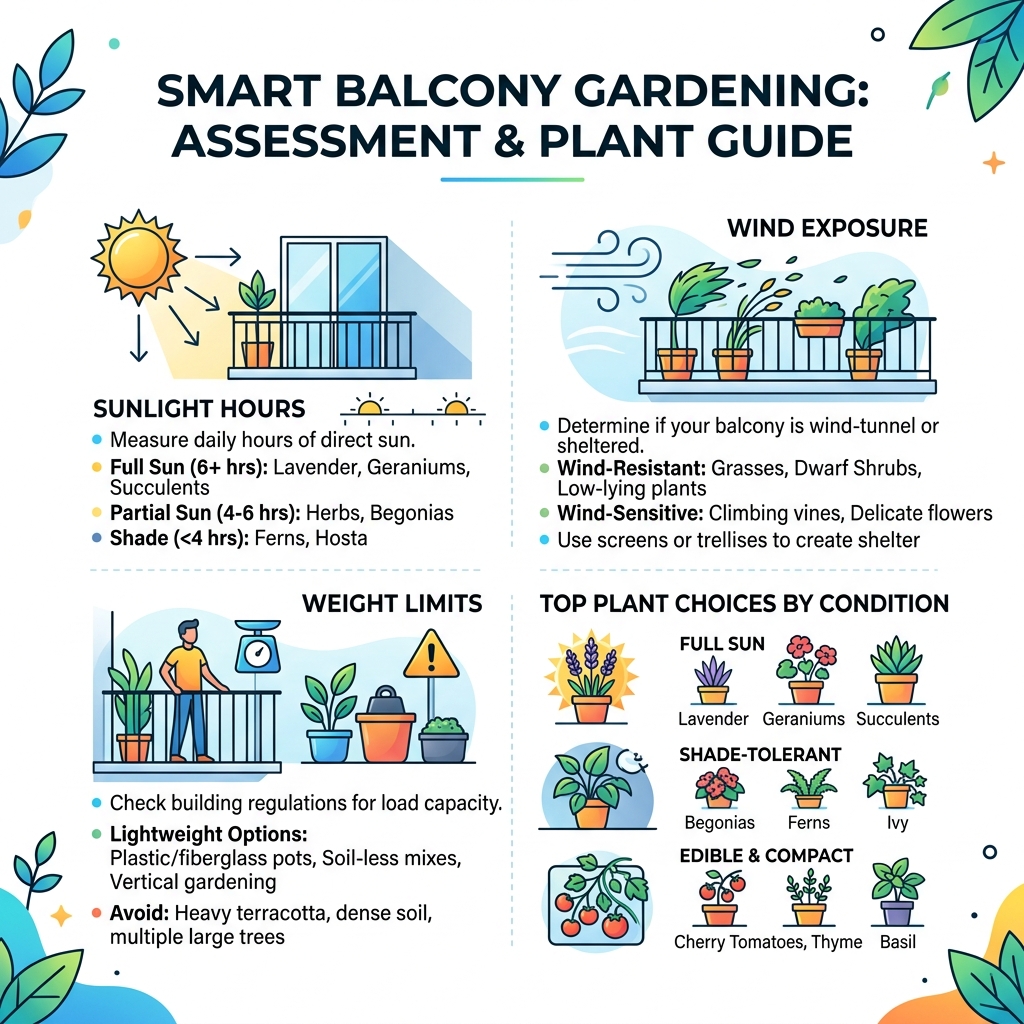
Assessing Your Environment: Sunlight, Wind, and Weight
Before we fall in love with a specific hibiscus or a dwarf lemon tree, we have to look at the “bones” of our balcony. Unlike a traditional backyard, a balcony is a microclimate. It might be ten degrees hotter than the ground level because of heat reflecting off glass windows, or it might be a wind tunnel that dries out soil in hours.
Sunlight: The Make-or-Break Factor
The first step in gathering balcony plants ideas is tracking the sun. We recommend doing a “sun audit” on a clear day.
- Full Sun: 6-8+ hours of direct light. This is usually a south-facing balcony.
- Part Sun/Shade: 3-5 hours of light. Common on east or west-facing spots.
- Shade: 0-2 hours of direct light. Often found on north-facing balconies or those tucked under deep overhangs.
For a deeper dive into how light affects your growth, check out our guide on understanding sunlight needs for balcony plants.
Managing the Wind
On higher floors, wind is a silent plant killer. It physically breaks stems and accelerates evaporation. We can use “wind baffles” like slim trellises placed 2-4 inches from the railing. This breaks the gust without turning your balcony into a sail. If you can’t stop the wind, choose plants with flexible stems or silver, waxy leaves that resist drying out.
Weight Restrictions and Regulations
Soil is heavy. Wet soil is even heavier. Before we go out and buy massive concrete planters, we must check our building regulations and weight limits. As a rule of thumb, use lightweight pots made of resin, fiberglass, or plastic. Avoid heavy terracotta or stone unless your balcony is structurally reinforced. Also, check if your lease allows items to be attached to railings — safety first!
Top Selections for Color and Fragrance
Adding a splash of color is usually the primary goal when searching for balcony plants ideas. Whether you want a “jungle” vibe or a minimalist aesthetic, the right flowers can transform the space.

| Plant Type | Best Light Condition | Key Benefit |
|---|---|---|
| Lavender | Full Sun | Fragrance & Pollinators |
| Geraniums | Full Sun | Continuous Blooms |
| Begonias | Shade | Vibrant Foliage & Flowers |
| Fuchsia | Part Shade | Attracts Hummingbirds |
| Succulents | Full Sun | Drought Tolerance |
Learning how to start balcony gardening is all about matching these benefits to your specific setup.
Best Balcony Plants Ideas for Every Sunlight Level
Lavender: This is a sun-lover’s dream. It thrives in the heat and wind of an elevated balcony. It comes in hundreds of varieties, but all of them offer that classic, relaxing scent. Just ensure your pot has excellent drainage; lavender hates “wet feet.”
Geraniums: These are the workhorses of the balcony world. They are incredibly resilient and provide pops of red, pink, and white all summer long. If you’re choosing the right plants for a sunny balcony, geraniums should be at the top of your list. Remember to “deadhead” (remove spent blooms) to keep the flowers coming.
Begonias: Don’t have much sun? No problem. Begonias are the best flowers for a shaded balcony. They offer lush, waxy leaves and delicate flowers that brighten up dark corners.
Succulents: For those of us who occasionally forget to water, succulents like sedums and “hens-and-chicks” are perfect. They store water in their leaves, making them the ultimate low-maintenance choice for hot, south-facing balconies.
Creative Balcony Plants Ideas for Year-Round Color
Golden Bamboo: If you need a fast-growing privacy screen, golden bamboo is excellent. However, we must keep it in a sturdy container (at least 24 inches deep) to prevent it from becoming invasive. It provides a lovely rustling sound in the wind and stays green year-round in many zones.
Star Jasmine: This vining plant is a sensory delight. It produces small, white, star-shaped flowers with an unmatched perfume. It’s one of our favorite fast-growing plants for small balconies because it grows up, not out, saving precious floor space.
Gardenias: While they can be a bit finicky, the fragrance of a gardenia is legendary. They love humidity, so they do well if grouped with other plants.
Hydrangeas: Look for new, compact varieties like the ‘Centennial Ruby’. These are specifically bred to stay small enough for pots while still producing those massive, iconic flower heads. They are perfect for a tropical balcony garden feel.
Mandevilla: This tropical climber is a pollinator magnet. It produces large, trumpet-shaped flowers in shades of pink and red. It’s a great way to add height and a “vacation” feel to your outdoor space.
Maximizing Small Spaces with Vertical Balcony Plants Ideas
When floor space is at a premium, we have to look up. Vertical gardening is the secret weapon of the urban gardener.
Trellises and Railing Planters
Trellises allow us to grow “climbers” like jasmine, clematis, or even pole beans. By using the wall or the railing as a support, we create a wall of green that takes up only a few inches of floor depth. Railing planters are another space-saver; they sit on top of or hang over the edge, leaving the floor clear for chairs and tables.
Hanging Systems and Tiered Stands
Hanging baskets are perfect for “spiller” plants like trailing petunias or ‘Silver Falls’ dichondra. They draw the eye upward and make the balcony feel larger. If you have a corner to fill, choosing the right balcony plant stands can help you stack pots vertically. These easy balcony garden projects are perfect for beginners who want a high-impact look with minimal construction.
Growing Your Own Food: Edible Balcony Garden Solutions
Can you really grow dinner on a balcony? Absolutely. Edible balcony plants ideas are more popular than ever, and you don’t need a farm to harvest fresh ingredients.
The Balcony Herb Garden
Herbs are the easiest entry point. Most herbs for balcony gardening like rosemary, thyme, and oregano flourish in sunny, well-draining pots. Mint is another great choice, but it’s a “space hog” — always give it its own pot so it doesn’t choke out your other plants.
Vegetables and Fruit
Cherry Tomatoes: Look for “determinate” or “patio” varieties. These grow to a set height and don’t require the massive cages that garden tomatoes do. Chili Peppers: Peppers love the heat of a balcony. There are many chili peppers perfect for balconies that offer both spicy harvests and beautiful, colorful fruits. Strawberries: These are perfect for hanging baskets. This keeps the fruit off the soil and makes harvesting a breeze. Dwarf Fruit Trees: Believe it or not, you can grow citrus or even apples on a balcony. Dwarf fruit trees perfect for balconies are grafted to stay small while still producing full-sized fruit.
For those interested in wellness, consider exploring the best medicinal plants for balconies, such as aloe vera or calendula.
Common Balcony Gardening Questions
What are the best plants for balcony privacy?
Privacy is a top priority in the city. Golden bamboo is a classic choice for a tall, dense screen. If you prefer something flowering, Star Jasmine or Mandevilla on a trellis creates a living curtain. For a more permanent look, tall rectangular planters filled with evergreen shrubs like Boxwood or Podocarpus can define your space and block the neighbor’s view.
How do I manage watering on a high-rise balcony?
Watering can be a logistical nightmare if you don’t have an outdoor tap. We suggest:
- Self-watering pots: These have a reservoir at the bottom that keeps soil moist for days.
- Expandable hoses: These can attach to your kitchen sink and reach the balcony, then shrink down for easy storage.
- Water-retaining granules: Mix these into your compost to help hold onto moisture during heatwaves.
- Drip trays: Always use saucers or trays to catch runoff; your downstairs neighbors will thank you!
Which plants are most wind-tolerant for elevated spaces?
If your balcony feels like the deck of a ship, go for “tough” plants. Ornamental grasses move beautifully in the wind without breaking. Dwarf olive trees and Rosemary have small, leathery leaves that don’t lose moisture easily. Coastal varieties like Erigeron (seaside daisy) are also naturally adapted to breezy conditions.
Conclusion
At Finance Lixo, we believe that everyone deserves a slice of nature, no matter how high up they live. Transforming your balcony isn’t just about aesthetics; it’s about creating a sustainable, personal retreat. By using a seasonal rotation, you can keep your balcony looking fresh year-round — swapping out summer petunias for autumn pansies or winter evergreens.
Ready to get your hands dirty? Whether you want to build an eco-friendly balcony garden or just want a single pot of lavender, the best time to start is now. Start your balcony garden today and watch your urban sanctuary grow!
