
Low-Maintenance Hanging Plants for Balcony Gardens: A Comparison
Why Low-Maintenance Plants for Balcony Gardens Are Worth the Switch
Low-maintenance plants for balcony spaces give urban apartment dwellers a real garden feel — without the daily grind of complex care routines. Whether your balcony gets full sun, partial shade, or is constantly windy, there are plants that will genuinely thrive with minimal effort.
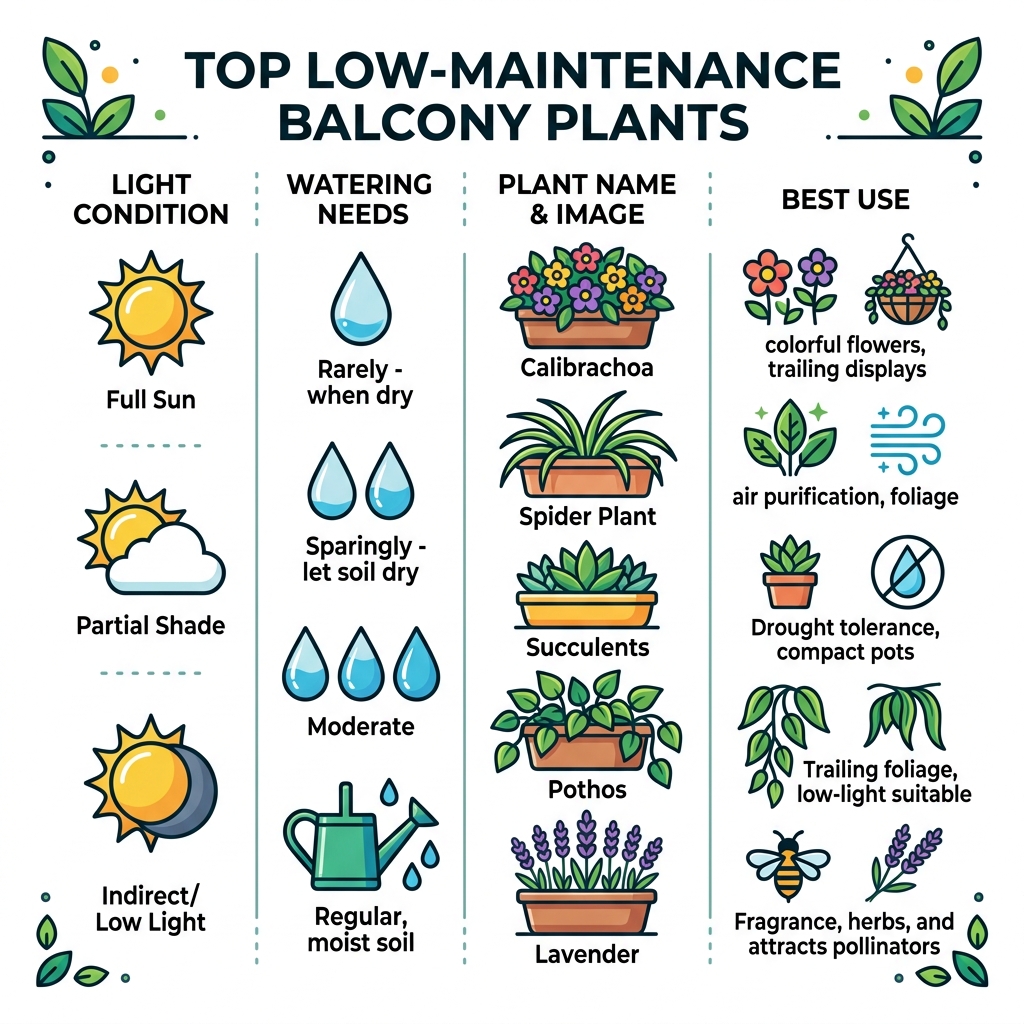
Here are the top low-maintenance hanging plants for balconies, at a glance:
| Plant | Best For | Light Needs | Watering |
|---|---|---|---|
| Calibrachoa (Million Bells) | Color, trailing displays | Full sun (6+ hrs) | Regular, moist soil |
| Spider Plant | Foliage, air purification | Indirect/partial shade | Sparingly, let soil dry |
| Succulents | Drought tolerance, compact pots | Full sun | Rarely — only when soil is dry |
| Pothos | Low-light foliage, hanging | Low to indirect light | Moderate |
| Lavender | Fragrance, herbs, pollinators | Full sun | Low |
The appeal is simple. Most people want greenery on their balcony but worry they’ll kill everything they buy. The truth is, choosing the right plant for your specific conditions — sunlight, wind exposure, and space — makes all the difference between a thriving display and a pot of dead stems.
Even a small balcony with just a few square feet can support a lush hanging garden. You just need to match the plant to the place.
This comparison breaks down the best options so you can pick what actually works for your setup.
Assessing Your Space for Low Maintenance Plants for Balcony Success
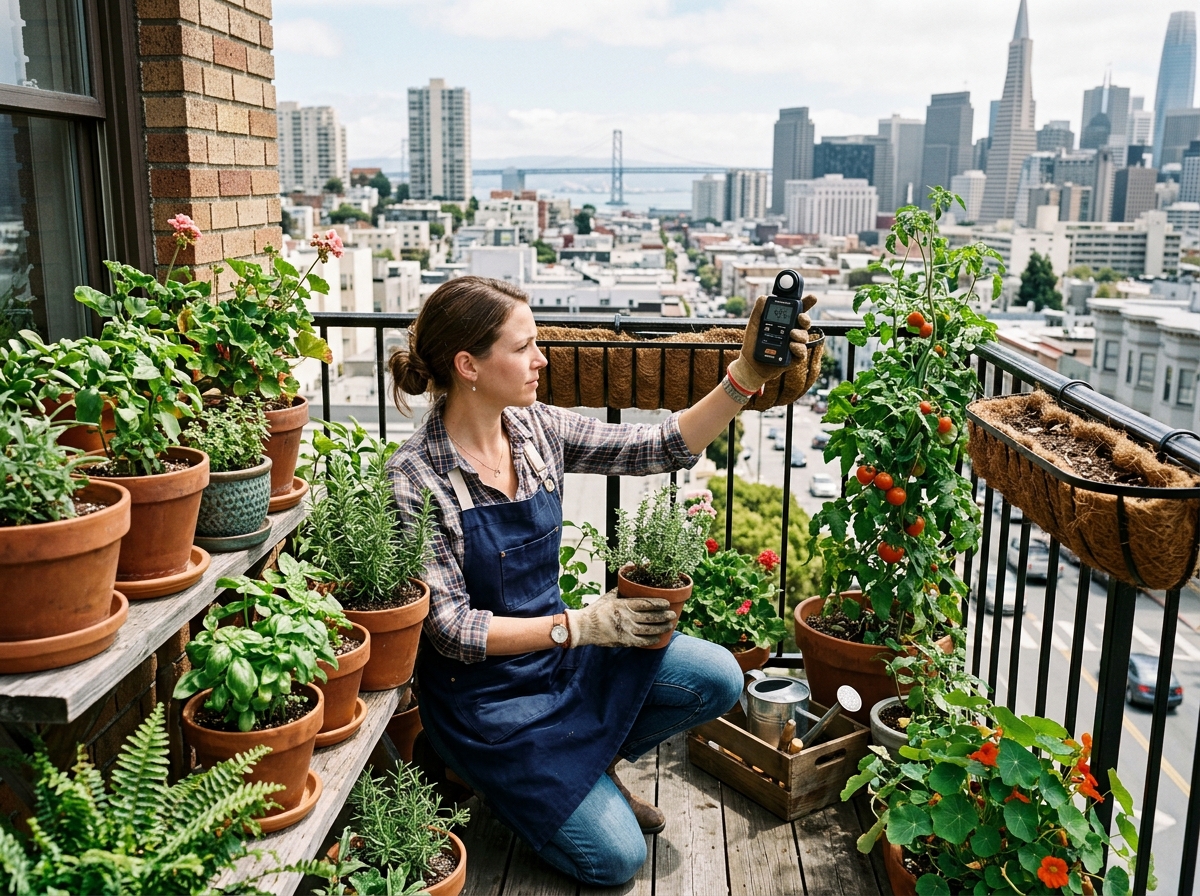
Before we rush to the garden center and buy every pretty flower in sight, we need to take a cold, hard look at our balcony. Every balcony has a “microclimate”—a fancy way of saying the specific weather conditions on your little slice of the outdoors. What works on a ground-floor patio might wither on a 15th-floor balcony due to wind or intense reflected heat.
Sunlight Exposure
This is the big one. We often overestimate how much sun our balconies get. To choose the right low maintenance plants for balcony success, track the sun for one Saturday.
- Full Sun: 6+ hours of direct sunlight.
- Partial Shade: 3-6 hours of sun.
- Full Shade: Less than 3 hours of direct sun.
If you aren’t sure where to start, check out our guide on understanding sunlight needs for balcony plants to avoid sunburning your new green roommates.
Wind and Weight
The higher up you are, the windier it gets. Wind acts like a giant hair dryer, sucking moisture out of leaves and soil. If you have a windy spot, you’ll want “unkillable” plants with waxy leaves or low profiles.
Weight is another sneaky factor. Wet soil is heavy! Before installing a massive vertical wall, check your building’s rules. Using lightweight materials like fiberglass or plastic pots instead of heavy ceramic can save your balcony (and your security deposit). For more on these basics, our quick and easy beginner’s guide to balcony gardening covers the essentials of setting up safely.
Top Low Maintenance Plants for Balcony: The Hanging Contenders
When we talk about hanging plants, we’re looking for “spillers”—plants that cascade over the edges of pots to create that lush, overflowing look. The following table compares three of the most popular choices based on their “neglect tolerance.”
| Feature | Calibrachoa | Spider Plant | Succulents (Trailing) |
|---|---|---|---|
| Maintenance Level | Low (Self-cleaning) | Very Low | Minimalist |
| Drought Tolerance | Moderate | High | Extreme |
| Best Visual Perk | Vibrant Blooms | Arching Foliage | Unique Textures |
| Growth Speed | Fast | Medium | Slow to Medium |
If you’re looking for top balcony plants that actually survive in pots, these three are the gold standard. They handle the restricted root space of containers better than most.
Calibrachoa (Million Bells) as Low Maintenance Plants for Balcony Sun
If you want the look of petunias without the high-maintenance “deadheading” (pinching off dead flowers), Calibrachoa is your best friend. These plants are famous for being “self-cleaning,” meaning they drop their old blooms and keep right on growing.
They typically grow about 6-10 inches tall but can trail down up to 30 inches, making them perfect for hanging baskets. We especially love the Calibrachoa ‘Cabaret Orange’ for a pop of sunset color. To keep them happy, give them at least 6 hours of sun and regular water. If they start looking a bit “leggy” mid-summer, just give them a quick trim to encourage new, bushy growth. For a deeper dive into their care, see how to grow & care for Calibrachoa (Million Bells) or the Million Bells: planting, growing, and caring for the trailing petunia guide. They are truly the easiest low-maintenance balcony plants for busy gardeners who want maximum color for minimum effort.
Foliage Favorites: Spider Plants and Pothos
Not every balcony is a sun-drenched paradise. For those of us with north-facing views or overhanging roofs, foliage plants are the way to go.
Spider Plants are legendary for a reason. They are tough, produce adorable “babies” on trailing stems, and are excellent at cleaning the air. They are quite sensitive to fluoride in tap water, though, so using rain or distilled water can prevent those brown tips.
Pothos (Devil’s Ivy) is another “unkillable” contender. It’s one of those rare plants that can thrive in low light and actually prefers to dry out between waterings. If you’ve ever wondered why air plants are the easiest roommates ever, you’ll find Pothos offers a similar level of “set it and forget it” charm but with much more dramatic trailing vines. These are among the top container-friendly plants and greenery for your balcony because they don’t mind being slightly root-bound.
Maximizing Small Spaces with Vertical Gardening Techniques
When floor space is at a premium, we have to look up! Vertical gardening is the secret weapon of the urban gardener. It allows us to grow a “tower of Zen” even on a balcony that barely fits a chair.
- Railing Baskets: These hook directly onto your balcony rail. They are perfect for herbs or trailing flowers like Million Bells.
- Wall-Mounted Pots: Using a trellis or a slatted wood wall, you can mount lightweight pots vertically. This is a great way to create a “living wall” that provides privacy from neighbors.
- Tiered Planters: These look like ladders or bookshelves and allow you to stack plants vertically.
If you’re worried about the upkeep, don’t be. Learning how to grow a low-maintenance vertical garden that thrives on neglect is mostly about choosing the right irrigation and hardy plants. For long-term success, check out the ultimate guide to vertical garden maintenance: tips and tricks to keep your wall looking green rather than brown.
Essential Care: Containers, Watering, and Feeding
The container you choose is just as important as the plant. For balconies, we recommend lightweight materials like fiberglass, plastic, or fabric grow bags. They are easier to move and won’t stress the balcony’s weight capacity.
The Magic of Drainage
Never, ever plant something in a pot without a hole. Without drainage, water sits at the bottom, the roots rot, and your plant dies a slow, soggy death. If you’re a “forgetful waterer,” consider self-watering pots. These have a reservoir at the bottom that the plant drinks from as needed. You can find out more about the best plants for self-watering pots that won’t drown to make your life even easier.
Feeding Your Plants
Because balcony plants live in a limited amount of soil, they run out of nutrients quickly. We recommend using a slow-release fertilizer at the start of the season. It’s like a time-release vitamin for your plants. For flowering beauties like Calibrachoa, a liquid fertilizer every two weeks during the peak of summer will keep those blooms coming.
For a truly distinguished balcony, look for plants with the RHS Award of Garden Merit, like the Kalanchoe pumila. This award basically means the plant has been “vetted” by experts to be reliable and easy to grow. And to avoid messy spills on your neighbor’s balcony below, you can stop the drip with these top indoor self-watering planters that work just as well in sheltered outdoor spots.
Frequently Asked Questions about Balcony Gardening
What are the best low maintenance plants for balcony privacy?
If you want to block out the prying eyes of the apartment building across the street, look for height. Golden Bamboo is a classic choice, but keep it in a sturdy pot so it doesn’t become invasive. Hollyhocks can reach up to 9 feet tall and offer beautiful blooms. Climbing vines like Mandevilla or Sweet Potato Vine grown on a trellis are also excellent for creating creative and easy balcony gardens that grow themselves while giving you some much-needed seclusion.
How do I protect my balcony plants from extreme wind?
Wind is the silent killer of balcony gardens. To fight back:
- Use heavy containers (like resin or thick plastic) that won’t blow over.
- Group plants together so they can protect each other.
- Install a privacy screen or windbreak.
- Choose wind-resistant plants like Dwarf Olive trees or succulents. For more protection strategies, read our easy balcony gardening tips for your urban oasis.
Can I grow herbs as low maintenance plants for balcony spaces?
Absolutely! Herbs are some of the best low maintenance plants for balcony life because many of them prefer to be ignored. Rosemary and Lavender love the hot, dry conditions of a sunny balcony and don’t need much water once established. Mint is also incredibly hardy—just keep it in its own pot, or it will take over everything! Check out the best herbs for your apartment balcony and even some easy vegetables to grow on your balcony to turn your outdoor space into a mini grocery store.
Conclusion
At Finance Lixo, we believe that everyone has the potential to be a great “plant parent”—you just need the right tools and the right plants. Cultivating a balcony garden isn’t just about making your apartment look like a Pinterest board; it’s about your mental well-being. There’s a unique sense of peace that comes from stepping out into your own “tower of Zen” after a long day of work.
By choosing low maintenance plants for balcony environments, you’re setting yourself up for success rather than a chore. Start small with one or two hardy survivors like a Spider Plant or a pot of succulents, and watch your confidence grow along with your greenery. If you’re ready to take the first step, our guide on how to start small balcony gardening for beginners will walk you through the rest. Happy planting!
