
Liquid Gold: Best Indoor Plant Food for Every Houseplant
Why the Right Fertilizer for Indoor Plants Makes All the Difference
Fertilizer for indoor plants is one of the most overlooked parts of houseplant care — yet it’s often the difference between a plant that just survives and one that genuinely thrives.
Here are the best fertilizers for indoor plants at a glance:
| Fertilizer | Type | NPK Ratio | Best For |
|---|---|---|---|
| Easy Peasy Indoor Plant Food | Liquid concentrate | 4-3-4 | All-purpose houseplants |
| Espoma Organic Indoor | Liquid organic | 2-2-2 | Organic growers |
| Miracle-Gro Indoor Plant Food | Liquid | 1-1-1 | Weekly feeding |
| Dyna-Gro General | Liquid | Balanced | Mixed collections |
| Espoma Indoor! Organic | Liquid concentrate | Balanced | Pothos, fiddle leaf, monstera |
Here’s something most plant guides get wrong: fertilizer isn’t actually “food” for your plants. Plants make their own food through photosynthesis. Fertilizer is really a mineral supplement — it replaces nutrients that potted plants can’t get from the ground like they would in nature.
In a pot, nutrients get used up or washed away over time. Without a top-up, even a healthy plant will slowly run out of the minerals it needs to grow new leaves, stay green, and fight off pests.
The good news? Feeding your indoor plants doesn’t have to be complicated. Whether you have a single pothos on a shelf or a full apartment jungle, there’s a simple solution that fits your routine.
Related content about fertilizer for indoor plants:
The Science of Fertilizer for Indoor Plants: NPK and Beyond
To understand fertilizer for indoor plants, we have to look at the “Big Three” macronutrients found on almost every bottle: Nitrogen (N), Phosphorus (P), and Potassium (K). These are the pillars of plant health, but they aren’t the whole story.
The Macronutrient Trio
- Nitrogen (N): Think of this as the “green-up” nutrient. It is responsible for lush, leafy growth and vibrant green foliage. If your plant looks pale or stunted, it likely needs more Nitrogen.
- Phosphorus (P): This is the energy booster. It helps develop strong root systems and is essential for producing flowers and fruit. Even if your plant doesn’t bloom, it needs Phosphorus to build a solid “foundation” below the soil.
- Potassium (K): This acts like a plant’s immune system. It regulates water movement within the plant cells and helps the plant resist diseases and environmental stress.
The Hidden Heroes: Micro and Trace Elements
While NPK gets all the glory, a high-quality fertilizer for indoor plants should also contain micronutrients and trace elements. According to the Proven Winners Guide, essential minerals like Boron, Copper, Iron, Manganese, and Zinc are vital for long-term health. Without these, plants can suffer from “hidden hunger,” where they grow but never truly look their best.
| Nutrient | Main Function | Visual Sign of Health |
|---|---|---|
| Nitrogen (N) | Foliage & Leaf Growth | Deep green, large leaves |
| Phosphorus (P) | Roots & Blooms | Strong stems, vibrant flowers |
| Potassium (K) | Overall Vitality | Resilience to pests/drought |
Timing and Application: When to Feed Your Houseplants
We often get asked, “How often should I use fertilizer for indoor plants?” The answer depends largely on the light and the season.
The Growing Season vs. Semi-Dormancy
Most houseplants follow the rhythm of the sun. In the spring and summer (roughly March through September), longer days and warmer temperatures trigger active growth. This is when your plants are “hungry” and should be fertilized regularly—usually every 2 to 4 weeks.
In late fall and winter, many plants enter a state of semi-dormancy. Because they aren’t pushing out new leaves, they don’t need the extra minerals. In fact, fertilizing during winter can lead to a buildup of mineral salts that can burn sensitive roots.
The Art of Dilution
One of the golden rules we follow is “weakly, weekly.” Many plant enthusiasts prefer to dilute their fertilizer to half-strength and apply it more frequently rather than giving a full-strength “megadose” once a month. This provides a steady stream of nutrients that mimics nature more closely.
For a reliable organic option that is easy to dose, the Espoma Organic Indoor Houseplant Food is a fantastic choice. It features an “Easy Dose” cap that measures the perfect amount for you, preventing the messy guesswork that often leads to over-fertilizing.
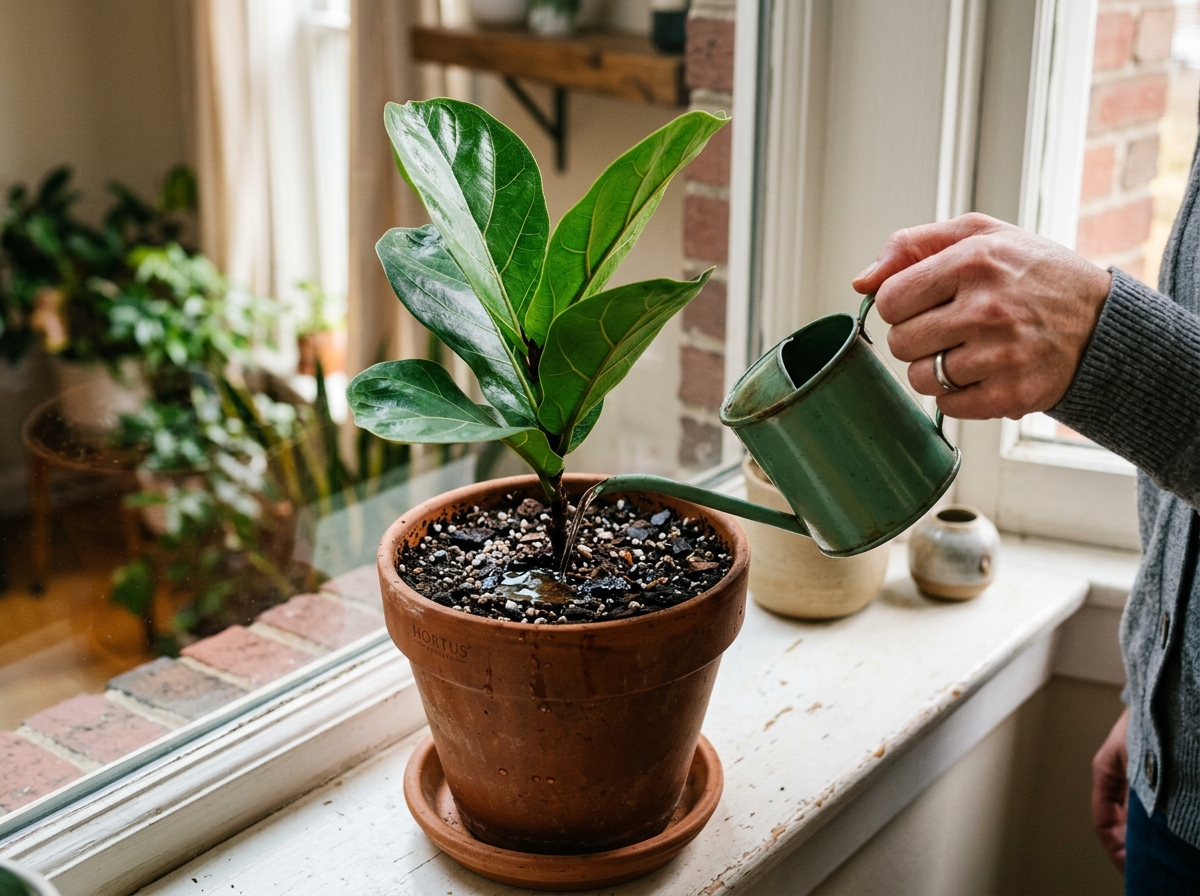
Choosing a Fertilizer for Indoor Plants Based on Soil Type
The medium your plant lives in dictates how you should feed it.
- Pre-fertilized Soil: If you just bought a new plant or repotted one into a fresh bag of “moisture control” potting mix, wait! Most commercial soils come with “time-release” fertilizer already mixed in. You usually won’t need to add any supplemental fertilizer for indoor plants for the first 1 to 2 months.
- Gritty and Soilless Mixes: If you use a gritty mix (like for succulents) or a soilless medium (like LECA or orchid bark), you must fertilize more frequently. These mixes don’t hold onto nutrients, so the plant is entirely dependent on what you provide in the water.
- Nutrient Depletion: Over time, every watering washes a little bit of mineral content out of the drainage holes. After about a year in the same pot, most soil is “spent,” making regular feeding non-negotiable.
For those using standard indoor potting mixes, a gentle product like Miracle-Gro® Indoor Plant Food is designed for instant absorption, helping to replenish those lost nutrients quickly.
Signs Your Greenery Needs a Fertilizer for Indoor Plants Boost
How do you know if your plant is actually hungry? Your plants will “talk” to you through their leaves:
- Pale or Yellowing Leaves: If the older, bottom leaves are turning yellow (chlorosis), the plant may be pulling Nitrogen from old growth to support new growth.
- Small New Leaves: If the new leaves are significantly smaller than the old ones, the plant lacks the “building blocks” to grow to full size.
- Slow Growth: If it’s June and your Pothos hasn’t moved an inch, it’s likely time for a boost.
- Salt Buildup: Conversely, if you see a white, crusty film on the soil surface or the rim of the pot, you might be over-fertilizing. This is a sign of salt buildup, which can cause brown, “burnt” leaf tips.
If you prefer an organic approach to fixing these issues, the Miracle-Gro Organic Indoor Plant Food uses plant-based ingredients to gently restore soil health without the risk of harsh chemical burns.
Best Commercial and DIY Fertilizer Options
When choosing a fertilizer for indoor plants, you have two main paths: the lab-tested precision of commercial products or the “kitchen chemist” route of DIY.
Commercial Standouts
Commercial fertilizers are generally more reliable because they offer a “full spectrum” of nutrients. Many experts recommend urea-free formulas for houseplants, as urea can sometimes burn roots in a confined pot environment.
- Easy Peasy Indoor Plant Food: This brand has earned a stellar reputation, boasting a 4.5-star rating from over 5,700 reviews. Users frequently report growth spurts in stubborn plants like Monsteras and Fiddle Leaf Figs.
- Dyna-Gro Liquid Grow: Often cited in Reddit discussions, this is a professional-grade, all-purpose liquid that works for everything from Snake Plants to Wandering Dudes.
- Liquid Indoor Plant Food (4-3-4): Highly concentrated options like this one are great value because a small 8oz bottle can last for an entire year of feedings.
The DIY Debate: Banana Peels and Coffee Grounds
We all love a good life hack, but are DIY fertilizers actually effective? Professional horticulturists like Marlie Graves are often skeptical. The issue is that organic matter (like eggshells or banana peels) needs to be broken down by soil microbes before the plant can actually “eat” the minerals. In an indoor pot, those microbes are often in short supply.
- Banana Peels: While rich in Potassium, they can attract fruit flies if not buried deep in the soil.
- Coffee Grounds: Great for Nitrogen, but they can make the soil too acidic if used in excess.
- Aquarium Water: This is the “Liquid Gold” of the DIY world. If you have a fish tank, that “dirty” water is packed with nitrogen-fixing bacteria and organic waste that plants absolutely love. It’s free, gentle, and highly effective.
Frequently Asked Questions about Houseplant Food
Can I use the same fertilizer for snake plants and fiddle leaf figs?
Yes! Most common houseplants are “foliage plants,” meaning they primarily grow leaves. A balanced, all-purpose fertilizer for indoor plants (like a 10-10-10 or a 2-2-2 ratio) will work perfectly for both. However, keep in mind that Snake Plants grow much slower and require far less frequent feeding than a Fiddle Leaf Fig.
Is aquarium water safe for my indoor plants?
Absolutely. In fact, it’s one of the best “natural” fertilizers available. The nitrates and phosphates produced by fish waste are in a form that plants can absorb almost immediately. Just make sure the water is at room temperature before pouring it into your pots!
How do I fix over-fertilization?
If you’ve been a little too heavy-handed and notice brown leaf tips or a white crust on the soil, don’t panic. Take the plant to a sink or bathtub and “flush” the soil. Pour lukewarm water through the pot for several minutes, letting it drain out the bottom. This washes away excess salts. Avoid fertilizing again for at least six weeks.
Conclusion
At Finance Lixo, we believe that a beautiful home starts with a healthy environment. Investing in a quality fertilizer for indoor plants is a small step that pays massive dividends in the form of cleaner air, better aesthetics, and the pure joy of watching something grow.
Whether you choose a high-tech liquid concentrate or the water from your goldfish bowl, the key is consistency. By understanding the NPK needs of your green roommates and respecting their seasonal cycles, you can turn a struggling collection into a thriving indoor jungle.
For more tips on Sustainable gardening and creating a home you love, stay tuned to our latest guides!
