
Pick the Best Balcony Herb Varieties for Your Space
Why the Best Herbs for a Balcony Garden Are Worth Growing Right Now
The best herbs for balcony garden setups are ones that match your light, space, and cooking habits — and the good news is you don’t need much room to get started.
Quick answer: the top herbs for a balcony garden are:
| Herb | Sunlight Needed | Difficulty |
|---|---|---|
| Basil | 6+ hours (full sun) | Easy |
| Mint | 3-4 hours (partial shade) | Very easy |
| Chives | 3-4 hours (partial shade) | Very easy |
| Parsley | 3-6 hours (partial shade) | Easy |
| Thyme | 6+ hours (full sun) | Easy |
| Oregano | 6+ hours (full sun) | Easy |
| Rosemary | 6+ hours (full sun) | Moderate |
| Cilantro | 4-6 hours | Easy |
| Sage | 6+ hours (full sun) | Easy |
| Lavender | 6+ hours (full sun) | Moderate |
A small balcony can produce a surprising amount of fresh herbs. Even a 4×6 foot space can fit 6 to 10 herb varieties using simple vertical setups and railing planters.
The biggest mistake beginners make? Choosing herbs based on taste alone — without checking how much sun their balcony actually gets. Match the herb to your conditions first, and the rest becomes simple.
Whether you have a sunny south-facing balcony or a shadier north-facing one, there’s a combination of herbs that will thrive in your space.
Terms related to best herbs for balcony garden:
Top 10 Best Herbs for Balcony Garden Success
When we talk about the best herbs for balcony garden success, we are looking for plants that are productive, relatively compact, and resilient to the unique conditions of apartment living—like wind and heat.
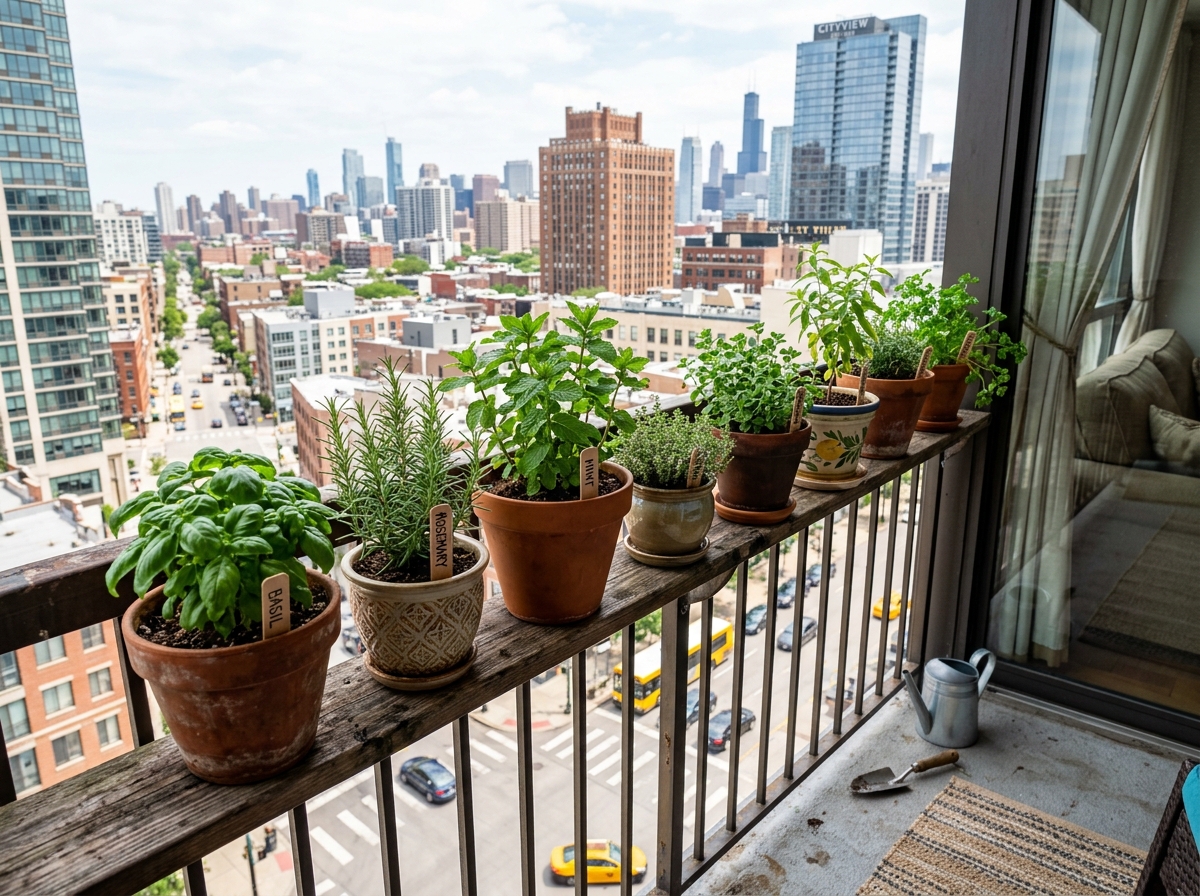
- Basil: The king of the balcony. It thrives in containers and provides a continuous harvest if you pinch it back regularly. It loves the heat but needs consistent moisture.
- Mint: Nearly indestructible. Because it spreads via aggressive surface runners, it must always be kept in its own pot. It is one of the best herbs for your apartment balcony because it handles partial shade so well.
- Chives: Perhaps the easiest herb for beginners. They are perennials (they come back every year) and tolerate a wide range of light conditions. Plus, their purple flowers are edible and attract pollinators.
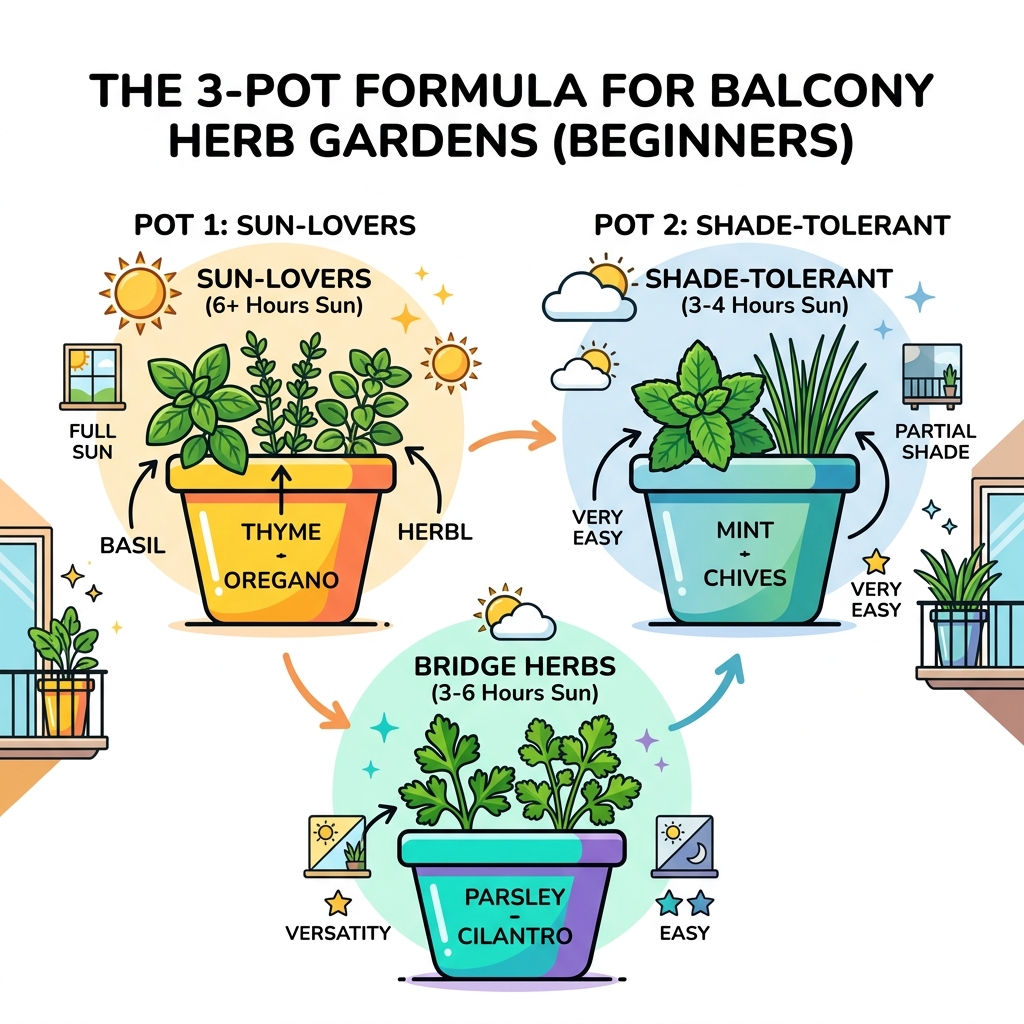
- Parsley: A biennial that acts like an annual in most balcony setups. It prefers moist soil and slightly cooler spots. It is a “bridge herb” that fits into almost any culinary dish.
- Rosemary: A hardy perennial that loves the sun. It can grow quite large, so it eventually needs a bigger pot (10-12 inches). It is incredibly drought-tolerant once established.
- Thyme: A low-growing, woody herb that is perfect for the edges of planters. It is very drought-resistant and comes in many varieties, like Lemon Thyme, which is a favorite for balcony gardeners.
- Oregano: Like mint, it can be a bit of a “bully,” so give it its own space. It loves well-drained soil and lots of sun. Always taste a leaf at the garden center before buying, as flavor varies wildly between plants.
- Cilantro (Coriander): Best grown from seeds because its taproot doesn’t like being moved. It grows fast and “bolts” (goes to seed) quickly in the heat, so keep it in a cooler corner.
- Sage: With its beautiful silvery-grey leaves, sage is as much an ornamental plant as a culinary one. It needs excellent drainage to prevent root rot.
- Lavender: While not always used in cooking, it is one of the 10 Best Herbs to Grow on a Balcony because its scent is relaxing and it helps repel mosquitoes.
For a deeper dive into specific varieties, check out our guide on the-best-herbs-for-balcony-gardening.
Sun-Loving Mediterranean Best Herbs for Balcony Garden
If your balcony faces south or west and gets blasted by 6+ hours of direct sun, you have the perfect environment for Mediterranean herbs. These plants—Rosemary, Thyme, Oregano, and Sage—evolved on dry, rocky hillsides.
The secret to success here is drainage. We recommend a “Mediterranean mix”: 60% high-quality potting soil and 40% perlite or grit. This prevents the roots from sitting in water, which these herbs hate. Use terracotta pots for these varieties; the porous clay allows the soil to breathe and dry out more naturally.
For those starting from scratch, it’s often worth looking at thyme-to-grow-top-seeds-for-your-high-rise-herb-garden to see which varieties handle the higher winds of high-rise living best.
Shade-Tolerant Best Herbs for Balcony Garden
Don’t despair if your balcony is tucked away or north-facing. While you might struggle with rosemary, herbs like Mint, Parsley, Chives, and Cilantro can thrive with just 3-4 hours of indirect light.
These “soft-stemmed” herbs prefer moisture-retentive soil. Unlike their Mediterranean cousins, they don’t want to dry out completely. If your balcony is particularly dark, you can still succeed by using light-colored pots to reflect what little light you have, or by supplementing with a small LED grow light. You can find more tips for these specific conditions in our article on best-herbs-for-your-apartment-balcony.
Essential Setup: Containers, Soil, and Sunlight
Setting up your garden correctly from day one saves hours of frustration later. Most beginners fail because they use “garden soil” in a pot. Garden soil is too heavy and will compact, suffocating your herb’s roots. Always use a dedicated potting mix.
| Pot Material | Pros | Cons |
|---|---|---|
| Terracotta | Breathes well, prevents root rot, looks classic. | Heavy, can crack in freezing weather, dries fast. |
| Plastic | Lightweight, retains moisture longer, cheap. | Can overheat roots in direct sun, less eco-friendly. |
| Ceramic | Beautiful, holds moisture well. | Expensive, heavy, often lacks enough drainage holes. |
Always ensure your pots have drainage holes. If you find a beautiful ceramic pot without one, use it as an outer “sleeve” for a plain plastic pot with holes. For more professional advice on substrate, Jekka’s tips for the balcony herb gardener suggests using a peat-free, loam-based compost mixed with horticultural grit.
If you are a renter and worried about weight or space, see the-best-herbs-for-balcony-gardening-2 for lightweight container options.
Maximizing Small Spaces with Vertical Design
When floor space is limited, look up! Vertical gardening is the ultimate hack for the best herbs for balcony garden yield.
- Railing Planters: These clip onto your balcony rail, using space that would otherwise be wasted. They are perfect for trailing herbs like thyme or compact herbs like chives.
- Tiered Stands: A simple three-tiered shelf can triple your growing area. Place sun-lovers on the top shelf and shade-tolerant herbs like mint on the bottom.
- Wall Pockets: Felt or plastic pockets can be hung on walls to create a living herb tapestry.
For detailed layouts, explore our balcony-herb-garden-design guide or learn how vertical-herb-gardening-made-easy-for-tiny-kitchens can bring your garden right to your door.
Care and Maintenance for Continuous Harvest
The goal of a balcony garden is to eat from it! To keep the supply coming, you must harvest correctly.
- The 1/3 Rule: Never harvest more than one-third of a plant at a time. This ensures the plant has enough foliage to continue photosynthesizing and growing.
- The Finger Test: Don’t water on a schedule. Stick your finger an inch into the soil; if it’s dry, water. If it’s damp, wait.
- Pinching: For herbs like basil, pinch off the top set of leaves just above a leaf node. This tells the plant to grow two new stems instead of one, making it bushier.
- Feeding: Container herbs run out of nutrients quickly. Use a liquid seaweed fertilizer at half-strength every two weeks during the growing season.
Check out How to Start a Micro Herb Garden in a Small Space for more on maintaining these tiny ecosystems. And remember, planning is key—don’t be a “dill” and skip the preparation; stop-being-a-dill-and-plan-your-balcony-herb-garden-layout has you covered.
Troubleshooting Pests and Seasonal Changes
Even on a high-rise balcony, pests can find your plants. Aphids and spider mites are the most common culprits. A simple spray of water and a few drops of dish soap (or neem oil) usually does the trick.
As the seasons change, you’ll need to protect your perennials. In winter, move pots against the house wall for warmth or wrap them in horticultural fleece. If you live in a very cold climate, many herbs like rosemary and chives can be moved to a sunny windowsill indoors.
For those wanting a more permanent setup, you might stop-thyme-and-build-a-balcony-wall-herb-garden that includes built-in weather protection.
Frequently Asked Questions about Balcony Herbs
Can I grow herbs on a north-facing balcony?
Yes! While you won’t be able to grow “sun-worshippers” like lavender or rosemary, you can have great success with mint, chives, lemon balm, and parsley. These plants naturally grow in the dappled light of forest floors. If it’s truly dark, a small LED grow light can bridge the gap.
Which herbs should not be planted together?
The biggest mistake is mixing “wet” and “dry” herbs. Do not plant rosemary (which loves dry soil) in the same pot as mint (which loves moisture). Also, Mint is a bully—its roots will strangle other plants in a shared container. Finally, Fennel is known to inhibit the growth of many other herbs, so it’s best kept in its own “solitary confinement” pot.
Is it better to start from seeds or seedlings?
For beginners, seedlings (starter plants) are much better for slow-growers like rosemary, thyme, and lavender. However, for fast-growers like basil and cilantro, seeds are easy and much cheaper. The Supermarket Hack: If you buy a “living herb” pot from the supermarket, it usually contains 10-15 overcrowded seedlings. Take it home, gently split the root ball into 3 or 4 clumps, and repot them into separate containers with fresh soil. You’ll turn one $5 pot into four thriving plants!
Conclusion
At Finance Lixo, we believe that sustainable urban living starts with the small choices we make at home. Growing the best herbs for balcony garden success isn’t just about saving money on groceries—it’s about the joy of harvesting fresh flavors just steps from your kitchen. Whether you’re a seasoned gardener or a total beginner, your balcony has the potential to become a productive, aromatic oasis.
Ready to transform your space? Start your journey with our balcony herb garden design guide and enjoy the taste of homegrown herbs all year long!
