
How to Choose Easy to Maintain Balcony Plants That Actually Survive
Why Most Balcony Plants Die (And How to Pick Ones That Won’t)
Easy care balcony plants are the fastest way to turn a bare concrete ledge into a green retreat — without spending every weekend watering, pruning, or replacing dead pots.
Here are the top easy-care options to get you started:
| Plant | Best For | Sun Needs | Watering |
|---|---|---|---|
| Succulents | Drought tolerance | Full sun | Once a month |
| Geraniums | Full sun color | Full sun | Moderate |
| Begonias | Shady balconies | Shade/partial | Regular |
| Lavender | Wind, fragrance | Full sun | Low |
| Calibrachoa | Trailing color | Full sun | Moderate |
| Ferns | Deep shade spots | Shade | Moderate |
| Golden Bamboo | Privacy screens | Sun/partial | Moderate |
The key trait they all share: they adapt well to container life and handle the heat, wind, and neglect that balcony conditions often bring.
Balconies are tough environments for plants. Wind dries out soil fast. Concrete retains heat. Sun can reflect off windows and scorch leaves. Most plants just aren’t built for it.
But some plants thrive in exactly these conditions — and they need very little from you to do it.
Whether your balcony gets blazing afternoon sun or barely sees daylight, there are low-maintenance options that genuinely survive. This guide walks you through how to pick the right ones for your specific space, how to pot them, and how to keep them alive with minimal effort.
What Defines an Easy Care Balcony Plant?
When we talk about easy care balcony plants, we aren’t just talking about plants that are hard to kill. We are looking for “urban survivors.” A plant that thrives on a balcony needs to be resilient enough to handle a microclimate that is often harsher than a traditional backyard.
For us, a truly easy-care plant meets at least three of these four criteria:
- Drought Tolerance: Life gets busy. If a plant shrivels the moment you miss a single watering, it’s not easy care. We love succulents because they are the champions of drought tolerance; you can often go weeks without watering them.
- Self-Cleaning: This is a professional term for “you don’t have to pick off dead flowers.” Plants like Calibrachoa (Million Bells) are self-cleaning, meaning they drop their old blooms naturally, so you don’t have to spend your Saturday morning deadheading.
- Pest and Disease Resistance: Some plants are like magnets for aphids or mildew. Easy-care varieties, such as Lavender or Geraniums, are generally ignored by common pests.
- Adaptability to Pots: Not all plants like having their roots confined. The best options are those that actually prefer the restricted space of a container.
To find the absolute best fit for your lifestyle, check out our guide on the easiest low maintenance balcony plants for busy gardeners and see our list of top balcony plants that actually survive in pots.
Top Easy Care Balcony Plants for Every Sunlight Level
One of the biggest mistakes we see beginners make is buying a plant because it looks pretty at the store, without checking if their balcony provides the right light.
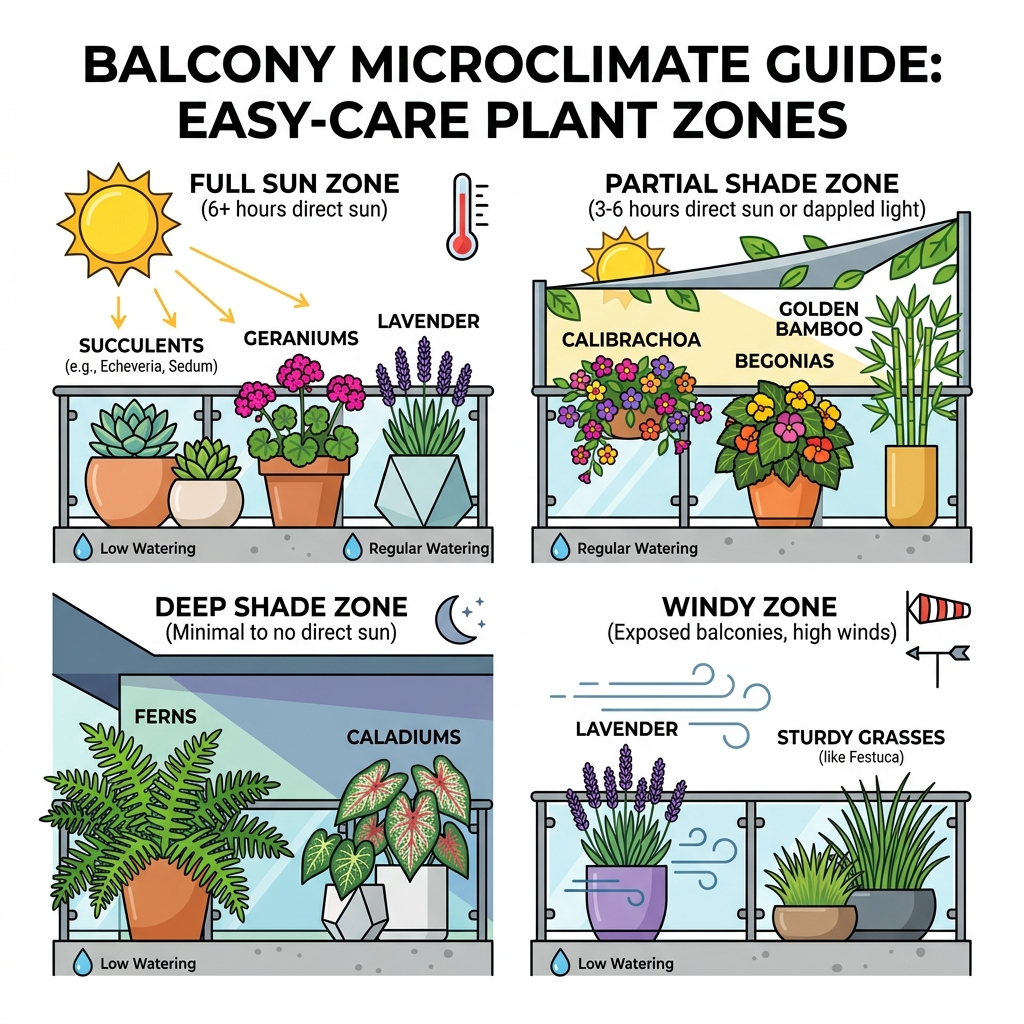
Your balcony is its own microclimate. For example, if you have a south-facing balcony with glass railings, the sun can reflect and intensify the heat, essentially “baking” your plants. Conversely, a north-facing balcony might feel like a “cave,” requiring plants that can photosynthesize in low-light conditions.
Before you head to the nursery, spend a day tracking how many hours of direct sun your space gets. For more help, read our deep dive into understanding sunlight needs for balcony plants.
Best Easy Care Balcony Plants for Full Sun
If your balcony is a sun-drenched paradise for at least 6 to 8 hours a day, you need plants that can handle the “heat island effect” of urban living.
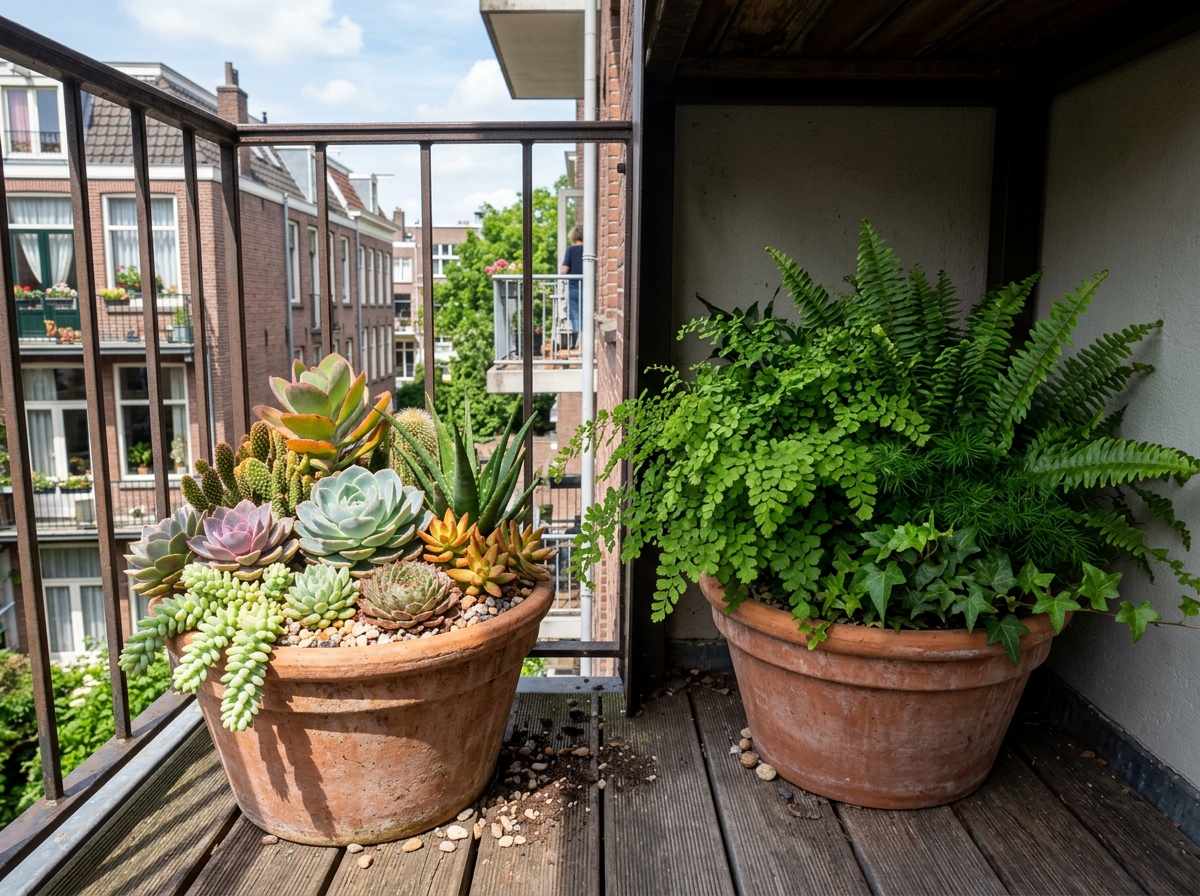
- Succulents: These are arguably the easiest plants for patio pots. Varieties like Echeveria, Sedum, and “Hens and Chicks” store water in their leaves. They thrive on neglect and only need water about once a month.
- Geraniums: A classic for a reason. They love the sun, come in vibrant colors, and are incredibly sturdy. Just make sure to deadhead them occasionally to keep the flowers coming.
- Lantana: These are heat-loving powerhouses. They produce clusters of tiny, bright flowers and are very drought-tolerant once established.
- Calibrachoa (Million Bells): These look like tiny petunias but are much tougher. They are “self-cleaning” and produce hundreds of flowers from spring until the first frost. They thrive in full sun but can handle light shade. If you want to master these, read How to Grow & Care for Calibrachoa (Million Bells) or check out the Calibrachoa ‘Cabaret Orange’ for a stunning, vigorous variety.
For more sun-loving suggestions, see our tips on choosing the right plants for a sunny balcony.
Thriving in the Shadows: Easy Care Balcony Plants for Shade
Don’t despair if your balcony is shaded by other buildings. You can still have a lush oasis. The goal here is to use plants with interesting leaf textures and colors.
- Begonias: These are the stars of the shade. They offer both beautiful foliage and delicate flowers. They love humidity but don’t want to sit in soggy soil.
- Ferns: For a “jungle” vibe, ferns are unbeatable. They handle low light gracefully, though they do appreciate a regular misting if the air is dry.
- Hostas: While often grown in gardens, many smaller Hosta varieties do exceptionally well in pots. They are known for their striking green, blue, or variegated leaves.
- Coleus: If you want color without flowers, Coleus is the answer. Their leaves come in neon greens, deep purples, and fiery reds.
Check out our full list of the best flowers for a shaded balcony and our gardening without sunlight tips for shady balconies for more inspiration.
Wind-Resistant and Hardy Varieties
High-rise balconies often face a challenge that backyards don’t: intense wind. Wind can physically damage brittle plants and rapidly evaporate moisture from the soil.
- Lavender: This is a “best balcony herb” because it is drought-, heat-, and wind-tolerant. It’s hardy in Zones 5-10 and smells amazing.
- Rosemary: Like lavender, rosemary has needle-like leaves that don’t catch the wind as easily as broad-leafed plants. It’s tough, edible, and very low-maintenance.
- Ornamental Grasses: Grasses are built to bend, not break. They add movement and a lovely rustling sound to your balcony.
For more ideas on weather-resistant greenery, see Plants for every kind of balcony.
Functional Benefits of Easy Care Balcony Plants
Beyond just looking nice, easy care balcony plants can solve common urban living problems. Why settle for just a “pretty” plant when you can have one that works for you?
Privacy and Vertical Growth
Living in an apartment often means being a little too close to your neighbors. You can create a natural “green wall” using tall or vining plants.
- Golden Bamboo: This is excellent for creating privacy. It grows 8 to 20 feet tall and can be kept in a large planter. Note: Always keep bamboo in a container so it doesn’t become invasive!
- Mandevilla: A stunning vining plant that can climb a trellis or railing. It produces large, trumpet-shaped flowers and can grow up to 20 feet if given the space.
- Ivy: Classic and nearly indestructible, ivy can be trained to cover a privacy screen or allowed to trail elegantly from hanging baskets.
For more layout inspiration, look at 21 Balcony Garden Ideas for Beginners in Small Apartments and our own top plants for your balcony a selection guide.
Fragrance and Pollinator Attraction
You can turn your balcony into a sensory retreat that also helps the local environment.
- Fuchsia: These are “hummingbird magnets.” Their exotic, drooping flowers are a favorite for pollinators. They prefer cooler spots and consistent moisture.
- Million Bells (Calibrachoa): These don’t just look good; they are also attractive to butterflies. For planting specifics, see Million Bells: Planting, Growing, and Caring for the Trailing Petunia | Almanac.com.
- Jasmine: If you want a balcony that smells like a five-star spa in the evening, Jasmine is the way to go. It’s a vigorous climber that produces highly fragrant white flowers.
Low-Effort Maintenance and Container Strategies
The secret to “easy care” isn’t just the plant; it’s the setup. If you set your plants up for success from day one, your daily maintenance drops to almost zero.
Essential Care Practices for Busy Gardeners
We recommend a “set it and forget it” approach where possible:
- Slow-Release Fertilizer: Instead of remembering to feed your plants every week, mix slow-release fertilizer granules into the soil at the start of the season. This provides a steady stream of nutrients for months.
- Pinch and Trim: For plants like Calibrachoa or Coleus, occasionally “pinching” off the tips of new growth encourages the plant to grow bushier and produce more flowers.
- Seasonal Cleanup: In the fall, remove dead foliage to prevent pests from overwintering in your pots.
- Watering Strategy: Check the soil by sticking your finger in to the second knuckle. If it’s dry, water deeply until water runs out the bottom. On hot, windy days, you might need to do this daily.
For more detailed care, see How to Plant and Grow Calibrachoa or the Calibrachoa Care guide.
Choosing the Right Pots for Easy Care Balcony Plants
The material of your pot dictates how often you’ll be watering.
| Material | Weight | Durability | Moisture Retention |
|---|---|---|---|
| Plastic | Very Light | High | High (Soil stays moist longer) |
| Terra Cotta | Medium | Fragile | Low (Porous; dries out fast) |
| Fiberglass | Light | Very High | Medium |
| Fabric Bags | Very Light | Moderate | High (Great for root health) |
- Self-Watering Pots: These are a lifesaver. They have a reservoir at the bottom that allows the plant to “drink” as needed. Check out our list of the best plants for self watering pots that wont drown.
- Drainage is Non-Negotiable: Never plant directly into a pot without holes. If water can’t escape, the roots will rot, and your “easy care” plant will be dead in a week.
For a deeper look at pot selection, see Container Gardening: Pots Galore!: A Balcony Garden and our guide on top container friendly plants and greenery for your balcony.
Frequently Asked Questions about Easy Care Balcony Plants
How often should I water my balcony plants in the summer?
It depends on the material of your pot and the wind. In peak summer, a small hanging basket might need water twice a day. However, a large plastic pot with a succulent might only need water once every few weeks. Always use the “finger test” to check soil moisture.
Which plants are best for a very windy high-rise balcony?
Look for plants with flexible stems or needle-like leaves. Lavender, Rosemary, and ornamental grasses like Blue Fescue are excellent. Avoid tall, top-heavy plants or those with large, brittle leaves that can catch the wind like a sail.
Can I grow easy-care herbs alongside my flowering plants?
Absolutely! Many herbs are actually quite beautiful. Lavender, Rosemary, and Thyme are very easy-care and look great mixed with flowers like Geraniums. Just ensure they have similar sunlight and water needs (e.g., don’t put a water-loving Mint in the same pot as a drought-loving Succulent).
Conclusion
Creating a beautiful outdoor space doesn’t have to be a second job. By choosing easy care balcony plants that are naturally suited to your sunlight and wind conditions, you can enjoy a lush, green retreat with just a few minutes of effort a week.
At Finance Lixo, we believe in sustainable urban living that fits your lifestyle. Whether you are looking for privacy, fragrance, or just a splash of color, there is a low-maintenance plant ready to thrive on your balcony. Start small, pick the right pot, and watch your apartment garden grow! For more urban gardening inspiration, visit us at https://financelixo.com/.
