
The Best Railing Planters for Every Style
The Best Railing Planters to Transform Any Outdoor Space
The best railing planters let you grow flowers, herbs, and vegetables on your balcony or deck railing — no yard required. This form of container gardening is a perfect solution for urban residents. If you just want a quick answer, here are the top picks by category:
- Best overall: Root & Vessel Countryside Railing Planter (USA-made, BPA-free plastic, no tools needed, fits 2×4 and 2×6 railings)
- Best budget option: TQVAI 10 Inch Railing Planter (4.4/5 stars, 1,247+ reviews on Amazon)
- Best for metal hanging style: Dahey Metal Iron Hanging Flower Pots (4.2/5 stars, 1,784+ reviews on Amazon)
- Best for low maintenance: Adjustable Self-Watering Railing Planter (fits 1″ to 4.25″ railings, no tools, built-in reservoir)
- Best for durability: Flower Window Boxes PVC Over-the-Rail Planter (rot-proof, lifetime guarantee, ships fully assembled)
- Best for wide railings: Demi Railing Planter (fits 1″ to 5.5″ railings, tested from -20F to +120F)
Small balconies and tight outdoor spaces don’t have to feel bare. Railing planters are a simple, low-cost way to add greenery without giving up any floor space.
They sit right on your railing — or hang from it — turning an unused edge into a living garden. You can grow trailing flowers for color, fresh herbs for cooking, or even compact vegetables like cherry tomatoes and peppers.
The tricky part? There are a lot of options out there. Materials, sizes, installation styles, and railing compatibility all vary widely. A planter that works perfectly on a 2×4 wood deck rail might not work at all on a curved metal balcony railing.
This guide breaks down the best options by type, feature, and use case — so you can find the right fit for your space without the guesswork.
Easy best railing planters glossary:
Popular Types of Railing Planters for Your Home
When we look at the best railing planters, we quickly realize they aren’t a “one size fits all” solution. The design of your balcony or deck railing dictates which style will stay secure and look the best.
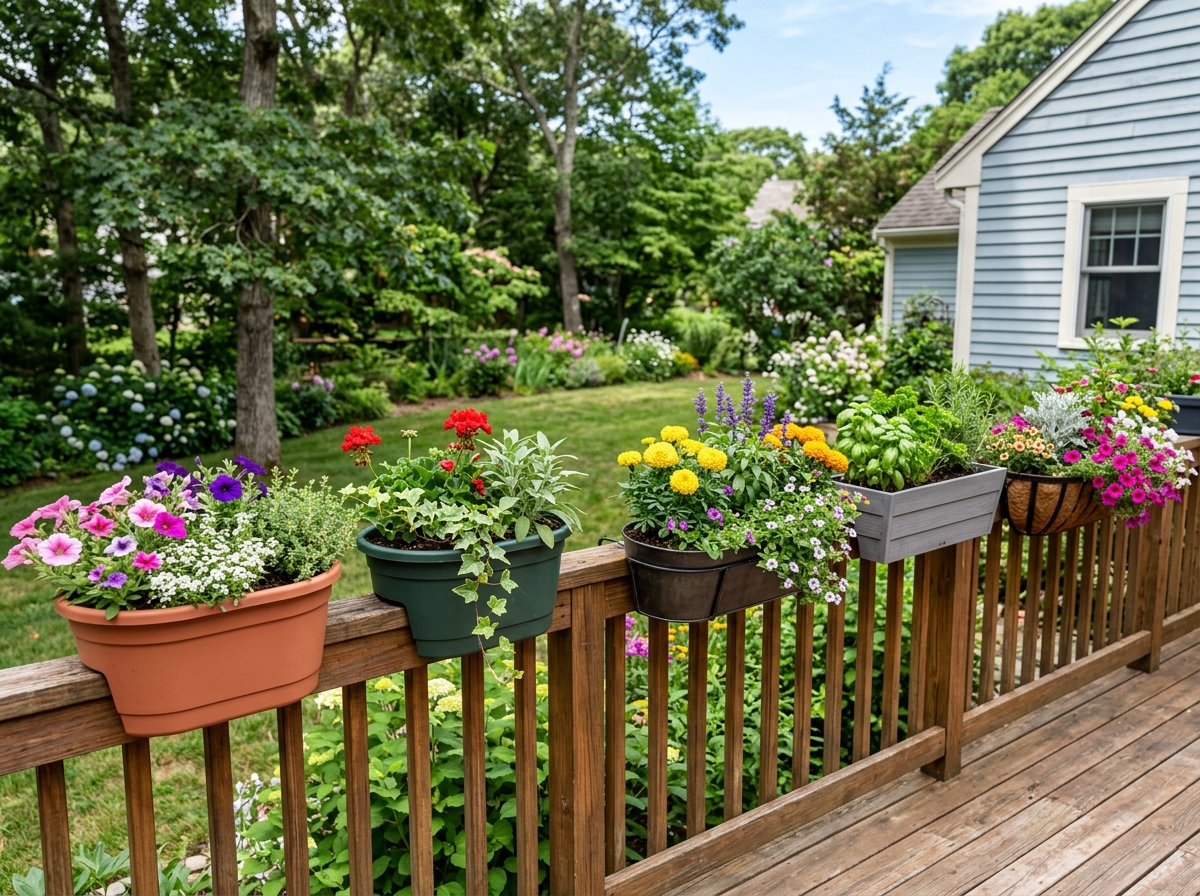
Over-the-Rail (Straddle Style)
These are perhaps the most popular for standard wooden decks. They feature a deep “V” or “U” shaped groove in the center, allowing the planter to sit directly over the rail. Brands like Root & Vessel specialize in these, offering designs that fit standard 2×4 (3.5″ wide) or 2×6 (5.5″ wide) lumber. The beauty of the straddle-style design is that it often requires no tools—you simply place it and fill it.
Rail-Top Planters
Unlike those that hang over both sides, rail-top models sit flat on the upper surface of the railing. These are excellent for wider, flat-top rails and often come with “understrips” or adjustable support bars to keep them level. Some high-end PVC models even offer custom understrip spacing to fit non-standard widths.
Hanging Baskets and Brackets
For metal fences or thin wrought iron railings, hanging pots with hooks are the way to go. Products like the Dahey Metal Iron pots use detachable hooks that loop over the top of the fence. For a more permanent look, heavy-duty steel hooks can support larger wooden or PVC boxes. You can learn more about balcony railing planters in our comprehensive guide.
Self-Watering Reservoirs
If you have a busy schedule or live in a hot climate, self-watering options are game-changers. These include a built-in reservoir at the base. An evaporative grid or wicking system allows the plants to draw water as needed, which can reduce your watering frequency by up to three times.
Key Features to Look for in the Best Railing Planters
Choosing the best railing planters involves more than just picking a pretty color. You need to consider how the material will handle the scorching sun or a surprise frost, which can vary based on your local USDA Plant Hardiness Zone.
Material Durability and Weather Resistance
- Plastic and Resin: High-grade, BPA-free plastic is a top choice because it is lightweight and shatter-resistant. Look for UV-protected materials to ensure the color doesn’t fade after one summer.
- Metal: Often used for a classic “English Garden” look. While beautiful, metal can rust over time if not powder-coated. It also conducts heat, which can dry out soil faster.
- PVC/Vinyl: Solid PVC (like the Versatex used by some manufacturers) is virtually indestructible. It won’t rot, warp, or crack, and it often comes with a lifetime guarantee.
- Cedar: Naturally rot-resistant and beautiful, though it requires more maintenance than synthetic materials to keep its color.
Drainage Systems
Proper drainage is non-negotiable. Without it, your plants’ roots will sit in stagnant water and rot. The best railing planters feature removable drainage plugs or pre-drilled holes. Some even include an “overflow” hole so that during a heavy rainstorm, the water has a way out before it drowns your petunias. Check out these top-rated rail-mounted planters for more on drainage-friendly designs.
Comparison of Planter Materials
| Feature | Plastic/Resin | Metal (Iron/Steel) | PVC/Vinyl | Cedar Wood |
|---|---|---|---|---|
| Weight | Very Lightweight | Heavy | Moderate | Moderate |
| Durability | High (if UV-rated) | Moderate (rust risk) | Lifetime | High (with care) |
| Maintenance | Low | Low to Moderate | Zero | Moderate |
| Aesthetic | Modern/Colorful | Classic/Ornate | Clean/Traditional | Natural/Rustic |
Best Railing Planters for Herbs and Vegetables
If you want to grow food, depth is your best friend. Most herbs and small vegetables need at least 6 to 8 inches of soil depth to thrive.
For a successful edible garden, we recommend planters with a 10-inch depth. This provides enough room for robust root systems. Herbs like basil, parsley, mint, and thyme are perfect candidates for railing life because they enjoy the high sun exposure usually found on balconies. Compact “patio” varieties of cherry tomatoes and peppers also do exceptionally well in these containers.
When planting edibles, always use a high-quality potting mix enriched with organic matter rather than heavy garden soil. For more specific plant ideas, see our guide on balcony railing planters for food.
Best Railing Planters for Small Balconies and Privacy
Railing planters are secret weapons for urban privacy. By choosing tall, upright plants or thick, cascading vines, you can create a natural screen between you and the neighbors.
To maximize privacy, look for “cascading” or “trailing” plants like wave petunias or sweet potato vines. These will spill over the edges, creating a wall of color. Alternatively, planting tall ornamental grasses or even bamboo-like reeds in a series of railing boxes can block the view from the street while still letting light through. If you’re tired of being on display, stop being a wallflower with these railing planter ideas.
Installation Methods and Railing Compatibility
Installation is where most people get stuck. You don’t want to buy a beautiful set of boxes only to find they won’t sit level on your specific fence.
No-Tools Installation
The easiest best railing planters use a “place and plant” method. These are designed to straddle the rail. However, keep in mind that these usually only fit standard 2×4 or 2×6 wood rails. If your rail is slightly narrower, the planter might feel loose. A pro tip is to use small wooden wedges or “stabilization wedges” tucked underneath to keep the box from rocking.
Brackets and Universal Hooks
For metal or vinyl railings, you’ll likely need brackets. Some planters come with adjustable brackets that can fit anything from a 1-inch metal bar to a 4-inch wide rail. If your chosen planter doesn’t have built-in hooks, you can find heavy-duty balcony railing hooks that allow you to hang almost any standard window box.
Safety First
If you live on a second story or higher, securing your planters is a safety requirement. Even if a planter “sits” securely, high winds can be dangerous. We always suggest using a couple of stainless steel screws to anchor the planter directly to the railing if the material allows, or using zip ties as an extra “fail-safe” measure. Don’t let your plants hang out alone—make sure they are tethered!
Maintenance and Seasonal Care for Railing Gardens
Railing planters are exposed to more wind and sun than pots on the ground, which means they can dry out faster.
Watering and Soil
Because they are elevated, these planters lose moisture quickly. During the height of summer, you might need to water daily. This is where self-watering wicks and reservoirs become incredibly valuable, as they can keep the soil moist for days at a time. Always use a light, airy potting mix; heavy soil can become compacted and prevent water from reaching the roots.
Fertilization
In a confined space, plants quickly use up the nutrients in the soil. We recommend a regular fertilization schedule—usually every two weeks during the growing season—to keep your flowers blooming and marvelous.
Winterizing Your Planters
Can you leave them out all year? It depends on the material.
- Resin and PVC: These are usually frost-resistant and can stay out. However, you should empty the soil or ensure the drainage holes are clear so that freezing water doesn’t crack the container.
- Metal and Ceramic: These should be brought inside to prevent rust or cracking from ice expansion.
- Soil Replacement: It’s a good practice to replace at least the top half of your soil every spring to refresh the nutrients and remove any pests that may have overwintered.
Frequently Asked Questions about Railing Planters
Do railing planters need drainage holes?
Absolutely. Without drainage, water pools at the bottom, leading to root rot and “drowning” your plants. If your planter doesn’t have them, you can usually drill a few 1/4-inch holes in the bottom yourself.
How do I secure a loose planter on a narrow railing?
If your over-the-rail planter wobbles, it’s likely because your railing is thinner than the planter’s groove. You can fix this by sliding “shims” or small blocks of wood into the gap. Some brands also sell specific stabilizer pieces for this exact reason.
Can I grow plants year-round in these containers?
Yes, if you choose the right plants for your climate. In warmer areas, you can swap summer petunias for winter pansies or kale. In colder regions, you might plant small evergreens or winter berries, provided the planter material is rated for freezing temperatures (like high-quality resin or PVC).
Conclusion
Finding the best railing planters is the fastest way to turn a boring balcony into a vibrant outdoor sanctuary. Whether you’re looking for the ease of a no-tools resin box or the lifetime durability of a custom PVC planter, there is a style that fits your railing and your aesthetic.
By focusing on proper drainage, selecting the right material for your weather, and ensuring a secure fit, you can enjoy a lush garden right at your fingertips. We love how these simple additions can transform even the smallest apartment space into a green oasis.
Ready to get your hands dirty? Start your balcony herb garden today and enjoy fresh flavors all season long!
