
Genius Ways to Turn Your Tiny Balcony Into a Green Oasis
Your Tiny Balcony Can Become a Green Oasis — Here’s How
Apartment balcony gardening ideas can transform even the smallest outdoor space into a thriving, personal sanctuary — and you don’t need a yard, a big budget, or a green thumb to get started.
Here are the most popular and effective ways to green up your balcony:
- Go vertical — use wall planters, ladder shelves, and tiered stands to multiply your growing space without using floor area
- Start with herbs — basil, mint, and thyme thrive in small pots and are nearly impossible to kill
- Use railing planters — attach them to your balcony edge for flowers, herbs, or trailing greens
- Try hanging baskets — perfect for strawberries, petunias, or cascading ivy
- Grow compact vegetables — cherry tomatoes, lettuce, and bush beans do well in containers
- Add privacy with climbing plants — star jasmine or clematis on a trellis creates a green screen
- Choose lightweight containers — plastic, fabric grow bags, or fiberglass keep weight manageable
The good news? Studies show that just looking at a garden can lower blood pressure and reduce stress. Your balcony isn’t just a place to grow plants — it’s a place to breathe.
Whether you have a tiny 4×6 foot space or a generous wraparound terrace, this guide covers everything from planning and plant selection to watering, pest control, and design. Let’s dig in.
Essential Planning for Your Apartment Balcony Gardening Ideas
Before you rush to the garden center and load your car with terra cotta pots, we need to talk about the “boring” but vital part: planning. Skipping this stage is the number one reason balcony gardens fail. We’ve seen many enthusiastic gardeners lose their deposits because they didn’t check the rules first!
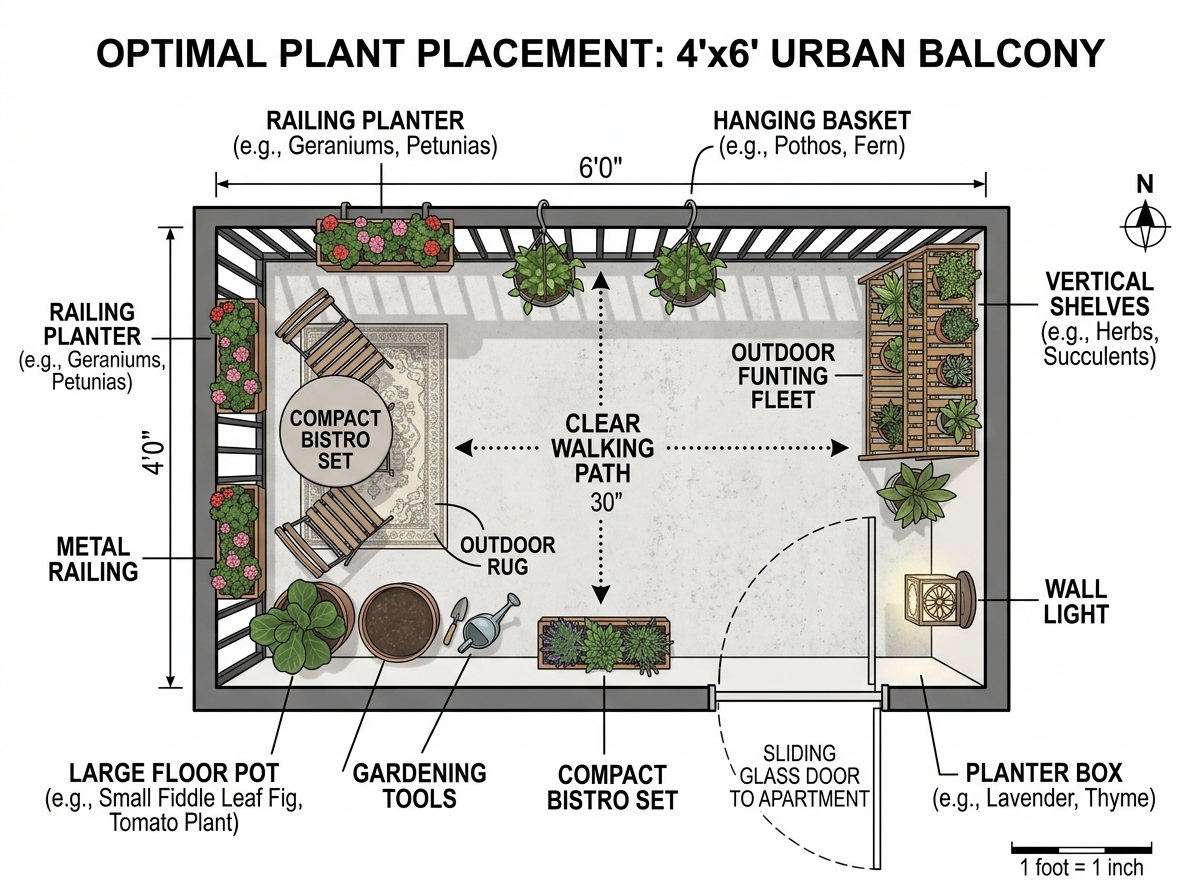
Start by grabbing a tape measure. Knowing the exact dimensions of your space is fundamental for effective design. A standard 4×6 foot balcony can actually support 10 to 20 small containers if you plan correctly. While you’re out there, look at the “bones” of the space. Are there sturdy railings? Is the floor concrete or wood? Where is your nearest water source? If you don’t have an outdoor spigot (and most apartments don’t), you’ll need to plan for hand-watering or a kitchen-sink hose attachment.
Building regulations are your next stop. Check your lease or HOA rules regarding weight limits, hanging items, and aesthetic guidelines. Some buildings forbid anything hanging over the railing for safety reasons, while others have strict rules about the color of your pots. For a deep dive into the logistics, check out The Ultimate Apartment Balcony Gardening Guide.
Assessing Sunlight for Your Apartment Balcony Gardening Ideas
Sunlight is the “fuel” for your plants, and balconies are notorious for having tricky microclimates. Unlike a backyard, a balcony is often boxed in by walls or the balcony above it. We recommend tracking the sun for one full day. Check your balcony every hour from 8 AM to 6 PM.
- Full Sun (6+ hours): Usually south- or west-facing. This is “tomato territory.” You can grow peppers, basil, and most flowering annuals.
- Partial Sun/Shade (3-6 hours): East-facing balconies get gentle morning sun. This is perfect for leafy greens, root veggies like radishes, and herbs like parsley or chives.
- Full Shade (Less than 3 hours): North-facing balconies or those heavily shaded by other buildings. Don’t despair! You can still grow lush ferns, hostas, caladiums, and even mint or spinach.
For more tips on handling high-heat areas, see our guide on Choosing the Right Plants for a Sunny Balcony.
Understanding Weight and Safety Limits
This is the “safety first” section. Soil is heavy. Water is heavier. A 15-gallon container filled with wet soil can weigh between 80 and 100 pounds! Most residential balconies are engineered to hold about 40 to 60 pounds per square foot.
To keep your balcony (and your landlord) happy, we suggest:
- Using lightweight materials: Swap heavy ceramic or terra cotta for resin, fiberglass, or fabric grow bags.
- Strategic placement: Place your heaviest pots near load-bearing walls or over structural beams rather than right at the edge of the slab.
- Lightweight soil: Never use “garden soil” from the ground. Use a high-quality potting mix with perlite or vermiculite to keep the weight down and the drainage up.
Ignoring these limits can lead to structural damage or even balcony failure. Read more about Avoiding Pitfalls: Common Balcony Gardening Mistakes to stay safe.
Maximizing Space with Vertical and Smart Layouts
When you’re dealing with a tiny footprint, the only way to go is up! Thinking “up” rather than “out” is the ultimate game-changer for apartment balcony gardening ideas. Vertical planting turns blank walls into living art without costing you extra rent or losing floor space.
One of our favorite tricks is using a freestanding ladder. You can lean a thrift-shop ladder against the wall and stack pots on the rungs. It’s renter-friendly because it requires zero drilling. You can also use “S-hooks” to hang lightweight pots from your railing or tension rods to create a floor-to-ceiling plant display. For more inspiration, explore our Vertical Balcony Garden Ideas and learn about Maximizing Limited Space with Balcony Gardening.
Creative Apartment Balcony Gardening Ideas for Small Spaces
Don’t let a small space limit your imagination. You can create a “perimeter plan” by lining the edges of your balcony with narrow planters, leaving an 18-24 inch walking path in the center. This makes the space feel like a lush hallway rather than a cluttered closet.
Railing planters are essential—they act like a tiny parade of greenery right at eye level. If you’re a renter, look for “over-the-rail” brackets that don’t require screws. Another genius move? Foldable furniture. Use a bistro set that can be tucked away when you need to do heavy gardening work. Check out these Unleashing Your Green Thumb: Small Balcony Gardening Ideas for more space-saving hacks.
Designing for Privacy and Aesthetics
Your balcony should be an extension of your indoor living space. If your neighbors are a little too close for comfort, use your garden to create a natural screen. Columnar evergreens (like Sky Pencil Holly) or a trellis covered in climbing jasmine can block the view while providing a wonderful scent.
To make the space feel “finished,” add an outdoor rug to cover ugly concrete and incorporate some mood lighting. String lights or solar-powered lanterns can transform a daytime “work” garden into a nighttime oasis. For a complete aesthetic overhaul, see How to Master Small Balcony Garden Decoration Ideas.
Choosing the Right Containers and Soil
The container is your plant’s entire world. Choosing the right one is about more than just looks.
| Material | Pros | Cons |
|---|---|---|
| Plastic/Resin | Lightweight, retains moisture, cheap | Can look “cheap,” might fade in sun |
| Fabric Bags | Excellent drainage, air-prunes roots, very light | Dries out quickly, can look messy |
| Terra Cotta | Beautiful, breathable | Very heavy, breaks easily, dries out fast |
| Fiberglass | Modern look, lightweight, durable | Can be expensive |
No matter what material you choose, drainage is non-negotiable. If your pot doesn’t have holes, your plants will drown. We like to place a coffee filter or a small piece of screen over the drainage holes to keep the soil from washing out onto the neighbor’s balcony below. If you’re feeling crafty, try our DIY Balcony Planters: A Step-by-Step Guide.
Selecting Plants for Your Balcony Environment
Success starts with picking the right “roommates.” Not every plant wants to live on a balcony. High-rise balconies can be incredibly windy, which dries out soil and can snap tall, brittle stems. If you’re high up, choose low-profile plants or sturdy succulents.
- For Beginners: Start with “unkillable” herbs like mint (keep it in its own pot, or it will take over!) and chives.
- For Fragrance: Lavender, jasmine, and rosemary make every breeze smell like a spa.
- For Color: Petunias and geraniums are classic for a reason—they bloom all summer with minimal fuss.
Unsure what fits your vibe? See What Can You Grow in a Balcony Garden? for an exhaustive list.
Edible Apartment Balcony Gardening Ideas
Yes, you can grow dinner on your balcony! The secret is looking for “determinate” or “dwarf” varieties. These are plants bred specifically to stay small and bushy rather than turning into 10-foot monsters.
- Cherry Tomatoes: Look for varieties like ‘Tiny Tim’ or ‘Patio.’ They are high-yield and fit perfectly in a 5-gallon pot.
- Salad Greens: Lettuce and spinach are the “instant gratification” crops. You can harvest them in as little as 30 days.
- Strawberries: These are perfect for hanging baskets or “strawberry towers” where they can cascade down.
- Bush Beans: Unlike pole beans, these don’t need a massive trellis and produce plenty of pods for a summer salad.
For more food-growing tips, check out Easy Vegetables to Grow on Your Balcony.
Maintenance Tips for a Thriving Urban Garden
Container gardens are high-maintenance compared to in-ground gardens. Because the roots are confined, they rely entirely on you for food and water. In the heat of summer, a balcony pot might need water twice a day!
We recommend the “finger test.” Stick your finger two inches into the soil. If it feels dry, it’s time to water. When you water, do it thoroughly until you see water coming out of the bottom holes. This ensures the entire root ball is hydrated. Since frequent watering leaches nutrients out of the soil, you’ll need to fertilize regularly. A balanced liquid fertilizer (like a 5-5-5 NPK) every 2-4 weeks during the growing season will keep your plants lush.
If daily watering sounds like a chore, consider Setting Up Drip Irrigation for Your Balcony Garden or investing in Essential Balcony Garden Tools You Must Have.
Managing Pests and Seasonal Changes
Even on the 20th floor, bugs will find you. Aphids, fungus gnats, and spider mites are the most common uninvited guests. We suggest keeping a bottle of Neem oil or insecticidal soap on hand for early intervention. Companion planting—like putting marigolds near your tomatoes—can also help deter pests naturally.
As the seasons change, so should your garden. When the first frost looms, bring tender tropicals and herbs indoors. For hardier plants, you can use “frost cloth” or move pots closer to the warmth of the apartment walls. For a month-by-month breakdown, see the Urban Dwellers Guide to Balcony Gardening.
Frequently Asked Questions about Balcony Gardening
What are the best low-maintenance plants for beginners?
If you’re worried about your “black thumb,” start with succulents, snake plants, or ZZ plants (if your balcony is shaded). For outdoor-specific plants, geraniums and mint are incredibly resilient. They can handle a bit of neglect and still look great.
How do I prevent water from dripping onto my neighbors’ balconies?
This is the quickest way to make enemies in an apartment building! Always use saucers or drip trays under every single pot. We also recommend watering slowly in the morning so the excess moisture has time to evaporate rather than pooling.
Can I grow vegetables on a north-facing balcony?
Yes, but you have to be selective. You won’t be able to grow sun-hogs like tomatoes or peppers. Instead, focus on leafy greens (lettuce, kale, arugula), herbs (parsley, mint, cilantro), and root veggies like radishes. These plants actually prefer the cooler, indirect light of a north-facing space.
Conclusion
Creating a balcony garden is one of the most rewarding “genius ways” to improve your quality of life in the city. It’s about more than just plants; it’s about claiming a piece of nature for yourself. Whether you’re snipping fresh basil for a homemade pizza or just enjoying a quiet coffee surrounded by greenery, your tiny oasis will quickly become your favorite “room” in the house.
At Finance Lixo, we believe in making the most of every square foot you have. Sustainable, green living doesn’t require a massive estate—it just requires a bit of creativity and a few good pots. Ready to turn that “dull ledge” into a masterpiece? Start your journey at Finance Lixo and let’s grow something beautiful together.
