
Easy Shade Loving Balcony Flowers That Actually Thrive
Your Shady Balcony Can Be a Green Oasis — Here’s How
Shade loving plants for balcony gardens are the secret to turning a dim, north-facing outdoor space into something genuinely beautiful. If your balcony sits in the shadow of other buildings, an awning, or tall trees, you are not out of luck. You just need the right plants.
Best shade loving plants for balconies — quick answer:
| Plant | Type | Light Needed |
|---|---|---|
| Begonias | Flowering | 2-4 hrs indirect |
| Fuchsia | Flowering | 2-4 hrs indirect |
| Impatiens | Flowering | 2-4 hrs indirect |
| Hostas | Foliage | 2-4 hrs indirect |
| Ferns | Foliage | 1-3 hrs indirect |
| Coleus | Foliage | 2-4 hrs indirect |
| Heuchera | Foliage | 2-4 hrs indirect |
| Mint | Herb | 3-4 hrs indirect |
| Parsley | Herb | 3-4 hrs indirect |
| Chives | Herb | 3-4 hrs indirect |
Many balcony gardeners assume shade means nothing will grow well. But the opposite is often true. Shade can actually protect container plants from heat stress and reduce how often you need to water.
The key challenge is understanding exactly how much shade you are dealing with. A balcony that gets two hours of morning sun behaves very differently from one that never sees direct sunlight at all.
Think of it this way:
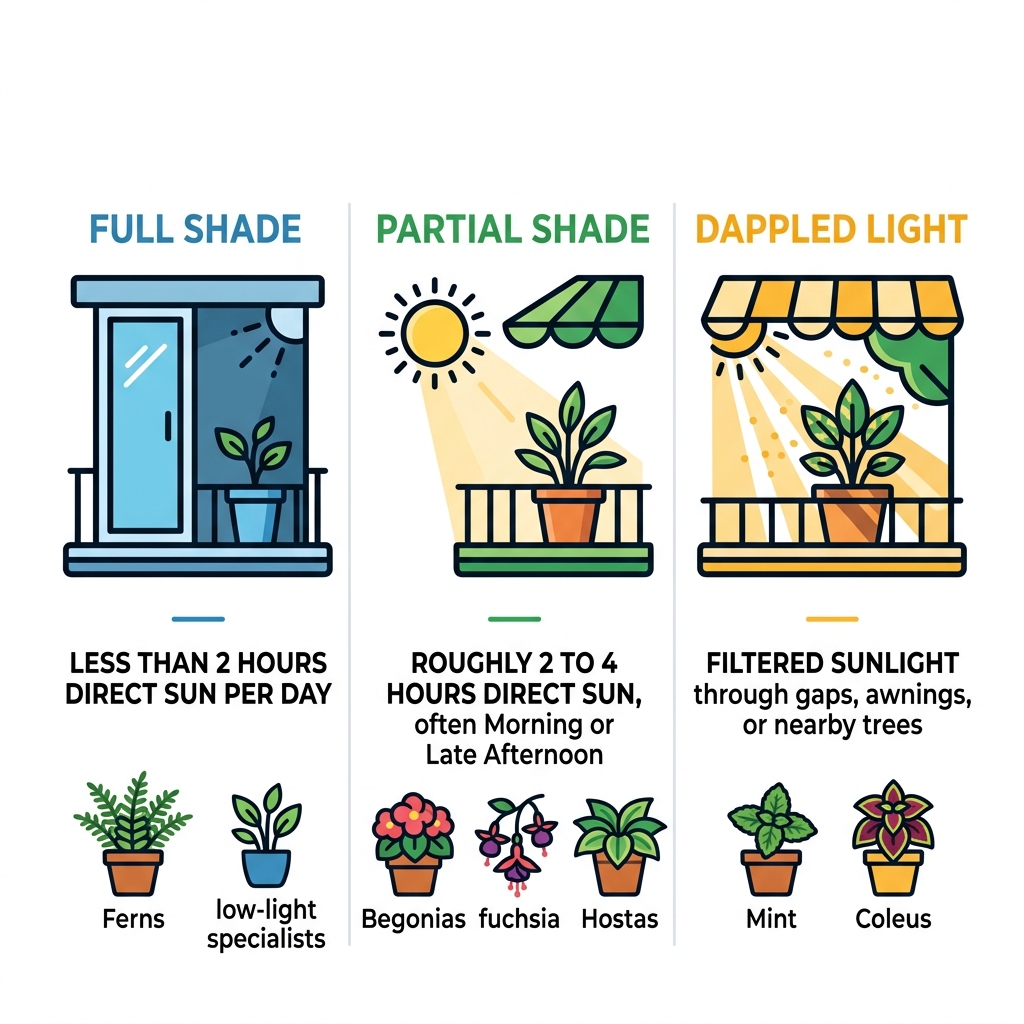
- Full shade — less than 2 hours of direct sun per day
- Partial shade — roughly 2 to 4 hours of direct sun, often morning or late afternoon
- Dappled light — filtered sunlight through gaps, awnings, or nearby trees
Most shade loving balcony plants thrive in partial shade or dappled light. Even a handful of low-light specialists can handle full shade beautifully.
Top Shade Loving Plants for Balcony Gardens
When we look at our balconies, we shouldn’t see shadows as a limitation, but as an opportunity to create a lush, temperate retreat. Many of the most stunning plants in the world actually prefer the cool, protected environment of a shaded corner. In fact, research shows that nearly 87% of common shade-loving plants are evergreen or offer winter interest, meaning your balcony won’t look like a graveyard once the summer heat fades.
Begonias
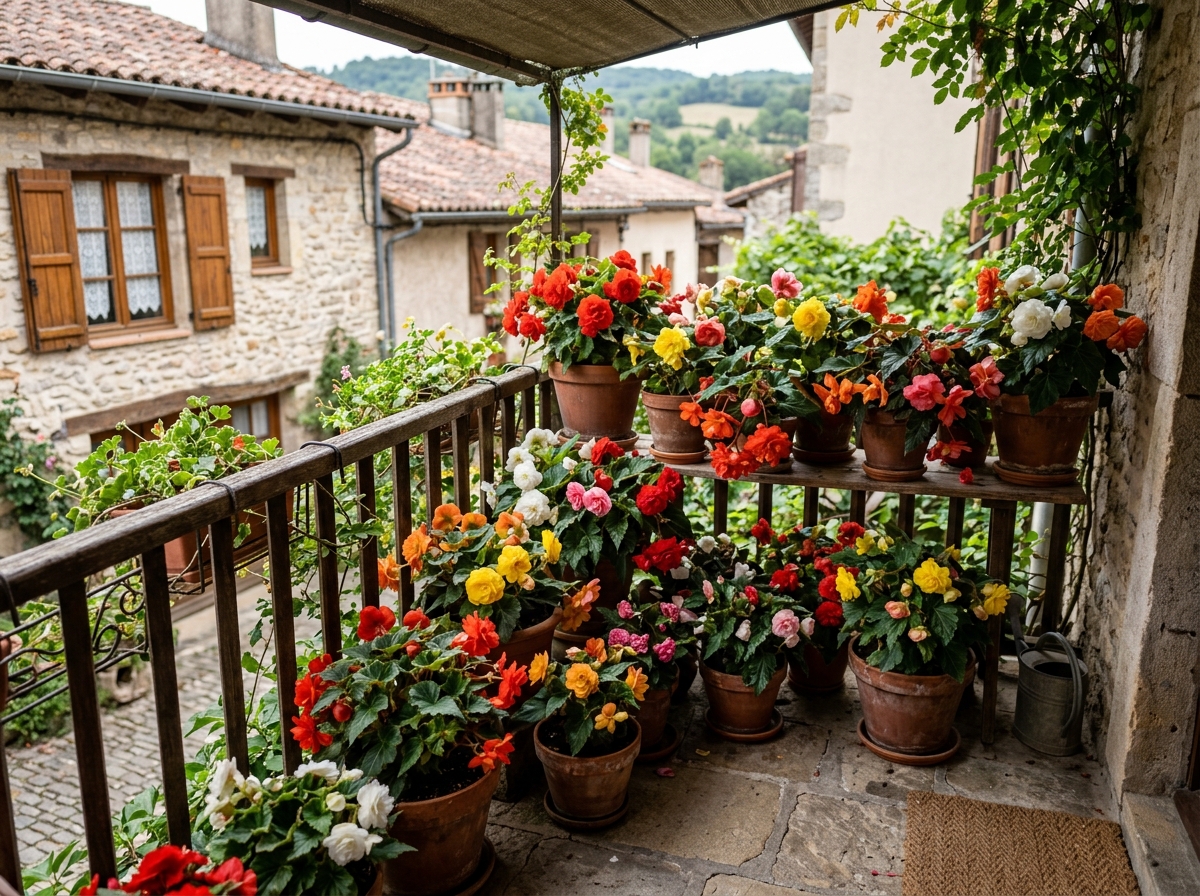
Begonias are the heavy hitters of the shade world. Specifically, tuberous begonias can bloom all the way until October in partial shade. They are fantastic “thrillers” for large combination containers. Just be careful not to let them get waterlogged; they like moist soil but hate “wet feet.” For more inspiration on choosing the right blooms, check out our guide on the Best Flowers for a Shaded Balcony.
Fuchsias
If you want an exotic look, Fuchsias are your best friend. Originally from South and Central America, these plants produce pendulous, bell-shaped flowers that hummingbirds adore. They prefer the cooler temperatures found in the shade and should be pruned back to bare stems every January to encourage fresh, vigorous growth.
Hydrangeas
While many think of these as massive garden shrubs, dwarf varieties perform exceptionally well in balcony containers. They provide structure and “bones” to your garden. Because they have large leaves, they act as a great visual anchor against smaller, daintier flowers.
25 Plants for Shady Container Gardens
If you are looking for a massive variety, there are many plants for shady container gardens that we recommend exploring. From the architectural height of Bamboo to the trailing grace of English Ivy, the options are vast. Many of these are considered “almost un-killable,” making them perfect for beginners who might be nervous about their green thumb.
Flowering Favorites for Shady Spots
Who says you need a sun-drenched patio to have a riot of color? Some of the most prolific bloomers on the market are actually shade loving plants for balcony environments.
- Busy Lizzies (Impatiens): These are a shade garden classic for a reason. They bloom from May until October and come in almost every color imaginable. They are sensitive to cold, so wait until mid-May to plant them outside.
- Torenia (Wishbone Flower): An underutilized gem, Torenia offers unique, trumpet-shaped flowers with a “wishbone” structure inside. They love filtered light and stay compact, making them perfect for window boxes.
- Lobelia: Known for its intense electric blue hues, Lobelia cascades beautifully over the edges of pots. It thrives in the cooler temperatures of a shaded balcony where sun-loving plants might wilt.
- Primrose: Perfect for early spring color, Primroses provide bright, cheerful blossoms when the rest of the garden is still waking up.
To keep these beauties blooming, remember to “deadhead”—the process of pinching off faded flowers. This tells the plant to stop making seeds and start making more petals! You can find more specific variety recommendations in our Best Flowers for a Shaded Balcony list.
Stunning Foliage and Visual Interest
In a shade garden, foliage is often the star of the show. Since flowers might be slightly less dense than in full sun, we rely on leaf texture and color to provide year-round beauty.
- Coleus: Available in dizzying patterns of neon green, deep burgundy, and hot pink, Coleus is essentially a living painting. It’s incredibly easy to grow and can be used as a “filler” or “thriller” in your pots.
- Caladiums: These “Angel Wings” have large, heart-shaped leaves with white or pink veining. They thrive in 4-6 hours of indirect light.
- Hostas: The kings of shade. Hostas come in everything from miniature sizes to giant blue-leafed varieties. They are exceptionally hardy and return year after year.
- Heuchera (Coral Bells): These offer stunning ruffled leaves in shades of purple, silver, and lime. They have shallow roots, making them perfect for shallow balcony containers.
- Ferns: Nothing says “lush” like a Boston or Maidenhair fern. They thrive on the higher humidity often found on shaded balconies. If you’re looking to bring some of that greenery inside as well, take a look at The Best Indoor Plants for Your Balcony.
Growing Herbs and Edibles in Limited Light
Most people think you need a farm in the sun to grow food. We are here to tell you that’s a myth! While you might not be growing giant pumpkins, many leafy greens and herbs actually prefer the protection of a shaded balcony. In fact, they can do remarkably well with only 3-4 hours of indirect light.
The Secret to Shady Herbs
The general rule for edibles is: if you eat the leaf or the root, it can handle some shade. If you eat the fruit (like a tomato), it needs sun.
- Mint: This is nearly impossible to kill and actually prefers part-shade. It’s a thirsty plant, so water it more than you think you should!
- Parsley and Chives: These hardy herbs stay green and productive in low light.
- Leafy Greens: Lettuce, spinach, and kale often “bolt” (turn bitter and go to seed) in the sun. In the shade, they stay sweet and tender for much longer.
- Basil: While it loves sun, you can successfully grow basil on a shaded balcony by focusing on reflective light and avoiding overwatering.
For a deeper dive into edible urban gardening, check out our guide on What Can You Grow in a Balcony Garden?.
Shade Loving Plants for Balcony Herb Gardens
If you want to get more adventurous, try these moisture-loving, shade-tolerant options:
- Wild Garlic: Thrives in woodland-style shade.
- Lemon Balm: A member of the mint family that adds a wonderful scent to your balcony.
- Wasabi & Woodruff: These are specialized shade lovers that can turn your balcony into a gourmet pantry.
Plants in the shade grow a bit slower, so be patient with your harvest. You can find more technical advice in our article on Gardening Without Sunlight: Tips for Shady Balconies.
Essential Care and Design Tips for Low Light
Caring for shade loving plants for balcony gardens is different from caring for sun-drenched ones. The biggest mistake we see? Overwatering. Because the sun isn’t baking the soil, water evaporates much slower.
The Right Foundation
Don’t just grab a bag of “dirt” from the backyard. For balcony containers, you need a lightweight potting mix.
- Drainage is King: Ensure your pots have plenty of holes. Shade plants are prone to root rot if they sit in soggy soil.
- Cocopeat & Perlite: We highly recommend adding cocopeat to your mix. It improves aeration and holds just enough moisture without becoming heavy.
- Fertilization: Since shade plants grow slower, they need less food. Use a balanced liquid fertilizer at half-strength every 4-6 weeks during the growing season.
For more on managing these environmental factors, read Understanding Sunlight Needs for Balcony Plants and explore our list of The Easiest Low-Maintenance Balcony Plants for Busy Gardeners.
Maximizing Light for Your Shade Loving Plants for Balcony
If your balcony feels more like a cave, we can use some “smoke and mirrors” (literally) to brighten things up.
- Reflective Surfaces: Hang a mirror on the back wall of the balcony to bounce ambient light toward your plants.
- White Everything: Use white or light-colored pots and furniture. Light colors reflect light, while dark colors absorb it.
- Railing Planters: Move your plants as close to the edge of the balcony as possible to catch the maximum amount of “sky light.”
- Vertical Gardening: Use wall-mounted planters. Light levels are often higher a few feet off the ground than they are on the floor.
- Pot Rotation: Give your pots a quarter-turn every week. This prevents the plant from becoming “leggy” as it reaches toward the light.
If you have a particularly dark spot, you might even consider specialized indoor/outdoor lighting. Learn more about light management in The Ultimate Guide to Monstera Light Needs.
Frequently Asked Questions about Shady Balconies
Why are my shade plants getting leggy and yellow?
“Leggy” growth (long, thin stems with few leaves) is a cry for help—your plant is stretching to find more light. Yellow leaves are often a sign of overwatering or a nitrogen excess. In low light, plants don’t process nutrients as fast, so “overfeeding” can actually burn them. If you’re struggling with a particularly dark apartment or balcony, see our tips on The Best Plants for Your Cave of an Apartment.
How often should I water plants in the shade?
There is no set schedule, but generally, you will water less than your sun-loving friends. Use the “finger test”: stick your finger two inches into the soil. If it feels damp, walk away. Only water when the top inch feels dry to the touch.
Which shade-loving balcony plants are safe for pets?
Safety first! If you have a furry friend, stick to these pet-safe options:
- Spider Plants: Tough as nails and totally safe.
- Boston Ferns: Classic, lush, and non-toxic.
- Calathea: Offers beautiful patterns and is pet-friendly.
- Avoid: Peace Lilies and certain Begonias can be toxic if ingested.
For a complete safety breakdown, check out our Top Plants for Your Balcony: A Selection Guide.
Conclusion
At Finance Lixo, we believe that everyone deserves a slice of nature, regardless of which way their balcony faces. Embracing shade loving plants for balcony gardening isn’t just about settling for what grows in the dark; it’s about discovering a world of vibrant textures, cooling greens, and resilient blooms that sun-drenched gardens can only dream of.
By choosing the right containers, maximizing your ambient light, and following a tailored care routine, you can transform your “cave” into a thriving ecosystem. Whether you’re growing fresh mint for a summer mojito or admiring the neon leaves of a Coleus, your urban oasis is just a few pots away.
Ready to turn your shadows into a sanctuary? Start your balcony garden journey today and join a community of urban gardeners who know that the best things often grow in the shade.
