
The Best Shady Balcony Plants for Your Urban Oasis
Shady Balconies Don’t Have to Be Bare
Shady balcony plants are the solution for urban apartment dwellers who want greenery but don’t get much sun. And there are more great options than you might think.
Here are some of the best plants that thrive in low-light balcony conditions:
- Fuchsia – prolific blooms all season, loves shade
- Begonia – flowers until October, handles partial shade well
- Hosta – lush foliage, one of the most reliable shade plants around
- Heuchera (Coral Bells) – colorful leaves, compact, perfect for pots
- Coleus – bold foliage color without needing flowers or sun
- Impatiens – classic flowering shade annual, blooms from summer to frost
- Ferns – elegant texture, thrives in low light
- Mint & Parsley – edible herbs that actually prefer some shade
Many city balconies face north, sit in the shadow of nearby buildings, or only catch a few hours of indirect light each day. That can make plant selection feel overwhelming.
But here’s the thing: shade is actually an advantage for container gardening. Pots dry out fast in full sun, stressing roots that can’t reach deep moisture like in-ground plants can. A shady balcony often means less watering, more lush foliage, and a calmer, greener space.
Below, you’ll find the best shady balcony plants for flowers, foliage, and year-round interest — plus simple care tips to keep them thriving.
Understanding Light Levels for Shady Balcony Plants
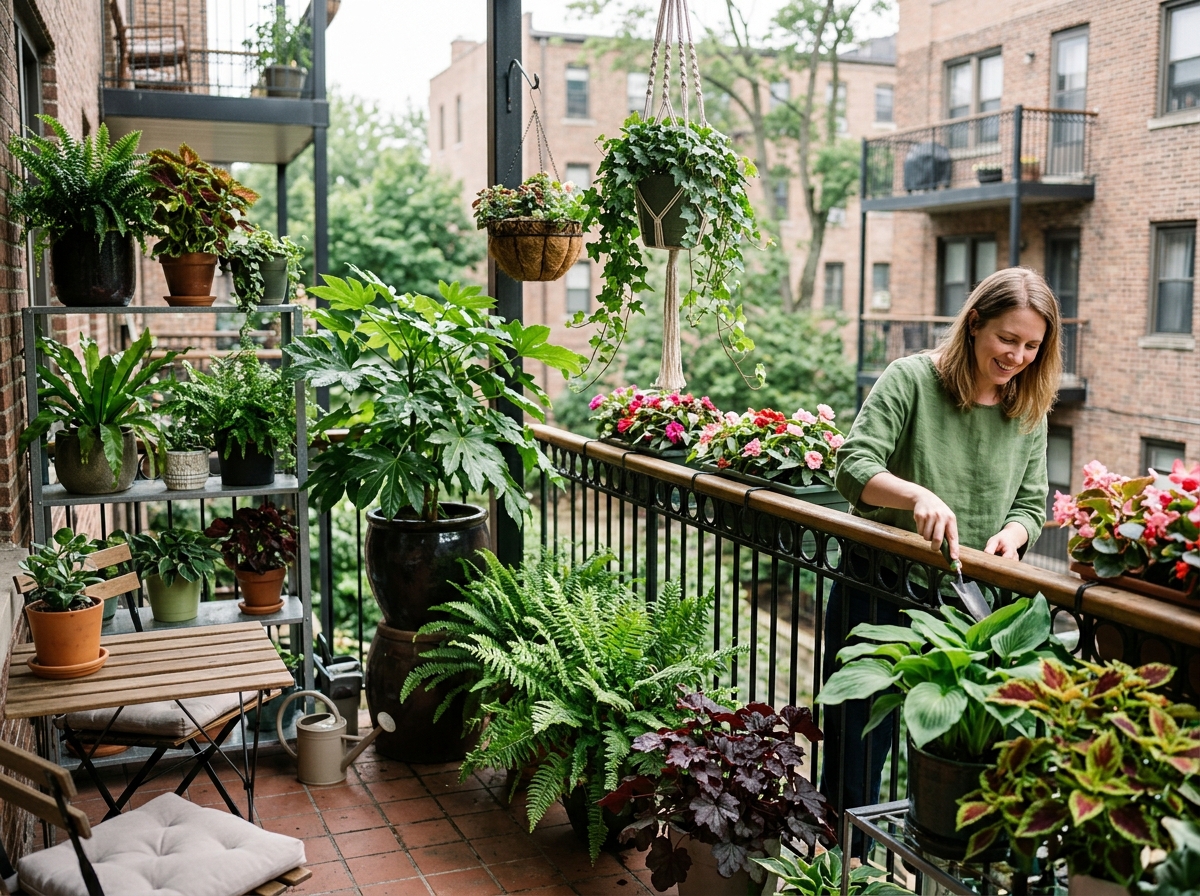
Before we start shopping for pots and soil, we need to talk about what “shade” actually means in an urban environment. Not all shade is created equal! On a balcony, your light levels are usually dictated by the direction the building faces and the “urban canyons” created by neighboring skyscrapers.
The North-Facing Challenge
If your balcony faces north, you likely have “full shade.” This means you rarely, if ever, get direct beams of sunlight hitting your plants. However, don’t despair! This is often “bright shade,” where reflected light from windows or light-colored buildings provides enough energy for many shady balcony plants to thrive.
Dappled Light and Partial Shade
Dappled light is what you get when sun filters through the leaves of a nearby tree or a balcony railing. Partial shade usually means the spot gets about 3 to 6 hours of sun, often in the morning or late afternoon. Interestingly, many plants that are labeled for “full sun” actually prefer partial shade when grown in containers, as the pots can overheat in midday glare.
The Urban Canyon Effect
In the city, shade isn’t just about the sun’s path; it’s about the buildings around you. You might live on a south-facing floor but still have a “shady” balcony because a taller building across the street blocks the light. For more detailed strategies on handling these specific environments, check out our guide on gardening without sunlight: tips for shady balconies.
| Light Type | Hours of Direct Sun | Best Plant Types |
|---|---|---|
| Full Shade | 0 – 2 hours | Ferns, Hostas, Ivy |
| Dappled Shade | Filtered all day | Begonias, Coleus |
| Partial Shade | 3 – 6 hours | Fuchsia, Hydrangea |
Top Flowering and Foliage Plants for Shady Balconies
When we design a shady oasis, we like to use the “thriller, filler, spiller” formula. This ensures your containers look professional and lush.
- The Thriller: A tall, eye-catching plant (like a Fatsia or a tall Coleus).
- The Filler: Mounded plants that hide the soil (like Begonias or Heuchera).
- The Spiller: Plants that tumble over the edge (like Ivy or Creeping Jenny).
By mixing textures—pairing the soft, large leaves of a Hosta with the delicate, subdivided fronds of a fern—you create visual interest even when nothing is in bloom. For a deeper dive into choosing the right blossoms, see our article on the best flowers for a shaded balcony.
Best Flowers for Shady Balcony Containers
Fuchsia These are the undisputed royalty of the hanging basket. They offer a dizzying array of colors and will bloom prolifically through the growing season. Just remember to prune them back to the stems in late winter to encourage fresh, bushy growth.
Begonias Tuberous begonias are fantastic for adding bright pops of red, pink, or orange to dark corners. They are sensitive to waterlogging, so ensure your pots have excellent drainage.
Impatiens Commonly known as “Busy Lizzies,” these are almost un-killable. They provide a carpet of color from May until the first frost. Just wait until mid-May to put them out, as they are very sensitive to the cold.
Hoya pubicalyx If you want something unique, consider the fragrant Hoya pubicalyx for evening scent. This climbing vine has glossy leaves that can turn a beautiful silvery-pink in bright indirect light. Its star-shaped flowers release a lovely perfume in the evening.
For even more floral inspiration, take a look at more flowers for a shaded balcony.
Bold Foliage and Unique Shady Balcony Plants
Coleus Coleus is the ultimate “cheat code” for shady balcony plants. They offer neon greens, deep purples, and fiery reds through their leaves, meaning you don’t have to wait for flowers to have a colorful balcony.
Heuchera (Coral Bells) These are hardy perennials with shallow roots, making them perfect for shallow balcony troughs. They come in shades of lime, silver, and even deep “chocolate.”
Philodendron erubescens For a tropical vibe, the Philodendron erubescens holds the RHS Award of Garden Merit, proving it’s a reliable grower. It’s an evergreen climber that adds height and a lush, jungle feel to sheltered spots.
Sanchezia Often underutilized, Sanchezia is perfect for tropical shade color. It features large, dark green leaves with bold yellow veins, making it look like a piece of living art.
If you feel like your apartment is more of a “cave” than a penthouse, don’t worry—we’ve got a list of the best plants for your cave of an apartment that will survive even the dimmest corners.
Edible Gardening in the Shadows
Most people think you need a scorching sun-drenched patio to grow food, but many of our favorite kitchen staples actually prefer the cooler, moister conditions of a shady balcony.
- Mint: This is a shade superstar. It grows so vigorously that we recommend keeping it in its own pot so it doesn’t take over.
- Leafy Greens: Lettuce, arugula, and spinach often “bolt” (turn bitter and go to seed) in the sun. In the shade, they stay sweet and tender much longer.
- Woodland Strawberries: Unlike the big supermarket berries, these tiny, flavor-packed fruits naturally grow on the forest floor. They are perfect for hanging baskets in the shade.
- Wasabi & Japanese Parsley: If you want to get adventurous, these moisture-loving plants thrive in low-light, cool conditions.
Pro Tip: Because shade plants don’t dry out as fast, be careful not to overwater your herbs. Always use the “finger test”—if the soil feels damp an inch down, wait another day.
Essential Care Tips for Shade-Loving Containers
Growing shady balcony plants is generally easier than sun gardening, but there are a few “golden rules” we follow to keep our urban oasis looking its best.
- The Right Soil: Always use high-quality potting soil. Since the nutrients in a pot are limited, we like to mix in a time-release fertilizer at the start of the season.
- Feeding: Shade plants might grow a bit slower, but they still need food. Supplement with a water-soluble fertilizer every two weeks during the height of summer.
- Humidity: Many shade lovers (especially ferns and Hoyas) love humidity. If your balcony is windy and dry, give them a quick misting in the morning.
- Pest Management: Sucking insects like mealybugs or scale can sometimes hide under large leaves. Keep an eye out for sticky residue on the foliage.
- Specialty Care: For variegated beauties like the Hoya crassicaulis ‘Moon Shadow’, ensure they get bright indirect light to maintain those creamy white patterns.
Frequently Asked Questions about Shade Gardening
How often should I water plants on a shady balcony?
In the shade, evaporation is much slower. While a sun-drenched petunia might need water twice a day, a shady Hosta might only need it twice a week. Always check the soil moisture with your finger before adding more water. Overwatering is the #1 killer of shade plants!
What are the most “un-killable” plants for low light?
If you’re a beginner, start with the “Big Three”: Snake Plant, English Ivy, and Cast Iron Plant. These are incredibly durable and can handle a bit of neglect while still looking green and healthy.
Can I grow evergreens on a shady balcony?
Absolutely. Boxwood is a classic choice for shade containers because it can be sheared into formal shapes. Skimmia and Yew are also excellent for providing structure and greenery even in the middle of winter.
Conclusion
Transforming a dim, north-facing space into a lush urban oasis is one of the most rewarding parts of city living. By choosing the right shady balcony plants—from the vibrant blooms of a Fuchsia to the architectural leaves of a Philodendron—you can create a calming retreat right outside your door.
At Finance Lixo, we believe everyone deserves a little slice of nature, no matter how much sun their balcony gets. So, grab a few pots, some high-quality soil, and start your balcony garden today!
