
Marshmallow Root: Growing Your Own Fluffy Pharmacy on a Balcony
From Campfire Candy to Balcony Pharmacy: The Real Marshmallow Root
Balcony marshmallow root demulcent growing is simpler than you think — here’s the quick version:
- What it is: Marshmallow root (Althaea officinalis) is a perennial herb whose root contains mucilage, a gel-like substance that coats and soothes irritated tissues in your throat, gut, and airways.
- Can you grow it on a balcony? Yes — in a deep container (at least 12–16 inches) with full sun and consistently damp soil.
- How to use it: Steep 1–2 tablespoons of dried root in 4 cups of room-temperature water for 6–12 hours. Strain and sip. Do not use hot water — it destroys the mucilage.
- Key safety note: Take marshmallow root at least 30–60 minutes away from any other medications, as it can slow their absorption.
Most people know marshmallows as the puffy white things you toast over a fire. But the plant behind the name? It’s something else entirely.
Althaea officinalis — the marshmallow plant — has been used as a healing herb for thousands of years. Ancient Egyptians made sweet treats from its root. Medieval Europeans used it for sore throats and digestive troubles. French confectioners in the 1800s whipped its sap into a medicinal candy for children with irritated throats. That candy eventually dropped the root entirely, swapping it for gelatin and corn syrup.
The plant, though, kept all its healing power.
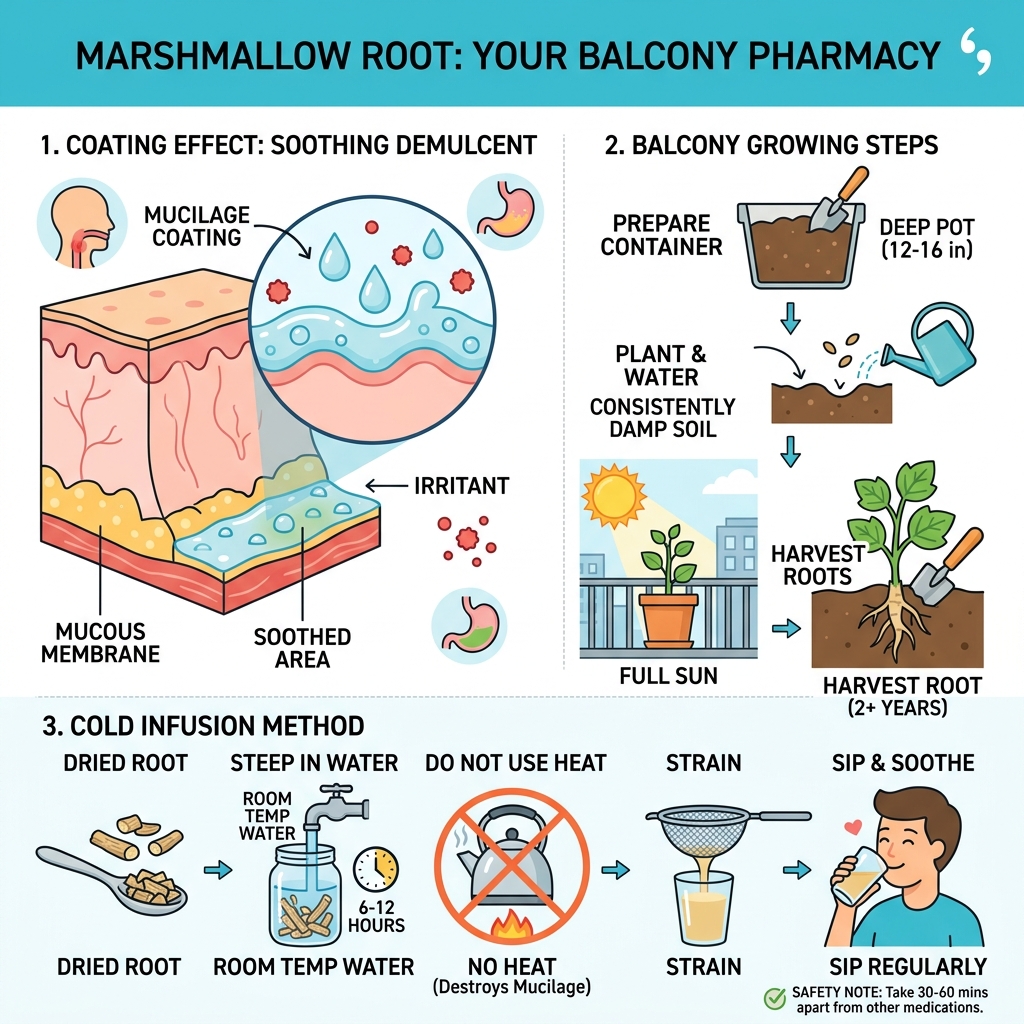
What makes marshmallow root special is its mucilage — a group of water-loving polysaccharides that swell into a thick, slippery gel when they contact water. That gel coats mucous membranes like a gentle, breathable film, reducing friction and locking in moisture wherever irritation lives.
The good news for urban gardeners: you don’t need a field or a farmhouse. A sunny balcony and a deep pot are enough to grow your own supply.
Understanding the Balcony Marshmallow Root Demulcent Power
When we talk about a “demulcent,” we are describing a specific herbal action. A demulcent is an agent that forms a soothing, protective film over mucous membranes. Think of it as an internal “liquid bandage.” For those of us living in dry urban environments or dealing with the occasional scratchy throat from seasonal changes, having a balcony marshmallow root demulcent source is like having a first-aid kit in a flowerpot.
The primary magic behind this plant lies in its mucopolysaccharides. These are long chains of sugar molecules that, when hydrated, turn into a viscous, slippery gel. This gel doesn’t just sit there; it actively works to dampen inflammation and shield sensitive tissues from further irritation.
The Science of Mucilage
From a scientific perspective, marshmallow root is a powerhouse. It contains approximately 11% mucilage, 11% pectin, and a whopping 37% starch. These polysaccharides have a high affinity for water. When you soak the root, these molecules swell, creating that signature “gooey” texture.
This viscous gel is incredibly effective for respiratory health. When you swallow a marshmallow root preparation, it coats the esophagus and sends a reflex signal to the lungs to produce more moisture, helping to soothe a dry, hacking cough. Furthermore, research into Marshmallow Root benefits for cough and GERD suggests that this coating effect can also protect the stomach lining from excess acid, offering relief for those struggling with heartburn or digestive irritation. For more ideas on what else you can pair with your marshmallow plant, check out our guide on medicinal plants for balconies.
Traditional vs. Modern Uses
The history of Althaea officinalis is as rich as its texture. The name Althaea comes from the Greek word althe, meaning “to cure.” Ancient Romans considered the root a delicacy and often included it in barley soups. In the Middle Ages, it was a staple in monastery gardens for treating everything from skin burns to digestive upset.
Fast forward to the 19th century, and French confectioners created pâté de guimauve. They whipped the root’s mucilage with sugar and egg whites to create a medicinal lozenge. Over time, the labor-intensive root extraction was replaced by gelatin, leading to the modern, sugar-heavy marshmallow candy we know today. By growing it yourself, you are reclaiming a piece of botanical history. If you’re wondering about the logistics of starting your own space, see What Can You Grow in a Balcony Garden? for more inspiration.
How to Grow Marshmallow Plants in Containers
Growing marshmallow on a balcony is entirely possible, but we need to respect the plant’s natural architecture. In the wild, marshmallow grows in salty marshes and damp meadows. It develops a thick, deep taproot that can be quite difficult to dig up in a traditional garden. In a container, we have to provide enough vertical space for that root to thrive.
Ideal Conditions for Your Balcony Marshmallow Root Demulcent
To get the best medicinal yield, we want to mimic the plant’s native habitat as much as possible.
- Sunlight: Marshmallow loves the sun. It needs at least 6 hours of direct sunlight to grow vigorously. If your balcony is shaded, the plant may become “leggy” and produce less mucilage. Read more about understanding sunlight needs for balcony plants to find the best spot.
- The Pot: This is the most critical factor. Because of the deep taproot, you should choose a pot that is at least 12 to 16 inches deep. Ceramic or heavy plastic pots work well to retain moisture. For suggestions on the best vessels, visit our page on top pots for balcony gardening.
- Soil and Water: Use a high-quality potting mix enriched with organic matter. Marshmallow is not a drought-tolerant plant; it likes to stay “wet-footed.” We recommend a self-watering pot or a consistent watering schedule to ensure the soil never fully dries out.
Sowing and Germination
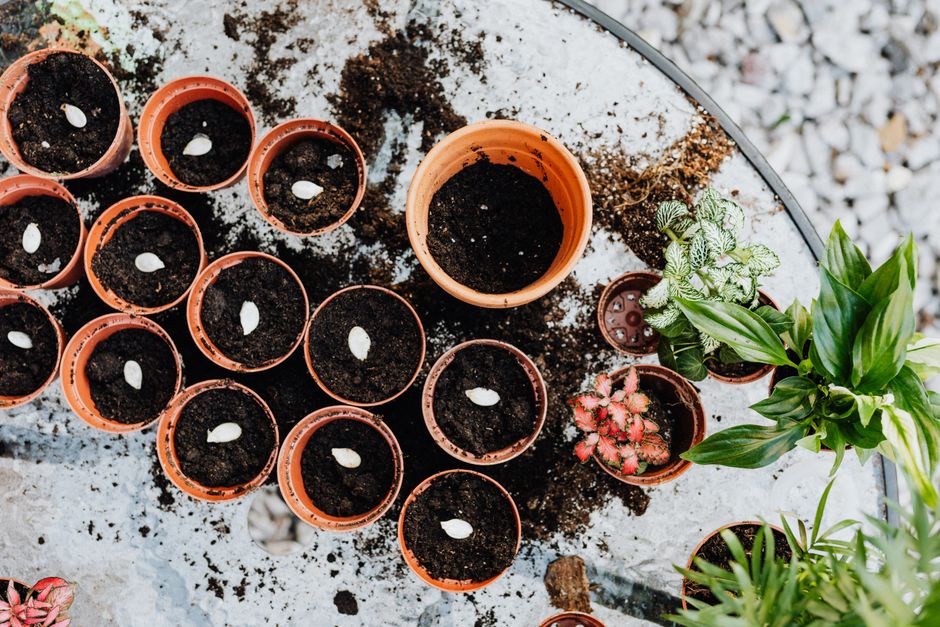
Marshmallow seeds often benefit from a process called cold stratification. This mimics a cold winter, telling the seed it’s time to wake up when things get warm. You can place your seeds in a damp paper towel inside a sealed bag in the refrigerator for about 4–6 weeks before planting.
Once stratified, sow the seeds in early spring. Just barely cover them with soil, as they need a bit of light to germinate. Keep the soil consistently moist. If you are a first-time gardener, our guide on how to start balcony gardening for beginners can help you navigate these early stages.
Caring for and Harvesting Your Balcony Herb
Marshmallow is a hardy perennial, meaning it will come back year after year. On a balcony, it can grow up to 4 or 5 feet tall, making it a beautiful, velvety privacy screen with pale pink or white flowers.
Harvesting Your Balcony Marshmallow Root Demulcent for Medicine
Patience is a virtue when it comes to marshmallow root. While you can harvest the leaves and flowers in the first year for mild teas, the root—the “fluffy pharmacy” part—is best harvested in the fall of the second or third year.
- Timing: Wait until the foliage begins to die back in late autumn. This is when the plant’s energy (and mucilage) is concentrated in the root.
- The Extraction: Carefully empty the container. You’ll see a thick, woody taproot with smaller lateral roots.
- Cleaning: Wash the roots thoroughly. Some herbalists prefer to peel the outer “skin” of the root to reveal the white, fleshy interior, which is often higher in mucilage.
- Drying: Slice the roots into small “coins” or cubes. Dry them in a dehydrator on low heat or in a cool, dark place with good airflow. Once bone-dry, store them in an airtight jar. For more botanical details, the Herbal Encyclopedia is an excellent resource.
Sustainable Root Collection
Since we are growing in containers, we have a unique advantage: we can harvest part of the root without killing the plant. If you have a large enough pot, you can carefully dig down and prune away some of the side roots while leaving the main crown and taproot intact. Replant the crown with fresh soil, and it will continue to grow the following spring. This ensures a perpetual supply of balcony marshmallow root demulcent for your home apothecary.
Preparing Your Homegrown Demulcent: The Cold Infusion Method
Now that you have your harvest, how do you use it? This is where many people make a mistake. Most herbal teas are made with boiling water, but heat is the enemy of mucilage. Boiling water can break down the delicate polysaccharides, leaving you with a watery tea instead of a thick, soothing demulcent.
Step-by-Step Cold Maceration
The “Cold Infusion” or “Cold Maceration” method is the gold standard for marshmallow root.
| Feature | Cold Infusion | Hot Tea |
|---|---|---|
| Extraction | Maximizes mucilage (slippery gel) | Extracts more tannins and starches |
| Texture | Thick, viscous, and “gooey” | Thin and watery |
| Best For | Sore throats, GERD, gut lining | General hydration (less medicinal) |
| Time | 4 to 12 hours | 10 to 15 minutes |
The Process:
- Place 1–2 tablespoons of dried, chopped marshmallow root into a jar.
- Add 2 cups of room-temperature, filtered water.
- Cover and let it sit on your counter or in the fridge for at least 4 hours (overnight is best).
- You will notice the water becoming thick and slightly amber-colored.
- Strain the liquid through a fine-mesh sieve or cheesecloth. Squeeze the roots to get every last drop of that precious gel!
This liquid can be sipped slowly throughout the day to coat the throat or taken before meals to help with digestive irritation. You can find more preparation variations at The Herbal Bake Shoppe.
Safety and Medication Spacing
Because marshmallow root is so good at coating things, it can actually be too good. That protective layer it forms in your stomach can slow down the absorption of other medications.
As a general rule, always take your balcony marshmallow root demulcent at least one hour before or after taking any other oral medications or supplements. This ensures your body can still absorb your medicine effectively. Also, because of its high fiber and mucilage content, always drink plenty of water when using marshmallow root to keep things moving smoothly through your system. For high-quality root sourcing if your balcony hasn’t produced enough yet, Baldwins is a trusted supplier.
Frequently Asked Questions about Marshmallow Root
Why do modern marshmallows no longer contain the root?
It mostly comes down to cost and shelf life. Extracting the mucilage from marshmallow roots is a slow, manual process. In the mid-20th century, mass production took over, and manufacturers found that gelatin (derived from animal collagen) and corn syrup were much cheaper and created a more consistent, shelf-stable product. While the name stuck, the medicine was lost.
Can I grow marshmallow root in a small pot?
We wouldn’t recommend it. A small “herb pot” (the kind you might use for basil) isn’t deep enough for the taproot. If the root hits the bottom of the pot too early, the plant will become stunted and won’t produce the high-quality mucilage you’re looking for. Aim for a pot that is at least 12 inches deep to give it the “leg room” it needs.
What are the best uses for a balcony marshmallow root demulcent?
It is a versatile “soother.” We use it primarily for:
- Dry, tickly coughs: It calms the “tickle” in the back of the throat.
- Heartburn and GERD: It provides a physical barrier against stomach acid.
- Skin Irritation: You can apply the cold infusion topically to soothe sunburns or dry, itchy skin.
- Gut Health: It supports the healing of the intestinal lining.
Conclusion
Building your own “fluffy pharmacy” on a balcony is one of the most rewarding projects an urban gardener can undertake. By growing a balcony marshmallow root demulcent, you aren’t just adding a beautiful plant to your space; you are cultivating a ancient, time-tested remedy that offers genuine relief for modern ailments.
At Finance Lixo, we believe that urban self-sufficiency starts with the small choices we make on our balconies and in our homes. Whether you’re looking to soothe a sore throat or simply want to connect with the history of herbal medicine, the marshmallow plant is a perfect companion. Start your balcony garden journey today and discover the power of growing your own medicine!
