
Best ways to start a vertical herb garden on your balcony
Why a Balcony Vertical Herb Garden Is Worth Starting Today
A balcony vertical herb garden lets you grow fresh herbs in a small outdoor space by stacking plants upward instead of outward. It’s one of the smartest ways to garden when you don’t have a yard.
Here’s a quick overview of how to get started:
- Assess your balcony – Check sunlight hours, wind exposure, and weight limits
- Pick a system – Choose from freestanding towers, wall-mounted pockets, railing planters, or DIY lattice setups
- Select your herbs – Basil, rosemary, mint, parsley, chives, oregano, and sage all do well vertically
- Use the right soil – Lightweight potting mix with good drainage is essential
- Water consistently – Check moisture daily in summer; balcony herbs dry out fast
- Harvest often – Most herbs grow back bushier when you snip them regularly
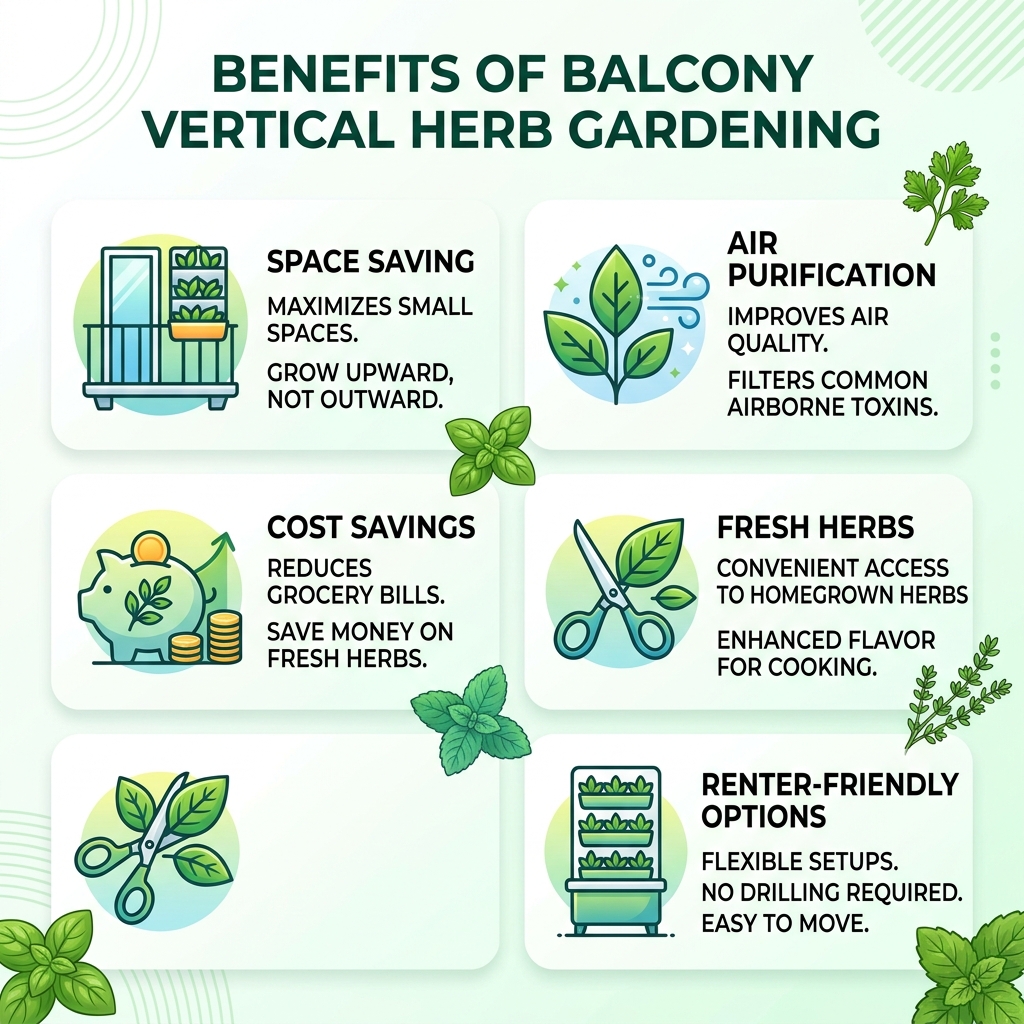
Most systems fit into just 2 x 2 feet of floor space and can save you over $200 a year on store-bought herbs. Plus, according to NASA research, plants actively filter toxins like formaldehyde and benzene from the air around you.
Whether you rent or own, there are setups that require zero drilling. You don’t need a big budget or a green thumb to make this work.
Quick balcony vertical herb garden terms:
Planning Your Balcony Vertical Herb Garden
Before we start buying seeds and soil, we need to play detective. Every balcony has its own “microclimate.” A south-facing balcony in a high-rise behaves very differently than a shaded ground-floor patio. Planning ahead prevents the heartbreak of wilted basil or a stern letter from your condo board.
When we look at balcony herb garden design, we have to balance aesthetics with physics. You’re essentially building a living wall, so you need to consider how water moves, how the wind blows, and how much weight your railing or floor can actually support.
Assessing Sunlight and Wind
Sunlight is the “fuel” for your herbs. Most culinary herbs are Mediterranean by nature, meaning they crave at least 6 hours of direct sun daily.
- South-facing balconies: These are the “gold standard.” They get the most intense sun, perfect for rosemary, thyme, sage, and basil.
- East-facing: You’ll get gentle morning sun. This is great for “soft” herbs like parsley, chives, and cilantro that might wilt in harsh afternoon heat.
- West-facing: Expect hot, intense afternoon sun. You’ll need to water more frequently here.
- North-facing: These are shadier. Stick to mint, chives, and parsley, which can tolerate lower light levels.
Wind is the silent killer of the balcony vertical herb garden. On higher floors, wind can dry out potting soil faster than the sun does. It can also physically snap delicate stems. If your balcony is a wind tunnel, we recommend placing your vertical structure against a wall or using a wind buffer—like a lattice panel—to protect shallow-rooted herbs.
Understanding Space and Weight Limits
Vertical gardening is all about the footprint. A system like the Sagano Vertical Gardening System allows you to grow dozens of plants in a tiny 2×2 foot area. However, we must talk about weight. Wet soil is heavy. A large vertical tower filled with damp potting mix and ceramic pots can weigh hundreds of pounds.
Always check your condo bylaws or rental agreement. Some buildings have strict rules about what can be hung from railings or drilled into exterior walls. If you’re worried about structural integrity or rules, choosing the best vertical garden for balcony spaces often means opting for lightweight, freestanding plastic towers or fabric pockets rather than heavy wooden structures.
Best Systems and Structures for a Balcony Vertical Herb Garden
Now for the fun part: choosing your gear! There are three main ways to go vertical: freestanding towers, wall-mounted systems, and railing-mounted planters.
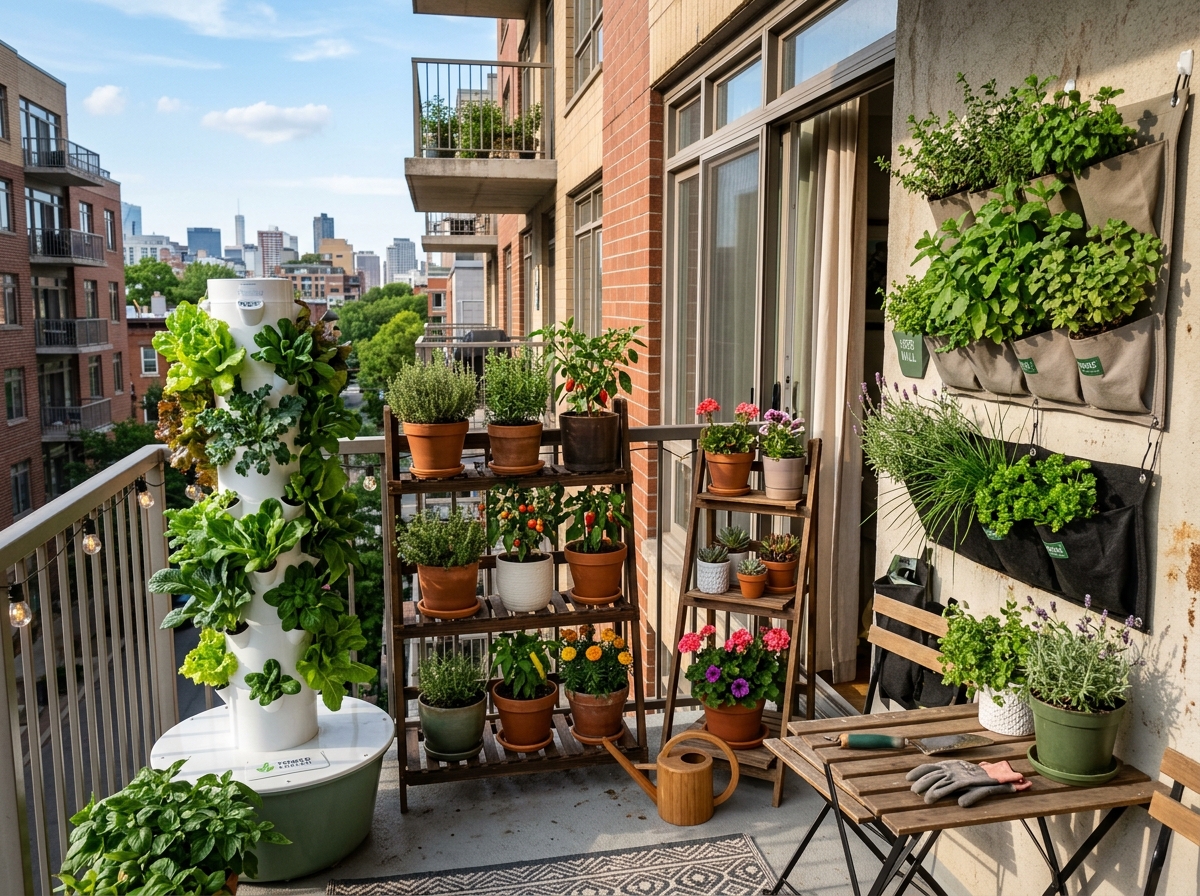
- Freestanding Towers: Systems like the GreenStalk 7-Tier Vertical Planter or the Garden Tower Project are fantastic because they don’t require any attachment to your building. They sit on the floor and grow upward.
- Wall-Mounted Planters: These are perfect for narrow balconies. The Minigarden Vertical is a modular system that can be stacked like LEGO bricks against a wall.
- Tiered Shelving: This is a classic approach. You can use a simple ladder shelf or a specialized unit like the Vigoroot 4-Tier Balcony Garden, which uses breathable fabric to help roots “air prune” for better health.
For more inspiration, check out these vertical balcony garden ideas.
Renter-Friendly Balcony Vertical Herb Garden Options
We know the struggle of wanting a garden without losing your security deposit. If you can’t drill, don’t worry! You can use vinyl lattice panels secured with heavy-duty zip ties to your railing.
Another pro-tip: use “vinyl siding clips” or “Command” outdoor hooks to hang lightweight herb pockets. These options provide a secure hold without leaving a single hole in the wall. Freestanding towers are also the ultimate renter-friendly choice because you can simply roll them away when you move.
DIY Vertical Structures
If you’re feeling crafty, you can build a custom balcony vertical herb garden for very little money. Upcycling is our favorite way to garden sustainably.
- The Pallet Garden: Find a heat-treated pallet (look for the “HT” stamp). Staple landscape fabric to the back and bottom to create pockets, fill with soil, and lean it against a wall.
- Wooden Ladders: An old A-frame ladder makes a perfect tiered stand for individual herb pots.
- Mason Jar Walls: While beautiful for Pinterest, mason jars need careful drainage management. We recommend drilling holes in the lids or using them for herbs that like “wet feet” like mint.
For a step-by-step on building your own, see our guide to stop thyme and build a balcony wall herb garden.
Essential Supplies and Planting Strategies
To succeed, you need more than just a planter. You need the right “engine” (the soil) and “fuel” (the fertilizer).
- Potting Mix: Never use “garden soil” or “topsoil” from the ground. It’s too heavy and won’t drain properly in a container. Use a high-quality potting mix containing peat moss or coco coir and perlite.
- Drainage: This is non-negotiable. Your containers must have holes. If they don’t, your herbs’ roots will sit in water and rot.
- Fertilizer: Herbs in containers lose nutrients every time you water. Use an organic, water-soluble fertilizer like liquid seaweed or fish emulsion every two weeks during the growing season.
| Herb | Sunlight Needs | Water Needs | Best Vertical Position |
|---|---|---|---|
| Rosemary | Full Sun (6+ hrs) | Low (Let dry out) | Top (needs most light) |
| Basil | Full Sun (6+ hrs) | Medium (Keep moist) | Middle |
| Mint | Partial Shade | High (Always damp) | Bottom (stays cooler) |
| Parsley | Partial Shade | Medium | Bottom/Middle |
| Thyme | Full Sun | Low | Top/Middle |
Choosing the Best Herbs for Your Balcony Vertical Herb Garden
Not all herbs are created equal when it comes to vertical life. We want “cut-and-come-again” varieties that don’t mind a little crowding.
- Basil: The king of balcony herbs. It grows fast and loves the heat.
- Rosemary & Sage: These are perennials. They grow slower but are hardy and can handle the wind.
- Mint: Warning! Mint is an aggressive spreader. Always give mint its own dedicated container within your vertical system, or it will choke out your other plants.
- Chives: Nearly indestructible and they produce beautiful edible purple flowers.
Learn more about the best herbs for balcony gardening to find the perfect match for your cooking style.
Grouping and Arranging for Success
When we plan our balcony herb garden layout, we group plants by their thirst.
Put your “thirsty” herbs like mint, parsley, and cilantro together. Put your “dry” Mediterranean herbs like rosemary, thyme, and oregano in another section. If you put rosemary (which hates wet feet) in the same pot as mint (which loves water), one of them is going to be unhappy.
Also, consider the height. Tall, sun-blocking herbs like dill or fennel should go at the very top or in a spot where they won’t shade out smaller herbs like thyme.
Maintenance and Troubleshooting for Urban Herb Gardens
A balcony vertical herb garden isn’t a “set it and forget it” project. Because the soil volume is smaller than a traditional garden, the plants rely entirely on you for survival.
Watering and Fertilizing Tips
The “finger test” is your best friend. Stick your finger an inch into the soil. If it feels dry, water it. In the height of summer, a vertical garden on a windy balcony might need water every single morning.
We recommend watering in the morning to reduce evaporation and prevent fungal issues. If you have a high-tech system like the Verde Vertical Garden or the Wall Farm, much of this is automated, but you still need to keep the reservoir filled!
For more pro-tips, read the ultimate guide to vertical garden maintenance tips and tricks.
Managing Pests and Seasonal Changes
Even on the 20th floor, pests like aphids and spider mites can find your garden. Inspect your plants weekly. If you see tiny bugs or sticky residue on leaves, a simple spray of water and a few drops of dish soap (insecticidal soap) usually does the trick.
As the seasons change, you have a choice. Annuals like basil will die off when the frost hits. Perennials like rosemary and chives can often stay outside if the pot is large enough and protected from the wind. If you live in a very cold climate, you might want to bring your vertical garden indoors near a sunny window for the winter.
Discover the best herbs for your apartment balcony that can survive through different seasons.
Frequently Asked Questions about Balcony Herb Gardening
How much sunlight do balcony herbs need?
Most culinary herbs need at least 6 hours of direct sunlight. However, if you have a shady balcony, you can still grow mint, parsley, chives, and lemon balm—they just might grow a bit slower.
How do I prevent water from dripping on neighbors?
This is the number one cause of “balcony wars.” Use systems with built-in reservoirs or catch-trays. If you’re DIY-ing, ensure each pot has a saucer, or use a “wicking” system where water is contained within the structure. The Garden Tower 2 is specifically designed to recapture excess water in a base drawer.
Which herbs should not be planted together?
Avoid planting mint with anything else; it’s a bully and will take over. Also, avoid planting moisture-loving herbs (parsley, cilantro) in the same container as drought-loving herbs (rosemary, sage).
Conclusion
Starting a balcony vertical herb garden is one of the most rewarding projects you can undertake. Not only does it provide you with fresh, organic ingredients for your kitchen, but it also transforms a sterile concrete space into a lush, air-purifying sanctuary.
By saving money on groceries and improving your mental well-being through the act of gardening, you’re investing in yourself. Whether you choose a high-end hydroponic tower or a simple DIY pallet, the key is to just start. Start your balcony herb garden design today and enjoy the “thyme” of your life!
