
Potted Perfection: Top Plants for Your Small Patio
Transform Any Tiny Outdoor Space With the Right Plants
Small patio potted plants are one of the easiest ways to turn a bare balcony or compact outdoor space into a lush, personal retreat — no yard required.
Here are the best plants for small patio containers, at a glance:
- Full sun spots: Calibrachoa (Million Bells), Compact Verbena, Tropical Hibiscus, Meyer Lemon
- Partial shade spots: Heuchera (Coral Bells), Hostas, Ferns, Lace Leaf Japanese Maple
- Low maintenance picks: Rosemary, Sage, Thyme, Purple Fountain Grass
- Edible options: Dwarf fig, patio peach, blueberry, culinary herbs
- Best for visual impact: Miniature roses, Purple Pixie Loropetalum, Dwarf Alberta Spruce
The key insight? Container gardening is actually forgiving once you match the right plant to the right light and pot. Many compact and dwarf varieties are bred specifically to thrive in small containers — staying beautiful without taking over your space.
One important thing to know upfront: container conditions are harsher than in-ground planting. Soil dries faster, roots have less room, and pots sitting on sun-baked surfaces heat up quickly. The good news is that choosing the right plants from the start solves most of the problems before they begin.
Whether you have a sun-drenched balcony or a shaded urban porch, there’s a potted plant combination that will work for you.
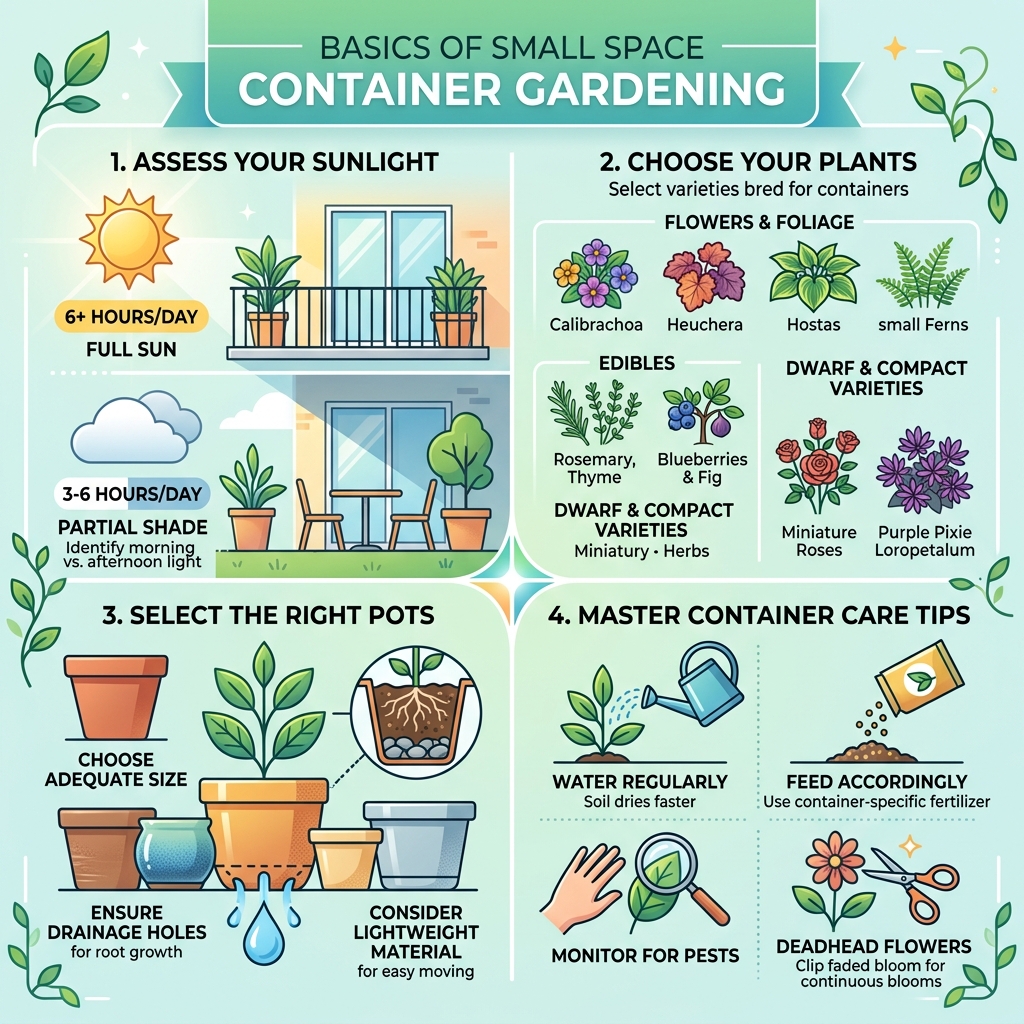
Basic small patio potted plants vocab:
Best Small Patio Potted Plants for Every Sunlight Level

When we start planning our patio oasis, the first thing we have to look at isn’t the plant—it’s the light. We like to think of a small patio as a series of microclimates. One corner might be a scorching sun trap, while another stays cool and damp under an awning.
Matching your small patio potted plants to these light levels is the difference between a thriving garden and a collection of expensive sticks. If you put a shade-loving Hosta in six hours of direct afternoon sun, it’s going to crisp up faster than a piece of toast. Conversely, a sun-loving Hibiscus in a dark corner will stop blooming and start pouting.
For more detailed help on matching plants to your specific balcony environment, check out our top-container-friendly-plants-and-greenery-for-your-balcony.
Full Sun Favorites for Small Patio Potted Plants
If your patio gets at least six hours of direct sunlight, you’re in the “full sun” zone. This is where high-energy, heavy-blooming plants shine.
- Lanai® Compact Verbena: This is a rockstar for small spaces. It stays tiny (about 4 to 6 inches tall) but spreads out to 14 inches, making it look like a colorful carpet. It’s famous for being powdery mildew tolerant and absolutely loves the heat.
- Tropical Hibiscus: Often called the “color engine” of the patio, these offer massive, vibrant blooms. They provide that instant resort vibe. Just remember to prune them in late winter to keep them bushy.
- Meyer Lemon: Want fragrance and fruit? The Meyer Lemon is a container favorite because it stays manageable but produces full-sized, sweet-tart lemons. Plus, the white blossoms smell heavenly.
- Calibrachoa (Million Bells): These look like tiny petunias but are much tougher. They are “self-cleaning,” meaning you don’t have to pick off dead flowers to keep them blooming. Varieties like Minifamous™ Compact Calibrachoa are specifically bred to stay tidy in pots.
- Lantana: These are essentially bulletproof. They love the heat, tolerate a bit of drought, and attract every butterfly in the neighborhood.
Shade-Tolerant Varieties for Dimmer Spaces
Don’t despair if your patio is tucked away in the shadows. Some of the most elegant small patio potted plants actually prefer the shade.
- Balboa Sunset® Heuchera: Also known as Coral Bells, this plant is all about the foliage. It features ruffled leaves that shift through shades of green, plum, and red. It only grows about 7 inches tall, making it perfect for the “front” of a pot arrangement.
- Hostas: These are the kings of the shade. While they do bloom, people grow them for their lush, architectural leaves. They come in everything from deep blue-green to bright chartreuse.
- Ferns: If you want a “jungle” feel, ferns are the answer. They love the humidity and the lack of direct sun.
- Japanese Maples: Specifically the dwarf or “Lace Leaf” varieties. They grow slowly and offer incredible structure and color, especially in partial shade where their delicate leaves won’t scorch.
Choosing the Right Containers and Soil for Success
We’ve seen it happen a thousand times: someone buys a beautiful plant, sticks it in a pot with no holes, uses dirt from the backyard, and wonders why the plant dies in two weeks. Choosing the right “house” for your small patio potted plants is critical.
First, let’s talk drainage. If your pot doesn’t have a hole at the bottom, your plant’s roots will sit in water and rot. It’s like trying to live in a bathtub that won’t drain—eventually, things get gross. If you find a decorative pot you love that lacks drainage, use it as a “cachepot”—keep the plant in a plain plastic nursery pot with holes and simply set that inside the pretty one.
For a deep dive into the best vessels for your greenery, see our guide on top-pots-for-balcony-gardening.
Square vs. Round Containers Did you know that square containers actually hold about 50% more soil than round ones of the same height? More soil means more room for roots and better water retention, which is a huge plus for small patios where space is at a premium.
| Pot Material | Pros | Cons |
|---|---|---|
| Ceramic/Glazed | Beautiful, heavy (won’t blow over), holds moisture well. | Can be expensive and heavy to move. |
| Terracotta | Classic look, breathable (great for succulents). | Dries out very fast, can crack in freezing weather. |
| Resin/Plastic | Lightweight, affordable, retains water well. | Can look “cheap” if not high-quality; light pots can blow over. |
| Metal | Modern, very durable. | Can heat up soil too much in direct sun; needs a liner. |
The Soil Secret Never use “garden soil” in a pot. It’s too heavy and will compact, suffocating the roots. Always use a high-quality “potting mix” or “container mix.” These are formulated with things like peat moss, perlite, and vermiculite to stay fluffy and well-drained. Because nutrients leach out of the bottom every time you water, we recommend using a slow-release fertilizer at planting time.
Design Secrets: Visual Combinations and Dwarf Varieties
Designing your small patio potted plants is where the fun really begins. You don’t need a degree in landscape architecture to make your pots look professional. We use a simple recipe: The Thriller, The Filler, and The Spiller.
- The Thriller: This is your center-piece. It’s usually tall and eye-catching. A Fire Chief Arborvitae (which has 28 five-star reviews!) makes a great evergreen thriller with its orange-red tips.
- The Filler: These are mid-sized plants that surround the thriller and make the pot look full. Purple Pixie Loropetalum is a fan favorite here—it has 64 five-star reviews and stunning purple foliage that stays vibrant all year.
- The Spiller: These are trailing plants that hang over the edge of the pot, softening the look. Calibrachoa is the ultimate spiller, cascading down with hundreds of tiny blooms.
The Power of Dwarf Varieties In a small space, “dwarf” is your favorite word. These are plants bred to stay small while still producing full-sized beauty.
- Bonanza Peach: A dwarf peach tree that produces full-sized fruit but only grows to about 6 feet.
- Miniature Roses: All the beauty of a rose bush in a package that fits on a side table.
- Little Miss Figgy: The smallest fig tree available, perfect for the tiniest of patios.
If you are struggling with a particularly cramped space, our article on small-balcony-no-problem-with-these-compact-planters offers some ingenious solutions for narrow areas.
Maintenance and Seasonal Care for Longevity
Caring for small patio potted plants is a bit different than caring for a traditional garden. Because they are in containers, they are entirely dependent on us for their “food” and “water.”
The Finger Test Don’t water on a strict schedule. Instead, use the “finger test.” Stick your finger about an inch into the soil. If it feels dry, water it. If it’s still damp, leave it alone. Overwatering is the #1 killer of container plants because it leads to root rot.
For those of us who tend to be a bit forgetful, check out the best-plants-for-self-watering-pots-that-wont-drown.
Feeding Your Plants Because nutrients wash away with every watering, container plants need regular feeding. A liquid fertilizer every two weeks during the growing season will keep your flowers blooming and your foliage lush.
Low-Maintenance Small Patio Potted Plants for Busy Gardeners
If you have a busy schedule (or a history of “unintentional plant homicide”), look for plants that are forgiving of inconsistent care.
- Rosemary, Sage, and Thyme: These Mediterranean herbs actually prefer to dry out a bit between waterings. They are tough, fragrant, and you can eat them!
- Purple Fountain Grass: This adds height and movement to a patio. It’s very drought-tolerant once established and stays controlled in a pot.
- Deer-Resistant Options: If your patio is at ground level and you have four-legged visitors, look for plants like Heuchera or certain herbs. You can even find deer-resistant plant sales to save on these hardy varieties.
For more “un-killable” suggestions, see our list of top-balcony-plants-that-actually-survive-in-pots.
Winter Protection and Indoor Transitions
When the temperature drops, your small patio potted plants need a plan. Because their roots are above ground, they are more susceptible to freezing than plants in the soil.
- Frost Blankets: For mild frosts, covering your pots with a frost blanket or even an old bedsheet can provide just enough warmth to save them.
- Moving Pots: Grouping your pots together against a warm wall of the house can help. For tropicals like Hibiscus or Palms, you’ll need to bring them indoors before the first frost.
- Dormancy: Some plants, like Hostas, will die back to the ground in winter. Don’t throw them away! They are just sleeping. Keep the soil slightly moist, and they’ll pop back up in the spring.
- Grow Bags: If you’re tight on storage space for empty pots in the winter, grow-bags-for-balcony-maximizing-your-small-space are a great option as they can be emptied and folded flat.
Frequently Asked Questions about Patio Gardening
What are the most common mistakes when planting small patio pots?
The most frequent error we see is overwatering. It’s easy to think more water equals more love, but soggy roots can’t breathe. Second is poor drainage-always ensure there are holes in the bottom of your pots. Third is ignoring sunlight needs; trying to grow a sun-loving plant in the shade is a recipe for disappointment. Finally, cramped roots can happen if you don’t move a growing plant into a larger pot every year or two.
Which small patio plants provide edible yields?
You don’t need a farm to grow food!
- Little Miss Figgy: A compact fig tree that produces delicious fruit.
- Raspberry Shortcake: A thornless, dwarf raspberry that stays around 2-3 feet tall.
- Patio Peaches: Like the ‘Bonanza’ variety, which produces full-sized peaches on a tiny tree.
- Culinary Herbs: Basil, mint, and parsley are some of the most rewarding small patio potted plants because you can use them in your kitchen daily.
Where is the best place to buy high-quality patio plants online?
Buying online is a great way to find specific dwarf varieties that local big-box stores might not carry. Look for nurseries that offer shipping protection and zone filtering so you only buy what will survive in your climate. Many reputable online sources provide quality guarantees, free shipping options, and detailed customer reviews to help you make an informed decision. It also helps to compare care guidance from trusted plant resources such as the Missouri Botanical Garden, especially when researching container-friendly varieties before you buy.
Conclusion
At Finance Lixo, we believe that you don’t need a massive backyard to enjoy the benefits of gardening. Investing in small patio potted plants is a sustainable way to increase the aesthetic value of your home and create a peaceful retreat for yourself. By choosing the right pots, matching your plants to your sunlight, and following a few simple maintenance tips, you can enjoy a thriving urban oasis all year long.
Start your small patio garden today and see how a little bit of greenery can transform your daily life!
