
Elevate Your Greens with a Raised Garden Balcony
Growing Green in the Sky: What You Need to Know Before You Start
A balcony raised garden bed is one of the simplest ways to grow fresh vegetables, herbs, and flowers when you don’t have a backyard. Whether you’re in a high-rise apartment or a ground-floor condo, a raised bed turns even the smallest outdoor ledge into a productive growing space.
Here’s what a balcony raised garden bed setup typically involves:
- Choose your bed type – elevated, wheeled, self-watering, or vertical/tiered
- Check your balcony’s weight limit – filled beds can be heavy; lightweight mixes help
- Pick the right material – cedar, galvanized steel, food-grade plastic, or composite
- Layer your soil properly – drainage layer first, then compost, then quality potting mix
- Select compact plants – herbs, leafy greens, and dwarf tomatoes work best in small spaces
Most kits assemble in under an hour, many without any tools at all.
The appeal is real. Unlike traditional pots, raised beds give you control over your soil, better drainage, and more growing space per square foot. You can grow a surprising amount of food — think salad greens, basil, cherry tomatoes — right outside your door.
But balcony gardening does come with its own challenges. Weight limits, wind exposure, and watering needs all require a little planning upfront. The good news? None of it is complicated once you know what to look for.
This guide walks you through everything — from picking the right bed to keeping your plants thriving all season long.
Why Choose a Balcony Raised Garden Bed?
When we think of gardening, we often picture sprawling backyard plots. But for those of us living in urban environments, the balcony raised garden bed is a game-changer. Why choose one over a collection of standard pots? For starters, they offer unparalleled soil control. When you use a raised bed, you aren’t at the mercy of whatever dirt is on the ground. You can customize the pH levels and nutrient density specifically for what you’re growing.
Ergonomics play a massive role too. Many balcony beds are “elevated,” meaning they sit on legs at waist height. This is a lifesaver for our backs and knees—no more kneeling on hard concrete to pull a few weeds! Furthermore, these beds promote better aeration and drainage. Because they are contained and slightly elevated, the soil doesn’t compact as easily as it does in the ground, allowing roots to breathe and grow faster.
We’ve found that raised beds also significantly reduce weed growth. Since you’re using fresh, high-quality potting mix in a contained unit, you won’t have to deal with the constant influx of local weed seeds. For more foundational advice on setting up your space, check out these easy balcony gardening tips for your urban oasis and our guide on creating a green oasis: how to start balcony gardening.
Selecting the Best Materials and Designs
Choosing the right material is about more than just looks; it’s about durability, weight, and safety for your edibles.
- Cedar Wood: This is a gold standard for a reason. Cedar is naturally rot-resistant and insect-resistant. It doesn’t require chemical treatments, making it safe for growing vegetables. It also ages beautifully to a silver-grey patina.
- Galvanized Steel: If you want something that will last a lifetime, metal is the way to go. Modern galvanized steel beds are rust-resistant and provide a sleek, industrial look. They are surprisingly lightweight when empty.
- Food-Grade Plastic (PP): Often used in vertical tiered systems, high-density plastic is incredibly light and waterproof. Just ensure it is “food-grade” to prevent chemicals from leaching into your soil.
- Composite Materials: These are made from a mix of wood fibers and plastic. They offer the look of wood with the zero-maintenance benefits of plastic.
| Material | Durability | Weight | Relative Cost | Best For |
|---|---|---|---|---|
| Cedar | High | Medium | Moderate | Natural aesthetics, veggies |
| Galvanized Steel | Very High | Light | Moderate/High | Longevity, modern style |
| Plastic (PP) | Moderate | Very Light | Low | Vertical/Tiered setups |
| Composite | High | Heavy | High | Permanent fixtures |
Vertical and tiered designs, such as a 4 ft Vertical Raised Garden Bed with 5 Tiers for Patio Balcony , are particularly effective for small footprints. These allow you to stack your garden upwards, utilizing vertical space rather than floor space.
Finding the Right Size Balcony Raised Garden Bed
Size matters, but not just for how many plants you can fit. You must consider your balcony’s footprint and weight capacity. A standard small bed might be 3-4 feet long, while medium beds range from 4-6 feet.
Depth is another critical factor. Most vegetables need at least 8 to 10 inches of soil depth to thrive. If you’re growing root vegetables like carrots or leeks, aim for a deeper bed. If you’re limited on room, don’t worry. Small balcony? No problem with these compact planters can still provide a lush environment. For those looking to go upward, we recommend choosing the best vertical garden for balcony spaces.
Specialized Features for Urban Spaces
Modern engineering has brought some fantastic features to the balcony raised garden bed world:
- Wheeled Models: These allow you to chase the sun. If your balcony only gets morning light on one side, you can simply roll the garden to the other side in the afternoon.
- Self-Watering Systems: These include a reservoir at the bottom that wicks moisture up to the roots. This is perfect for busy urbanites or for those hot summer days when balcony pots dry out in hours.
- Modular Kits: Brands like Frame It All offer kits that snap together without tools, allowing you to create custom shapes that fit into awkward corners.
- Elevated Planter Boxes: Products like the Urban Balcony Elevated Planter Box | Gardener’s Supply raise the soil to a comfortable 29-30 inches, making gardening accessible for everyone.
How to Set Up Your Balcony Raised Garden Bed
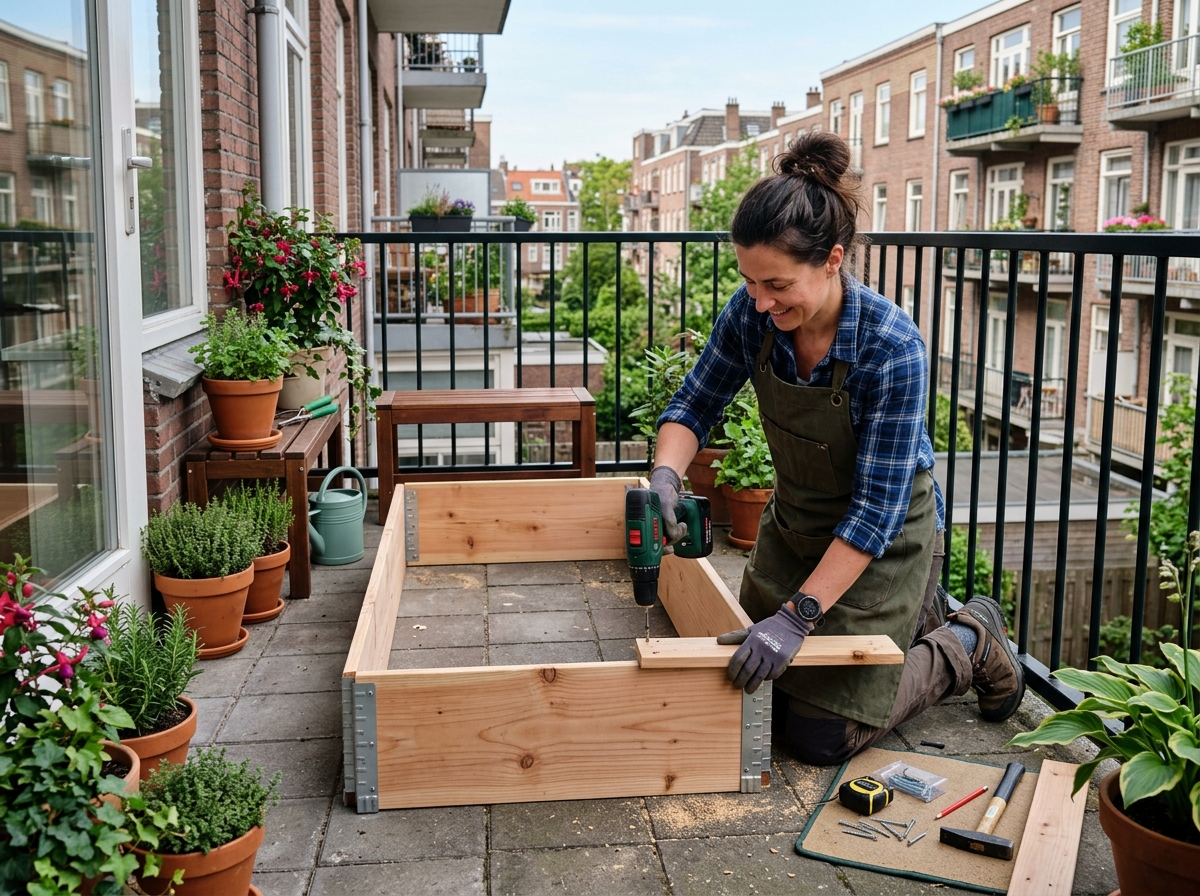
Setting up your bed is usually a quick Saturday morning project. Most modern kits, like the 4 Feet Vertical Raised Garden Bed with 5 Tiers for Patio Balcony – Costway , feature tool-free assembly. You simply slot the panels into the corner posts.
Once the frame is together, liner installation is your next step. A landscape fabric liner prevents soil from washing out of the drainage holes and protects the material of the bed (especially wood) from constant moisture contact.
Next, consider your drainage layers. While some people fill the entire bed with soil, adding a 2-inch layer of gravel or pottery shards at the very bottom can prevent water from pooling at the roots. For a deep dive into building your own, see our DIY balcony planters: a step-by-step guide.
Essential Soil and Layering Techniques
On a balcony, the soil is the heaviest component. Using heavy “garden soil” from a bag meant for backyards can put too much stress on your balcony structure. Instead, use a lightweight potting mix.
A pro-tip for a balcony raised garden bed is the layering technique:
- Drainage Layer: Pebbles or shards at the bottom.
- Separation Layer: A piece of non-woven fabric to keep the soil from washing into the drainage layer.
- Organic Layer: A mix of compost and aged manure to provide nutrients.
- Planting Layer: High-quality, lightweight potting mix.
This layering creates a “decomposition effect” where the organic matter breaks down over time, generating a small amount of heat and a steady stream of nutrients for your plants. If you’re on a budget, we have tips for budget-friendly containers for balcony plants that still look great.
Planting in Your Balcony Raised Garden Bed
Now for the fun part! What should you grow? Since space is at a premium, we recommend “high-value” crops—things that are expensive to buy fresh or taste significantly better when home-grown.
- Leafy Greens: Lettuce, spinach, and kale grow quickly and can be harvested “cut and come again.”
- Culinary Herbs: Basil, mint, cilantro, and rosemary thrive in raised beds. A Lgarden Balcony Elevated Gardening System – Earthy Green Finish is perfect for a kitchen-side herb station.
- Compact Tomatoes: Look for “determinate” or “patio” varieties that don’t grow into 6-foot monsters.
- Pollinator Flowers: Marigolds and nasturtiums not only look beautiful but also help keep pests away from your veggies.
For more inspiration, browse our top plants for your balcony: a selection guide and our list of easy vegetables to grow on your balcony.
Managing Challenges: Weight, Wind, and Water
Gardening several stories up presents unique environmental factors.
Weight is the most serious consideration. Most modern balconies are designed to hold about 50-100 lbs per square foot, but you should always verify this with your building management or a structural engineer. To keep things light, use perlite-heavy potting mixes and avoid heavy ceramic drainage layers.
Wind can dry out plants and even topple tall garden beds. If you live in a windy area, choose a lower-profile bed or one made of heavy-duty steel. You can also use the railing as an anchor point, securing the bed with heavy-duty zip ties or brackets.
Watering is a daily task on a balcony. Because raised beds are exposed to air on all sides, they dry out faster than the ground. We recommend checking the soil moisture every morning. If the top inch is dry, it’s time to water. Be mindful of your neighbors below—ensure your bed has a tray or a drainage system that doesn’t send a waterfall onto their balcony!
Explore how to use grow bags for balcony: maximizing your small space as a lightweight alternative, and learn how to grow a lush garden on a small apartment balcony to master these microclimates.
Safety and Legal Considerations for Renters
Before you buy that beautiful Planter Boxes: Elevated Cedar Planter Box | Gardener’s Supply. , check your lease. Some buildings have strict rules about what can be placed on balconies due to weight, aesthetics, or “perceived” fire hazards.
- Building Codes: Ensure your bed doesn’t block emergency egress points.
- Landlord Permission: It’s always better to ask. Show them a photo of the bed and explain the weight-saving measures you’re taking.
- Water Runoff: Many cities have ordinances against water dripping onto public sidewalks or lower balconies. Use saucers or self-contained drainage systems to stay in the clear.
For those just starting out, our quick and easy beginner’s guide to balcony gardening covers more of these essential logistics.
Frequently Asked Questions about Balcony Gardening
How much weight can a standard balcony hold for a garden bed?
Most residential balconies are rated for 50 to 100 pounds per square foot (psf). A 2’x4′ bed filled with wet soil can easily exceed 200 lbs. Always distribute the weight by placing beds near the structural walls or over support beams rather than right against the outer railing.
What are the best low-maintenance plants for high-rise balconies?
Herbs like rosemary and thyme are incredibly hardy and drought-tolerant. Succulents are also a great choice if you want greenery without the daily watering commitment. If you want veggies, chard and kale are much more “forgiving” than tomatoes or peppers.
Do raised beds on balconies need special drainage systems?
Yes. Unlike a backyard bed where water soaks into the earth, balcony water has nowhere to go. You must use a bed with drainage holes and a tray to catch excess water, or a specialized “elevated” system that manages runoff to prevent staining your balcony floor or annoying your neighbors.
Conclusion
At Finance Lixo, we believe that sustainable urban living starts with small, intentional choices. A balcony raised garden bed is more than just a place to grow food; it’s a way to reconnect with nature and reduce your grocery bill while beautifying your home. Whether you choose a sleek metal design or a classic cedar box, the joy of harvesting your own basil for a Friday night pizza is unmatched.
Ready to dig in? Start your journey with a budget-friendly balcony gardening setup and watch your urban oasis come to life. Happy gardening!
