Why Self-Watering Pots for Tomato Plants Are a Game-Changer for Balcony Growers
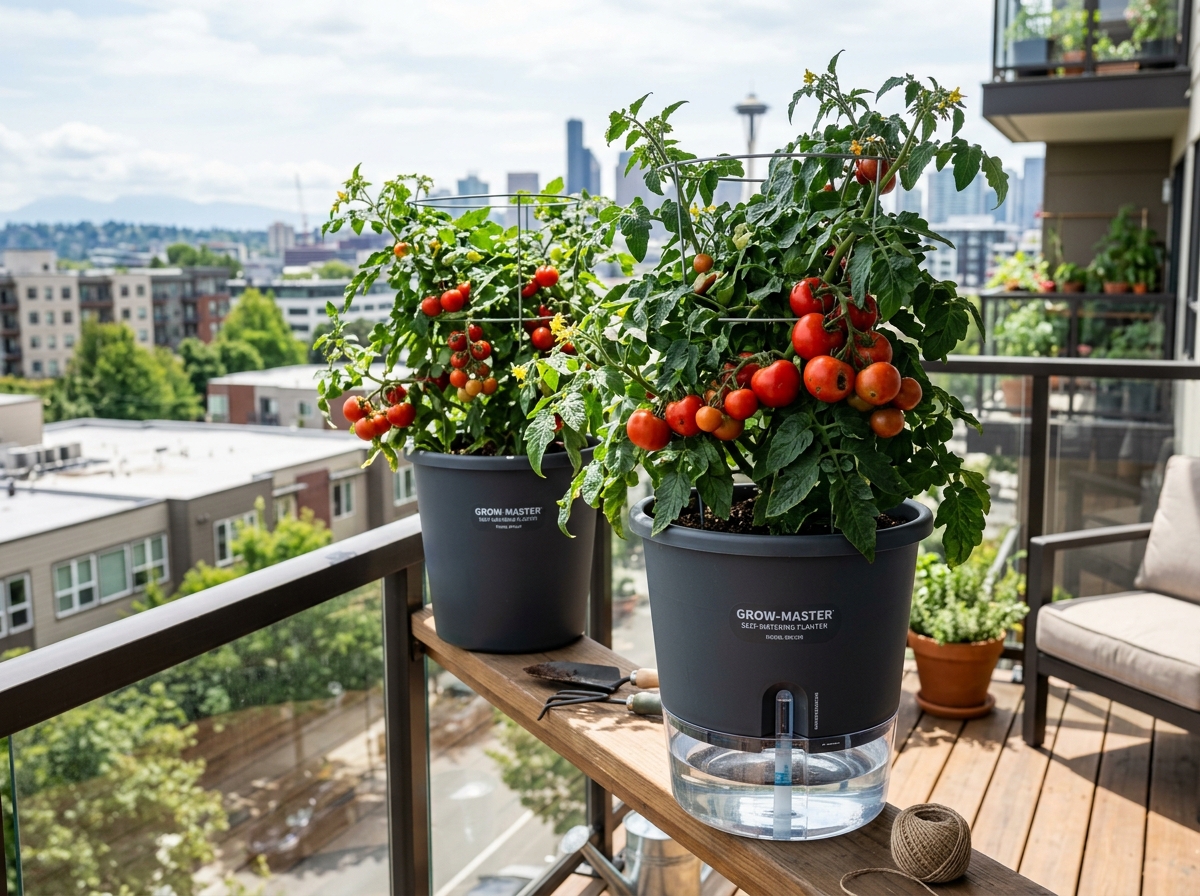
Self-watering pots for tomato plants are one of the smartest ways to grow a healthy tomato crop in a small space — no yard, no sprinkler system, no daily watering routine required.
Here are the best options to consider:
| Planter | Reservoir Size | Key Feature | Best For |
|---|---|---|---|
| EarthBox Tomato Bundle | Large reservoir | Integrated trellis + wheels | High yields, easy mobility |
| Garden Patch GrowBox | 4 gallons | 47% longer water supply | Beginners, all soil types |
| Oasis Self-Watering Planter | 2.75 gallons | 3-tier aluminum trellis | Patio and balcony setups |
| Maxitom Tomato Planter | 2 liters | Compact, terracotta design | Small spaces, climbing plants |
| TOM TOMATO Planter | 5 liters | Weekly watering only | Urban apartments, beginners |
Tomatoes are thirsty plants. Inconsistent watering is one of the top reasons home-grown tomatoes fail — causing cracked fruit, blossom end rot, and stunted growth.
Self-watering planters solve this by delivering moisture directly to the roots from a built-in reservoir below the soil. You refill the reservoir every few days (or even once a week), and the system handles the rest.
For anyone growing on a balcony or small patio, this means less guesswork, less daily effort, and better harvests — even without any prior gardening experience.
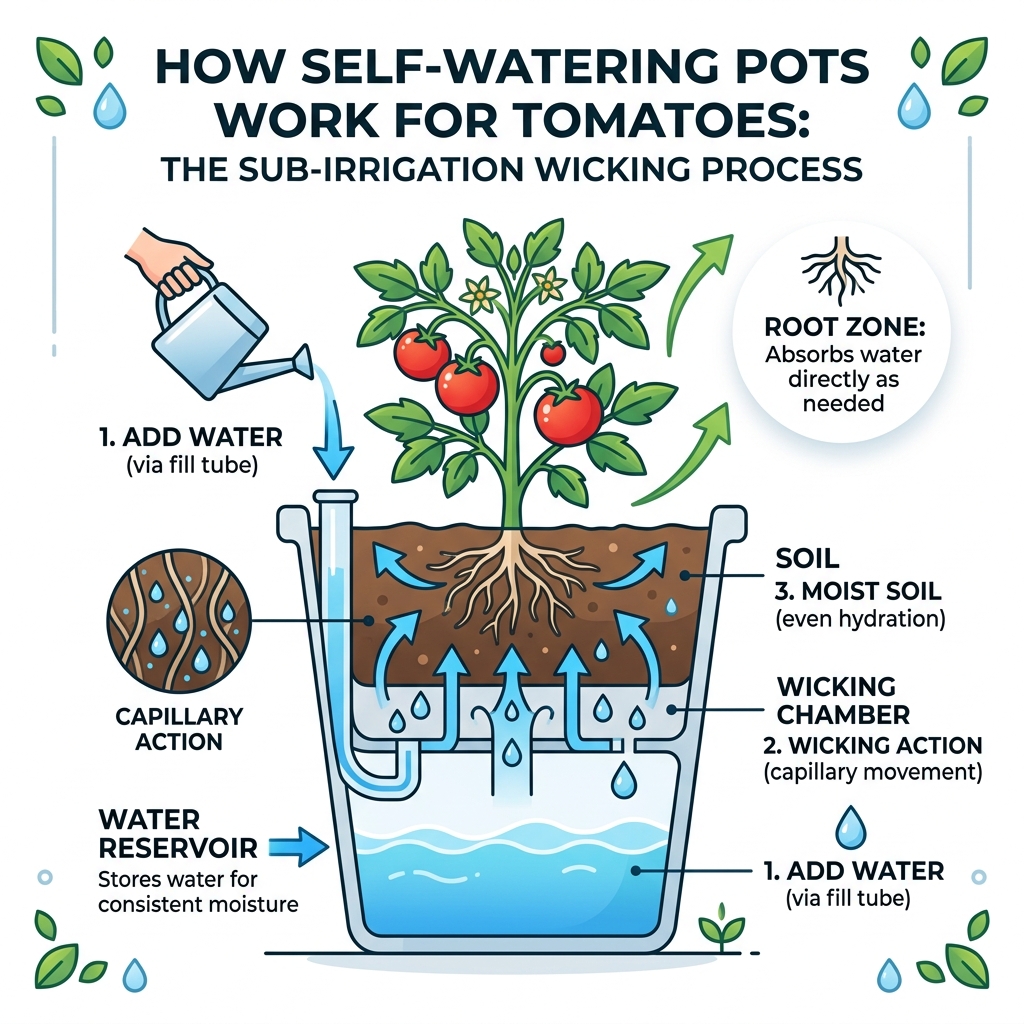
How Self Watering Pots for Tomato Plants Work
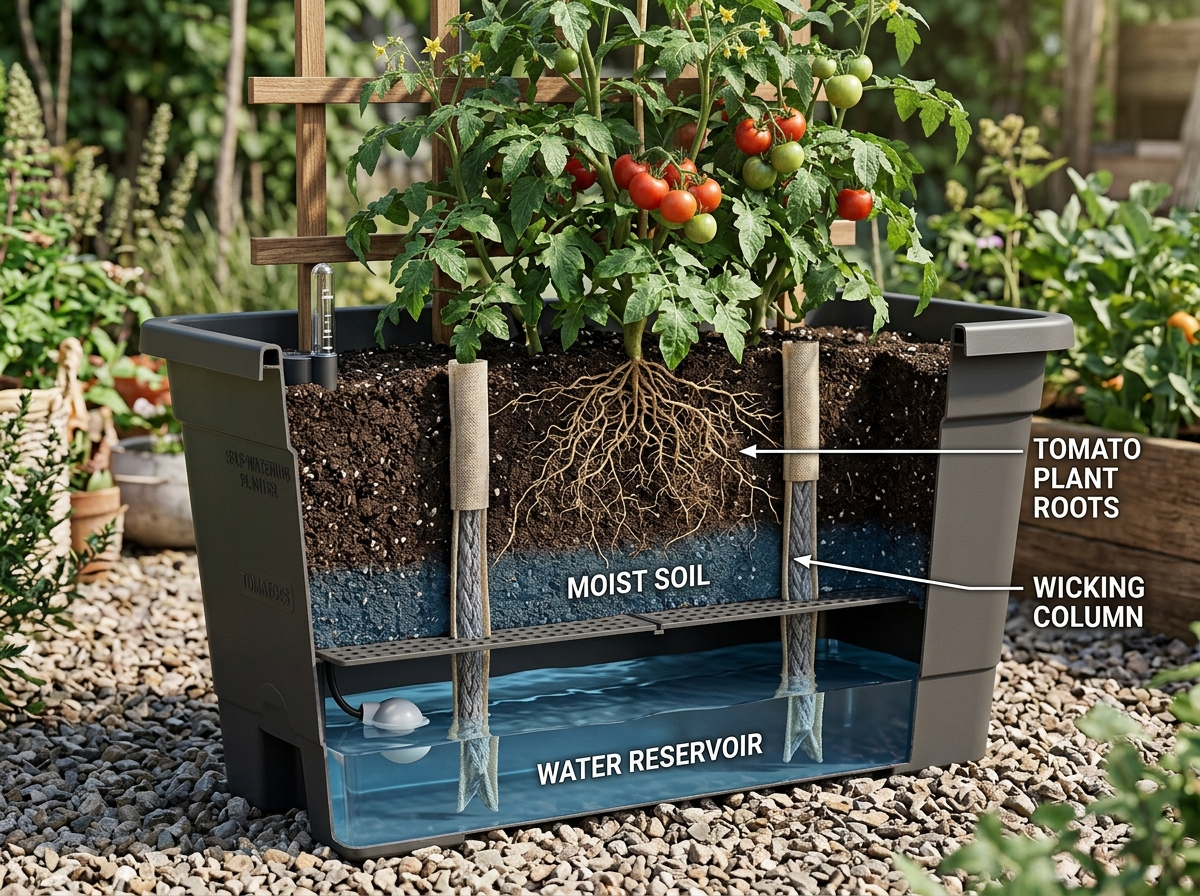
To understand why self watering pots for tomato plants are so effective, we need to look beneath the surface. These systems rely on a method called sub-irrigation. Unlike traditional pots where you pour water over the top of the soil, these containers store water in a bottom-mounted reservoir.
The magic happens through capillary action. Most high-quality planters, such as those discussed in our guide on unleashing the power of self-watering pots for balcony gardens, feature wicking chambers or “feet” that extend from the soil container down into the water. As the plant transpires and the soil dries out, moisture is naturally pulled upward into the root zone.
Key components usually include:
- The Water Reservoir: A dedicated tank at the base that holds several liters or gallons of water.
- Aeration Screen: A perforated platform that separates the soil from the water, preventing the roots from sitting directly in liquid and rotting.
- Wicking Chambers: Pockets of soil that stay in contact with the water to facilitate upward movement.
- Fill Tube: A pipe that allows you to add water directly to the reservoir without disturbing the plant or compacting the soil.
This setup ensures the soil stays at a consistent level of “dampness”—never bone-dry and never waterlogged. It’s a bit like a buffet for your plants; they take exactly what they need, exactly when they need it.
Key Benefits of Using a Self-Watering Planter
If you’ve ever tried growing tomatoes in balcony pots, you know the struggle of the “wilt-and-soak” cycle. One hot afternoon can turn a thriving vine into a crispy mess. By switching to a self-watering system, you are essentially providing your plants with an insurance policy.
One of the most significant benefits is the yield increase. Research into EarthBox systems shows they can produce bigger yields than traditional in-ground or raised bed gardens. Because the plant is never stressed by thirst, it can put all its energy into producing fruit rather than surviving a drought.
Another major win is the prevention of blossom end rot. This frustrating condition—where the bottom of the tomato turns black and mushy—is usually caused by a calcium deficiency triggered by inconsistent watering. By maintaining steady moisture, these planters keep the calcium flowing smoothly to the fruit.
Furthermore, these pots are champions of water conservation. Because the water is stored in a covered reservoir at the bottom, there is significantly less evaporation compared to surface watering. This is a huge plus for sustainable gardening and for those who want to stop playing god with your plants and buy these self-watering planters to save time and resources.
Efficiency of Self Watering Pots for Tomato Plants vs. Traditional Methods
Are they truly more efficient? In a word: Yes. Traditional pots lose water through the sides (if porous) and through the top. They also suffer from “nutrient leaching,” where heavy watering from the top washes away expensive fertilizers through the drainage holes.
In self watering pots for tomato plants, the water moves upward. This keeps the nutrients in the soil where the roots can actually reach them. Statistics show that systems like the Garden Patch GrowBox hold up to 4 gallons of water, lasting roughly 47% longer than other standard planters. This efficiency means you can go away for a weekend without coming home to a “tomato cemetery.”
Beyond Tomatoes: Other Plants for Your Self-Watering System
While these pots are the gold standard for tomatoes, they are incredibly versatile. Any “heavy drinker” in the vegetable world will thrive here. If you are looking for the top pots for balcony gardening, consider using these systems for:
- Peppers and Eggplants: These heat-loving plants hate drying out.
- Cucumbers and Zucchini: Their large leaves lose moisture quickly; a reservoir keeps them crisp.
- Herbs: Especially basil, which loves consistent moisture.
- Runner Beans and Peas: Many self-watering kits come with trellises that are perfect for these climbers.
Essential Features to Look For in a Tomato Planter
Not all self watering pots for tomato plants are created equal. When you are shopping, look for features that specifically cater to the heavy, tall nature of tomato vines.
- Reservoir Capacity: For tomatoes, bigger is better. A reservoir of at least 2 to 5 liters is standard, but some premium boxes hold up to 4 gallons.
- Integrated Trellis Support: Tomatoes need to go up. Look for planters like the Oasis Self-Watering Tomato Planter With Trellis or the Garden Grow Self Watering Tomato Tower, which feature built-in frames.
- Food-Safe Materials: Ensure the plastic is BPA-free and UV-protected. Since you’ll be eating the produce, the container shouldn’t leach chemicals or degrade in the sun.
- Overflow Holes: These are vital. They ensure that if it rains heavily, the excess water drains out rather than drowning your roots.
| Feature | Importance | Why it matters |
|---|---|---|
| BPA-Free Plastic | High | Safety for food consumption |
| UV Protection | High | Prevents the pot from cracking in the sun |
| Water Level Indicator | Medium | Lets you see when to refill at a glance |
| Wheels/Casters | Low/Medium | Essential if you need to move the pot to follow the sun |
For more tips on keeping your setup running smoothly, check out our guide on keeping your plants hydrated: how to water balcony plants.
Choosing the Right Size Self Watering Pots for Tomato Plants
Size matters. A common mistake is choosing a pot that is too small. For a standard tomato plant, you want a container with at least a 5-gallon soil capacity.
- Determinate Varieties: These stay smaller and bushier. They can usually thrive in a standard 16-liter to 20-liter planter like the TOM TOMATO.
- Indeterminate Varieties: These are the “vining” types that never stop growing. They need maximum root space and a very sturdy trellis, such as the one found in the EarthBox system.
Setting Up Your Planter for Maximum Yield
Setting up self watering pots for tomato plants is a quick process—often taking less than 30 minutes—but doing it right is the difference between a few snacks and a massive harvest.
First, you must use potting mix, not garden soil. Garden soil is too heavy and will not “wick” water upward; it will just turn into a muddy brick. We recommend a high-quality, peat or coco-coir based mix that stays fluffy.
Next, consider your nutrient strategy. Many pros use a “fertilizer strip” method. You pack the potting mix into the container, create a small trench, and pour in a line of dry fertilizer. You then cover this with a mulch cover (often included in kits like the Garden Patch GrowBox). This prevents weeds and keeps the moisture locked in.
If you have a larger balcony garden, you might even consider setting up drip irrigation for your balcony garden to automatically refill your self-watering reservoirs! For more specific planting steps, see our deep dive on growing tomatoes in balcony pots part 2.
Frequently Asked Questions about Self-Watering Tomato Planters
How often do I need to refill the water reservoir?
This depends on the weather and the size of the plant. A young seedling might only need a refill once every 10-14 days. However, a full-grown, fruit-heavy tomato plant in the heat of July might drink a gallon a day. Generally, most reservoirs (like the 5L tank in the TOM TOMATO) are designed to last about a week for an average plant.
Are these planters safe for growing food?
Yes, provided you choose reputable brands. Look for “BPA-free,” “food-grade,” or “polypropylene” (PP) labels. Brands like Vego Garden and EarthBox use high-quality, non-toxic materials specifically designed for vegetable gardening.
Can I use regular garden soil in a self-watering pot?
No! This is the number one cause of failure. Regular garden soil contains clay and silt that will compact and stop the wicking process. It can also harbor soil-borne diseases. Always use a lightweight potting “mix” or “soilless medium.”
Conclusion
At Finance Lixo, we believe that gardening should be accessible, sustainable, and—most importantly—fun. Using self watering pots for tomato plants removes the stress of the daily watering chore and replaces it with the joy of a bountiful harvest. Whether you are an urban dweller with a tiny balcony or a busy professional who forgets to water, these smart systems are the ultimate shortcut to garden success.
Ready to start your journey? From choosing the right Tomato Self-watering Planter – “Maxitom” to mastering drip irrigation, the path to juicy, sun-ripened tomatoes has never been clearer.
