
The Best Outdoor Self-Watering Solutions for Your Garden
Why the Best Self Watering for Outdoor Plants Can Save Your Garden
The best self watering for outdoor plants includes a range of solutions to fit every budget and garden size:
| Solution | Best For | Coverage/Capacity | Duration |
|---|---|---|---|
| Terra-cotta olla pots | Container gardens, raised beds | Up to 18-inch diameter | Up to 1 week |
| Self-watering stakes/globes | Individual pots and planters | Single plant per unit | Days to 2 weeks |
| Solar drip kits (e.g. AquaBloom) | Balconies and patios | Up to 20 plants | Up to 12 days |
| Smart hose timers (e.g. Rachio) | Yards and garden beds | Multi-zone coverage | Indefinite with scheduling |
| DIY pressure bottle | Small balconies, budget setups | 1-3 plants | 1-2 weeks |
| Self-watering planters | Pots and containers | Varies by size | Days to weeks |
If you have a balcony or patio full of plants, you already know the anxiety. You leave for a long weekend and come back to wilted leaves. You water too much and get root rot. You water too little and lose a plant you’ve been growing for months.
The problem is real. Outdoor plants dry out much faster than indoor ones. Sun, wind, and heat pull moisture from soil quickly, sometimes within a day or two.
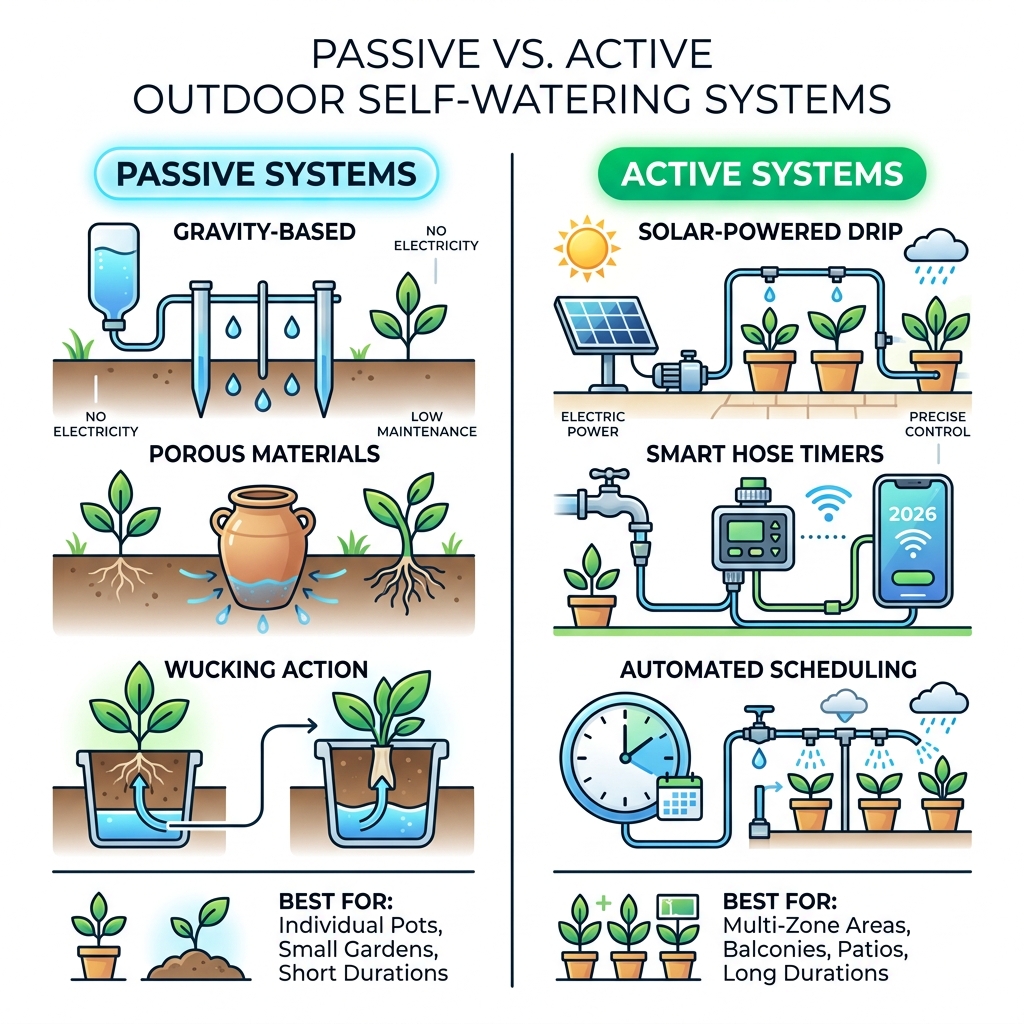
That’s where self-watering systems come in. They deliver water slowly and steadily, right when and where plants need it. Some work passively through gravity or porous clay. Others use solar power, WiFi, and weather data to automate everything.
The right system depends on your space, your plants, and how long you’re away. A small balcony with a few pots needs something very different from a backyard vegetable garden.
This guide breaks down the best options across every category, from simple DIY hacks to smart tech solutions, so you can find what works for your setup.
Best self watering for outdoor plants helpful reading:
- plants for self watering pots
- self watering planters for indoor plants
- self watering pots for tomato plants
Choosing the Best Self Watering for Outdoor Plants
When we step outside, the rules of hydration change. Indoors, a plant might thrive on a single cup of water per week (roughly 237 mL). Outdoors, that same plant faces a gauntlet of environmental stressors. Direct sunlight accelerates transpiration, while wind physically pulls moisture out of the leaves and soil surface.
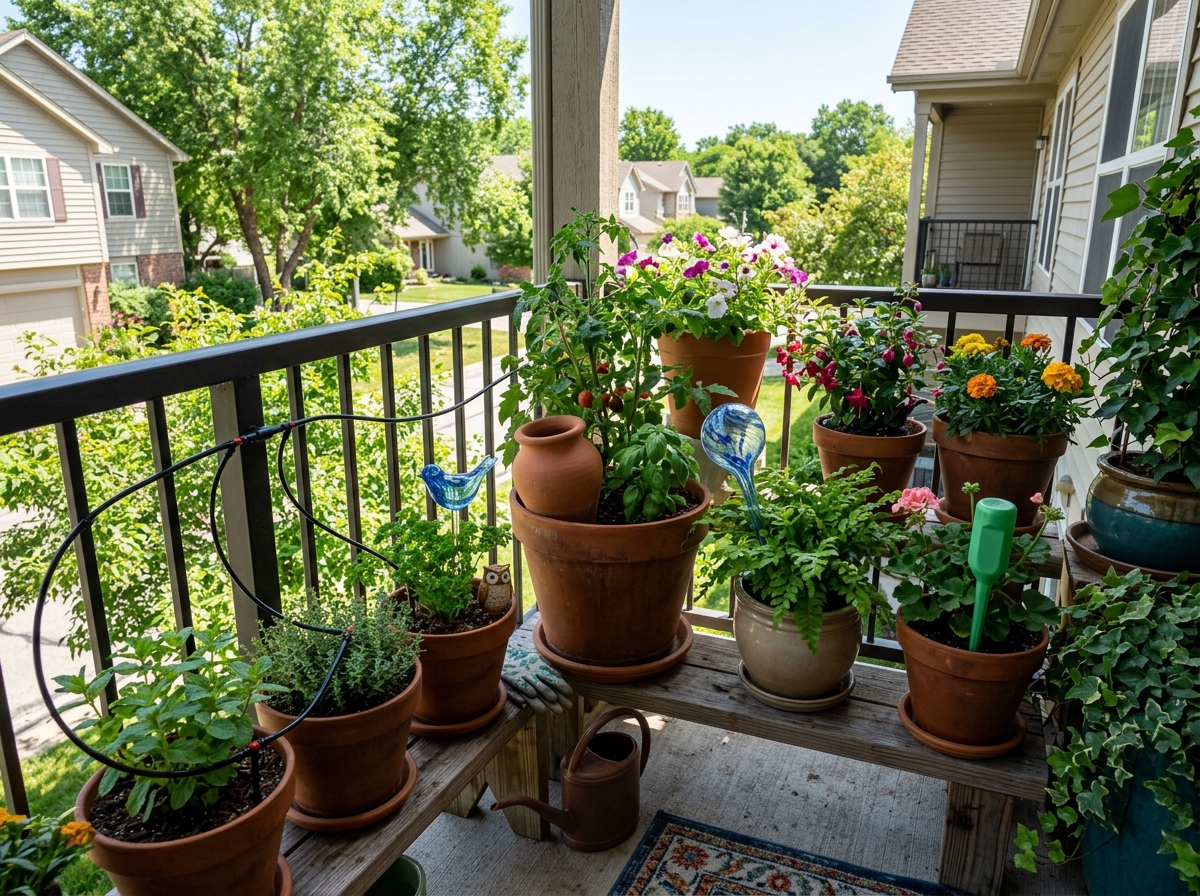
To find the best self watering for outdoor plants, we have to account for evaporation rates. In high-heat areas, a standard watering globe might empty in hours rather than days. This is why capacity and delivery method are so critical. If you are struggling with keeping your patio green, you might want to stop playing God with your plants and buy these self-watering planters to handle the heavy lifting for you.
High-Tech Irrigation: The Best Self Watering for Outdoor Plants in Large Spaces
For those of us with sprawling gardens or multiple zones, manual spikes just won’t cut it. We need systems that think for themselves. Smart controllers like the Rachio 3 Smart Sprinkler Controller | Rachio are game-changers. These devices use “weather intelligence” to skip watering when rain is in the forecast, saving both water and money.
The beauty of high-tech systems lies in zone management. You can program your thirsty hydrangeas to get a deep soak while your drought-tolerant shrubs get a light mist.
| Feature | Smart Hose Timer | Traditional Clock Timer |
|---|---|---|
| Control | Remote via Smartphone App | Manual on-device buttons |
| Weather Awareness | Automatic Rain/Wind Skips | None (waters during rain) |
| Scheduling | Unlimited, dynamic shifts | Limited to 1-2 fixed slots |
| Notifications | Real-time alerts on leaks/skips | None |
| Power | Often Solar or Long-life Battery | Standard Alkaline batteries |
DIY Hacks: Best Self Watering for Outdoor Plants on a Budget
We don’t always need a high-tech hub to keep our plants alive. In fact, some of the most reliable methods are things we can build from our recycling bin. Real-world testing shows that a “pressure bottle” system is one of the most effective ways to handle a two-week vacation.
To make one, take a large plastic bottle, poke two tiny holes on opposite sides near the bottom, fill it with water, and seal the lid tight. Place it on a tray with your plants. Because of the vacuum seal, the bottle only releases water as the soil or tray dries out, creating a demand-based system.
Another budget-friendly “hack” is the pooling method. You place your potted plant (which must have drainage holes) into a larger decorative pot that has no holes. Fill the outer pot with a few inches of water. While some worry about overwatering, many gardeners find that under-watering in the hot sun is the far greater threat.
Passive Watering Solutions for Containers and Patios
Passive systems are the unsung heroes of the garden. They don’t require batteries, WiFi, or a degree in engineering. Instead, they rely on physics—specifically capillary action and porosity. This makes them incredibly reliable for unleashing the power of self-watering pots for balcony gardens where power outlets are scarce.
Porous Terra-Cotta Ollas
Ollas are perhaps the oldest “smart” technology in the world. These unglazed clay pots are buried in the soil and filled with water. Because the clay is porous, water molecules seep through the walls only when the surrounding soil is dry.
A standard 700ml olla can typically support one or two plants in an 18-inch container for up to a full week. The roots actually grow toward the clay, sipping moisture directly from the source. This prevents the surface evaporation that plagues top-watering methods.
Self-Watering Stakes and Globes
If you are looking for something more decorative, glass globes and terra-cotta stakes are the way to go. You can find a wide variety of these on the Amazon Best Sellers: Best Self-Watering Stakes list.
The most effective stakes are those that allow you to recycle a wine or liter bottle. The terra-cotta spike regulates the flow, ensuring the bottle doesn’t just dump all its water into the soil at once. For larger outdoor pots, we recommend using multiple stakes to ensure the entire root ball stays hydrated. If you’re transitioning from indoor to outdoor gardening, it’s worth noting the differences in top indoor self-watering planters and how they compare to these rugged outdoor stakes.
Smart Technology and Solar-Powered Irrigation
When we move into the “active” category, solar power is our best friend. Since outdoor plants are usually in the sun anyway, why not use that energy to power the pump?
Automated Hose Timers
Modern hose timers, like the Smarter, automated hose watering | Rachio, have moved far beyond the “egg timer” style of the past. These WiFi-enabled valves can handle up to 200 PSI and feature flow detection to alert you if a hose has burst. With “Rain Skip” features, they stop the water the moment local weather stations report a downpour.
Precision Smart Sprinklers
For lawns and irregular garden beds, precision is key. Systems like the OtO Smart Sprinkler | OtO Lawn use a 360-degree nozzle that can be “painted” via an app. This means you can program the sprinkler to water your flower bed and your grass, but completely skip the sidewalk or your neighbor’s fence.
These units are typically solar-powered, requiring only about three hours of direct sunlight a day to stay charged. They can cover up to 5,000 square feet, making them the best self watering for outdoor plants in large, complex landscapes.
Plant Selection and Maintenance for Outdoor Systems
Not every plant is a candidate for a self-watering system. While these gadgets are lifesavers, they can be too much of a good thing for certain species.
Best Plants for Self-Watering
Plants that love “wet feet” or consistent moisture are the primary beneficiaries. This includes:
- Leafy Greens: Spinach and lettuce stay crisp and avoid bolting.
- Tropicals: Monsteras and palms thrive on the humidity.
- Tomatoes: These are notorious for cracking if watering is inconsistent; a self-watering pot provides the steady hydration they crave.
- Ferns: They never want to dry out completely.
On the flip side, we should avoid using these systems for succulents, cacti, or Mediterranean herbs like rosemary and lavender, as their roots are prone to rot in constantly damp soil.
Maintenance and Troubleshooting
To keep your system running smoothly, follow these tips:
- Clogging: Mineral buildup from “hard” water can plug up drip heads. Soak them in vinegar once a season to clear the lines.
- Winterizing: This is crucial. Any system with a pump, valve, or plastic tubing must be drained and brought inside before the first freeze. Ice expansion will crack even the most durable plastic.
- Soil Additives: We recommend mixing wool pellets into your soil. These can reduce watering needs by up to 25% by holding onto moisture and releasing it slowly.
- Pest Control: Standing water in reservoirs can attract mosquitoes. Ensure your system is sealed or use “mosquito dunks” to keep larvae at bay.
Frequently Asked Questions about Outdoor Self-Watering
How long can these systems keep plants hydrated during a vacation?
It depends on the reservoir size and the weather. A 700ml olla typically lasts a week. A solar-powered drip system with a large 10-liter reservoir, like the AquaBloom Automatic Plant Watering System – Gardena, can keep up to 20 plants happy for about 12 days. For longer trips, smart hose timers connected to a faucet are the only indefinite solution.
Do self-watering systems work in extreme heat or direct sunlight?
Yes, but you must upsize your reservoir. In 90°F+ weather, plants can consume double their usual water. Passive systems like ollas are actually better in high heat because the water is stored underground where it stays cool and doesn’t evaporate.
Can outdoor self-watering systems freeze during winter?
Most cannot. While some products like the Self Install Automatic Sprinkler System | Rain Bird are designed to be self-draining, most timers and drip lines will be damaged by freezing. Always drain and store your equipment before winter.
Conclusion
Finding the best self watering for outdoor plants doesn’t just save your garden—it saves your sanity. Whether you choose the ancient wisdom of an olla pot, the DIY simplicity of a pressure bottle, or the high-tech precision of a smart sprinkler, you’re investing in a more sustainable and resilient garden.
At Finance Lixo, we believe that gardening should be a source of joy, not a chore that keeps you tethered to a garden hose. By automating your hydration, you can enjoy your summer vacations knowing your plants will be just as lush when you return as they were when you left. For more tips on making the most of your outdoor space, explore our latest guides at Finance Lixo.
