
Grow Your Own: Herb Garden Ideas for Tiny Balconies
Why Small Balcony Herb Planters Are the Smartest Upgrade for Urban Apartments
Small balcony herb planters let you grow fresh herbs in almost any outdoor space, no matter how tight it is. Whether you have a tiny condo ledge or a narrow apartment balcony, the right planter setup can turn it into a productive mini garden.
Here’s a quick overview of what works best:
- Best herbs to start with: Basil, chives, mint (keep it isolated!), parsley, thyme, and rosemary
- Best planter types: Vertical tiered fabric planters, railing boxes, raised wooden planters, or repurposed household items
- Sunlight needed: Most herbs need 6+ hours of direct sun; mint and chives can manage with less
- Key rule: Group herbs by watering needs — Mediterranean herbs (dry soil) separate from soft-stemmed herbs (moist soil)
- Space hack: A 4-tier vertical planter under 10 inches deep can quadruple your growing area against a wall
It doesn’t take a lot of space, money, or gardening experience to get started. Most herbs are forgiving, fast-growing, and incredibly rewarding — you can go from planting to your first harvest in as little as four to six weeks.
The biggest barrier most people face isn’t skill. It’s not knowing where to start — which planter, which herbs, and how to arrange everything on a small balcony without it becoming a cluttered mess.
This guide walks you through everything, step by step.
Small balcony herb planters glossary:
Choosing the Best Small Balcony Herb Planters for Your Space
When we look at a tiny balcony, we don’t see a lack of space; we see an opportunity for vertical thinking. The right small balcony herb planters are those that maximize every square inch while providing the best environment for root health. In urban gardening, we often fight against two things: limited floor space and the drying effects of wind.
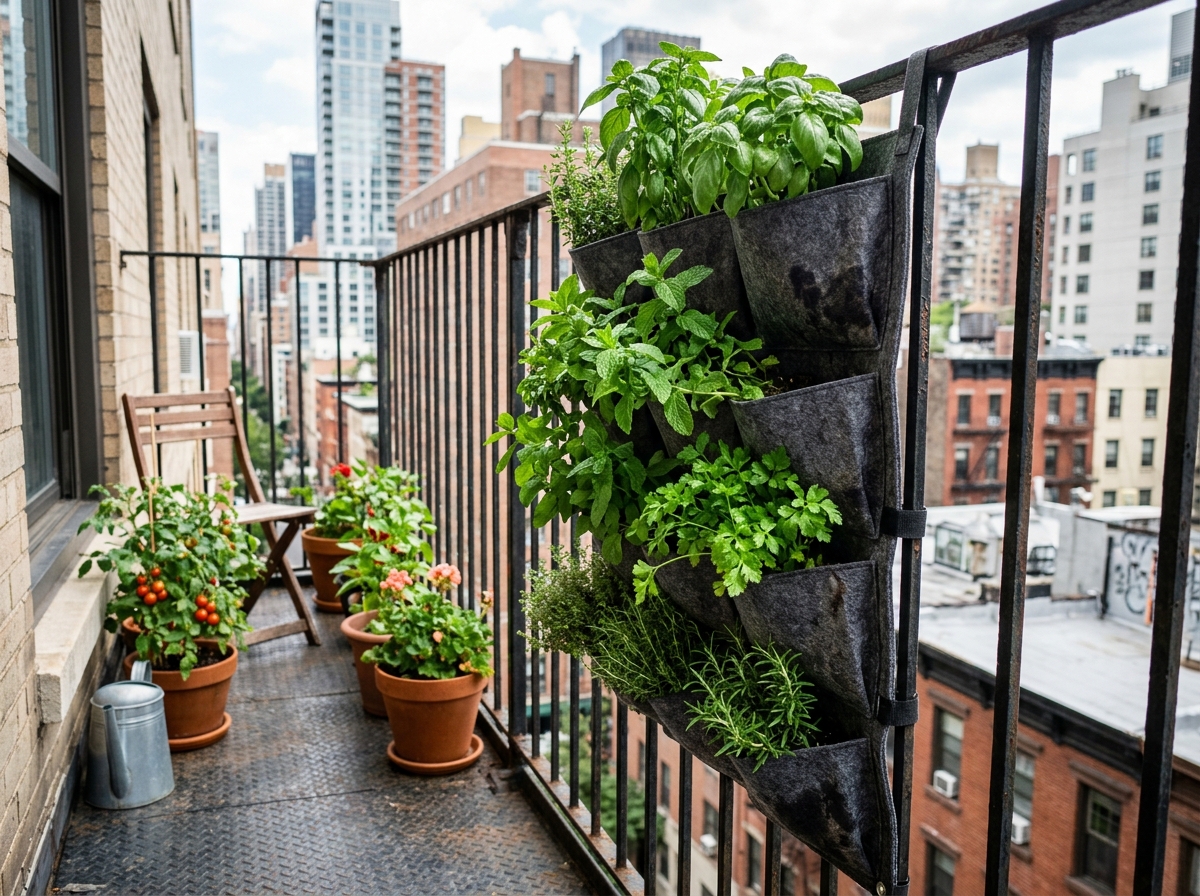
One of the most effective solutions is the use of vertical gardening. Systems like the Vigoroot 4-Tier Balcony Garden are game-changers because they focus on depth rather than width. These planters often feature fabric troughs which are for container gardening. Why? Because of “air pruning.” When roots reach the edge of the fabric, they are exposed to air, which stops their growth and encourages the plant to send out a mass of small, fibrous feeder roots. This leads to a much stronger root system, better nutrient uptake, and ultimately, a bigger harvest for us to enjoy.
If you prefer a more traditional look, raised wooden planters made from FSC-certified cedar are excellent. Cedar is naturally rot-resistant, which is vital when your garden is exposed to the elements. These planters often come with built-in drainage and biodegradable liners to prevent root rot—a common killer of balcony herbs.
Vertical and Space-Saving Small Balcony Herb Planters
To help you decide which setup fits your lifestyle, let’s look at two of the most popular commercial options:
| Feature | Vigoroot 4-Tier Planter | VegTrug Herb Garden |
|---|---|---|
| Width | 80 cm (approx. 31.5 in) | 78 cm (approx. 30.7 in) |
| Depth | 24 cm (approx. 9.4 in) | 58 cm (approx. 22.8 in) |
| Height | 160 cm (approx. 63 in) | 80 cm (approx. 31.5 in) |
| Capacity | 4 deep fabric troughs | 8 individual plantable pockets |
| Best For | Wall-leaning space saving | Back-friendly waist-high gardening |
The Vigoroot system is particularly impressive for high-rise dwellers because it is less than 10 inches deep. You can find more about these compact solutions in our guide on small-balcony-no-problem-with-these-compact-planters. Meanwhile, the VegTrug design is perfect if you want to keep your herbs separated into eight distinct pockets, preventing aggressive growers from taking over the whole neighborhood.
Affordable and DIY Small Balcony Herb Planters
We know that not everyone wants to drop a significant amount of money on a brand-new system right away. If you’re on a budget, look around your home! You can find a wealth of budget-friendly-containers-for-balcony-plants in your own recycling bin or at local thrift stores.
- Railing Buckets: These are classic for a reason. They utilize the “dead space” of your balcony railing.
- Repurposed Ladders: An old wooden ladder makes a fantastic tiered plant stand. Just place pots on the rungs to create an instant vertical garden.
- Wooden Pallets: With a bit of landscape fabric and some staples, a pallet can become a “living wall.”
- Mason Jars: While cute for a kitchen windowsill, they can work on a balcony too. Just be extremely careful with watering since they lack drainage holes—adding a layer of pebbles at the bottom can help, but it’s not a perfect fix.
Selecting and Grouping Your Balcony Herbs
Once you’ve picked your small balcony herb planters, the next step is choosing the residents. Not all herbs get along! Some are water hogs, while others prefer to keep their “feet” dry. Some are polite neighbors, while others—looking at you, Mint—are total space invaders.
Beginner-Friendly Herbs for Small Spaces
If this is your first time gardening, we recommend starting with “the classics.” These are generally hardy and offer a high success rate:
- Basil: The king of the balcony. It loves the sun and tells you exactly when it’s thirsty by wilting slightly.
- Chives: Nearly indestructible. They grow back quickly after being snipped and even produce beautiful edible purple flowers.
- Parsley: A biennial that is very happy in containers. It prefers slightly more moisture than its Mediterranean cousins.
- Rosemary: A hardy perennial that smells divine. It can handle the wind and heat of a high balcony with ease.
- Mint: We love mint for tea and mojitos, but it must be kept in its own pot. If you plant it with other herbs, its underground runners will choke out everything else within a month.
For a deeper dive into variety selection, check out our article on the-best-herbs-for-balcony-gardening.
Grouping Herbs by Watering and Light Needs
The secret to a thriving balcony garden is grouping. We like to categorize herbs into two main “neighborhoods”:
- The Mediterranean Neighborhood: This includes Thyme, Sage, Rosemary, and Oregano. These plants evolved in rocky, dry soils. They love 6+ hours of sun and want their soil to dry out completely between waterings.
- The Soft-Stemmed Neighborhood: This includes Basil, Parsley, Cilantro (Coriander), and Dill. These herbs prefer “consistently moist” soil. If they dry out too much, they tend to “bolt” (go to seed) and lose their flavor.
By grouping these correctly, you avoid the common mistake of overwatering your Rosemary while trying to keep your Parsley alive. You can learn more about these layouts at stop-being-a-dill-and-plan-your-balcony-herb-garden-layout.
Optimal Growing Conditions: Sunlight, Soil, and Water
Your balcony is a microclimate. It might be windier, hotter, or shadier than the ground-level garden down the street. Understanding these factors is key to using your small balcony herb planters effectively.
Sunlight and Orientation
The direction your balcony faces determines what you can grow.
- South-Facing: The “Gold Standard.” You’ll get 6-8+ hours of sun, perfect for sun-hungry Mediterranean herbs.
- North-Facing: This can be tricky. You’ll likely have more shade. Stick to shade-tolerant herbs like Mint, Chives, and Lemon Balm. They won’t grow as fast, but they will survive.
- East/West-Facing: You’ll get intense sun for half the day. Most herbs will do well here, but keep an eye on watering during the hot afternoon sun on a West-facing balcony.
Soil: Don’t Use “Garden Soil”
One of the biggest mistakes beginners make is digging up dirt from a park or a friend’s yard. Real garden soil is too heavy for containers; it compacts, suffocates roots, and doesn’t drain well. Instead, use a high-quality organic potting mix.
We recommend a blend that includes:
- Mushroom Compost: For a slow release of nutrients.
- Blood and Bone: To provide essential nitrogen and phosphorus.
- Perlite or Vermiculite: To keep the mix airy and light.
For more on choosing the right housing for your plants, see top-pots-for-balcony-gardening.
Starting from Seeds vs. Seedlings
Should you buy a packet of seeds or a pre-grown plant?
- Seeds: Much cheaper and very rewarding. Herbs like Basil, Dill, and Cilantro grow quickly from seed (germination usually takes 7-14 days). Check out thyme-to-grow-top-seeds-for-your-high-rise-herb-garden for the best varieties to sow.
- Seedlings: Best for slow-growers like Rosemary, Lavender, or Sage. When transplanting, remember to gently massage the roots if they are circling the bottom of the nursery pot. This “wakes them up” and encourages them to grow outward into their new home.
Watering and Drainage Best Practices
On a balcony, the wind can dry out a small pot in hours. We use the “finger test”—stick your index finger an inch into the soil. If it feels dry, it’s time to water.
Always ensure your small balcony herb planters have drainage holes. Without them, water pools at the bottom, the soil turns sour, and the roots rot. If you’re worried about water dripping onto your neighbor’s balcony below, use saucers or consider grow-bags-for-balcony-maximizing-your-small-space which breathe and manage moisture more naturally.
Long-Term Care: Harvesting, Pests, and Weather Protection
A herb garden isn’t a “set it and forget it” project. It’s a living thing that needs a little love to keep producing.
The “Cut-and-Come-Again” Method
Most herbs are incredibly generous. The more you harvest, the more they grow! By “pinching” off the top set of leaves, you encourage the plant to branch out, creating a bushier, more productive plant. Never harvest more than one-third of the plant at a time, though, or you might shock it. Learn the art of the snip at stop-thyme-and-build-a-balcony-wall-herb-garden.
Managing Common Balcony Pests
Even on the 10th floor, pests can find you.
- Aphids: Tiny green or black bugs. A simple spray of insecticidal soap or even a sharp blast of water can knock them off.
- Spider Mites: They love hot, dry balconies. Keeping humidity up by misting can help.
- Natural Repellents: Growing herbs like Lemongrass, Rosemary, and Basil can actually help repel mosquitoes from your seating area!
For vertical solutions to pest management, visit vertical-herb-gardening-made-easy-for-tiny-kitchens.
Protecting Herbs from Extreme Weather
Wind is the silent killer of balcony gardens. It physically batters the plants and speeds up evaporation.
- Wind Buffers: Place your small balcony herb planters against a wall or use the railing itself as a shield.
- Overwintering: Perennials like Thyme and Sage can often survive winter outdoors if protected. Tender herbs like Basil will die at the first frost, so bring them inside or harvest them all for pesto before the cold hits.
- Greenhouse Covers: Many planters, like the VegTrug, offer custom greenhouse covers to extend your growing season into the cooler months.
Frequently Asked Questions about Balcony Herb Gardening
Which herbs can be planted together in one pot?
You can successfully group Mediterranean varieties like rosemary, thyme, sage, and oregano because they all enjoy full sun and well-drained, drier soil. Similarly, moisture-loving “soft” herbs like parsley, cilantro, and chives can share a space. Just remember: always give mint its own “apartment” (pot) so it doesn’t take over the whole building!
How much sunlight does a balcony herb garden need?
The vast majority of culinary herbs are sun-worshippers and need at least 6 hours of direct sunlight daily. If your balcony is shadier, focus on mint, chives, parsley, and lemon balm, which are more tolerant of partial shade conditions.
What are the best small balcony herb planters for beginners?
For beginners, we recommend raised planters like the VegTrug Herb Garden because they are ergonomic and have built-in drainage. If you are extremely tight on space, a vertical fabric system like the Vigoroot 4-Tier Balcony Garden is the best way to maximize your harvest without cluttering your floor.
Conclusion
Starting a balcony herb garden is one of the most rewarding steps you can take toward a more sustainable and flavorful urban lifestyle. At Finance Lixo, we believe that you don’t need a sprawling backyard to enjoy the luxury of fresh, homegrown produce. With the right small balcony herb planters, a little bit of sunlight, and a consistent watering routine, you can transform your tiny outdoor space into a lush, aromatic sanctuary.
Ready to take your balcony to the next level? Check out More design inspiration for your home for more tips on making the most of your urban living space. Happy planting!
