
Grow Your Own Salad with This Urban Balcony Gardening Guide
Your Balcony Is a Garden Waiting to Happen
An urban balcony gardening guide is exactly what you need if you want to grow fresh herbs, salads, or flowers — but only have a small outdoor ledge to work with. The good news: even a tiny balcony can become a productive, beautiful green space.
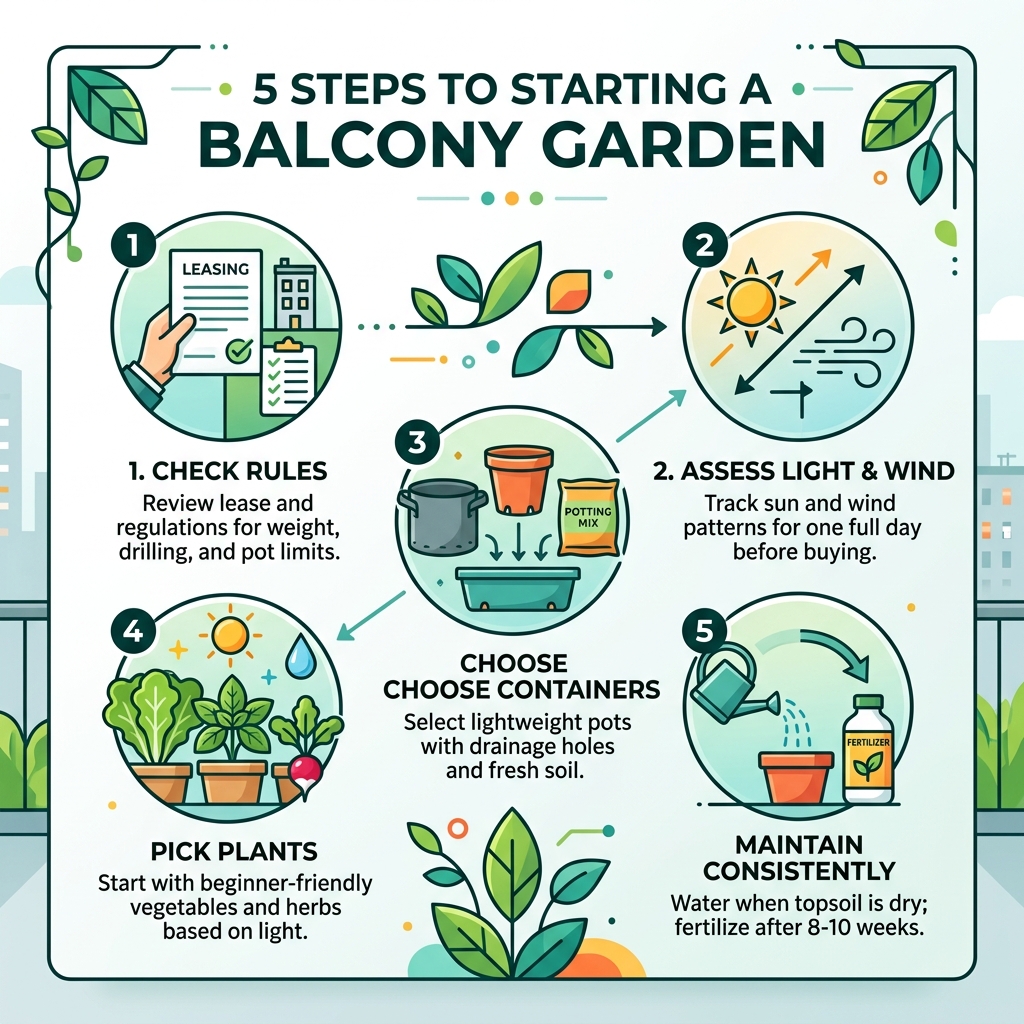
Here’s the quick version — how to start a balcony garden in 5 steps:
- Check the rules — Review your lease or building regulations for restrictions on pots, weight, and drilling.
- Assess your space — Track sunlight and wind patterns for at least one full day before buying anything.
- Choose the right containers — Use lightweight plastic, fabric, or fiberglass pots with drainage holes and fresh potting mix.
- Pick beginner-friendly plants — Start with herbs, loose-leaf lettuce, or radishes based on how much sun your balcony gets.
- Stay consistent with care — Water when the top inch of soil feels dry, and fertilize after the first 8-10 weeks.
That’s the foundation. But if you want your balcony garden to actually thrive — not just survive — the details matter.
Most vegetables and herbs need at least 6-8 hours of direct sunlight daily. Balcony containers dry out faster than ground soil, especially on windy upper floors. And building codes typically set a load limit of around 60 pounds per square foot, which affects what containers and soil you can use.
This guide walks you through every step — from reading your balcony’s microclimate to setting up irrigation — so you can grow real food in a real small space, without the guesswork.
Urban balcony gardening guide terms to remember:
- Balcony Vegetable Gardening for Beginners
- Small Balcony Gardening for Beginners
- Low Maintenance Creative Balconies Garden Design
Assessing Your Space: Rules, Weight, and Microclimates
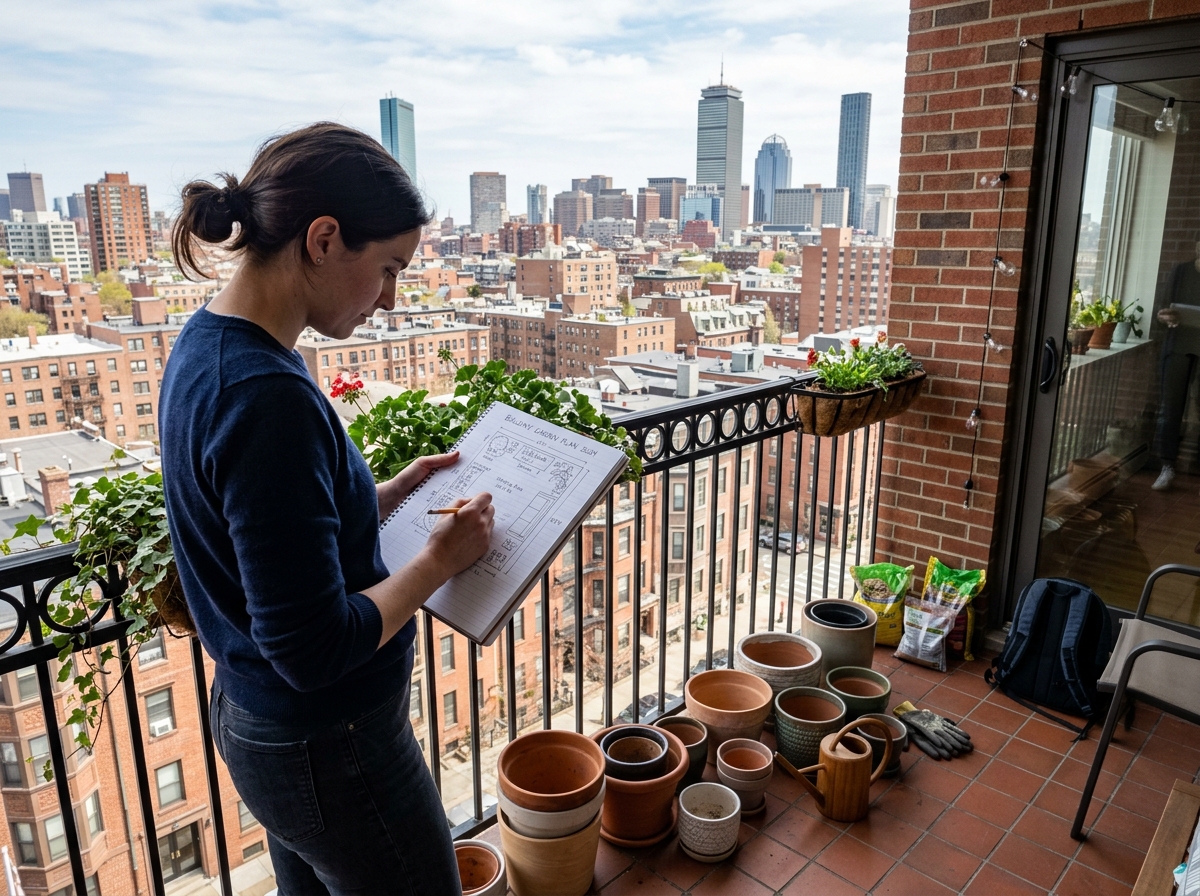
Before we start buying bags of soil and colorful ceramic pots, we need to do a little detective work. Gardening on a balcony isn’t quite the same as gardening in a backyard; we have neighbors below us, building codes above us, and structural limits beneath our feet.
First, check your building’s bylaws or your lease agreement. Some apartment complexes have strict rules about “non-attached elements.” This might mean you can’t hang planters over the outside of the railing, or you might be restricted from drilling into the exterior walls to hang shelves. Safety is also a major factor—your garden should never obstruct emergency exits or fire escapes.
Weight is the silent “deal-breaker” of balcony gardening. Most modern building safety codes require balconies to support roughly 60 pounds per square foot. While that sounds like a lot, a large ceramic pot filled with wet garden soil can easily exceed that limit. To keep things safe, we always recommend spreading the weight out rather than clustering heavy pots in one corner.
To ensure your plants actually grow, you need to understand the light they’ll receive. You can find more info about sunlight needs to help you match the right plant to your specific ledge.
Evaluating Sunlight and Wind Patterns
The direction your balcony faces dictates your entire planting calendar.
- South-facing balconies are the “gold standard,” receiving 6–8+ hours of direct sun. This is where tomatoes and peppers thrive.
- East-facing balconies get gentle morning sun, perfect for leafy greens like lettuce that might wilt in intense afternoon heat.
- West-facing balconies get blasted with hot afternoon sun; here, Mediterranean herbs like rosemary and thyme are your best friends.
- North-facing balconies are often in full shade, meaning you’ll want to stick to ferns, hostas, or shade-tolerant herbs like mint and chives.
To get an accurate reading, we suggest the “photo method.” Take a picture of your balcony every two hours from 7 AM to 7 PM. This creates a visual record of exactly where the shadows fall. You can also use tools like SunCalc.org to map the sun’s trajectory specifically for your address.
Don’t forget the wind! Higher floors experience much higher airflow, which leads to soil evaporating 2-3 times faster than at ground level. If your balcony is a wind tunnel, consider installing bamboo screens or acrylic windbreaks to protect delicate stems from snapping.
Managing Weight and Safety
Managing weight is all about the materials you choose. Instead of heavy terracotta or stone, we opt for lightweight alternatives like:
- Plastic or Resin: Durable, affordable, and very light.
- Fiberglass: Looks like stone but weighs a fraction of the amount.
- Fabric Grow Bags: Excellent for root health and incredibly light when empty.
When arranging your layout, place the heaviest pots near the building’s structural supports (usually the walls) rather than right at the edge of the railing. Also, always use saucers. Not only do they protect the balcony floor, but they prevent water from dripping onto your neighbor’s morning coffee below!
Essential Gear: Choosing the Right Containers and Soil
Choosing a pot is about more than just aesthetics. Every container needs drainage holes. Without them, water sits at the bottom, the roots rot, and your plant dies a soggy death. If you find a beautiful pot without holes, use it as a “cachepot”—keep the plant in a plain plastic nursery pot inside the decorative one.
For those who travel or tend to forget watering, self-watering planters are a lifesaver. Products like the Keter Easy Grow (which holds about 31.7 gallons of soil) include a built-in reservoir that allows plants to drink as needed.
If you’re feeling crafty, check out our DIY planter guide for custom solutions. For those with absolutely zero floor space, railing planter options can double your growing area by utilizing the perimeter of your space.
Selecting the Best Potting Media
Never use “garden soil” or “topsoil” from a bag in your balcony containers. It is too heavy, it compacts easily, and it often contains weed seeds or pests. In a pot, garden soil turns into a hard brick that prevents roots from breathing.
Instead, use a high-quality potting mix. These are “soilless” blends usually made of:
- Peat moss or Coconut Coir: To hold moisture.
- Perlite or Vermiculite: Those little white “popcorn” bits that provide aeration and drainage.
- Compost: For initial nutrients.
| Container Material | Weight | Durability | Moisture Retention |
|---|---|---|---|
| Plastic | Very Light | High | High |
| Terracotta | Heavy | Medium (can crack in frost) | Low (porous) |
| Fabric Bags | Lightest | Medium | Medium (high aeration) |
| Fiberglass | Light | High | High |
Fertilization and Soil Health
Plants in containers are like pets—they are entirely dependent on you for food. Most fresh commercial potting soils only have enough nutrients to last for 8-10 weeks. After that, the plants will have “eaten” everything in the pot.
To keep your urban balcony gardening guide project successful, we recommend a two-pronged approach:
- Slow-release fertilizer: Mix these granules into the soil at planting time. They break down slowly over several months.
- Liquid feed: Every 2-4 weeks during the growing season, use a water-soluble organic fertilizer (like seaweed extract or fish emulsion) to give your plants a quick boost.
Maximizing Your Urban Balcony Gardening Guide Layout
When space is tight, we stop thinking horizontally and start thinking vertically. A long, narrow balcony can be transformed by “zoning.” We like to divide the space into three areas:
- The Growing Zone: Where the sun is strongest, usually along the railing.
- The Relaxation Zone: A small chair or bistro set.
- The Utility/Vertical Zone: Using walls for trellises or shelving units.
To get more inspiration, explore these vertical garden ideas or our tips on maximizing limited space.
The Thriller, Filler, Spiller Technique
This is a classic design secret for making containers look professional.
- The Thriller: An upright, eye-catching plant in the center (like a dwarf tomato or a tall ornamental grass).
- The Filler: Bushy plants placed around the thriller to make the pot look full (like basil, marigolds, or petunias).
- The Spiller: Trailing plants that hang over the edge of the pot (like strawberries, creeping thyme, or sweet potato vine).
Choosing Edibles for Your Urban Balcony Gardening Guide
If you want a high “return on investment,” grow things you eat every day. Herbs are the perfect starting point—1 in 4 people in Britain already grow them because they take up very little space and are expensive to buy at the store.
For beginners, we recommend:
- Leafy Greens: Loose-leaf lettuce and spinach grow fast and can be harvested “cut-and-come-again” style.
- Radishes: These are the “instant gratification” of the garden, often ready to eat in just 25–30 days.
- Herbs: Chives, mint (keep it in its own pot!), and parsley are very forgiving.
Check out our best herbs for balconies and our top plant selection guide for more specific recommendations.
Maintenance and Care: Watering and Protection
Watering is the most important daily task. Because balcony pots are exposed to wind on all sides, they dry out much faster than a garden bed. In the heat of summer, you might need to water twice a day.
The “Finger Test” is your best tool: stick your finger into the soil up to the second knuckle. If it feels dry, water until it starts to run out of the drainage holes at the bottom. We always recommend watering in the morning; this allows the leaves to dry during the day, which prevents fungal diseases.
For more detailed help, see our hydration tips or learn about setting up drip irrigation.
Pest Control and Companion Planting
Even 15 floors up, pests like aphids will find your plants. They are often blown in by the wind. Instead of harsh chemicals, we use companion planting.
- Marigolds deter many common pests with their scent.
- Basil planted near tomatoes can help improve the tomato’s flavor and repel flies.
- Neem oil or a simple spray of soapy water is usually enough to handle most urban infestations.
Be sure to read up on avoiding common mistakes to keep your ecosystem healthy.
Common Mistakes in Your Urban Balcony Gardening Guide
We’ve all been there—the “garden center trolley effect” where we buy everything that looks pretty without a plan. Here are the top pitfalls to avoid:
- Using Garden Soil: As mentioned, it’s too heavy and doesn’t drain.
- Ignoring the Wind: A beautiful plant can be shredded in one afternoon if not secured or screened.
- Overwatering: If the soil is always soggy, the roots can’t breathe.
- Blocking the Door: Always ensure you have a clear path for safety.
Frequently Asked Questions about Urban Balcony Gardening
How much weight can a standard balcony hold?
Most building safety codes require balconies to support 60 pounds per square foot. To stay within this limit, use lightweight potting mixes (which weigh less than topsoil) and plastic or fabric containers. Avoid large stone statues or massive concrete planters unless you have confirmed your balcony’s specific load-bearing capacity with a structural engineer.
What are the easiest vegetables for beginners to grow?
Radishes are the easiest, followed by loose-leaf lettuce and spinach. These “quick crops” are often ready in 4–6 weeks. Cherry tomatoes (specifically “patio” or “determinate” varieties) are also great for beginners because they are more disease-resistant and don’t grow into 8-foot-tall monsters.
How do I protect my balcony plants from strong winds?
Group your pots together; they create a small microclimate of humidity and provide mutual physical support. You can also use bamboo panels or trellis screens as windbreaks. For tall plants like tomatoes, use sturdy stakes or “guy-lines” to tether the pots to the balcony structure so they don’t blow over.
Conclusion
At Finance Lixo, we believe that gardening is for everyone, regardless of how much square footage you have. By following this urban balcony gardening guide, you aren’t just growing food; you’re contributing to urban biodiversity, improving your mental well-being, and creating a personal sanctuary in the heart of the city.
Whether you start with a single pot of mint or a full vertical farm of tomatoes, the key is to start small and learn as you go. Ready to get your hands dirty? Start your journey with our beginners guide and watch your urban oasis bloom!
