
Design a Balcony Garden That Makes Your Neighbors Green with Envy
Why Every Urban Apartment Dweller Should Design a Balcony Garden
Design a balcony garden and you can turn even the smallest concrete slab into a thriving green retreat — no yard required.
Here’s a quick overview of how to do it:
- Assess your space — check weight limits, sunlight hours, wind exposure, and any landlord or HOA restrictions
- Plan your layout — divide the balcony into zones (seating, growing, transition) and keep pathways at least 18 inches wide
- Choose plants and containers — match plants to your light conditions and use lightweight pots with proper drainage
- Maintain and enjoy — water consistently, feed every 2-3 weeks, and protect plants seasonally
Most apartment balconies support 40-50 pounds per square foot — enough for a beautiful, productive garden if you plan smart. Wind, shade, and limited floor space are real challenges, but they’re very solvable ones.
The reward? Fresh herbs at arm’s reach, a calming outdoor space, and yes — neighbors who will absolutely notice.
Whether your balcony gets full sun all day or sits in shade most of the time, there’s a design that works for it. This guide walks you through every step.
Assessing Your Space: The Foundation of a Successful Design
Before we buy a single bag of soil, we need to play detective. Every balcony has a “microclimate”—a specific set of environmental conditions that might be totally different from the park across the street.
Weight Limits and Regulations
Safety first! Most residential balconies are engineered to support 40-50 pounds per square foot (psf). While high-rise buildings can sometimes handle up to 100 psf, we must be cautious. Why? Because wet soil is surprisingly heavy, weighing between 75-100 pounds per cubic foot. A standard 2x2x1 foot planter filled with damp soil can easily tip the scales at 300-400 pounds.
Check your lease or HOA rules before you start. Some buildings have strict bans on hanging items over railings or painting the floor. Understanding these creating-a-green-oasis-how-to-start-balcony-gardening steps ensures your garden stays legal and safe.
Sunlight and Exposure
How much sun does your “yard” actually get? We recommend tracking the light every two hours.
- Full Sun: 6–8+ hours of direct light.
- Part Sun: 4–6 hours (usually morning or late afternoon).
- Part Shade: 2–4 hours of filtered light.
- Full Shade: Less than 2 hours of direct sun.
Pro tip: If you have a Ring camera, use it to monitor the space for 24 hours to see exactly where the shadows fall!
The Wind and Heat Island Effect
Balconies, especially on higher floors, experience the “wind tunnel effect.” Wind can dry out plants faster than the sun does, and temperatures can fluctuate 5-15°F from the official ground-level readings. Furthermore, urban balconies often suffer from the urban heat island effect, where concrete absorbs heat, making the air up to 2°C warmer than surrounding areas.
How to Design a Balcony Garden Layout for Maximum Impact
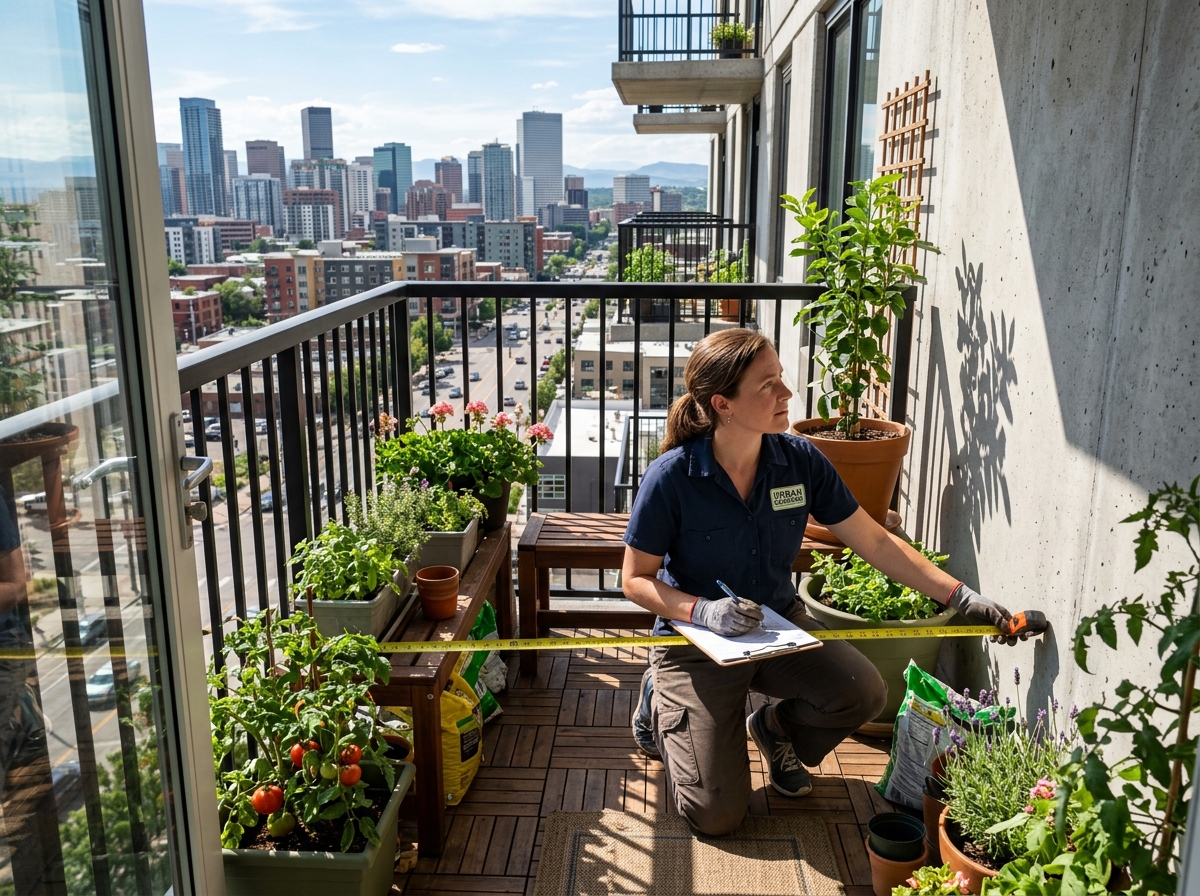
When we design a balcony garden, we aren’t just placing pots; we are creating a room. The goal is to maximize every inch without making it feel like a storage unit.
Zoning and Traffic Flow
Divide your balcony into three primary zones:
- The Relaxation Zone: Where you sit with your coffee.
- The Growing Zone: Where the greenery lives.
- The Transition Zone: The area right by the door that connects inside to outside.
To keep the space functional, maintain clear pathways of at least 18 inches in width. This ensures you can move around to water your plants without doing a gymnastic routine.
Utilizing Vertical and Railing Space
Don’t let your walls go to waste! Vertical balcony garden ideas are the secret weapon of the urban gardener. Use trellises, wall-mounted planters, or even hanging gutters to double your growing area. Railing planters are another fantastic way to add a colorful backdrop while keeping the floor clear.
| Layout Style | Best For | Key Feature |
|---|---|---|
| L-Shaped | Square Balconies | Wraps around the corner to leave the center open. |
| Linear | Long & Narrow | Keeps all pots on one side to maintain a walking path. |
| Zoned | Large Balconies | Uses furniture and tall plants to create “rooms.” |
Smart Strategies to Design a Balcony Garden in Small Spaces
If your balcony is under 50 square feet, every piece of furniture must earn its keep. Look for bistro sets with 24-30 inch table diameters or foldable chairs that can be tucked away.
To create the illusion of more space, consider adding an outdoor-rated mirror to a wall—it reflects the greenery and makes the area feel twice as large. Tiered plant stands and pocket gardens (fabric bags with slots for plants) are also excellent for how-to-master-small-balcony-garden-decoration-ideas that keep things organized.
Selecting Plants and Containers for Your Microclimate
The pots you choose are just as important as the plants inside them. For balconies, we always prioritize lightweight materials like resin, fiberglass, or plastic. Traditional terracotta is beautiful but heavy and porous, meaning it dries out very quickly in the wind.
Container Essentials
Every container must have drainage. We recommend multiple quarter-inch drainage holes spaced every 2-3 inches across the bottom. To prevent soil from running out and staining your balcony (or your neighbor’s!), place a coffee filter or a screen over the holes before adding soil.
For most vegetables and herbs, a 12-inch depth is the minimum. If you want to grow root vegetables like carrots, aim for 18+ inches.
Matching Plants to Light
- For Sunny Spots: Mediterranean herbs (lavender, rosemary), peppers, and balcony-flower-garden-ideas like petunias or lantana.
- For Shady Spots: Ferns, hostas, begonias, and leafy greens like spinach or kale.
- For Windy Spots: Ornamental grasses or sturdy succulents that won’t snap in a breeze.
If you want a lush, jungle feel, explore tropical-balcony-garden options like Philodendrons, but remember they may need to come inside during the winter.
Choosing the Best Edibles to Design a Balcony Garden
There is nothing more satisfying than a “pizza garden” on your balcony.
- Herbs: Basil, mint, and chives are high-yield and take up very little space. Always plant mint in its own pot, or it will take over everything!
- Vegetables: Look for “determinate” or “patio” varieties of tomatoes. These grow to a fixed size rather than vining forever.
- Quick Wins: Radishes are ready in 4-6 weeks, making them perfect for beginners.
Check out our balcony-herb-garden-design guide for more specific culinary pairings.
Maintenance Mastery: Watering, Feeding, and Seasonal Care
Container plants are like pets—they rely entirely on us for food and water. Because they have limited soil, they dry out faster and run out of nutrients more quickly than plants in the ground.
The Golden Rules of Watering
Since many balconies lack a hose spigot, you’ll likely be hand-watering.
- Check daily: Stick your finger an inch into the soil; if it’s dry, water it.
- Water in the morning: This gives the plants a “drink” before the heat of the day and prevents fungal diseases.
- Use saucers: Always place trays under your pots to catch overflow. This prevents water from dripping onto the balcony below.
Feeding Your Garden
Nutrients leach out of the soil every time you water. We recommend adding a slow-release fertilizer at planting time and supplementing with a liquid fertilizer every 2-3 weeks. Look for the N-P-K (Nitrogen, Phosphorus, Potassium) numbers on the bag:
- High Nitrogen (N): Great for leafy greens and herbs.
- High Phosphorus (P): Essential for flowers and tomatoes.
Pests and Winterization
Keep an eye out for uninvited guests. Aphids and spider mites love balcony gardens. Neem oil is a great organic solution, but often “handpicking” bugs is enough for a small space.
When the temperature drops, protect your investment. Wrap pots in bubble wrap or burlap to insulate the roots, and move tender plants against the building wall where it’s warmer. For more tips on sustainable care, see our eco-friendly-balcony-garden guide.
Elevating Aesthetics: Privacy, Lighting, and Comfort
A garden should be a sanctuary. To truly design a balcony garden that feels like an oasis, we need to address the “human” elements: privacy, light, and coziness.
Creating a Living Screen
If your neighbor is a little too close for comfort, use plants to create a balcony-garden-for-privacy. Tall ornamental grasses, bamboo in troughs, or climbing jasmine on a trellis can block sightlines while smelling heavenly.
Lighting the Night
Modern LED solar lights are a game-changer. They provide 6-8 hours of glow after a day of charging.
- String lights: Drape them along the railing for a boho-balcony-garden vibe.
- Lanterns: Place them on the floor to highlight pathways.
- Fairy lights: Wrap them around trellises for a romantic-balcony-garden feel.
Explore more balcony-garden-lighting-ideas to extend your garden’s use into the evening.
Added Comforts
Don’t forget the floor! An outdoor rug can hide an ugly concrete slab and make the space feel like a cozy-balcony-garden. Add weather-resistant cushions and a small throw blanket for those chilly autumn nights.
Budget-Friendly and Renter-Friendly Design Tips
You don’t need a massive budget to design a balcony garden. In fact, some of the best gardens are built on a dime.
- Repurpose and Upcycle: Old wooden crates can become plant stands. Galvanized buckets (with holes drilled in the bottom) make stylish, industrial planters.
- Start from Seed: A packet of seeds costs $3, while a started plant costs $10. Try radishes or lettuce for easy seed starting.
- Phased Development: You don’t have to buy everything at once. Start with one “hero” plant and a chair, then add more each month.
- Temporary Solutions: Use “S-hooks” to hang plants from railings without drilling. Command hooks are great for lightweight string lights.
For those who prefer a clean, uncluttered look, a minimalist-balcony-garden focusing on 2-3 large, architectural plants is often cheaper and more impactful. Or, if you want the latest trends, check out these modern-balcony-garden-ideas.
Frequently Asked Questions about Balcony Gardening
How much weight can a standard residential balcony hold?
Most are rated for 40-50 pounds per square foot. To stay safe, use lightweight potting mix (never topsoil), choose plastic or resin pots, and distribute the weight evenly. Avoid placing all your heaviest pots in one corner.
What are the best plants for a windy high-rise balcony?
Look for plants with flexible stems or low profiles. Ornamental grasses (like Mexican Feather Grass), succulents, and dwarf conifers are excellent. Avoid large-leafed plants like Elephant Ears, as the wind will shred them.
How do I prevent water from dripping onto my neighbor’s balcony?
This is the number one cause of “neighbor wars.” Always use deep saucers under your pots. You can also use “self-watering” containers that have an internal reservoir, which significantly reduces runoff.
Conclusion
At Finance Lixo, we believe that everyone deserves a slice of nature, regardless of their zip code or square footage. When you design a balcony garden, you aren’t just growing plants; you’re growing your own well-being. From the first sprout of a radish to the glow of solar lights at twilight, your balcony is a canvas waiting for your touch.
Check out the-ultimate-apartment-balcony-gardening-guide for more advanced tips. Start your green journey today and transform your view one pot at a time!
