
Small Space Big Style DIY Balcony Garden Ideas
Why DIY Balcony Garden Ideas Are Worth Your Time (and Small Space)
DIY balcony garden ideas can turn even the tiniest outdoor slab into a living, breathing green retreat — no backyard required.
Here are some of the most popular and effective ideas to get you started:
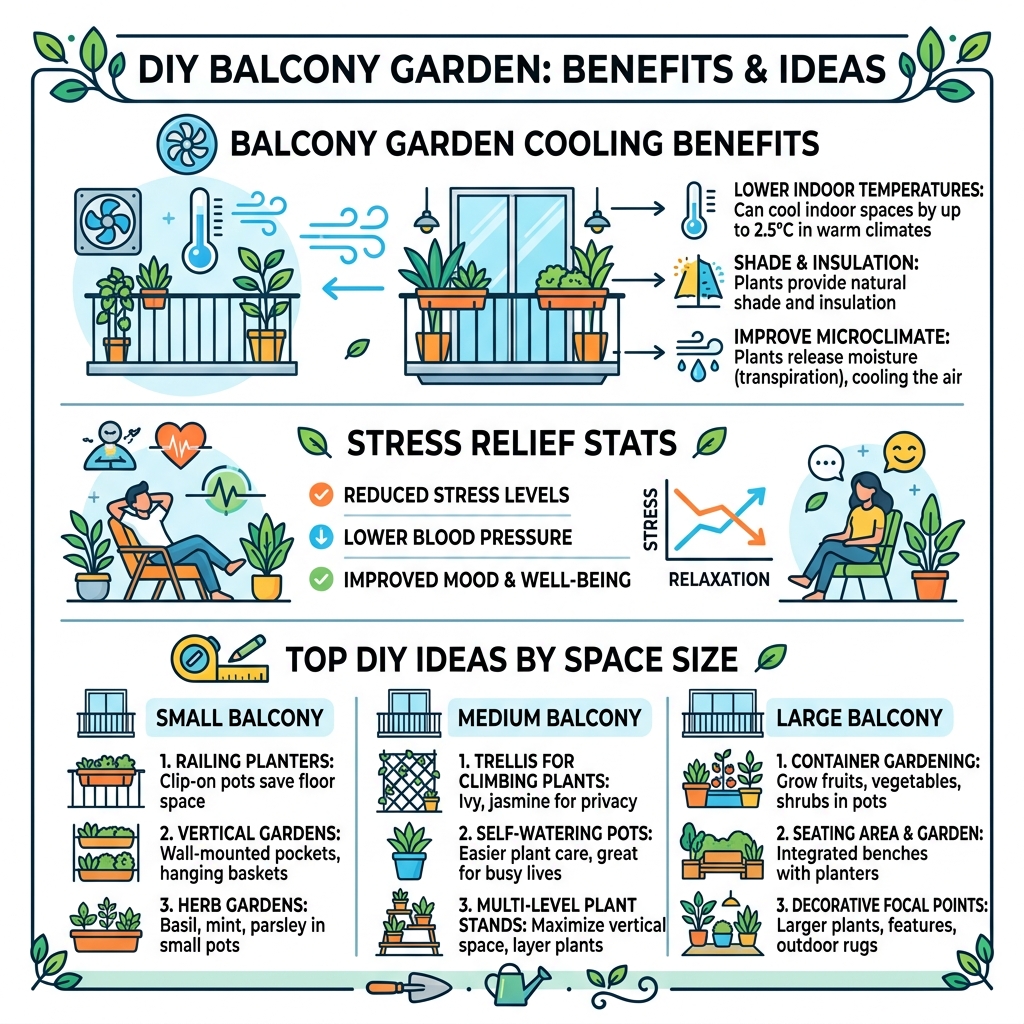
- Go vertical — use wall-mounted planters, trellises, or hanging baskets to grow up, not out
- Grow herbs first — basil, mint, and parsley thrive in small pots and give you instant kitchen wins
- Use railing planters — clip-on boxes free up precious floor space
- Repurpose containers — old jars, crates, or tin cans make charming, budget-friendly pots
- Add a trellis — train climbing plants like ivy or jasmine for privacy and greenery at once
- Try self-watering pots — perfect if you travel or forget to water
- Layer heights — mix tall plants at the back with trailing ones at the front for a lush, full look
The benefits go well beyond aesthetics. Studies show that even looking at a garden can lower blood pressure and reduce stress. And research has found that balcony greenery can cool indoor temperatures by up to 2.5°C in warm climates — a genuine, measurable win for city dwellers.
Whether you have a sun-drenched south-facing ledge or a shady urban nook, there’s a setup that works for you. The key is knowing where to start — and keeping it simple.
Essential Planning for Your DIY Balcony Garden Ideas
Before we run to the nearest garden center and buy every shiny ceramic pot in sight, we need to do a little “balcony detective” work. Jumping in without a plan is one of the most common mistakes beginners make, often leading to wilted plants and wasted money.
The first step is checking the “boring” stuff: your lease or building rules. Some apartment complexes have strict weight limits or rules against hanging planters over the edge of a railing for safety reasons. It’s always better to ask for permission than to be asked to dismantle your hard work later!
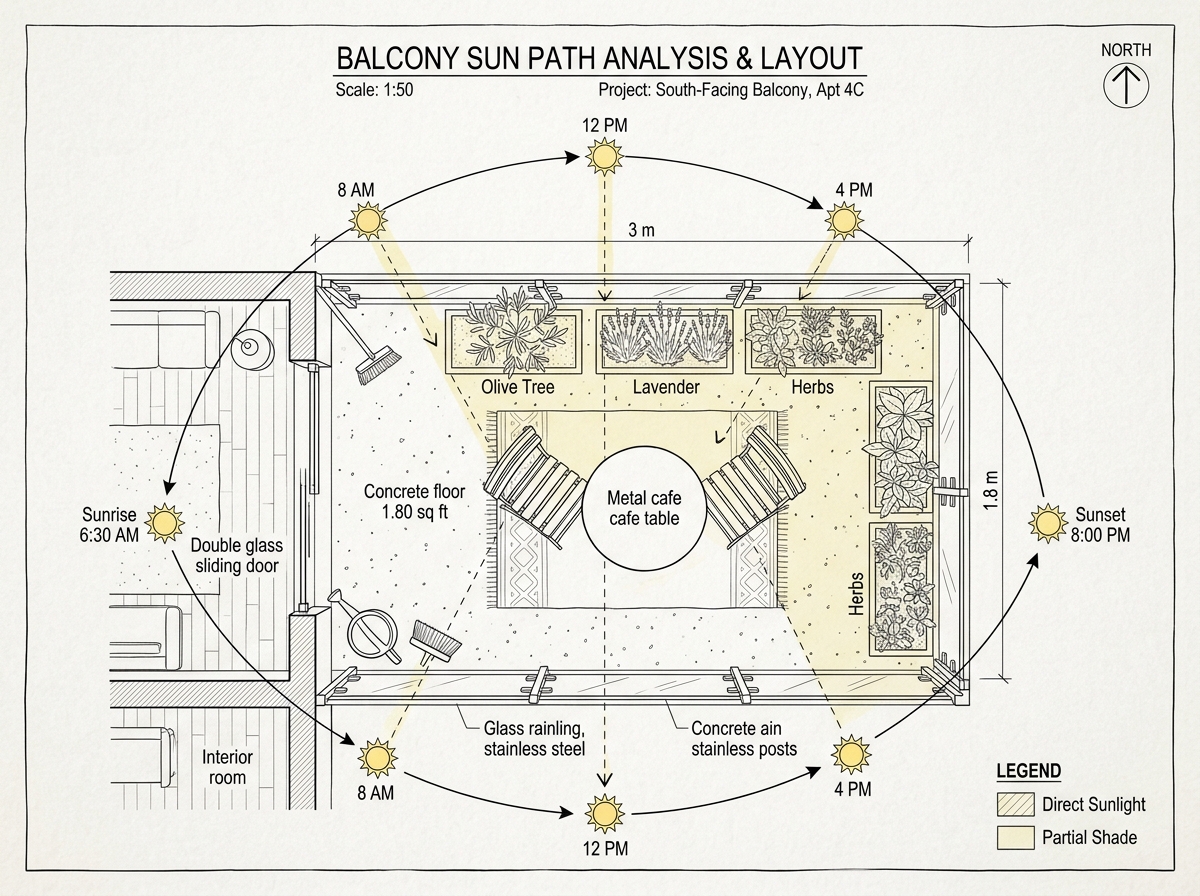
Once you have the green light, we need to look at the environment. Is your balcony a wind tunnel? Does it get scorched by the afternoon sun, or is it perpetually in the shadow of a neighboring skyscraper? Taking a few days to observe these patterns will save you a lot of heartache. For a deep dive into the basics, check out this How to Start a Balcony Garden the Easy Way (2026 Guide) or explore our own tips on how to Breathe Life Into Your Space: Easy Balcony Garden Projects.
Assessing Sunlight and Microclimates
Sunlight is the fuel for your garden, but “full sun” on a balcony isn’t the same as full sun in a backyard. On a balcony, heat can intensify as it reflects off glass windows or concrete walls, potentially cooking delicate leaves.
To track your sun accurately, we recommend using a phone compass to see which way your balcony faces.
- South-facing: This is the “gold mine” for sun-loving veggies and Mediterranean herbs, getting 6-8+ hours of direct light.
- East/West-facing: You’ll get roughly 4-6 hours of sun (morning or afternoon), perfect for many flowering plants and leafy greens.
- North-facing: This is a shady retreat. You’ll want to stick to ferns, hostas, and begonias.
If you have a smart doorbell or a Ring camera, you can even check the history to see exactly when the shadows move across your space!
Understanding Structural Safety and Weight
This is the part where we need to be careful. While most modern balconies are built to be sturdy, they aren’t invincible. A typical balcony can support between 150kg and 250kg per square meter. That sounds like a lot until you realize a single 50-liter terracotta pot filled with wet soil can weigh over 40kg!
Water is the “hidden” weight. Wet compost absorbs 30-40% of its volume in water. To keep things safe, we suggest:
- Distribute the weight: Place your heaviest, largest pots against the building wall rather than the outer edge.
- Go lightweight: Swap heavy stone or terracotta for fiberglass, resin, or plastic pots.
- Spread it out: Avoid clustering all your plants in one corner.
For those of us in tighter urban regulations, this How to Create a Balcony Garden: The Complete Guide for UK Gardeners offers excellent insights into managing structural loads safely.
Maximizing Small Spaces with Vertical DIY Balcony Garden Ideas
When floor space is at a premium, we look up! Vertical gardening is the secret weapon of the apartment dweller. By using the walls and railings, you can triple your growing area without tripping over a single pot.
One of our favorite diy balcony garden ideas is the pallet planter. You can often find wooden pallets for free; just ensure they are heat-treated (marked “HT”) rather than chemically treated. Staple some landscape fabric to the back and bottom, fill with soil, and you have a ready-made living wall.
Other vertical wins include:
- Trellises: Perfect for climbing vines like jasmine or even “cucamelons.”
- Railing Planters: These sit snugly on top of your balcony rail, keeping the floor clear.
- Hanging Baskets: Use these for trailing flowers like petunias or “Tumbling Tom” tomatoes.
- Wall-mounted Pots: Simple ring brackets can hold standard pots against a brick or wood wall.
If you’re feeling handy, follow our DIY Balcony Planters: A Step-by-Step Guide to build your own custom solutions.
Smart Layouts for Narrow Balconies
Narrow balconies can feel like a hallway if you just line pots up in a row. Instead, we use “zoning.” Even on a small balcony, you can create a “reading zone” with a single chair and a “garden zone” at the far end.
Apply the Rule of Three: group plants in odd numbers (3, 5, or 7) and vary their heights. Place a tall plant (like a dwarf citrus tree) at the back, a medium bushy plant (like basil) in the middle, and a trailing plant (like ivy) to spill over the front. This creates depth and makes the space feel like a “real” garden rather than a collection of pots. For more layout inspiration, check out these Creative Balcony Gardening Ideas.
Privacy Screening and Windbreaks
Balconies are often exposed to prying eyes and biting winds. We can solve both problems with plants! A row of tall ornamental grasses or a bamboo screen can act as a natural windbreak.
If you live on a high floor (above the 4th or 6th story), wind becomes a serious issue. It dries out soil in hours and can snap brittle stems. For these “high-rise” gardens, consider installing 6mm acrylic or Perspex panels on the railings. They block the wind without blocking your view or the sunlight. Just make sure they are anchored securely so they don’t turn into sails during a storm!
Choosing the Right Plants, Containers, and Soil
Not all plants are built for the “pot life.” When selecting your greenery, look for “compact,” “patio,” or “determinate” varieties on the seed packets. These are bred specifically to stay small and thrive in containers.
Plant Selection Guide: Sun vs. Shade
| Light Condition | Best Edibles | Best Ornamentals |
|---|---|---|
| Full Sun (6+ hours) | Tomatoes, Peppers, Basil, Strawberries | Lavender, Petunias, Marigolds, Succulents |
| Partial Shade (3-6 hours) | Mint, Lettuce, Parsley, Spinach | Fuchsias, Impatiens, Ivy, Begonias |
| Full Shade (<3 hours) | (Limited) Arugula, Chives | Ferns, Hostas, Caladiums, Peace Lilies |
When it comes to containers, we cannot stress this enough: drainage is king. Every pot must have holes at the bottom. If you find a gorgeous pot without holes, use it as a “cachepot”—keep the plant in a cheap plastic nursery pot with holes, and set that inside the pretty one.
For soil, leave the “garden soil” at the store. It’s too heavy and doesn’t drain well in pots. Instead, use a high-quality potting mix. We love mixes that include perlite (those little white volcanic rocks) because it keeps the soil airy and prevents it from compacting. For more expert-backed tips, see How to Create a Thriving Balcony Garden, According to Experts.
Edible DIY Balcony Garden Ideas for Beginners
If you want to eat your hard work, start with herbs. They offer the best “return on investment” because they are expensive at the grocery store but grow like weeds on a balcony. Mint, rosemary, and thyme are nearly indestructible.
Cherry tomatoes are another balcony superstar. They are prolific and look beautiful cascading down from a hanging basket. If you’re worried about pollinators reaching your high-rise balcony, give your tomato plants a gentle shake every morning to help move the pollen around—it works! For more effortless food ideas, read about Creative and Easy Balcony Gardens That Grow Themselves.
Low-Maintenance Ornamental Champions
If you’re the type who forgets to water (don’t worry, we’ve all been there), stick to “low-maintenance champions.”
- Succulents: These are the camels of the plant world. They store water in their leaves and love the sun.
- Lavender: It smells amazing, loves the heat, and doesn’t mind a bit of wind.
- Snake Plants: Technically an indoor plant, but they love a “summer vacation” on a shady balcony and are nearly impossible to kill.
Maintenance, Watering, and Pest Control Strategies
Container gardening is a bit more demanding than “in-ground” gardening because the plants rely entirely on you for food and water. Nutrients leach out of the soil every time you water, so we need to put them back in.
We recommend using a slow-release fertilizer mixed into the soil at planting time, followed by a liquid fertilizer every 2-4 weeks during the growing season. Look for the N-P-K ratio on the bottle (Nitrogen, Phosphorus, Potassium). A balanced 10-10-10 blend is usually a safe bet for most balcony gardens.
Effective Watering Solutions
Watering is the #1 reason balcony plants die—either too much or too little.
- The Finger Test: Stick your finger an inch into the soil. If it feels dry, water it. If it’s damp, leave it alone.
- Morning is Best: Water early in the day so the leaves have time to dry, which prevents fungus.
- Neighbor Etiquette: Always use saucers under your pots! Nothing ruins a neighborly relationship faster than “compost tea” dripping onto their laundry or morning coffee below.
If you travel often, self-watering pots are a game-changer. They have a reservoir at the bottom that the plant drinks from as needed, meaning you only have to top it up every few days. For more care tips, see Breathe Life Into Your Space: Easy Balcony Garden Projects 2.
Routine Care and Troubleshooting
A healthy garden requires a little “TLC” every week.
- Deadheading: Pinch off faded flowers. This tells the plant to stop making seeds and start making more blooms.
- Pruning: Especially for herbs like basil—pinching off the top stems encourages the plant to grow bushy rather than tall and lanky.
- Pest Control: If you see tiny bugs like aphids, don’t panic. A simple spray of water mixed with a few drops of dish soap or neem oil will usually do the trick organically.
Frequently Asked Questions about Balcony Gardening
How much weight can a typical balcony hold?
Most modern balconies are designed to support between 150kg and 250kg per square meter. However, this includes the weight of people and furniture. To be safe, use lightweight pots, spread the weight evenly, and place the heaviest items against the main building wall.
What are the best low-maintenance plants for beginners?
Herbs like mint and rosemary are incredibly hardy. For flowers, geraniums and petunias are very forgiving. If you have a shady spot, snake plants and ferns are great “set it and forget it” options.
How do I protect my plants from strong winds?
Group your pots together for mutual support and use heavier containers (or anchor lightweight ones to the railing). Installing bamboo screens or lattice panels can also help break the wind’s force while adding a bit of privacy.
Conclusion
At Finance Lixo, we believe that you don’t need a sprawling estate to enjoy the peace and productivity of a garden. These diy balcony garden ideas prove that with a little planning, some vertical thinking, and the right potting mix, anyone can create a personal oasis.
Gardening is a journey of trial and error. Some plants will thrive, and some… well, some will become compost. And that’s okay! Every yellow leaf is a lesson, and every fresh sprig of basil is a victory. So, grab a trowel, pick out a few favorite plants, and start turning that concrete slab into your new favorite “room” in the house.
For more lifestyle tips and home improvement guides, explore More info about Finance Lixo services. Happy gardening!
