
Why Balcony Flower Pot Ideas Can Transform Your Small Urban Space
Balcony flower pot ideas are one of the fastest ways to turn a bare concrete slab into a lush, calming retreat — even if you only have a few square feet to work with. This form of container gardening is perfect for urban environments where ground space is limited.
Here are the most effective ideas to get started:
- Use the Thriller-Filler-Spiller method — one tall focal plant, a few medium fillers, and trailing plants that cascade over the edge
- Choose lightweight containers like plastic, fiberglass, or fabric grow bags to stay within balcony weight limits
- Go vertical with railing planters, hanging baskets, and ladder shelves to multiply your growing space
- Match plants to your microclimate — sun, shade, wind, and heat all affect which plants will thrive
- Group pots in odd numbers and repeat one or two container materials for a cohesive, styled look
The good news? You don’t need a big space or a big budget. As one design principle puts it: cozy doesn’t mean crowded — it means composed. A single well-planted pot can anchor an entire balcony and make it feel intentional.
Whether you want edible herbs, cascading flowers, or a dramatic focal tree, this guide covers everything you need to build a balcony garden that’s beautiful and easy to maintain.
Essential Design Principles for Balcony Flower Pot Ideas
When we think about professional-looking containers, it’s rarely a happy accident. Most stunning displays follow a set of core design principles that ensure the arrangement looks balanced and intentional throughout the season.
The Thriller-Filler-Spiller Method
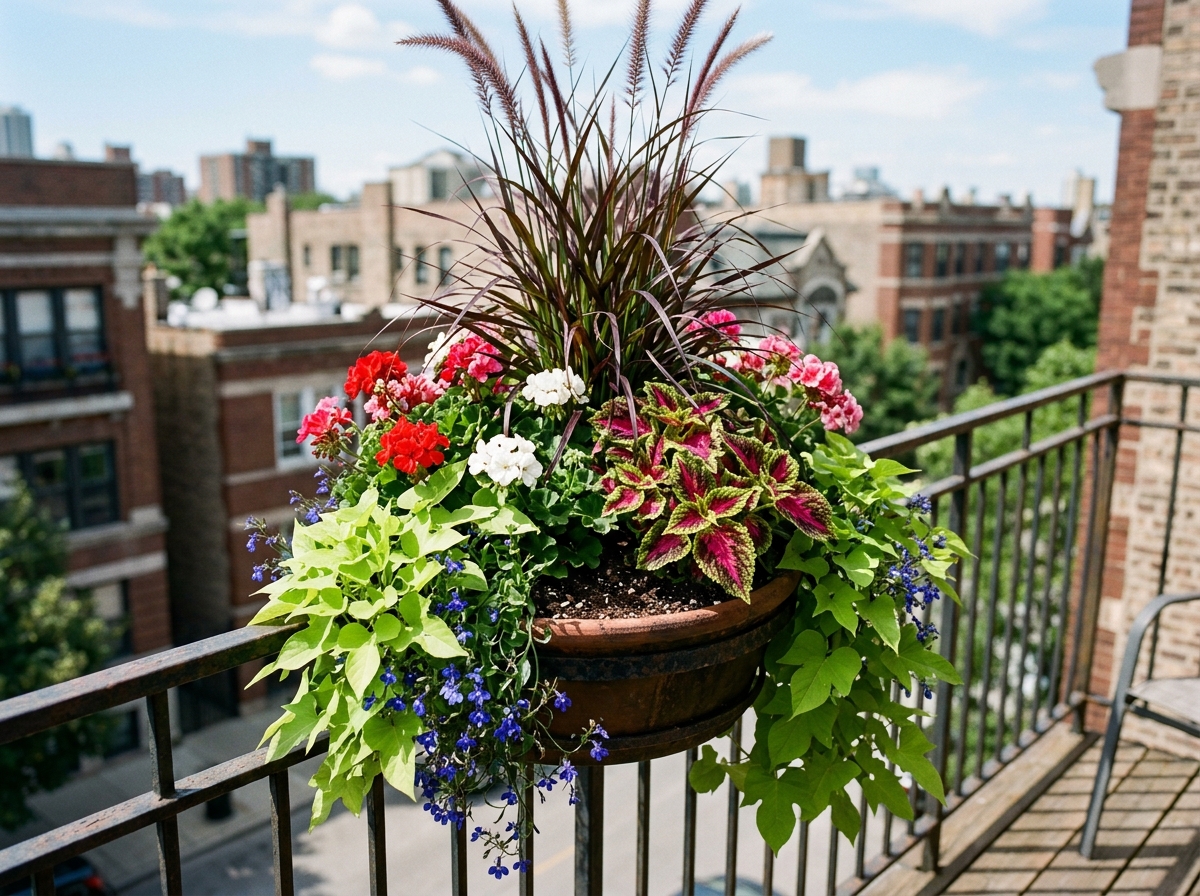
This is the “golden rule” of container gardening. To create a show-stopping pot, we select three types of plants:
- The Thriller: An upright, eye-catching plant that acts as the focal point. Think Calla lilies, ornamental grasses like Purple Fountaingrass, or even a dwarf citrus tree.
- The Filler: Mounded plants that surround the thriller, hiding the soil and adding bulk. Lantana, geraniums, and coleus are excellent choices here.
- The Spiller: Cascading plants that tumble over the edges of the pot to soften the hard lines. Creeping Jenny, sweet potato vine, and lobelia are classic “spillers.”
Color Harmony and Texture
We find that sticking to a tight color palette makes a small balcony feel calmer. You might choose a monochromatic scheme—like various shades of purple using lavender, heliotrope, and petunias—or a high-contrast look, such as pairing zingy chartreuse foliage with deep burgundy blooms.
Texture is just as important as color. Mixing broad, waxy leaves (like Rex begonias) with fine, airy textures (like ornamental grasses) creates visual rhythm. For more inspiration on arranging these elements, check out our guide on balcony flower garden ideas.
Visual Rhythm and Repetition
To prevent a balcony from looking like a random collection of pots, we recommend repeating patterns. Use the same type of container material (like all terracotta or all gray fiberstone) across the space. Grouping pots in odd numbers—usually three—creates a more natural, “collected” look than even pairings.
Choosing the Right Containers for Urban Spaces
Selecting a pot isn’t just about aesthetics; on a balcony, we have to consider physics. Weight, wind, and water management are our primary concerns.
Weight and Wind Resistance
Most balconies have weight limits. While a large ceramic pot looks beautiful, once filled with wet soil, it can become incredibly heavy. For high-rise living, we often suggest fiberglass or plastic pots that mimic the look of stone or lead without the bulk.
Conversely, if your balcony is a “wind tunnel,” lightweight pots can blow over. In these cases, we use wider, low-profile pots with a heavier base or secure them to the railing. You can find a detailed breakdown of the top pots for balcony gardening to help you decide.
Drainage and Durability
Proper drainage is non-negotiable. Without holes in the bottom, your plants’ roots will sit in water and rot. We always use saucers to catch excess water—this prevents “downstairs neighbor drama” from dripping water and keeps your balcony floor clean.
| Container Material | Pros | Cons | Best For |
|---|---|---|---|
| Terracotta | Breathable, classic look, heavy (stable) | Dries out fast, can crack in frost | Mediterranean herbs |
| Plastic/Resin | Lightweight, retains moisture, cheap | Can look “cheap,” may tip in wind | Most annuals, renters |
| Fabric Bags | Excellent airflow, very light, portable | Dries out very fast, less “stylish” | Vegetables, potatoes |
| Fiberglass | Durable, lightweight, premium look | More expensive | Large focal trees |
If you’re on a budget, don’t worry—there are plenty of budget-friendly containers for balcony plants that look high-end but cost very little.
Maximizing Space with Vertical Balcony Flower Pot Ideas
When floor space is at a premium, we look up. Vertical gardening isn’t just a trend; it’s a necessity for urban dwellers.
- Railing Planters: These sit directly on your balcony rail. We recommend using locking brackets to ensure they stay put during a storm. See our balcony railing planters a comprehensive guide for safety tips.
- Hanging Baskets: These are perfect for spillers. A pro tip is to use a “ball of flowers” technique, where you plant through the sides of the basket as well as the top. For the best hardware, see the best hanging planters for balcony gardens.
- Ladder Shelves & Tiered Displays: A leaning ladder shelf allows you to stack multiple pots in the footprint of one. We suggest putting the heaviest pots on the bottom for stability.
Selecting Plants Based on Your Balcony Microclimate
A balcony is its own little world. Before buying plants, we need to observe the “microclimate.” Is it a south-facing sun-trap, or a north-facing shade zone?
Sun Exposure and Heat Reflection
- Full Sun (South/West): These balconies get hot. Sun reflects off windows and concrete, intensifying the heat. We choose tough, heat-loving plants like Lantana, Zinnias, and succulents.
- Part Shade/Full Shade (North/East): These stay cooler and the soil stays moist longer. For these spots, we love Rex begonias, ferns, and Hostas. If you’re dealing with low light, read our tips on the best flowers for a shaded balcony.
Wind and Humidity
Wind is the “silent killer” of balcony plants. It dries out soil at an incredible rate and can shred delicate leaves. If your balcony is windy, we lean toward plants with flexible stems (like grasses) or low-growing succulents that hug the pot.
Foolproof Plant Combinations and Balcony Flower Pot Ideas
Sometimes, the easiest way to start is with a “recipe.” Here are three of our favorite balcony flower pot ideas that rarely fail:
- The Kitchen Garden: Combine Basil (thriller), Parsley (filler), and Thyme (spiller) in a wide pot. It’s functional, fragrant, and beautiful.
- The Romantic Summer Mix: Use a pink Geranium as your thriller, purple Heliotrope as your filler, and white Bacopa as your spiller. It smells like vanilla and looks like a cottage garden.
- The Desert Chic: A tall Snake Plant (thriller) surrounded by various Echeveria succulents (fillers) and String of Pearls (spiller). This is extremely low-maintenance and wind-tolerant.
Maintenance and Care for Thriving Potted Gardens
Growing in pots is different from growing in the ground. Because the root system is confined, we have to be the plant’s entire life-support system.
Potting Soil and Watering
Never use “garden soil” from a backyard; it’s too dense and will suffocate roots in a pot. We always use a high-quality potting mix, which often contains perlite or coconut coir for aeration.
Watering is the most frequent task. In the height of summer, a small pot on a sunny balcony may need water twice a day. We check by sticking a finger an inch into the soil—if it’s dry, it’s time to water. If you’re building your own pots, our diy balcony planters a step-by-step guide explains how to set up proper drainage layers.
Fertilizing and Deadheading
Nutrients wash out of pots every time you water. We recommend a slow-release fertilizer at planting time, supplemented by a liquid feed every two weeks during the growing season. To keep flowers coming, we “deadhead”—which is just a fancy word for snipping off dead flower heads. This tells the plant to stop making seeds and start making more blooms!
Pest Management and Cleaning
Aphids and spider mites love the sheltered environment of a balcony. We do a weekly “quick check” under leaves. A simple spray of soapy water usually handles most visitors. Also, remember to clean your saucers occasionally; standing water can attract mosquitoes and look unsightly.
Frequently Asked Questions about Balcony Gardening
How do I prevent my balcony pots from blowing over in high winds?
We recommend a “low center of gravity” approach. Use heavy pots (like terracotta or stone) for floor-standing plants. For lighter pots, you can place a few heavy river stones at the bottom before adding soil. Additionally, securing railing planters with zip ties or specialized metal brackets is a must for high-rise safety.
What are the best lightweight soil options for high-rise balconies?
To keep the weight down, look for potting mixes that are heavy on peat moss, perlite, or vermiculite. Coconut coir is another fantastic, lightweight, and sustainable alternative. Avoid mixes that contain “forest products” or heavy sand, as these add significant weight when wet.
Can I grow vegetables in small balcony flower pots?
Absolutely! The key is to look for “patio” or “dwarf” varieties. Cherry tomatoes, “bush” cucumbers, and salad greens thrive in containers. Just ensure the pot is at least 10–12 inches deep for tomatoes to allow for a healthy root system.
Conclusion
At Finance Lixo, we believe that your home should be a sanctuary, and a well-designed balcony garden is the ultimate urban retreat. By using thoughtful balcony flower pot ideas, you can create a space that offers both privacy and beauty.
Remember to start simple: pick two or three styling ideas, stick to a cohesive color palette, and prioritize your balcony’s microclimate. Whether you’re adding solar-powered fairy lights for evening coziness or a tall “tiny tree” for a focal point, the goal is to make the space feel like an extension of your indoor living area.
Ready to dig in? More info about our gardening guides can help you take the next step in your urban gardening journey.
