
The High Life: Why Your Apartment Needs a Vertical Garden
Why a Vertical Garden for Apartment Balcony Living Is Worth It
A vertical garden for apartment balcony spaces is one of the smartest ways to bring greenery into your home without needing a yard. If you want the quick answer, here’s how to get started:
- Assess your balcony – Check sunlight hours, wind exposure, and any building or HOA rules.
- Pick a structure – Choose wall planters, freestanding towers, hanging baskets, or railing boxes.
- Select your plants – Match plants to your light levels (herbs and greens for sun; ferns and mint for shade).
- Use the right soil – Lightweight potting mix with perlite or coconut coir works best.
- Set up and maintain – Water frequently, fertilize regularly, and watch for pests.
Most apartment balconies sit unused. Maybe a chair, a few dead plants, some forgotten shoes.
But that small outdoor space? It’s prime real estate for growing food, flowers, and fresh air.
Vertical gardening flips the script. Instead of spreading out, you grow up. Wall planters, tiered towers, and hanging systems let you pack dozens of plants into just a few square feet. Some systems like the Garden Tower 2 support up to 50 plants in just 4 square feet.
The result is a living wall that looks beautiful, grows herbs you actually cook with, and makes your balcony feel like a retreat — not an afterthought.
And the best part? You don’t need to drill holes, own a home, or have a green thumb to make it work.
This guide walks you through every step.
Assessing Your Space for a Vertical Garden for Apartment Balcony Success
Before we start buying every terra cotta pot in sight, we need to play detective. A successful vertical garden for apartment balcony spaces depends entirely on the micro-climate of your specific unit. Unlike a traditional backyard, a balcony is often subject to extreme wind, harsh reflected heat, or deep shadows from neighboring buildings.
Sunlight Evaluation
Sunlight is the “fuel” for your garden. Most edible crops, like tomatoes and peppers, crave 6 to 8 hours of direct sun. If you have a south-facing balcony, you’re in luck—that’s the jackpot for sun-lovers. However, if you face north, you’ll be looking at shade-tolerant plants like ferns or leafy greens.
To get an accurate reading, we recommend tracking the sun every hour from 8 AM to 6 PM on a clear day. Note when the light is direct and when it becomes “filtered” by railings or overhangs.
| Light Level | Hours of Direct Sun | Best Plant Types |
|---|---|---|
| Full Sun | 6+ Hours | Tomatoes, Peppers, Basil, Succulents |
| Partial Sun | 3–5 Hours | Lettuce, Kale, Mint, Thyme, Cilantro |
| Full Shade | < 3 Hours | Ferns, Hostas, Begonias, Spinach |
Wind Exposure and Weight Restrictions
If you live on a high floor, wind is your biggest enemy. It dries out soil in record time and can literally blow lightweight pots off the ledge. For windy spots, we suggest using heavier, wide-base containers or securing structures directly to the railing.
Weight is another critical factor. Wet soil is surprisingly heavy. While most modern balconies are built to handle the weight of a few people, a massive collection of heavy ceramic pots can add up. This is why we often recommend lightweight materials like resin, plastic, or fabric. Before you go full “urban jungle,” it is vital to check your building regulations or HOA rules. Some buildings have strict policies against hanging items over railings or drilling into the exterior “envelope” of the building.
For more detailed advice on navigating these constraints, check out our guide on choosing the best vertical garden for balcony spaces.

Choosing the Best Vertical Garden for Apartment Balcony Structures
Once you know your “stats” (sun, wind, and rules), it’s time to pick your hardware. The beauty of a vertical garden for apartment balcony setups is that there is a solution for every budget and style.
- Wall Planters: These turn a blank wall into living art. You can use modular systems like the Minigarden Vertical or Minigarden Malta, which allow you to stack units as high or wide as you like.
- Freestanding Towers: If you can’t drill into walls, towers are your best friend. The Garden Tower 2 is a powerhouse, mimicking a raised bed vertically. For a more high-tech approach, the Verde Vertical Garden™ uses hydroponics (no soil!) to grow up to 70 plants in 14 layers.
- Hanging Baskets: Ideal for trailing plants like strawberries or petunias. Just ensure they are securely fastened so they don’t become “UFOs” on a windy day.
- Railing Boxes: These are the classic “window box” style but designed to sit securely over a balcony rail. They are perfect for a quick kitchen herb garden.
For more inspiration, we’ve curated a list of vertical balcony garden ideas to help you visualize your new space.
Renter-Friendly and No-Drill Vertical Garden for Apartment Balcony Options
We know the struggle: you want a lush garden, but you also want your security deposit back. You don’t need to drill into the brick to have a vertical oasis.
Pressure-lock stands are a game-changer. Products like the Urban Planty use a telescopic pole that locks between your floor and ceiling, supporting multiple pots without a single screw. Freestanding units like the Vigoroot 4-Tier Balcony Garden are less than 10 inches deep and lean against the wall, providing four layers of growing space while taking up almost zero floor area.
These portable systems are not just for the outdoors; many people use them to bring greenery inside. Learn more about why wall planter systems are the future of interior design and how they can bridge the gap between your balcony and your living room.
Selecting the Right Plants and Soil for Your Sky-High Oasis
You can’t just dig up dirt from the park and put it in a vertical planter. Standard garden soil is too heavy and doesn’t drain well enough for container life.
The Magic of Lightweight Potting Mix
For a vertical garden for apartment balcony success, we always use a high-quality, lightweight potting mix. Look for blends containing perlite, vermiculite, or coconut coir. These ingredients keep the soil “fluffy,” allowing air to reach the roots while retaining just enough moisture.
We also love the concept of air pruning. Some fabric-based systems, like the Vigoroot tiers, allow air to reach the roots through the fabric. This stops the roots from circling the pot (becoming “root-bound”) and encourages them to branch out, leading to a much healthier, more productive plant.
Feeding Your Sky Garden
Because vertical gardens have limited soil volume, nutrients leach out quickly every time you water. We recommend mixing in 10-20% compost or worm castings into your initial soil mix. After that, a regular schedule of liquid fertilizer will keep your plants from looking “tired.”
If you’re specifically looking to grow food, check out our tips on vertical herb gardening made easy for tiny kitchens.
Best Edibles and Ornamentals for a Vertical Garden for Apartment Balcony
Not every plant wants to live in a wall. You want to choose “compact,” “dwarf,” or “trailing” varieties.
- Leafy Greens: Lettuce, spinach, and kale are the superstars of vertical gardening. They have shallow roots and don’t mind being a little crowded.
- Compact Herbs: Basil, chives, parsley, and cilantro are essentials. If you’re a fan of Mediterranean flavors, you should definitely stop thyme and build a balcony wall herb garden.
- Trailing Flowers: Petunias, lobelia, and nasturtiums will spill over the edges of your planters, creating a “flowering waterfall” effect.
- Succulents: Perfect for those of us who occasionally forget to water. They love the sun and don’t mind the wind.
- Dwarf Vegetables: Look for “patio” varieties of tomatoes, peppers, and even cucumbers.
If you’re in a hurry to see results, we recommend using a vertical planter starter kit to grow food fast.
Installation and Maintenance: Keeping Your Garden Thriving
A vertical garden for apartment balcony use is a bit like a pet—it needs regular attention. Because these gardens are elevated and exposed to the elements, they dry out much faster than plants in the ground.
Watering and Irrigation
In the heat of summer, your vertical garden might need water once or even twice a day. If that sounds like too much work, consider a Micro-Drip System from Gardena. These automated systems can be set on a timer, delivering a slow trickle of water directly to the roots.
If you prefer the manual route, always water in the morning. This gives the plants a “drink” before the sun gets too hot and allows any water on the leaves to dry, preventing fungal issues.
Essential Maintenance Tools
You don’t need a shed full of tools, but a few basics will make your life easier:
- A long-neck watering can: To reach the high tiers without a ladder.
- Pruning shears: To keep your “living wall” from becoming an “overgrown jungle.”
- A moisture meter: A simple tool to tell you if the soil is actually dry at the root level.
- Liquid seaweed fertilizer: For a quick nutrient boost.
For a deeper dive into long-term care, read the ultimate guide to vertical garden maintenance tips and tricks.
Frequently Asked Questions about Balcony Vertical Gardening
How do I prevent water from dripping onto my neighbors?
This is the number one cause of “balcony wars.” To keep your neighbors happy:
- Use Catch Trays: Every pot should have a saucer or tray to catch excess water.
- Water Reservoirs: Choose systems with built-in reservoirs (like the Garden Tower or Urban Planty) that recapture drainage.
- Slow-Drip Systems: These minimize runoff by delivering water slowly.
- Absorbent Mats: Placing an outdoor rug or absorbent mat under your garden can catch the occasional stray drop.
Can I grow vegetables in a vertical garden on a shaded balcony?
Absolutely! While you won’t be growing prize-winning pumpkins, you can have a very productive “shade garden.” Focus on leafy greens like spinach, arugula, and various lettuces. Herbs like parsley, chives, and mint actually prefer a bit of relief from the afternoon sun. If your balcony gets less than 4 hours of sun, stick to these greens and ornamental ferns.
What are the most affordable DIY vertical garden ideas?
You don’t need a massive budget to start a vertical garden for apartment balcony living.
- Pallet Gardens: Secure landscape fabric to the back of a heat-treated wooden pallet, fill with soil, and plant in the slats.
- Gutter Planters: Mount sections of plastic rain gutters to your railing or wall.
- Ladder Stands: An old wooden ladder makes a perfect multi-tiered plant stand for various pots.
- Recycled Containers: Use plastic soda bottles or tin cans (sanded and painted) as hanging pockets.
For those who want a garden that doesn’t demand 24/7 attention, we have a guide on how to grow a low-maintenance vertical garden that thrives on neglect.
Conclusion
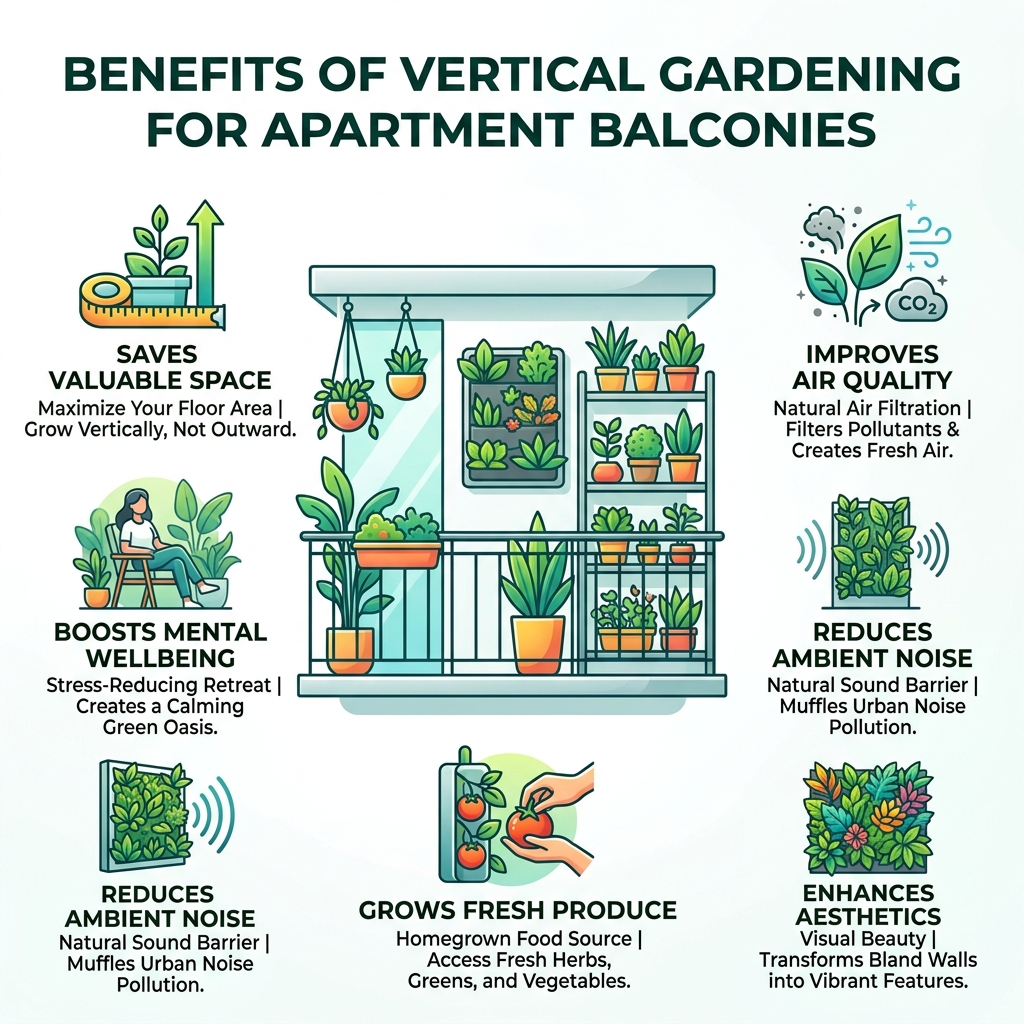
At Finance Lixo, we believe that urban sustainability and personal well-being go hand in hand. Transforming your balcony into a lush, vertical retreat isn’t just about the aesthetic appeal—it’s about creating a space that cleans your air, provides fresh food, and offers a mental escape from the hustle of city life.
Whether you start with a simple hanging basket or a high-tech hydroponic tower, the most important step is just to start. Your apartment balcony has the potential to be so much more than a storage spot for your bike. It’s time to look up and grow.
Start your vertical garden journey today and see how much life you can pack into a few square feet!
