
How to Repot Indoor Plants Without the Drama
Why Repotting Indoor Plants Safely Is the Secret to Long-Term Plant Health
Repotting indoor plants safely comes down to a few core steps: pick the right time (spring is ideal), choose a pot only 1-2 inches wider, use fresh indoor potting mix, handle roots gently, and hold off on fertilizer for 4-6 weeks after.
Quick overview — how to repot indoor plants safely:
- Check the signs — roots poking out of drainage holes, soil drying out too fast, or stunted growth
- Pick your timing — spring or early summer, when your plant is actively growing
- Choose the right pot — only 1-2 inches wider than the current one, with drainage holes
- Use fresh potting mix — indoor potting mix only, never garden soil
- Handle roots gently — loosen circling roots with your fingers, trim damaged ones with clean shears
- Water thoroughly after — then leave it alone for a few weeks to recover
Think of your houseplant like someone living in a studio apartment that was perfect at first — but after a few years of collecting books, bikes, and a suspiciously large succulent collection, the walls start closing in.
That’s exactly what happens inside a pot when roots run out of room. They circle. They tangle. They push up through the soil and poke out the drainage holes like they’re trying to escape.
And it’s not just about space. The nutrients in potting mix get used up over time, leaving your plant essentially eating an empty plate. Repotting fixes both problems at once.
The good news? You don’t need to be an expert. Most houseplants are surprisingly forgiving — as long as you follow a few simple rules and treat their roots with care.
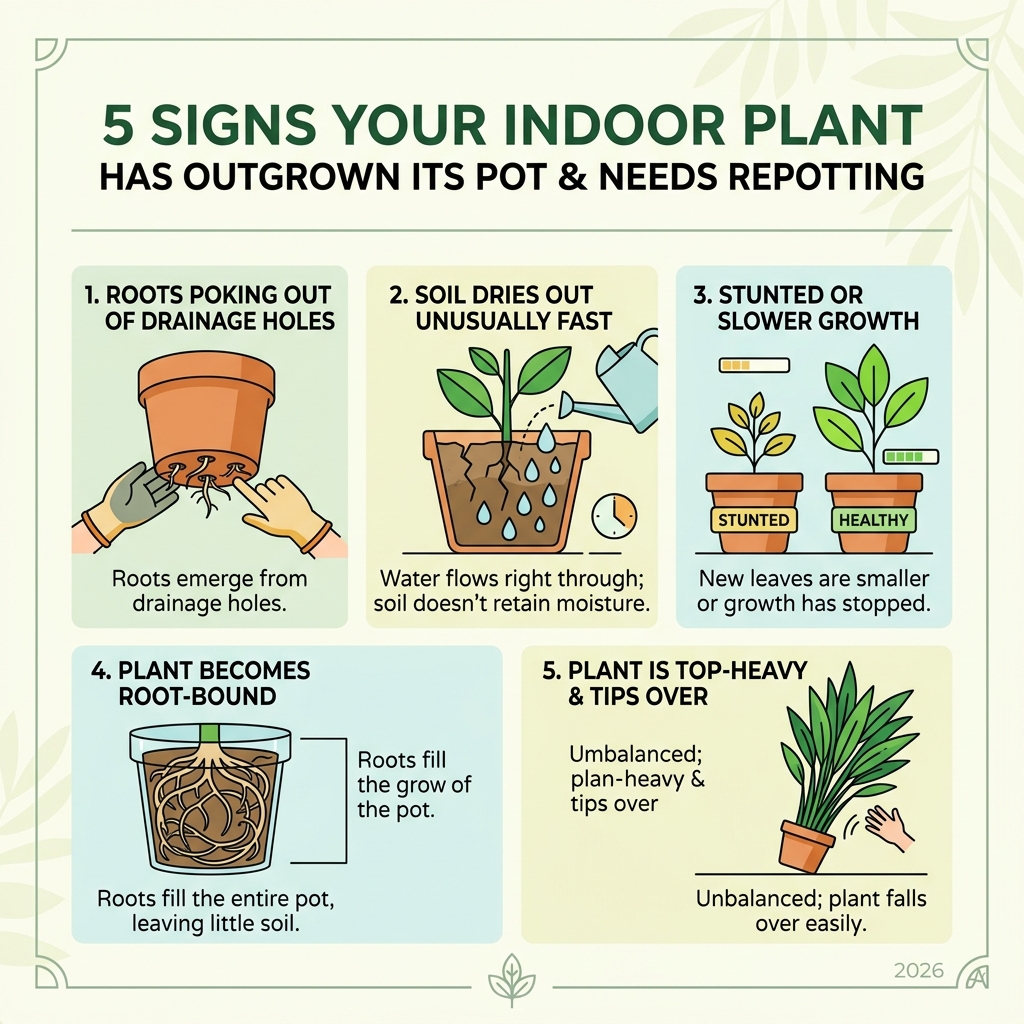
Similar topics to repotting indoor plants safely:
Recognizing the Signs: When Your Plant Needs a New Home
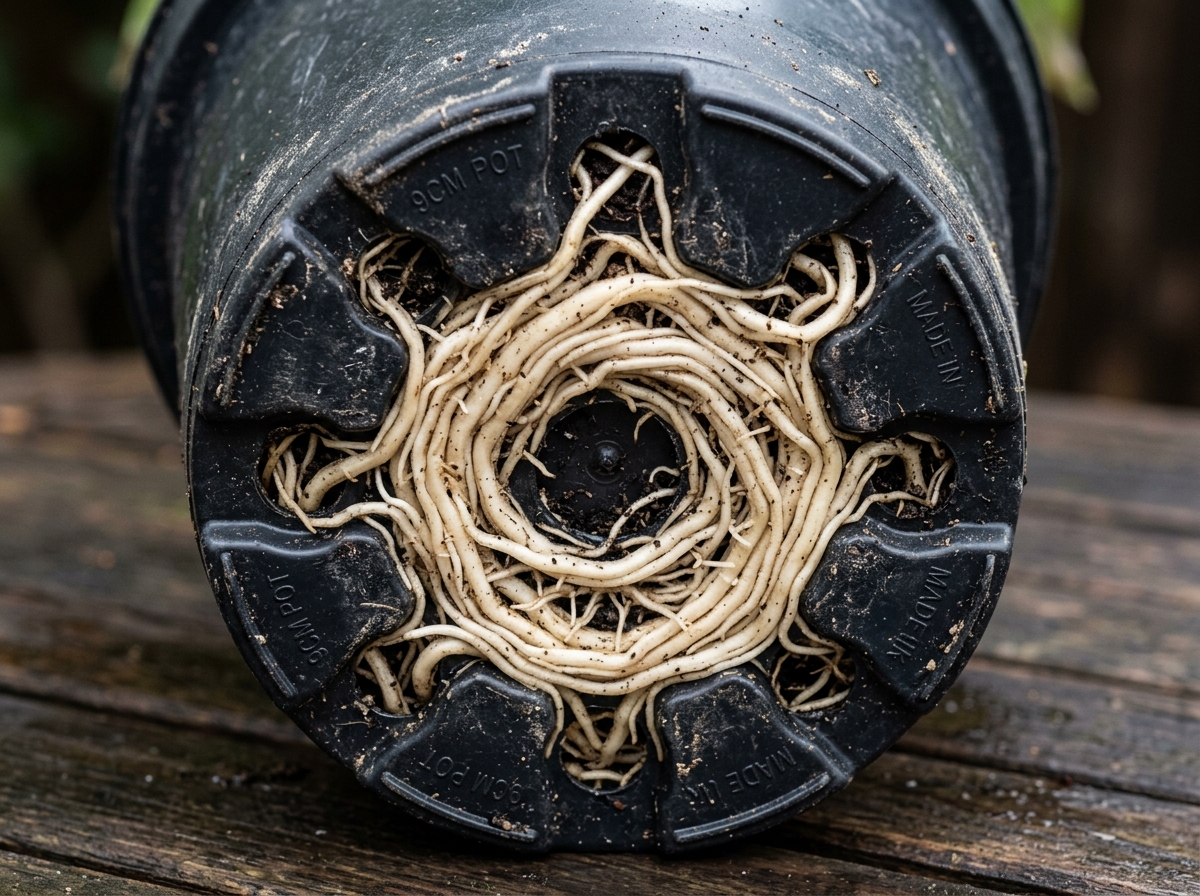
Knowing when to intervene is the first step in repotting indoor plants safely. Your plant cannot speak, but it certainly knows how to drop hints. If you notice roots spiraling at the bottom of a nursery pot or peeking out of the drainage holes like tiny explorers, it is time to upgrade.
Common indicators that your plant has outgrown its current home include:
- Root-bound status: When you lift the plant and see more roots than soil, or a solid mass of white roots.
- Stunted growth: If it is the middle of summer and your plant hasn’t put out a new leaf in months, it might be “choking” on its own roots.
- Rapid drying soil: If you water on Monday and the soil is bone-dry by Wednesday, the root mass has likely displaced too much soil to hold moisture.
- Yellowing lower leaves: This often signals that the soil nutrients are completely depleted.
- Salt buildup: White, crusty deposits on the pot rim or soil surface indicate that mineral salts from tap water and old fertilizer have reached toxic levels.
- Top-heavy containers: If your plant keeps tipping over because it is too large for its base, it’s a safety hazard for the plant and your floor!
Identifying Transplant Shock Before It Starts
Transplant shock is the “drama” we want to avoid. It happens when a plant’s root system is disturbed so much that it can no longer support the leaves. Signs include sudden wilting, even if the soil is moist, or a dramatic leaf drop right after moving.
To prevent this, we focus on root health. Healthy roots are firm and white or light tan; mushy brown roots indicate rot and need to be addressed before the plant moves to a new home. If you are looking for hardy plants that handle transitions well, check out the best indoor plants for your balcony to see which varieties are most resilient.
Timing and Preparation for Repotting Indoor Plants Safely
Timing is everything. We generally recommend repotting indoor plants safely during the spring or early summer. This is when plants enter their active growing season and have the metabolic “energy” to heal any root damage and colonize new soil quickly.
While some experts suggest fall repotting because growth slows down (reducing immediate demand on the roots), most indoor gardeners find the best results in spring. Avoid repotting in the dead of winter when plants are dormant, as they won’t have the strength to recover.
Frequency Guidelines:
- Fast growers (like Pothos or Spider Plants): Every 12–18 months.
- Slow growers (like Sansevieria or Cacti): Every 2–3 years.
- New purchases: Wait at least 2–4 weeks after bringing a plant home before repotting. It needs time to acclimate to your home’s light and humidity first.
Choosing the Right Pot for Repotting Indoor Plants Safely
The biggest mistake we see is “overpotting”—putting a small plant in a massive pot. This is dangerous because excess soil holds onto moisture that the roots can’t reach, leading to root rot.
Follow the 1-2 inch rule: Your new pot should be no more than 1 to 2 inches wider in diameter than the current one. If the plant is very small (under 5 inches), stick to a 1-inch increase.
Material Matters:
- Terracotta: Porous and “breathes,” making it perfect for succulents and cacti that hate wet feet.
- Plastic/Ceramic: Holds moisture longer, ideal for tropicals like Ferns or Calatheas.
- Drainage: Never skip drainage holes. If you have a beautiful decorative pot without holes, use it as a “cachepot.” Keep the plant in a plastic nursery liner with holes and set that inside the decorative one. For those who struggle with watering consistency, stop the drip with these top indoor self-watering planters to keep moisture levels stable.
Selecting Soil for Repotting Indoor Plants Safely
Never use “garden soil” from your backyard for indoor plants. It is too heavy, lacks proper aeration, and often contains pests or pathogens. We always use a high-quality indoor potting mix.
| Feature | Indoor Potting Mix | Garden Soil |
|---|---|---|
| Weight | Lightweight and fluffy | Heavy and dense |
| Aeration | High (contains perlite/vermiculite) | Low (compacts easily) |
| Sterility | Sterilized (no pests/weeds) | Contains bugs and fungi |
| Drainage | Fast-draining | Retains too much water |
Look for peat-free options to be more environmentally friendly. A good mix should feel airy and contain white bits (perlite) for drainage and chunky bits (like orchid bark) for oxygen flow to the roots.
The Step-by-Step Guide to Stress-Free Repotting
Ready to get your hands dirty? Here is how we ensure a smooth transition.
- Hydration Prep: Water your plant 24–48 hours before repotting. Moist roots are flexible and less likely to snap than brittle, dry ones.
- Gentle Extraction: Turn the pot sideways, place your hand over the soil surface with the plant stem between your fingers, and squeeze the sides of the pot. If it’s stuck, run a dull knife around the inside edge. Never pull the plant by the stem!
- Root Inspection: Use sterilized shears to snip off any roots that are black, mushy, or smell like compost. These are signs of rot.
- Set the Foundation: Add a layer of fresh soil to the bottom of the new pot. You want the top of the plant’s root ball to sit about 1 inch below the rim of the new pot to allow room for watering.
- Centering and Filling: Place the plant in the center. Fill the gaps around the sides with fresh mix. If you are using vertical setups, like top-rated vertical wall garden kits for indoor use, ensure the soil is tucked in firmly so it doesn’t spill out when mounted.
- Tamping: Gently press the soil down with your fingers to remove large air pockets, but don’t pack it so tight that roots can’t breathe.
Handling Root-Bound Plants and Tangled Masses
If your plant is a solid “brick” of roots, it needs a little tough love. We use our fingers to gently “tickle” the roots at the bottom and sides to encourage them to grow outward into the new soil.
For extremely tight masses, you can make 3 or 4 shallow vertical snips with sterilized scissors around the root ball. This triggers the plant to send out new, healthy feeder roots. Maintaining this root-to-shoot balance is essential for long-term health, especially in modern setups where wall planter systems are the future of interior design.
Essential Aftercare: Ensuring a Smooth Transition
The job isn’t done once the plant is in the pot. The first few weeks are critical for repotting indoor plants safely.
- Thorough Watering: Water the plant until it runs out of the drainage holes. This helps settle the soil around the roots and eliminates any remaining air pockets.
- Drainage Check: Always empty the saucer after 15 minutes. We don’t want the new soil sitting in a pool of water.
- Light Exposure: Keep the plant in its usual spot or move it to slightly lower light for a few days if it looks stressed. Avoid direct, scorching sunlight immediately after repotting.
- Fertilizer Delay: This is the golden rule. Wait 4–6 weeks before fertilizing. Fresh potting mix usually contains slow-release nutrients, and adding more can burn the sensitive, newly moved roots.
- Humidity: If the plant wilts slightly, increasing the humidity (using a pebble tray or humidifier) can help it recover without overworking the roots.
Advanced Techniques: Root Pruning and Size Control
What if you love your plant but don’t want it to get any bigger? Or what if you have a massive Fiddle Leaf Fig that simply cannot fit into a larger pot? This is where root pruning comes in.
Root pruning allows you to refresh the soil while keeping the plant in the same sized container.
- Remove the plant and shave off about 15% of the outer root mass using a sharp, sterile knife.
- Trim a corresponding amount of the top foliage to keep the plant balanced.
- Repot it back into the same clean pot with 100% fresh compost.
For very large specimen plants that are too heavy to move, we use topdressing. This involves scraping away the top 2–3 inches of old, crusty soil and replacing it with fresh, nutrient-rich potting mix and a bit of slow-release fertilizer. This “mini-refresh” can sustain a large plant for an extra year or two.
Frequently Asked Questions about Repotting
How often should I repot my indoor plants?
For most plants, every 12 to 18 months is the sweet spot. Slow-growing species like succulents or large “floor plants” can often go 3 years or more. Use the “roots through the drainage hole” test as your primary guide.
Can I repot a plant into a container without drainage holes?
We strongly advise against it. Without drainage, water pools at the bottom, creating a “death zone” where roots rot from lack of oxygen. If you must use a hole-less pot, use the “double-pot” method: keep the plant in a plastic nursery pot with holes, and place that inside the decorative one.
Should I fertilize my plant immediately after repotting?
No! Most high-quality potting mixes have enough nutrients to last at least a month. Furthermore, repotting causes microscopic tears in the roots. Applying fertilizer (which is essentially mineral salts) to these “wounds” can cause severe root burn. Wait at least 4 weeks.
Conclusion
At Finance Lixo, we believe that sustainable gardening starts with the health of the plants you already own. Repotting indoor plants safely is more than just a chore; it is an investment in the longevity and beauty of your home sanctuary. By watching for the signs, choosing the right materials, and being gentle with the root system, you ensure your green roommates thrive for years to come.
Ready to become the ultimate plant parent? Never kill another plant. Sign up for tips at Finance Lixo and join our community of successful indoor gardeners!
