
How to Harvest Rainwater for Your Indoor Jungle
Why Your Plants Are Begging You to Collect Rainwater
Rainwater collection for plants is one of the simplest upgrades you can make for a healthier indoor jungle — and it costs almost nothing to start.
Here’s the quick version of how to do it:
- Place a container (bucket, barrel, or IBC tote) under a drip edge or downspout
- Cover the opening with a fine mesh screen to block debris and mosquitoes
- Let rain do the work — water flows in and gets stored until you need it
- Use it to water your plants directly, via a watering can or gravity-fed hose
That’s it at its most basic. No permits, no plumbing, no expensive equipment required to get started.
But if you want to go further — collecting more water, keeping it cleaner, and using it smarter — there’s a lot worth knowing.
Rainwater is naturally soft, low in salts, and free of the chlorine found in tap water. For apartment dwellers nurturing a balcony garden or a shelf full of tropical houseplants, that difference in water quality is real. Your plants can actually tell.
And the timing couldn’t be better. Water costs are rising, droughts are becoming more common, and a single 1,000-square-foot roof can capture around 620 gallons from just one inch of rain. Even a small balcony setup can collect enough to make a meaningful dent in your watering routine.
This guide walks you through everything — from your first bucket under the rain to a full small-scale system optimized for urban apartment living.

Rainwater collection for plants helpful reading:
Why Rainwater is the Ultimate Superfood for Your Plants
If plants could talk, they’d probably stage a protest against tap water. While municipal water is safe for humans, it often contains chlorine, fluoride, and dissolved minerals like calcium and magnesium. Over time, these can build up in the soil of your pots, creating that crusty white salt layer you might see on the rim of your terracotta.
Rainwater, on the other hand, is a “soft” water. It is naturally slightly acidic (with a near-neutral pH), which is exactly what most tropical houseplants crave. Because it hasn’t traveled through miles of metal pipes, it is low in sodium and free of the chemicals used to treat drinking water.
According to the OSU Extension Service, rainwater is ideal for plants because it lacks the high salt concentrations often found in well water or treated city water. This high quality makes nutrients in the soil more available to the plant’s roots. When you switch to rainwater collection for plants, you’ll likely notice greener leaves and more vigorous growth. For more tips on keeping your green friends happy, check out our guide on keeping your plants hydrated.
Setting Up Your First System for Rainwater Collection for Plants
You don’t need a degree in engineering to start catching the clouds. A basic “active” system consists of a few key parts that work together to move water from the sky to your watering can.
The Basic Components
- Catchment Area: This is usually your roof. The smoother and cleaner the surface, the better the water quality.
- Conveyance: This includes your gutters and downspouts. They act as the “plumbing” that directs water toward your storage.
- Leaf Screens: A simple mesh guard over the gutter or at the top of the barrel to keep out leaves, twigs, and the occasional adventurous frog.
- First Flush Diverter: This is a “must-have” for clean water. It’s a simple PVC pipe setup that diverts the first few gallons of a rainstorm (which contain the most dust and bird droppings) away from your tank.
- Storage Tank: This is where the magic happens. Whether it’s a 55-gallon drum or a fancy ceramic urn, it needs to be opaque to prevent algae growth.
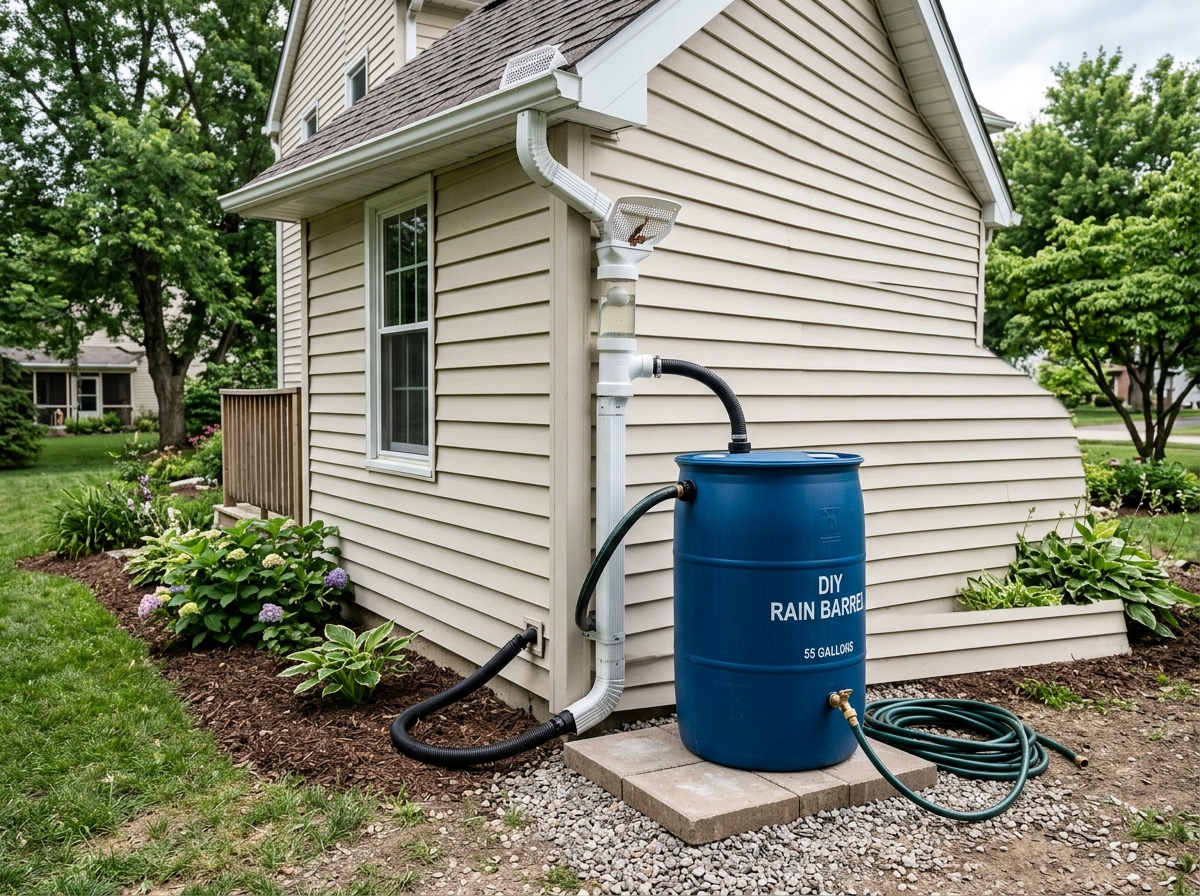
As noted by Live to Plant, positioning your storage on a raised platform allows for gravity-fed delivery, making it much easier to fill your watering can or connect a hose. If you have a larger garden, you might even consider small pumps to move water over longer distances.
Small-Scale Rainwater Collection for Plants on Balconies
If you live in an apartment, don’t worry—you don’t need a 2,000-square-foot roof to participate. Rainwater collection for plants can be done effectively on a balcony using the “bucket method.”
Simply place clean, food-grade buckets or trash cans under the drip line of your balcony’s roof. To prevent them from blowing away in a storm, ensure they are stabilized or weighted down. Most importantly, secure a fine metal screen over the top. This keeps debris out and prevents the local mosquito population from turning your water supply into a nursery. This setup pairs perfectly with setting up drip irrigation for your balcony to automate your watering.
Best Storage Containers for Rainwater Collection for Plants
For beginners, choosing the right container is about balancing capacity with the space you have available.
| Container Type | Capacity | Best For |
|---|---|---|
| Food-Grade 55-Gallon Drum | 55 Gallons | Small yards, affordable DIY |
| IBC Tote | 275 – 330 Gallons | Larger gardens, serious hobbyists |
| Rain Barrel (Commercial) | 50 – 75 Gallons | Aesthetics, ease of setup |
| Upcycled Trash Can | 20 – 32 Gallons | Balconies, ultra-low budget |
Always look for opaque materials. If light can get into your water, algae will grow. While algae isn’t necessarily harmful to plants, it can clog your watering can rose or drip emitters.
Calculating Your Harvest: How Much Water Can You Catch?
It is often surprising how much water a single rainstorm can produce. You can calculate your potential harvest using a simple formula:
Harvested Rainwater (gallons) = Catchment Area (sq ft) x Rainfall (inches) x 0.62
For example, if you have a small 100-square-foot section of roof and it rains 1 inch, you can collect approximately 62 gallons of water!
In regions like Coastal Oregon, a 1,000-square-foot roof can collect a staggering 47,000 gallons per year. Even in dry climates like Southern California, where annual rainfall might only be 10 inches, an average roof can still harvest over 10,000 gallons annually. Knowing these numbers helps you size your storage appropriately so you don’t have water overflowing and wasting away during the wet season.
Maintaining Water Quality: Preventing Pests and Contamination
To keep your rainwater collection for plants safe and odor-free, a little maintenance goes a long way.
- The First Flush: As mentioned earlier, the first 10 gallons of rain per 1,000 square feet of roof usually carry the most contaminants. Using a first flush diverter ensures this “dirty” water never enters your main storage.
- Roof Materials: Metal, clay tile, and plastic roofs generally provide the cleanest water. While asphalt shingles are common and generally acceptable for garden use, they can leach small amounts of residues. Avoid collecting from roofs with lead paint or copper components.
- Mosquito Control: Mosquitoes only need a tiny amount of standing water to breed. Use fine mesh (1/16th inch or smaller) on all openings. You can also use “mosquito dunks” (BTI), which are safe for plants and pets but lethal to mosquito larvae.
- Cleaning Schedule: Inspect your gutters and screens every few months. At least once a year, drain your tank and give it a quick scrub with a dilute vinegar solution to remove any sediment.
According to research on passive rainwater harvesting, keeping the “lid” on your water—whether that’s a physical lid on a barrel or a thick layer of mulch on the soil—is the best way to prevent evaporation and contamination.
Passive vs. Active Harvesting Methods
While barrels are the most recognizable form of rainwater collection for plants, they aren’t the only way.
Active Harvesting involves catching and storing water in tanks or barrels for later use. This gives you total control over when and where the water goes. It’s perfect for indoor plants or specific balcony pots.
Passive Harvesting is the practice of shaping your landscape to slow, spread, and sink rainwater directly into the ground. This uses the soil itself as a “storage tank.”
- Infiltration Basins & Swales: These are shallow depressions or trenches that catch runoff and allow it to soak in near plant roots.
- Organic Matter: Increasing the organic matter in your soil from 1% to 3% can actually double its water-holding capacity. Think of compost as a biological sponge.
- Rain Gardens: These are beautiful planted areas designed to soak up excess runoff from your roof or driveway.
For those with limited space, you can still use passive techniques by using high-quality potting mixes with plenty of organic matter in your balcony pots. You can learn more about managing water in small spaces in our article on drip irrigation for balcony gardens.
Frequently Asked Questions about Rainwater Collection for Plants
Is harvesting rainwater legal in my state?
In the vast majority of cases, yes! There is a common myth that collecting rain is illegal. In reality, most states and municipalities encourage it. For example, in Oregon, state law specifically allows residents to collect runoff from rooftops. In places like San Diego, the city even offers financial incentives for residents to install rain barrels. Always check your local municipal codes, but for most home gardeners, catching roof water is perfectly legal.
Is harvested rainwater safe for edible vegetable gardens?
Yes, but with a few precautions. To ensure food safety, always use a first flush diverter to minimize pathogens from bird droppings. It is also best to use drip irrigation rather than overhead sprinkling; this delivers water directly to the soil and keeps it off the leaves and fruit of the plants. Finally, always wash your produce with potable (tap) water before eating.
How do I stop mosquitoes from breeding in my rain barrel?
The best defense is a good screen. Ensure every opening in your system is covered with a fine mesh. If you do spot larvae (they look like tiny wiggling “commas” in the water), you can use a mosquito dunk or even a tablespoon of vegetable oil. The oil creates a thin film on the surface that prevents the larvae from breathing. However, frequent use of the water is the best cure—if you’re emptying the barrel every week to water your plants, the mosquitoes won’t have time to hatch!
Conclusion
Embracing rainwater collection for plants is a win-win. You get a free supply of high-quality “superfood” for your indoor jungle, and you help the environment by reducing stormwater runoff and conserving municipal water. Whether you start with a single bucket on your balcony or a sophisticated multi-barrel system, your plants will thank you with lusher leaves and more vibrant blooms.
At Finance Lixo, we believe that sustainability and home gardening should be accessible to everyone, regardless of the size of their living space. By taking these small steps toward water independence, you’re not just growing a garden—you’re participating in a larger movement toward environmental stewardship.
Start your sustainable garden journey today and discover how easy it is to turn your home into a thriving, water-wise oasis!
