
A Guide to Choosing the Perfect Living Wall Indoor Kit
Why Indoor Living Wall Kits Are the Smartest Upgrade for Small Spaces
Indoor living wall kits are vertical garden systems that mount directly to your wall, letting you grow dozens of plants in just a few square feet of floor space.
Quick comparison of top indoor living wall kits:
| Kit | Best For | Plant Capacity | Watering | Price Range |
|---|---|---|---|---|
| Biome Taiga | Smart home integration | Multiple pods | Automated, 2-3 weeks | Premium |
| Florafelt Compact | DIY hydroponic walls | 8 plants | Daily timer, 3-gal tank | ~$850 |
| ECO Living Green Wall | Edible produce | 88 plants | Automated LED system | ~$2,499 |
| Tevagrow TEVAWALL | Large capacity | 45 plants | App-controlled, 10-gal tank | Mid-range |
| GreenWalls Fully Automatic | Plug-and-play simplicity | Customizable | Mains-connected auto-fill | Mid-range |
| Botanicus Plantups | No-plumbing modular | Varies by pot size | Manual/optional LED | From $504 |
| Edible Walls Kits | Edible herb walls | Varies by size | Wall-mounted reservoir | Varies |
If you live in an apartment with no outdoor space, a living wall kit lets you bring a real garden indoors — without needing a backyard, a green thumb, or hours of maintenance each week.
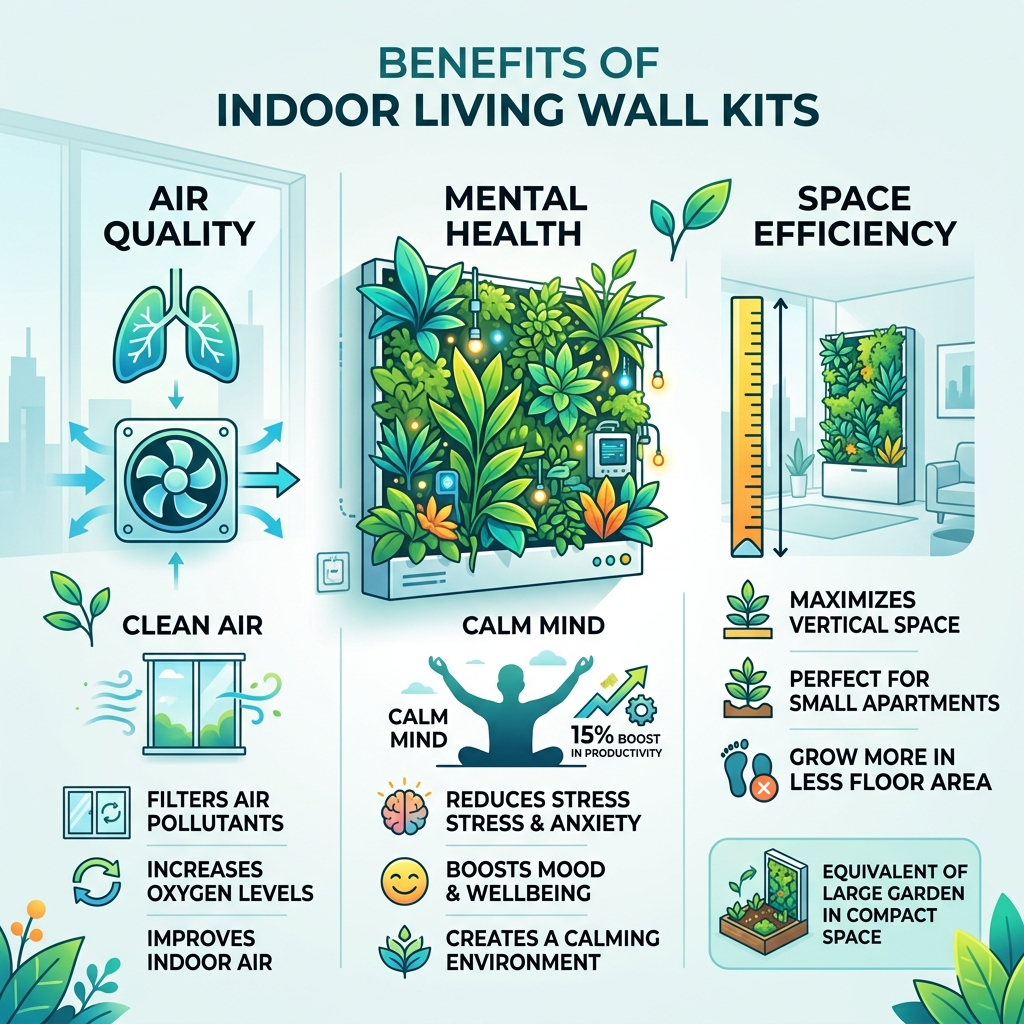
Research from the University of Exeter found that offices with plants see a 15% boost in productivity. And some systems, like the ECO Living Green Wall, can produce the equivalent of a 50-square-foot outdoor garden from under 3 square feet of floor space.
The challenge is that not every kit works the same way. Some are hydroponic. Some need plumbing. Some connect to your phone. Prices range from around $100 to over $2,500.
This guide breaks down the best options so you can find the right fit for your space, budget, and lifestyle.
Indoor living wall kits vocab explained:
The Evolution of Greenery: Indoor Living Wall Kits vs. Traditional Planters
When we think of indoor plants, we usually picture a few dusty terra cotta pots sitting on a windowsill. While charming, traditional planters have limitations that indoor living wall kits easily overcome. The primary shift is in space efficiency. A standard 50-square-foot outdoor garden can be condensed into a mere 3-square-foot footprint using vertical technology. This “upward” growth strategy allows urban dwellers to enjoy a lush jungle without sacrificing floor space.
Beyond aesthetics, the scientific benefits are profound. We aren’t just talking about a splash of green; we’re talking about active biofiltration. High-performance kits like the Biome Taiga Smart Living Wall use the microbe-rich root zones of plants to break down pollutants, including CO2 and Volatile Organic Compounds (VOCs). NASA studies have long supported the idea that specific plants can scrub toxins like formaldehyde and benzene from our indoor air, which is often more polluted than the air outside.
Furthermore, living walls act as natural humidifiers and noise dampeners. In dry climates or office environments with echoing hallways, a vertical garden softens the acoustics and adds much-needed moisture to the air.
| Feature | Traditional Pots | Vertical Living Wall Kits |
|---|---|---|
| Space Usage | High floor/shelf footprint | Minimal (uses vertical wall space) |
| Watering | Manual (easy to over/under water) | Often automated or self-watering |
| Air Filtration | Passive | Active (via root zone biofiltration) |
| Productivity | Minimal impact | Up to 15% boost in focus |
| Maintenance | Individual care per pot | Centralized system maintenance |
Essential Features of High-Performance Indoor Living Wall Kits
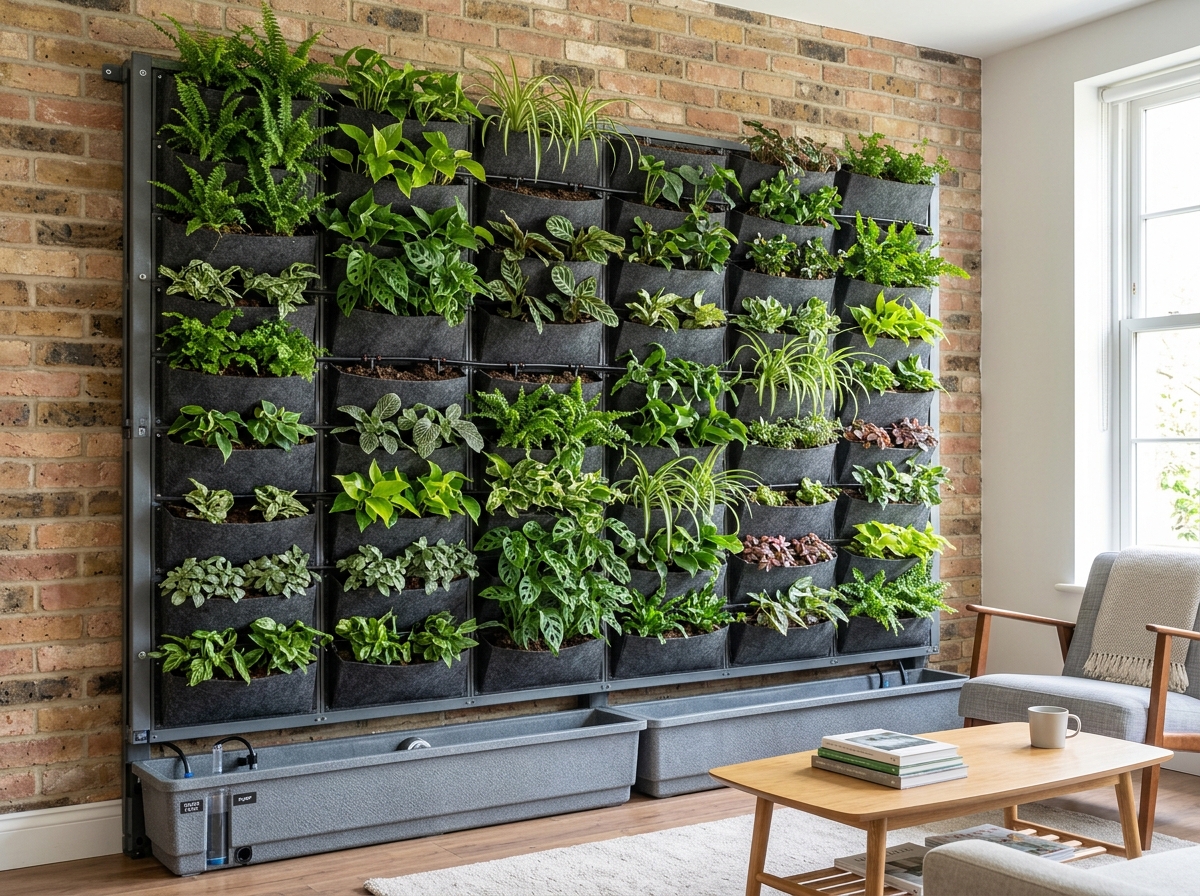
Choosing between different indoor living wall kits requires looking under the “hood” of the system. We need to consider how the plants are actually staying alive.
- Plant Capacity: Systems range from compact 8-pocket units like the Florafelt Compact Living Wall Kit to massive installations like the ECO Living Green Wall, which can hold up to 88 plants.
- Reservoir Size: If you aren’t plumbing the unit into your home’s water line, the reservoir size determines how often you’ll be refilling. A 10-gallon reservoir, found in systems like the TEVAWALL, offers significant autonomy.
- Materials: Look for sustainable or recycled materials. Many top brands use 100% recycled steel or recycled plastic nylon felt. These materials are chosen for their durability and moisture-wicking properties.
- Power Requirements: Most automated kits require a standard 110V outlet to run pumps, timers, or LED lights. Some modular systems, like those from Botanicus Green, offer “no-plumbing” designs that can function without power if you opt for manual watering.
Smart Technology in Modern Indoor Living Wall Kits
The “Smart” revolution has hit the garden. High-end indoor living wall kits now feature WiFi connectivity and integrated apps. These systems monitor ambient temperature, pressure, humidity, and even particulate matter (PM 1.0, 2.5, 10.0).
With an app, you can receive low-water alerts on your phone, so you never have to guess when the tank is empty. Some systems even provide weekly air quality reports, showing you exactly how much your wall is cleaning your home’s environment. Lighting is also integrated; magnetic LED “halos” can be scheduled for wakeup and bedtime via your smartphone to ensure plants get the light they need, even in windowless basements.
Automated Irrigation for Indoor Living Wall Kits
The biggest fear for new plant parents is the “vacation death” — coming home to a wall of brown leaves. Modern kits solve this with automated irrigation.
- Self-Watering Reservoirs: These tanks use pumps and timers to deliver water to the top of the wall, where it wicks down through the growing media.
- Hydroponic Wicking: Systems like Florafelt use recycled felt that acts like a sponge, delivering water and nutrients directly to the roots without soil.
- Mains Connection: Some kits, like the GreenWalls Fully Automatic Living Wall Kit, can be connected directly to a water supply with a solenoid valve that refills the trays automatically.
- Power Outage Resilience: High-quality systems include trays that hold enough water to sustain plants for up to 14 days even if the power goes out.
Installation and Long-Term Maintenance Requirements
We often get asked: “Do I need a contractor to install this?” For most indoor living wall kits, the answer is no. DIY installation is a core feature of these products.
- Mounting: Most systems use a “Z-clip” or rail system. You simply screw the rails into your drywall (using anchors) or studs, and the planter trays or panels hook right on.
- Setup Time: A standard smart wall can often be hung in 30 minutes or less.
- Phased Delivery: Some manufacturers ship the hardware first so you can get it mounted and connected to WiFi before the live plants arrive. This ensures the plants aren’t sitting in a box while you’re looking for your screwdriver.
Maintenance Checklist:
- Refilling: Depending on the reservoir size, you’ll need to top off the water once or twice a month.
- Fertilization: Hydroponic systems require a mild liquid plant food added to the reservoir every 4–6 weeks.
- Trimming: Just like a regular garden, you’ll need to snip back overgrown leaves to keep the wall looking tidy.
- Pest Control: For indoor soil-based systems, adding a layer of pebbles to the top of the soil is a great trick to deter pests like fungus gnats.
Choosing the Right Plants for Vertical Success
Not every plant is a “wall climber.” When selecting greenery for your indoor living wall kits, you have a few directions you can go:
- Tropical & Evergreen: Pothos, Philodendrons, and Ferns are the kings of the living wall. They love the consistent moisture of a hydroponic system and can handle indirect light.
- Pet-Safe Collections: If you have curious cats or dogs, look for kits that offer specific “Pet-Safe” plant bundles. This usually includes varieties like Spider Plants or certain Calatheas that won’t harm your furry friends if they take a nibble.
- Edibles: This is where the ROI comes in. The ECO Living Green Wall is designed specifically for high-yield produce. You can grow basil, mint, chives, pak choi, and butterhead lettuce. Because these systems use optimized LED lighting, you can harvest fresh greens year-round, regardless of the weather outside. Some users report up to $3,000 in annual grocery savings by growing their own produce vertically.
Frequently Asked Questions about Indoor Living Wall Kits
Do indoor living wall kits require special plumbing or electricity?
Most modern kits are “plug-and-play.” They do not require a plumber. They use a closed-loop system where a reservoir at the bottom holds the water, and a small pump (powered by a standard 12V or 110V outlet) moves it to the top. The water then drips back down into the reservoir. This “no-plumbing” design means you can put a living wall in a bedroom, hallway, or office without any risk of leaks or expensive pipework.
How do these systems perform during vacations or low-light conditions?
These systems are “vacation enablers.” Because they are automated, they can typically manage themselves for 2–3 weeks. If you’re going away longer, you just need a neighbor to pour a few gallons into the tank once. For low-light conditions, many kits include (or offer as an add-on) full-spectrum LED grow lights. These lights provide the exact wavelengths plants need to photosynthesize, meaning you can even grow a lush garden in a windowless basement.
Can I grow edible produce in an indoor living wall?
Absolutely. In fact, vertical farming is one of the most efficient ways to grow herbs and leafy greens. Kits like those from Up the Wall Gardens or Edible Walls allow you to swap ornamental plants for herbs. The key is ensuring you have enough light, as edible plants typically require more energy than low-light tropicals.
Conclusion
At Finance Lixo, we believe that your environment is an investment in your well-being. Whether you are looking to boost your productivity by 15%, save thousands on your annual grocery bill, or simply turn a drab apartment wall into a breathing urban oasis, indoor living wall kits offer a sustainable and high-tech solution.
The vertical gardening revolution isn’t just about decor; it’s about bringing the healing power of nature back into our tech-heavy lives. From smart, sensor-driven hydroponic towers to simple DIY felt pockets, there is a system for every budget and skill level.
Ready to breathe easier? Transform your space today and join the movement toward biophilic wellness.
