
The Best Minimalist Flooring Options for Tiny Balconies
Defining the Aesthetic of Minimalist Balcony Floor Tiles
When we talk about minimalism in outdoor design, we aren’t just talking about “having less stuff.” It is a deliberate design philosophy where every element serves a purpose. For minimalist balcony floor tiles, this means prioritizing clean lines, functional simplicity, and a decluttered visual field.
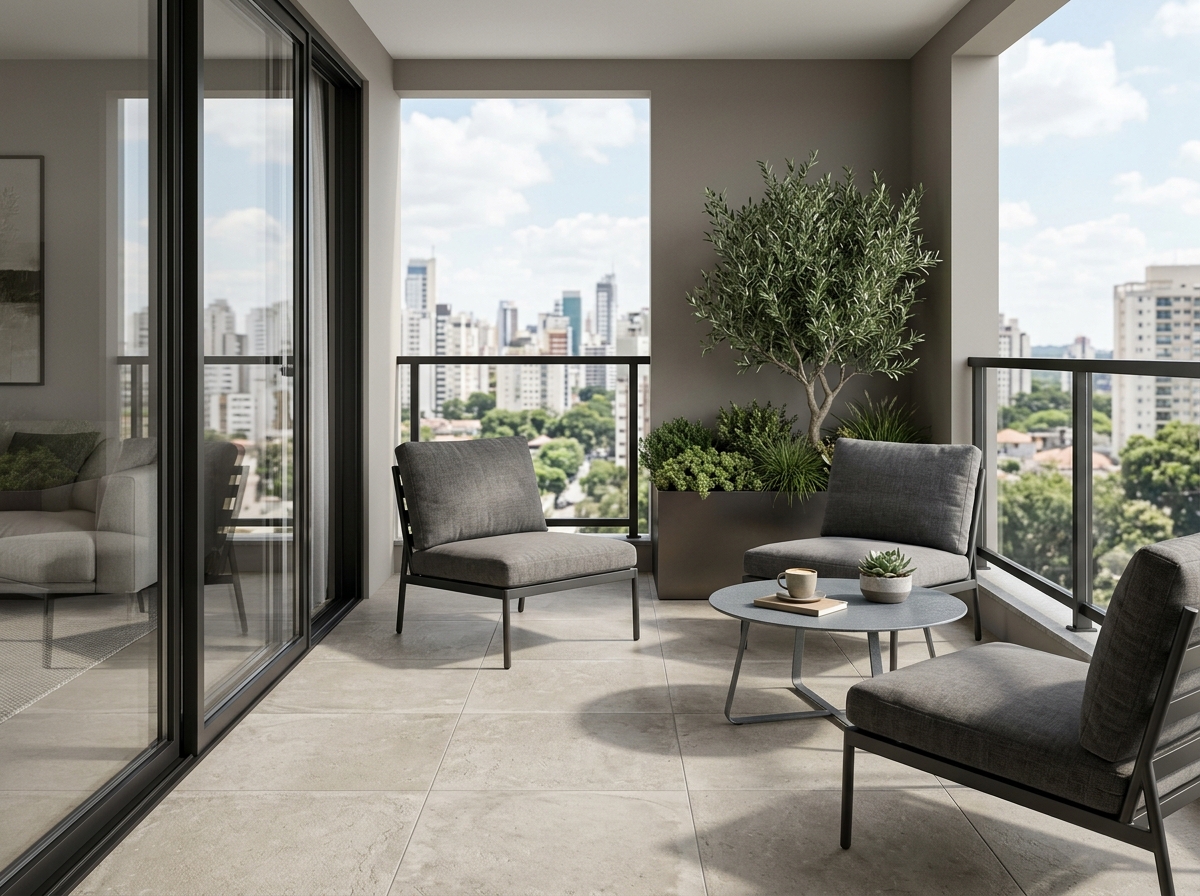
A minimalist balcony floor acts as a silent stage. It shouldn’t scream for attention with loud patterns or neon colors. Instead, it should provide a sense of spatial harmony. This aesthetic is particularly effective when paired with a Minimalist Balcony Garden Design, where the focus remains on the greenery rather than a busy floor. By choosing tiles with rectified edges (edges that are perfectly straight), you can achieve incredibly thin grout lines. This creates a “monolithic” look, making the floor appear as one continuous surface.
To truly master this look, you might want to explore Modern Balcony Garden Ideas that emphasize architectural plants and sleek containers, which naturally complement the “less is more” tiling approach.
The Power of Neutral Color Palettes
In minimalism, color is used to create atmosphere and continuity. Monochrome shades—blacks, whites, and every shade of charcoal in between—are staples. However, soft greys and beige tones are the real heroes for tiny balconies.
Why? Because they reflect light without being blinding. A soft grey tile can make a concrete-walled balcony feel airy and sophisticated. Beige or “greige” tones add a hint of warmth, preventing the space from feeling clinical. Using a color that closely matches your interior flooring can also create a seamless transition, effectively “tricking” the eye into thinking your living room extends right out onto the railing. For more ways to blend your floor with your flora, check out some Balcony Garden Inspiration.
Why Matte and Textured Finishes Matter
While a high-gloss tile might look glamorous in a showroom, it’s rarely the right choice for a minimalist balcony. Glossy surfaces reflect light in a scattered, busy way and, more importantly, they are incredibly slippery when wet.
Minimalism favors matte and textured finishes for three reasons:
- Safety Standards: Textured porcelain tiles can improve slip resistance by up to 35%, which is vital for an area exposed to rain.
- Light Absorption: Matte finishes absorb light rather than reflecting it, creating a soft, calm glow that feels more natural.
- Tactile Appeal: There is a “stone-like” honesty to matte tiles that fits the minimalist ethos of using authentic-feeling materials.
When you’re choosing Balcony Decor For Plants, a matte floor provides a grounded, organic backdrop that lets the textures of terracotta pots or wooden planters shine.
Top Materials for Minimalist Balcony Floor Tiles
Choosing the right material is a balance between “looks pretty” and “won’t break in five years.” Here is how the top contenders stack up:
| Feature | Porcelain Tiles | Natural Stone | Composite/Rubber Tiles |
|---|---|---|---|
| Durability | Extremely High (30-40 years) | High (20-30 years) | Moderate (10-20 years) |
| Water Absorption | Below 0.5% | Porous (requires sealing) | High Drainage |
| Maintenance | Low (40% lower cost than stone) | Moderate to High | Low |
| Installation | Professional Recommended | Professional Required | DIY Friendly |
| Weather Resistance | 30°F to 110°F+ | Varies by stone type | Excellent |
If you are working on a Budget Friendly Balcony Gardening Setup, understanding these material costs upfront will help you allocate more of your funds to the actual plants and furniture.
Porcelain: The Gold Standard for Minimalist Balcony Floor Tiles
If we had to pick a winner, it’s porcelain. Porcelain tiles are fired at much higher temperatures than standard ceramic, making them incredibly dense. This density results in a water absorption rate of less than 0.5%. In plain English: water can’t get inside the tile, so when the temperature drops and water freezes, the tile won’t crack.
With a lifespan of 30 to 40 years, porcelain is a “set it and forget it” solution. It is also UV-resistant, meaning those sleek charcoal tiles won’t turn a sad, faded grey after one summer in the sun. For those just starting their outdoor journey, our Quick And Easy Beginners Guide To Balcony Gardening pairs perfectly with a low-maintenance porcelain floor.
Wood-Look Porcelain for a Warm Minimalist Balcony Floor Tiles Aesthetic
Do you love the look of a wooden deck but hate the idea of sanding, staining, and fighting off rot? Wood-look porcelain is the answer. These tiles come in a plank format that mimics the grain and texture of real timber but carries all the durability of stone.
It’s a perfect fit for a Minimalist Balcony Garden because it introduces an organic element without the visual clutter of traditional “busy” wood grains. Look for light oak or weathered grey finishes to keep the vibe minimalist and modern.
Interlocking Rubber and Composite Deck Tiles
For renters or DIY enthusiasts, interlocking tiles are a game-changer. Often made from polyurethane-bonded rubber granulate or wood-plastic composites (WPC), these tiles “click” together like Lego bricks.
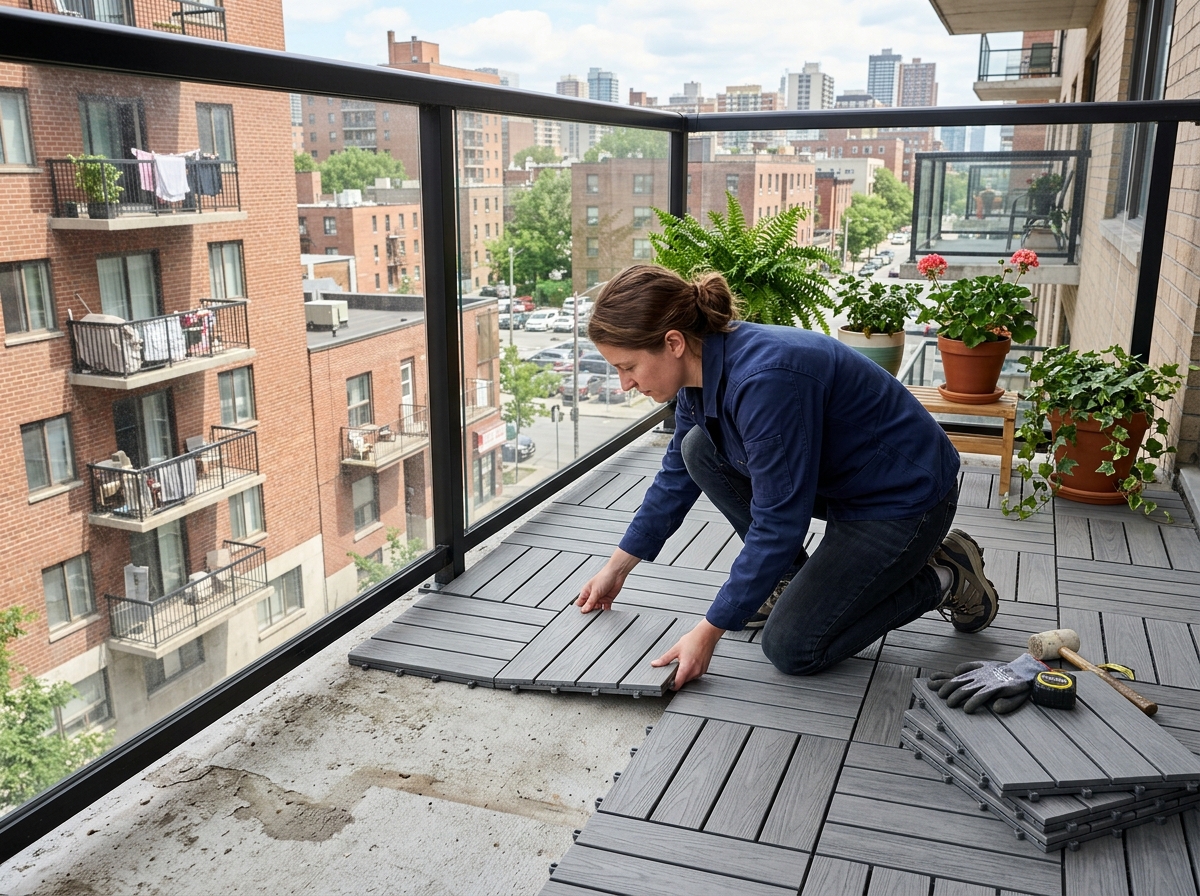
They are often 30×30 cm and can be laid directly over existing concrete without any messy adhesives. They offer a seamless look and excellent drainage, as water flows through the joints and beneath the tiles to the balcony drain. If you’re looking for a Cheap Balcony Makeover, this is the fastest way to hide an ugly concrete slab.
Maximizing Small Spaces with Tile Size and Patterns
It sounds counterintuitive, but for a tiny balcony, you actually want bigger tiles. This is one of the best-kept secrets in interior (and exterior) design.

Creating an Illusion of Space
Large-format tiles (think 60×60 cm or larger) mean fewer grout lines. Grout lines act as a visual grid; the more lines there are, the busier the floor looks, and the smaller the space feels. By minimizing these interruptions, you create a seamless transition that makes the floor appear expansive.
Using light colors like “white sand” or “soya beige” further enhances this effect by reflecting ambient light. If you are Maximizing Limited Space With Balcony Gardening, a large-format tile floor provides the clean “blank canvas” you need. This is a core principle in any Urban Dwellers Guide To Balcony Gardening, where every centimeter counts.
Minimalist Pattern Selection
If you want a pattern, keep it subtle. A simple grid layout is the hallmark of minimalism. Avoid “herringbone” or “chevron” patterns if your balcony is very narrow, as these can make the space feel frantic.
Instead, use low-contrast grout. If your tiles are light grey, use light grey grout. This makes the lines disappear, contributing to that “one big surface” feel. This architectural approach allows you to get more adventurous with Creative Balcony Gardening Ideas on the walls or railings without the space feeling overwhelmed. To see how a clean floor can change the whole vibe, look into Creating A Green Oasis How To Start Balcony Gardening.
Practical Benefits and Installation Considerations
Beyond aesthetics, minimalist balcony floor tiles have to work hard. They are exposed to the elements 24/7.
- Weatherproofing: Always ensure you use an exterior-rated tile. Interior tiles will crack the first time the temperature swings from a sunny 110°F to a chilly night.
- Subfloor Preparation: The “floor under the floor” must be level and clean. If you’re tiling over concrete, any existing cracks need to be addressed first.
- Weight Limits: If you live in an older apartment building, check the weight capacity of your balcony. Porcelain is heavy; composite deck tiles are much lighter.
For more advice on managing the logistics of a high-rise garden, our The Ultimate Apartment Balcony Gardening Guide covers everything from wind protection to weight limits.
Ensuring Proper Drainage and Safety
Water is the enemy of a balcony. If your tiles are installed flat, water will pool, leading to mold, mosquitoes, and potential leaks into the apartment below.
- Slope: Your balcony should have a slight slope (usually 1-2%) leading toward the drain.
- Waterproofing Membranes: Before the tiles go down, a liquid or sheet membrane should be applied to prevent moisture from seeping into the structural slab.
- Anti-Slip Ratings: Look for an “R-rating.” For balconies, an R10 or R11 rating is usually recommended to ensure you don’t take a tumble when watering your plants.
A safe floor allows you to comfortably enjoy your Balcony Garden With Furniture without worrying about a slippery surface.
Maintenance Tips for Long-Lasting Style
One of the best things about minimalist tiles is how easy they are to clean. Because they don’t have deep crevices or intricate patterns, dirt has nowhere to hide.
- Regular Cleaning: Sweep once a week to prevent abrasive dirt from scratching the surface.
- Mild Detergents: You don’t need harsh chemicals. A bucket of warm water and a drop of mild soap will keep porcelain looking brand new.
- Annual Inspections: Once a year, check the grout for any tiny cracks. Fixing a small crack now prevents a big leak later.
- Stain Prevention: If you’re using pots, use saucers! Rust from metal stands or tannins from potting soil can stain even the toughest tiles if left for months.
For more maintenance hacks, check out our Quick And Easy Beginners Guide To Balcony Gardening 2.
Frequently Asked Questions about Minimalist Balcony Floor Tiles
Which tile material is most durable for extreme weather?
Porcelain is the undisputed heavyweight champion here. It can handle temperature swings from 30°F to 110°F without batting an eye. Its UV resistance ensures the color stays true, and its low porosity prevents frost damage. This makes it the ideal choice for an Urban Dwellers Guide To Balcony Gardening 2 where the environment can be harsh.
How do I make a small balcony look bigger with tiles?
Stick to the “Three L’s”: Large format, Light tones, and Low contrast grout. By reducing the number of visible lines and using colors that reflect light, you blur the boundaries of the space. This is a key strategy when Maximizing Limited Space With Balcony Gardening 2.
Are minimalist tiles hard to maintain?
Actually, they are the easiest! Matte-finish porcelain is incredibly stain-resistant. Unlike natural stone, which may need to be resealed every year, porcelain is non-porous. It won’t soak up spilled coffee or rain. If you’re on a Budget Friendly Balcony Gardening Setup 2, you’ll appreciate that the maintenance cost is about 40% lower than natural stone.
Conclusion
At Finance Lixo, we believe that your home doesn’t end at the sliding glass door. Transforming your tiny balcony with minimalist balcony floor tiles is more than just a home improvement project; it’s about reclaiming a piece of the outdoors for your own peace of mind.
Whether you choose the timeless durability of porcelain, the warmth of wood-look planks, or the DIY ease of interlocking tiles, the goal is the same: to create a functional, beautiful space that feels larger than its footprint. By focusing on neutral palettes, matte finishes, and smart sizing, you can turn a cramped ledge into a sophisticated sanctuary.
Ready to dive deeper into outdoor aesthetics? Explore our Design section for more tips on creating a home that reflects your style, inside and out. Happy tiling!
