
Top Balcony Plants That Actually Survive in Pots
The Best Plants for Balcony Gardening: A Quick Comparison
The best plants for balcony gardens depend on your light and wind conditions — but these are the top performers across most urban spaces:
| Plant | Light Needed | Best For |
|---|---|---|
| Petunia | Full sun | Color, trailing baskets |
| Geranium | Full sun | Long blooms, low care |
| Lavender | Full sun | Fragrance, pollinators |
| Begonia | Shade | Color in low light |
| Fuchsia | Shade | Drama, hummingbirds |
| Fern | Shade | Lush texture |
| Bamboo | Any | Privacy, wind screening |
| Rosemary | Full sun | Edible, drought-tolerant |
| Mandevilla | Full sun | Climbing, visual impact |
| Coleus | Shade | Bold foliage color |
You don’t need a backyard to have a real garden. Even a 5 x 10 foot balcony can hold enough pots to feel like a green retreat.
But here’s the problem most people run into: they buy plants they love the look of, without checking whether those plants can actually survive their specific balcony conditions. Too much wind. Too much shade. Pots that dry out in hours. The plant dies, the gardener feels defeated, and the balcony stays grey.
It doesn’t have to go that way.
Microgardening — growing compact plants in containers on small urban spaces — is one of the biggest gardening trends right now. Modern plant breeding has made it easier than ever, with compact versions of almost every shrub, perennial, and even fruit tree now available for pot growing.
This guide cuts through the noise. Below, you’ll find plants that actually survive in pots, organized by your balcony’s conditions.
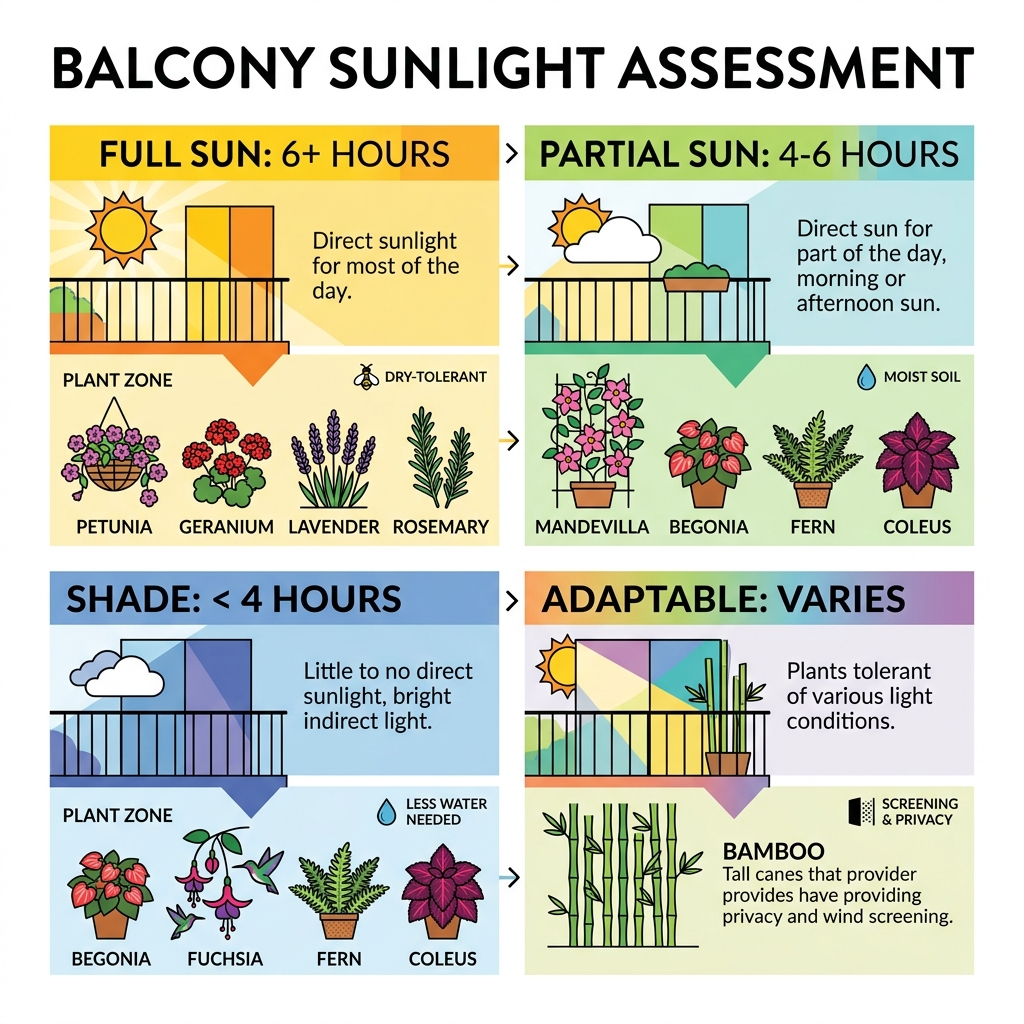
Assessing Your Space: The Secret to Choosing the best plants for balcony Success
Before we head to the garden center, we need to do a little “balcony detective work.” Choosing the best plants for balcony success isn’t just about what looks pretty; it’s about matching the plant to the reality of your architecture.
Sunlight Hours
The most common mistake is overestimating how much sun your pots get. A “sunny” balcony needs at least 6 hours of direct, unobstructed light. If your space is tucked between tall buildings or under a deep overhang, you might only be getting 2 to 3 hours. We recommend doing a “sunlight test”: check your balcony every hour on a clear day and note when the sun actually hits the floor. For a deeper dive into this, check out our guide on understanding sunlight needs for balcony plants. You can also compare your setup with this practical external guide on Best Balcony Plants for Small Spaces.
Wind Exposure
Wind is the silent killer of balcony gardens. High-rise balconies act like wind tunnels, which physically lashes delicate stems and sucks moisture out of the soil at double speed. If you can hear the wind whistling through your railing, you’ll need flexible plants like grasses or sturdy, waxy-leaved shrubs.
Weight Limits
Soil is heavy. Wet soil is even heavier. Before you fill ten massive ceramic pots, check your building’s structural limits. To keep things safe, we often suggest using lightweight resin or fiberglass containers and a soilless potting mix.
Microclimate and Drainage
Your balcony has its own “weather.” Concrete walls can radiate heat long after the sun goes down, creating a desert-like environment. Conversely, a corner balcony might have a “dead zone” where air doesn’t circulate, inviting mildew. Regardless of the climate, every pot must have drainage holes. Without them, your plants will effectively “drown” in stagnant water.
Sun-Drenched Selections: Top Performers for Full Sun (6+ Hours)

If your balcony is a sun trap, you have some of the most vibrant options available. These plants thrive in the heat and produce the most dramatic blooms.
- Petunias: These are the royalty of the balcony world. Varieties like “Easy Wave” are specifically bred to spread and trail, quickly filling railing planters with a carpet of color. They are hungry plants, so they’ll need regular feeding to keep those blooms coming.
- Geraniums (Pelargoniums): These are perhaps the most iconic and best plants for balcony boxes. They are incredibly tough, drought-tolerant, and love the sun. If you forget to water them for a day or two, they won’t hold a grudge.
- Mandevilla: This is a vining show-stopper. It loves to climb a trellis and produces large, trumpet-shaped flowers that attract pollinators. Just be careful if you have curious pets—Mandevilla can be toxic if ingested.
- Dwarf Olive Trees: For a Mediterranean vibe, a “Little Ollie” dwarf olive is perfect. They have beautiful silvery foliage and are surprisingly wind-resistant. Learn more about choosing the right plants for a sunny balcony to see how these fit into a larger design.
- Lavender: Not only does it smell heavenly, but its silver-grey foliage reflects sunlight, preventing the plant from scorching. It’s a favorite choice for urban gardeners because it’s hardy and attracts bees even several stories up.
Heat-Tolerant Herbs and Edibles
A sunny balcony is essentially a tiny farm waiting to happen. Herbs like Rosemary and Thyme are Mediterranean natives, meaning they actually prefer “poor” soil and lots of sun. They are some of the the best herbs for balcony gardening because they don’t mind the drying winds.
For those who want to eat their garden, Cherry Tomatoes are the way to go. They grow perfectly in 5-gallon pots. If you like a bit of heat, chili peppers perfect for balconies can be grown in even smaller containers, adding both spice to your kitchen and bright pops of red and orange to your décor. You can find more edible inspiration in our guide on chili peppers perfect for balconies.
Shade-Friendly Favorites: Thriving in Low Light
Don’t despair if your balcony feels like a cave. Some of the most elegant plants actually prefer a break from the harsh afternoon sun.
- Fuchsia: These are “hummingbird magnets.” Their pendulous, bell-like flowers look stunning in hanging baskets. They prefer the cooler air of a shaded balcony and need to stay consistently moist.
- Begonias: Specifically “Angel Wing” or “Rex” begonias. They are the best flowers for a shaded balcony because they offer both colorful flowers and stunning, patterned foliage.
- Ferns: If you want that “urban jungle” look, ferns like the Jurassic™ series are your best friend. They thrive in indirect light and add a soft, wild texture to the space.
- Impatiens: Varieties like “Beacon” are bred to be disease-resistant and can bloom in almost total shade. They are great for beginners because they “tell” you when they need water by wilting slightly, then bounce right back after a drink.
Foliage and Texture for Shady best plants for balcony Designs
When flowers are sparse in the shade, we lean on foliage to do the heavy lifting. Coleus comes in neon greens, deep purples, and hot pinks, providing “color” without needing a single bloom. Heuchera (Coral Bells) offers ruffled leaves in shades of lime, silver, and burgundy.
If you have a very small space, Ivy is one of the most reliable fast-growing plants for small balconies. It can trail down from a high shelf or climb a small wire frame. Interestingly, many of the best indoor plants for your balcony, such as Calatheas or Philodendrons, can actually spend their “summer holiday” outside in a shaded spot, provided the temperature stays above 55°F. Check out our tips on the best indoor plants for your balcony for more on this.
Privacy and Protection: Wind-Resistant and Screening Plants
One of the biggest requests we get is how to turn a fishbowl balcony into a private sanctuary. You don’t need a wall; you just need the right greenery.
- Golden Bamboo: This is the ultimate privacy screen. It grows tall and thick very quickly. Crucial tip: Always keep bamboo in a sturdy, deep container (at least 24 inches wide) to prevent it from becoming invasive or cracking the pot.
- Ornamental Grasses: Grasses like Miscanthus or Carex are excellent for windy balconies. They don’t break in the wind; they dance. The rustling sound also helps mask city traffic noise.
- Star Jasmine: This vining plant provides a double benefit. It creates a thick green screen on a trellis and produces a scent so powerful it can fill your whole apartment on summer evenings.
Using a mix of heights—tall bamboo at the back and shorter shrubs in front—creates a “layered” look that feels more like a real garden and less like a fence.
Vertical Gardening with the best plants for balcony Privacy
When floor space is at a premium, we look up. Climbing vines like Clematis can be trained to grow across a railing, creating a living “curtain.” You can also use fast-growing plants for small balconies-2 like pole beans or morning glories for a quick, one-season privacy fix. Railing planters that hang off the outside of the balcony are also a great way to add “bulk” to your screen without taking up a single square inch of your walking space.
Essential Care Tips for Potted Balcony Gardens
Growing in pots is fundamentally different from growing in the ground. In a pot, the plant is 100% dependent on you for its survival.
- The Right Mix: Never use “garden soil” from the ground. It’s too heavy and will compact, suffocating the roots. Use a high-quality soilless potting mix and add 20-30% Perlite. This keeps the mix light and airy.
- Watering Wisdom: Balcony pots dry out fast. On a windy, sunny day, you might need to water twice. Always use the “finger test”—stick your finger an inch into the soil. If it’s dry, water until it runs out the bottom.
- Feeding Your Plants: Because you water so often, nutrients wash out of the soil quickly. Use a slow-release fertilizer at the start of the season and a liquid feed every 2-3 weeks during peak growth. This is especially important for dwarf fruit trees perfect for balconies, which need lots of energy to produce fruit.
- Overwintering: If you live in a cold climate, your pots will freeze. Choose “hardy” plants that are rated for two zones colder than your actual location. You can also wrap pots in burlap or move them against the warm wall of the building to help them survive.
- Pest Management: Keep an eye out for aphids or spider mites. Since balconies are often isolated, you might not have enough “good bugs” (like ladybugs) to keep the pests in check. A simple spray of soapy water usually does the trick. If you’re interested in more functional plants, look into how to grow your own medicine best medicinal plants for balconies like Calendula or Lemon Balm, which are often quite pest-resistant.
Frequently Asked Questions about Balcony Plants
What are the best low-maintenance plants for a busy balcony?
If you travel often or just don’t have a green thumb, stick to Succulents, Geraniums, and Zinnias. These are the “survivors.” They can handle a bit of neglect and don’t require constant pruning or deadheading to look decent.
How do I prevent my balcony pots from drying out in the wind?
Wind is a moisture thief. To fight back, use self-watering pots or wicking inserts. You can also “cluster” your pots together; this creates a small microclimate with higher humidity, as the plants protect each other from the breeze. Adding a layer of mulch (like pine bark) on top of the soil also helps lock in moisture.
Can I grow native plants in balcony containers?
Absolutely! In fact, native plants are often more resilient because they are adapted to your local weather. Research shows that many native prairie species, such as Lanceleaf Coreopsis or Nodding Onion, can thrive in pots at least 16 inches deep. They also provide a vital pit stop for local pollinators like bees and butterflies.
Conclusion
Turning a concrete slab into a lush oasis is one of the most rewarding things you can do for your mental well-being and your home’s aesthetic. By choosing the best plants for balcony conditions—matching the right sun, wind, and pot size—you ensure that your garden doesn’t just survive, but thrives.
Whether you’re looking to start a small herb bar or build a towering bamboo privacy screen, Finance Lixo is here to help you navigate urban gardening. A sustainable, green lifestyle starts with a single pot. Transform your balcony today and see how much life a few well-chosen plants can bring to your space.
