
How to Grow a Low Maintenance Vertical Garden That Thrives on Neglect
Why a Low Maintenance Vertical Garden Is the Smartest Move for Small Spaces
A low maintenance vertical garden lets you grow lush greenery — or even food — on a wall or fence, with very little daily effort.
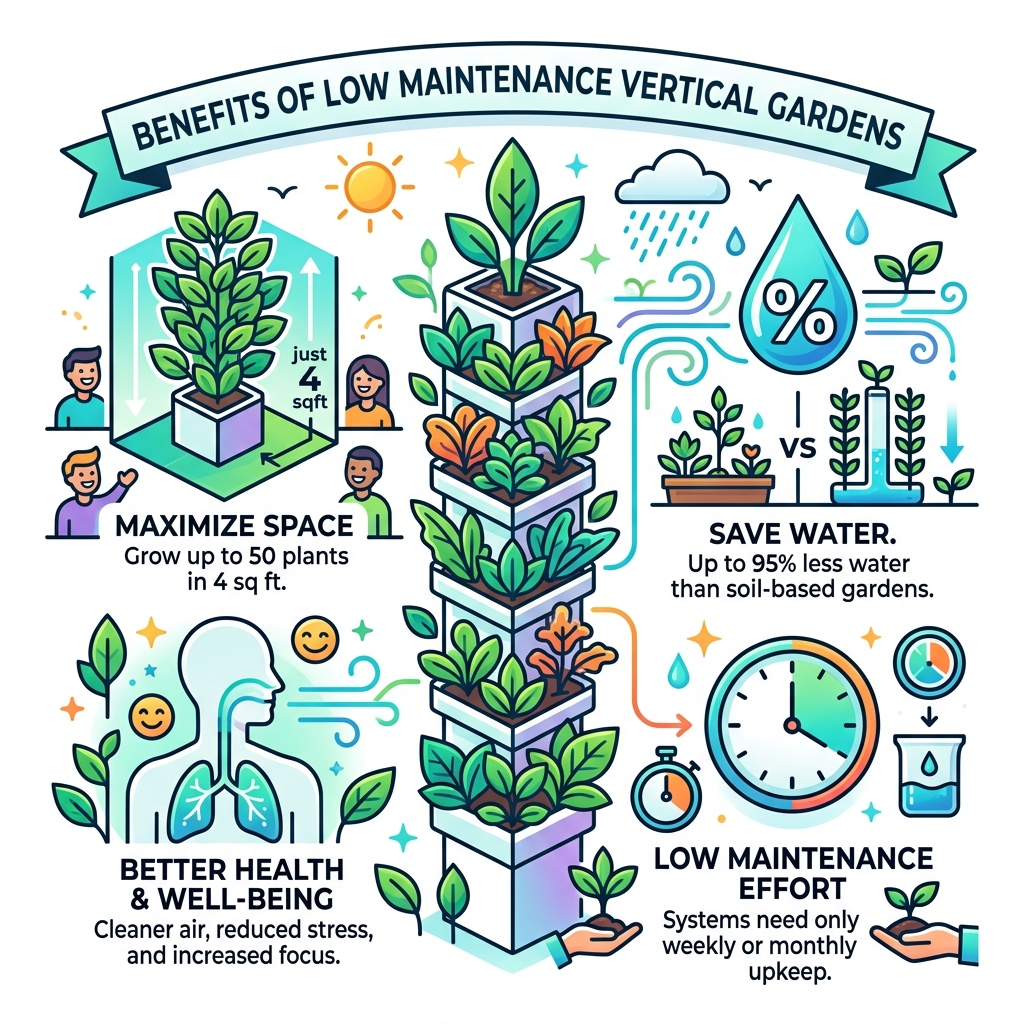
Here’s a quick overview of what makes these gardens so practical:
- Space-saving: Grow up to 50 plants in as little as 4 square feet
- Low effort: Many systems need only weekly or monthly upkeep
- Flexible: Works indoors, outdoors, on balconies, or in offices
- Healthier spaces: Indoor living walls are linked to better air quality and reduced stress
- Water-efficient: Hydroponic vertical systems can use up to 95% less water than soil-based gardens
Most apartment dwellers assume a real garden needs a backyard. It doesn’t.
Vertical gardens flip the script. Instead of spreading out, you grow up. A bare wall becomes a living, breathing green space. A tiny balcony becomes a retreat.
The best part? The right setup practically takes care of itself. Timed irrigation, self-watering reservoirs, and hardy plant choices mean you spend more time enjoying your garden and less time worrying about it.
Whether you want trailing pothos in your living room, fresh herbs in your kitchen, or a full privacy wall on your balcony — there’s a low-effort system that fits your space and your schedule.
The Main Benefits of Vertical Greenery
When we talk about a low maintenance vertical garden, we aren’t just talking about a pretty wall. We’re talking about a multi-tasking powerhouse that works for your home and your health. If you’ve ever felt the “urban squeeze” of a small apartment, you know that every square inch counts.
One of the most striking benefits is air purification. We spend a lot of time indoors, where volatile organic compounds (VOCs), formaldehyde, and carbon monoxide can linger. Research, including famous NASA studies, shows that plants like the spider plant or sword fern act as natural filters. In an office or home setting, these living walls have been shown to boost workers’ health, improving skin quality and even strengthening immune systems.
Beyond the air we breathe, there’s the peace we feel. Vertical gardens have a natural sound-dampening effect. The layers of leaves and the growing medium (whether soil or felt) help absorb high-frequency noises, making your home feel like a quiet sanctuary. They also provide thermal insulation. An outdoor green wall can keep your home cooler in the summer by shading the building’s “skin,” reducing your reliance on air conditioning.
For those of us living in the heart of the city, mental well-being is perhaps the biggest win. Adding life, color, and volume to a space softens harsh architectural lines and creates a calming effect. If you’re looking for specific inspiration for your outdoor area, you can find plenty of vertical balcony garden ideas that combine these health benefits with high-end design.
Top Plants for a Low Maintenance Vertical Garden
The secret to a garden that “thrives on neglect” isn’t magic; it’s plant selection. We always follow the “right plant, right place” rule. If you put a sun-loving cactus in a dark hallway, no amount of technology will save it. However, if you choose hardy, adaptable species, your low maintenance vertical garden will look lush even if you forget about it for a week or two.
Here are our top picks for a bulletproof green wall:
- Pothos (Epipremnum aureum): The undisputed king of vertical gardening. It’s a trailing vine that grows fast, handles low light, and tells you exactly when it’s thirsty by wilting slightly. Once you water it, it bounces back in hours.
- Snake Plant (Dracaena trifasciata): If you are a serial plant killer, start here. These plants can go weeks without water and thrive in almost any light condition. Their upright, sword-like leaves add great structural contrast to trailing vines.
- Philodendron: Similar to Pothos but with heart-shaped leaves. They are incredibly resilient and help create that “jungle” look very quickly.
- ZZ Plant (Zamioculcas zamiifolia): This plant is practically made of steel. It has waxy, deep green leaves and stores water in its thick roots, making it extremely drought-tolerant.
- Native Species: We always recommend looking at what grows naturally in your area. Native plants are adapted to your local climate and pests, meaning they require less fertilizer and intervention. For example, in Mediterranean-style climates, plants like Asparagus sprengeri or Carex grasses are incredibly tough.
For more detailed lists of species that won’t demand your constant attention, check out these low-maintenance plants for vertical gardens.
Best Edibles for a Low Maintenance Vertical Garden
Can you eat your wall? Absolutely. Vertical gardening produces more food per square foot compared to traditional methods because it maximizes sun exposure and improves airflow. This airflow is a secret weapon — it reduces the risk of fungus and pests, which means fewer chemicals and less work for you.
When choosing edibles, look for “compact” or “bush” varieties.
- Leafy Greens: Lettuce, spinach, and kale are perfect. They have shallow root systems and grow quickly. Some smart systems even allow you to harvest lettuce in as little as three weeks!
- Herbs: Mint, parsley, and chives are very hardy. Just be careful with mint — it’s an overachiever and might try to take over the whole wall if you don’t keep it in its own container.
- Strawberries: These are the “showstoppers.” They naturally trail downward, making them perfect for vertical pockets.
- Cherry Tomatoes: Look for “tumbling” varieties designed for hanging baskets. They provide a high yield without needing a massive trellis.
If you’re wondering how to fit these into a small outdoor area, we’ve got a guide on choosing the best vertical garden for balcony spaces that covers exactly which edible setups work best when floor space is at a premium.
Smart Irrigation for Your Low Maintenance Vertical Garden
Watering is where most gardens fail. Either we forget, or we overwater until the roots rot. To make a garden truly low maintenance, we need to automate the process.
The most effective method for a low maintenance vertical garden is a drip irrigation system paired with a timed controller. This setup delivers precise amounts of water directly to the roots, minimizing evaporation and waste.
Modern “smart” systems even offer app-based monitoring. You can be on vacation in another country and get a notification that your reservoir is low or adjust the watering schedule based on a local heatwave. For indoor systems, wicking fabric is a game-changer. These systems use a specialized felt that pulls water from a reservoir and distributes it evenly across the root zone through capillary action. It’s silent, electricity-free, and incredibly reliable.
For a deeper dive into how these systems integrate into modern homes, see our thoughts on choosing the best vertical garden for balcony spaces 2.
Choosing the Best Low-Maintenance Systems
Not all vertical structures are created equal. Depending on your budget and how much “DIY” you want to do, you have two main paths: soil-based or hydroponic.
| Feature | Soil-Based Systems | Hydroponic/Aquaponic Systems |
|---|---|---|
| Maintenance | Low (if using self-watering pots) | Very Low (fully automated) |
| Growth Speed | Moderate | Fast |
| Water Usage | Moderate | Extremely Low (95% less than soil) |
| Weight | Heavy (soil holds water) | Light (uses water or air) |
| Cost | Affordable | Higher Upfront Investment |
If you want something that feels like a “real” garden, soil-based towers are fantastic. Some advanced towers even include a central vermicomposting tube. You drop your kitchen scraps in the middle, worms turn them into compost, and the nutrients “tea” flows directly to your plants. It’s a closed-loop ecosystem that fits on a patio.
For those who want a “set it and forget it” indoor solution, modular trays and pre-seeded pods are the way to go. Systems like the Wall Farm indoor vertical garden use automated lights and passive watering to do 90% of the work for you.
If you have a very tight space, look for systems with a slim profile. The Atlantis Gro-Wall Slim Pro is a great example of a professional-grade system that is only about 165mm deep but still holds enough soil for plants to thrive long-term. For a compact, stylish indoor option, the TevaTower Mini fits seamlessly into an office or kitchen.
How to Set Up a Simple DIY Vertical Wall
You don’t need to spend thousands of dollars to get started. In fact, some of the most charming low maintenance vertical gardens are made from repurposed materials.
If you want to build your own, here is our simple four-step process:
- Select Your Surface and Support: Choose a wall that can handle the weight. A soil-filled pallet or a large felt system can weigh over 50 lbs when wet. Ensure you are using sturdy wall mollies or mounting directly into studs.
- Choose Your Structure:
- The Pallet Method: Sand down a heat-treated pallet, staple landscape fabric to the back and bottom, fill with soil, and plant in the slats.
- The Gutter Garden: Mount PVC or metal gutters horizontally on a fence. It’s cheap, effective, and great for herbs.
- Felt Pockets: You can buy ready-made kits like the Florafelt Compact Vertical Garden Kit which makes installation as simple as hanging a picture frame.
- Potting Media: Avoid heavy garden soil. Use a mix of coconut coir, perlite, and high-quality potting mix. Coconut coir is excellent because it retains moisture without becoming waterlogged, which is vital for vertical drainage.
- Drainage Management: This is the most common DIY mistake. If you’re indoors, you need a collection tray at the bottom. Outdoors, ensure the water from the top pots can “weep” down to the bottom ones so nothing goes to waste.
For those on a tight budget, this guide to vertical gardening on a budget offers brilliant tips on upcycling materials like plastic bottles or old ladders.
Maintenance Hacks for Minimal Effort
The goal of a low maintenance vertical garden is to maximize the “joy-to-work” ratio. Here is how we keep our gardens thriving with just a few minutes of attention per month:
- Slow-Release Fertilizer: Instead of mixing liquid fertilizer every week, use organic slow-release granules. They break down over 3-6 months, providing a steady stream of nutrients every time you water.
- The “Neglect” Prune: Don’t be afraid to snip off yellow leaves or leggy stems. Pruning actually encourages the plant to grow fuller and bushier. For a vertical wall, this keeps the greenery from getting too heavy and pulling away from the structure.
- Pest Prevention with Neem Oil: Pests like spider mites love dry, indoor air. Once a month, give your leaves a quick spray with a diluted neem oil solution. It’s natural, safe for pets, and acts as a preventative shield.
- Seasonal Adjustments: If your garden is outdoors, you’ll need to adjust your timer as the seasons change. In summer, you might water daily; in winter, once a week might be plenty.
If you’re managing a balcony setup, you might find more specific maintenance tips in our guide on choosing the best vertical garden for balcony spaces-3.
Frequently Asked Questions about Vertical Gardening
Can I grow a vertical garden in full shade?
Yes! Many of the best low-maintenance plants, like ferns, mosses, and snake plants, actually prefer indirect light. If you are growing indoors in a room with no windows, you can simply add a full-spectrum LED grow light on a timer to mimic the sun.
How often do I need to refill self-watering reservoirs?
Most consumer systems, like the TevaTower, have reservoirs that last between 2 to 4 weeks depending on the temperature and the types of plants you’ve chosen. The app-connected versions will even send a notification to your phone when the water level is low.
Are vertical gardens heavy enough to damage walls?
They can be if not installed correctly. A standard “living wall” can weigh 5-10 lbs per square foot. However, professional systems like the Florafelt Vertical Garden Pro System are designed to be lightweight and include air gaps or plastic backings to protect your walls from moisture and rot.
Conclusion
Creating a low maintenance vertical garden is one of the most rewarding ways to transform your living space. Whether you are looking to purify your indoor air, grow your own organic salads, or simply create a beautiful “botanical library” in your living room, there is a system that fits your lifestyle.
From 15-foot professional installations to a simple DIY pallet on a balcony, the key is to start with the right foundation: hardy plants, smart watering, and a sturdy structure. You don’t need a green thumb or a lot of time to enjoy the benefits of nature.
At Finance Lixo, we believe in sustainable living that works for you, not against you. An urban oasis isn’t a luxury reserved for those with sprawling estates; it’s a practical, healthy choice for anyone with a spare few feet of wall space.
Ready to turn your “dead” wall into a living masterpiece? Start your garden today and see how easy it is to grow a garden that thrives, even when you’re busy with the rest of your life. For more high-end design inspiration, take a look at these 15 vertical garden ideas from around the world. Happy gardening!
