
How to use a vertical planter starter kit to grow food fast
The Smartest Way to Grow More Food in Less Space
The GreenStalk vertical planter is a stackable, tower-style container garden that lets you grow up to 30 plants in just 2 square feet of space — making it one of the most popular solutions for balcony and small-space gardening.
Quick overview:
- What it is: A tiered vertical planter with 6 pockets per tier, made in the USA from food-grade, BPA-free plastic
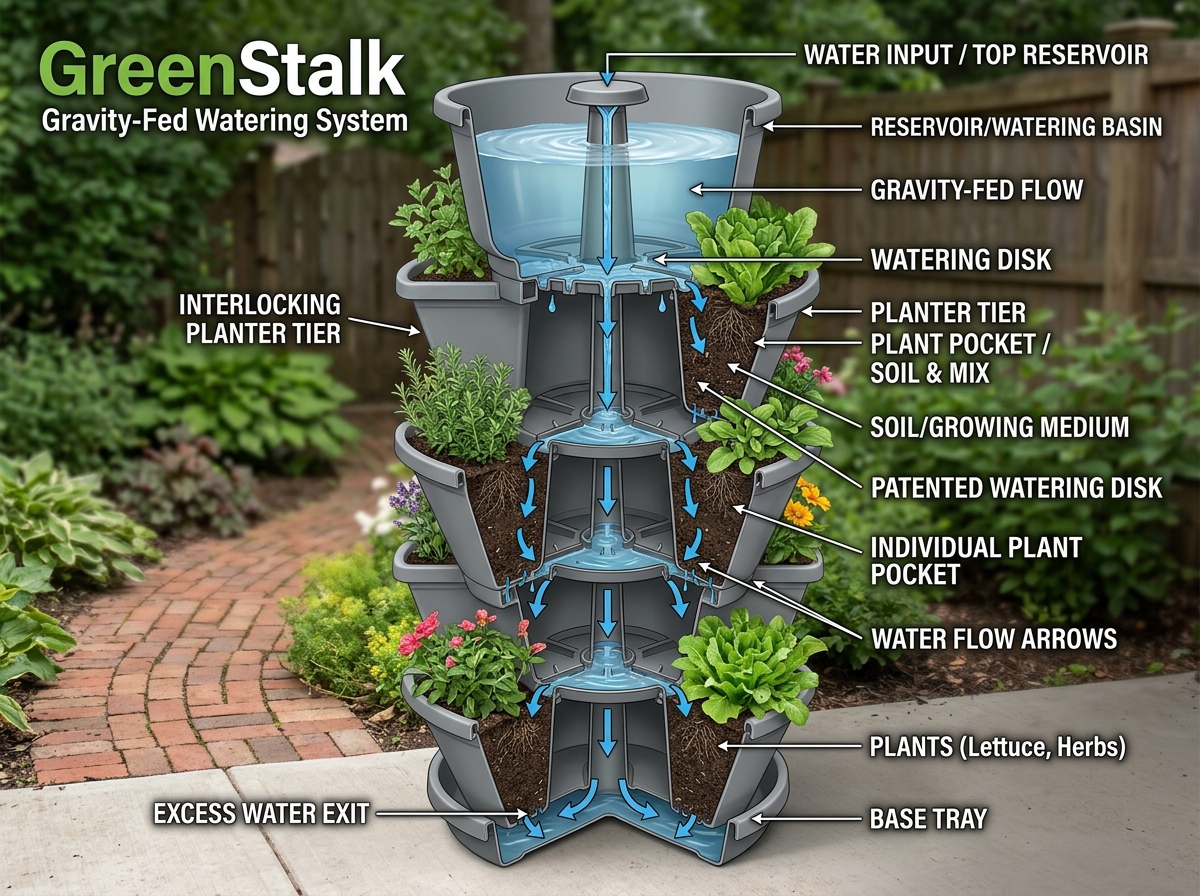
- How it works: A top water reservoir feeds water down through every tier simultaneously using gravity
- Best for: Herbs, vegetables, flowers, and root crops on patios, balconies, or decks
- Models: Original (10-inch deep pockets) and Leaf (7-inch deep pockets)
- Price range: $69.97 for 3-tier up to $169.00 for 7-tier
- Rating: 4.9/5 stars across thousands of verified reviews
If you’ve ever wished you could have a real garden but only have a small balcony or patio, you’re not alone. Most people assume you need a yard to grow meaningful amounts of food. You don’t.
Vertical gardening flips that assumption completely. Instead of spreading out, you grow up — stacking planting pockets on top of each other to multiply your growing space without multiplying your footprint.
The GreenStalk system has become a go-to choice for urban gardeners, apartment dwellers, and even people with chronic pain or mobility issues who want fresh food without the heavy lifting of traditional gardening.
This guide walks you through everything — how it works, which model fits your needs, setup tips, and whether it’s worth the investment.
What is a GreenStalk vertical planter and how does it work?
At its core, the greenstalk vertical planter is a patented soil-based vertical gardening system designed to maximize harvest in a tiny footprint. Unlike many vertical towers that rely on complex hydroponics or aeroponics (which require electricity and constant monitoring), this system uses high-quality potting soil. This makes it much more approachable for beginners who want the flavor of “dirt-grown” produce without the back-breaking labor of tilling a field.
The Patented Watering System
The “secret sauce” of this planter is its gravity-fed watering system. If you’ve ever tried to water a stack of pots manually, you know the struggle: the top gets soaked, the middle stays dry, and the bottom becomes a swamp. The GreenStalk Vertical Planter solves this with a clever design:
- Top Water Reservoir: You fill a single basin at the very top of the tower.
- Watering Disks: Each tier sits on a grey watering disk. These disks have specifically designed holes that catch water from the reservoir above and distribute it evenly to the six pockets in the tier below.
- Simultaneous Delivery: Because of this internal “plumbing,” water reaches every single tier at the same time. You don’t have to guess if the bottom plants are thirsty; if the top reservoir is empty and water is dripping from the drainage holes at the base, you know the job is done.
Compact Engineering
The entire unit occupies only about 2 square feet of floor space. Whether you choose a 3-tier, 5-tier, or 7-tier model, the width remains the same (about 19 inches). This engineering allows you to grow a massive variety of crops—from deep-rooted tomatoes to shallow-rooted lettuce—all in one vertical column.
Key Benefits of the GreenStalk System for Home Gardeners
Why has this specific planter earned nearly 5-star ratings from thousands of users? It comes down to solving the three biggest hurdles in gardening: space, water, and physical effort.
1. Water Efficiency
Vertical gardens are famously efficient, often using up to 90% less water than traditional in-ground gardens. Because the water is contained within the tiers and delivered directly to the root zones via the internal disks, there is very little evaporation or runoff waste.
2. Built to Last (and Safe for Food)
Many cheap plastic planters become brittle and crack after one summer in the sun. The greenstalk vertical planter is made in East Tennessee, USA, from high-quality, food-grade plastic. It is specifically formulated to be:
- BPA, BPS, and PVC-free: No nasty chemicals leaching into your organic strawberries.
- UV-Resistant: It won’t fade or become “crispy” in high heat.
- Durable: It comes with a 5-year warranty on both color and functionality. Real-world users have reported these planters surviving harsh northern winters and even accidental falls off decks without breaking.
3. Accessibility for All Bodies
Traditional gardening requires a lot of kneeling, bending, and heavy lifting. For those dealing with chronic pain, hip replacements, or age-related mobility issues, the vertical design is a game-changer. You can tend to your vegetables at waist or chest height. If you add the “Ultimate Spinner” base, you can even rotate the entire garden with one hand to ensure every plant gets equal sunlight.
Comparing Models: GreenStalk Original vs. Leaf Planters
Choosing the right model is the most important step in your vertical gardening journey. While they look similar from a distance, the pocket depth dictates what you can actually grow.
| Feature | GreenStalk Original | GreenStalk Leaf |
|---|---|---|
| Pocket Depth | 10 Inches | 7 Inches |
| Best For | Large veggies (tomatoes, peppers, squash, potatoes) | Leafy greens, herbs, strawberries, radishes |
| Soil Capacity | ~8 gallons per tier | ~6 gallons per tier |
| Popular Size | 5 Tier GreenStalk Original | 7 Tier GreenStalk Leaf |
| Total Height | 55 Inches (5-tier) | 56 Inches (7-tier) |
Which should you choose?
- The Original: This is the heavy-lifter. If you want to grow “big” food like zucchini, eggplants, or even sweet potatoes, you need the 10-inch depth for root expansion.
- The Leaf: This model adds more tiers in roughly the same height. It’s perfect for the “salad bar” approach. Since lettuce, spinach, and most herbs have shallow root systems, you can fit 42 plants in a 7-tier Leaf model versus 30 plants in a 5-tier Original.
Essential Setup: Soil, Assembly, and Planting Tips
Setting up your greenstalk vertical planter is straightforward, but doing it right the first time will save you a lot of headache later.
Choosing the Right Soil
This is the most common mistake new gardeners make. Do not use garden soil, topsoil, or raised bed soil. These are too heavy and will compact, preventing the watering system from working and suffocating your plant roots.
Instead, use a high-quality, lightweight potting mix. A good mix usually contains peat moss or coconut coir, perlite or vermiculite, and some compost. For a 5-tier Original, you will need about 40 gallons (5 cubic feet) of potting mix. For a 7-tier Leaf, you’ll need about 42 gallons (5.5 cubic feet). We recommend mixing in some worm castings for a natural nutrient boost before you start planting.
Assembly and Stacking
- Level the Base: Ensure your planter is on a flat surface. If you’re using a spinner or mover base, lock the wheels.
- Fill Tiers Individually: Fill each tier with soil before stacking. Pack the soil lightly into the pockets, but don’t stomp it down.
- The “Drench” Method: Once a tier is filled with soil, water it thoroughly until it’s saturated. This prevents the soil from “settling” too much later and ensures your seeds have moisture immediately.
- Click and Lock: Place the watering disk on top of the filled tier, then stack the next tier on top. You’ll feel it “lock” into place. Repeat until you reach the top.
- Add the Reservoir: The final piece is the top water reservoir.
Planting Tips
- Seeds vs. Starts: You can plant directly from seed or transplant nursery starts. If using starts, be gentle when tucking them into the pockets.
- Placement: Put your largest, heaviest plants (like tomatoes) in the bottom tiers for better stability. Put trailing plants like strawberries or nasturtiums where they have room to hang.
- Rotation: If your planter is against a wall, rotate it every few days so the “back” plants don’t get leggy reaching for the sun.
Frequently Asked Questions about the GreenStalk Vertical Planter
Can I use a GreenStalk vertical planter indoors or year-round?
Yes, but with caveats. If you want to garden indoors, you must provide supplemental light. A sunny window is rarely enough for vegetables. High-quality LED grow lights are essential. Also, consider the drainage; you’ll need a base that can catch excess water so you don’t ruin your floors.
For outdoor year-round use, these planters are incredibly hardy. They are guaranteed not to crack in freezing temperatures. However, the plants themselves might not survive. You can use custom-fit frost covers to extend your season into the late fall or early spring.
What is the best soil for a GreenStalk vertical planter?
As mentioned, a lightweight, well-draining potting mix is king. Look for brands that mention “Container Mix.” The goal is aeration and moisture retention without compaction. Because the water travels through the soil to reach the drainage holes, a heavy soil will cause the system to “back up” and lead to root rot.
Is the investment in a vertical planter worth it?
When you compare the cost of a greenstalk vertical planter to the cost of building several raised beds (lumber, hardware, soil, weed barriers), the vertical planter is often more affordable.
Furthermore, the yield-per-square-foot is significantly higher. In a traditional garden, you might fit two tomato plants in 2 square feet. In a GreenStalk, you could have two tomatoes, six heads of lettuce, a dozen strawberry plants, and a handful of herbs in that same footprint. When you factor in the 5-year warranty and the time saved on weeding (there are almost no weeds in these systems!), the ROI is very high for the serious home gardener.
Conclusion
The greenstalk vertical planter isn’t just a plastic pot; it’s a high-yield gardening system that levels the playing field for everyone. Whether you’re a suburban homesteader looking to maximize your deck or an urban dweller trying to grow your first salad on a fire escape, this system provides the durability and ease of use needed for success.
By focusing on high-quality soil, utilizing the patented watering system, and choosing the right model for your favorite crops, you can transform 2 square feet of space into a lush, edible oasis. Gardening shouldn’t be a chore that leaves you with a sore back—it should be an accessible, joyful way to bring fresh food to your table.
Ready to start your vertical journey? Check out the Vegetables category at Finance Lixo for more tips on what to grow this season!
