
22 Safe and Stylish Pet Friendly Balcony Plants
Your Balcony Can Be Green, Gorgeous, and Safe for Your Pet
Pet friendly balcony plants are non-toxic plants that won’t harm your cat or dog if they nibble, swat, or dig — and there are more stylish options than most people realize.
Here are some of the best ones you can start with today:
| Plant | Safe For | Light Needs | Size |
|---|---|---|---|
| Spider Plant | Cats & Dogs | Indirect | Small |
| Areca Palm | Cats & Dogs | Bright indirect | Medium-Large |
| Boston Fern | Cats & Dogs | Indirect | Small-Medium |
| Bamboo Palm | Cats & Dogs | Low-Bright | Medium |
| African Violet | Cats & Dogs | Indirect | Small |
| Marigolds | Cats & Dogs | Full sun | Small |
| Basil | Cats & Dogs | Full sun | Small |
| Echeveria Succulent | Cats & Dogs | Full sun | Small |
| Parlor Palm | Cats & Dogs | Low-Indirect | Medium |
| Catnip | Cats & Dogs | Full sun | Small-Medium |
The problem is that most plant labels at garden centers don’t tell you whether a plant is safe for pets. And the stakes are real — the National Animal Poison Control Center handles thousands of plant-related cases every year.
For urban apartment dwellers, balconies are precious green space. But if you share that space with a curious dog or cat, the wrong plant choices can turn your little garden into a health risk.
The good news? You don’t have to choose between a beautiful balcony and a safe one. Many stunning, low-maintenance plants are completely non-toxic — and some even purify the air.
This guide covers 22 of the best options, plus what to avoid and how to keep your pets from turning your plants into snacks.
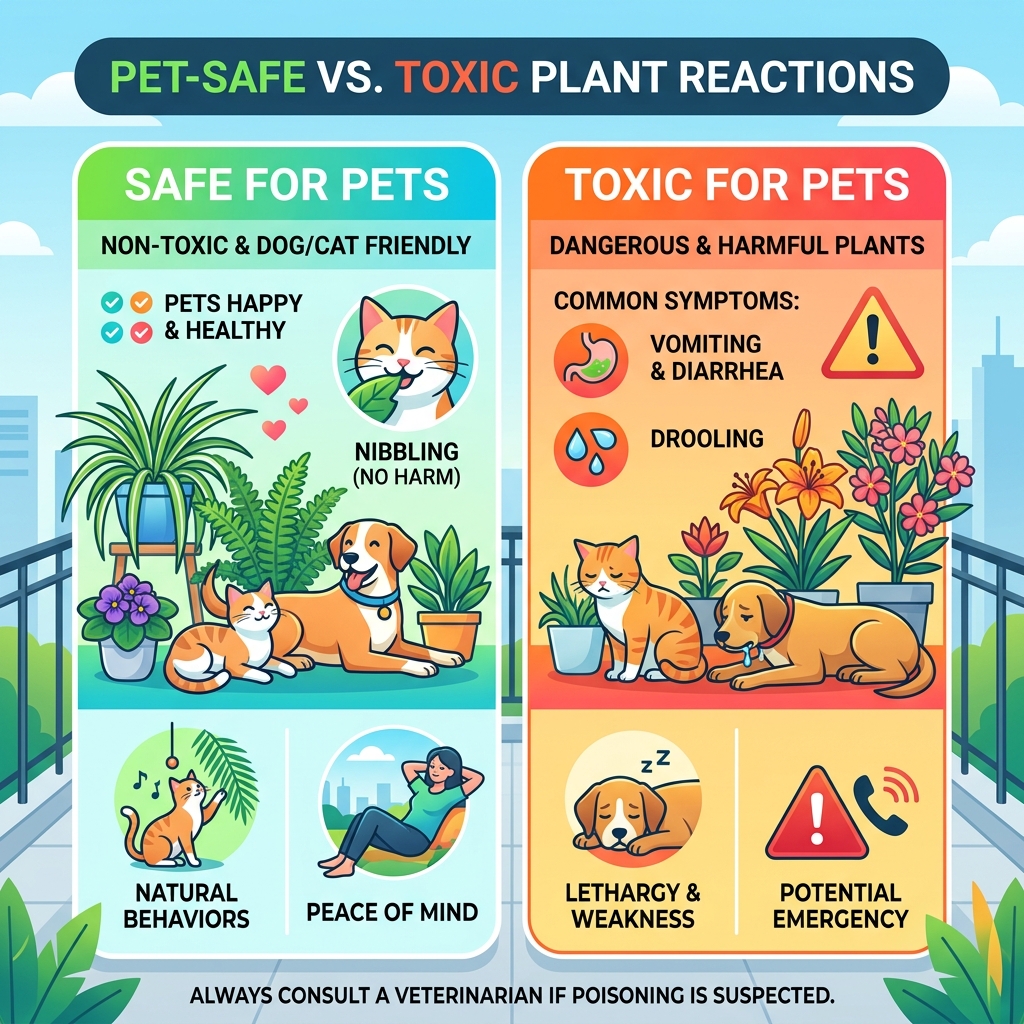
What Makes a Plant Truly Pet-Friendly for Balconies?
When we talk about pet friendly balcony plants, we aren’t just looking for greenery that looks nice. A truly pet-friendly plant meets a few specific criteria. First and foremost is non-toxicity. This means if your dog decides to treat your garden like a salad bar, or your cat finds a dangling leaf irresistible, they won’t suffer from poisoning. We look to high standards like those set by the ASPCA to verify that a species won’t cause internal damage, neurological issues, or severe allergic reactions.
However, in a balcony setting, “pet-friendly” also implies durability. Between the wind, sun, and a playful 10-pound cat swatting at fronds, your plants need to be tough. A plant that shatters at the first touch isn’t ideal for a shared space.
Furthermore, many of these safe choices offer the added benefit of air purification. For instance, the humble Spider Plant was famously included in NASA’s clean air study for its ability to filter toxins from the environment. Having these plants on your balcony can actually improve the air quality of your immediate outdoor (and indoor) living space.
If you are just starting out with your urban garden, we recommend checking out The ultimate apartment balcony gardening guide to help you set up a space that works for both you and your furry roommates. Whether you are looking for the Top 5 Pet-Safe Houseplants for Apartments or larger outdoor specimens, the goal is always peace of mind.
22 Best Pet Friendly Balcony Plants for Your Urban Oasis
Creating a lush retreat doesn’t require a massive backyard. Container gardening is the secret weapon of the urban dweller. By using pots, hanging baskets, and vertical planters, you can pack a lot of variety into a small square footage.

Below is a detailed look at 22 species that thrive in containers and keep your pets safe.
Low-Maintenance Pet Friendly Balcony Plants
If you’re a beginner or just have a busy schedule, these “unkillable” plants are for you. They are forgiving, safe, and provide that classic garden feel. For more tips on getting started, see our Quick and easy beginners guide to balcony gardening.
- Spider Plant (Chlorophytum comosum): These are legendary for being nearly impossible to kill. They love indirect light and produce “spiderettes”—tiny baby plants that dangle down. Cats often love them because they resemble grass, but don’t worry—they are non-toxic.
- Boston Fern: A classic choice for shaded balconies. They add a soft, prehistoric texture to your space and are excellent for improving air quality. Just keep them moist!
- Areca Palm: If you want a tropical vibe, this is your plant. It grows relatively large and acts as a great natural screen for privacy.
- Bamboo Palm: Another excellent air purifier, the Bamboo Palm is a slow grower that can eventually reach several feet, providing a nice bit of shade for a lounging dog.
- Cast Iron Plant: Aptly named for its strength, this plant can handle low light, temperature swings, and the occasional bump from a wagging tail.
- Parlor Palm: A compact, elegant palm that is perfect for smaller corners. It’s very safe for cats who like to hide behind foliage.
Flowering and Colorful Pet Friendly Balcony Plants
Who says a pet-safe garden has to be just green? You can add vibrant pops of color with these flowering beauties.
- African Violet: These stay small (usually under 12 inches) and provide stunning purple, pink, or white blooms. They prefer indirect light and should be watered from the bottom to keep their leaves dry.
- Marigolds: Not only are they bright and cheerful, but their scent also naturally repels certain pests. They love the sun and are completely non-toxic to dogs and cats.
- Gloxinia: These offer large, velvety flowers that look incredibly high-end but are perfectly safe for your furry friends.
- Petunias: A staple of balcony boxes everywhere. They are hardy, colorful, and won’t cause a trip to the vet if your pet gets curious.
- Snapdragons: These add height and a whimsical shape to your planters. They are great for sunny spots.
- Lulu Rose: While many roses are safe, the Dog-Friendly Plant: Lulu Rose is specifically noted for being non-toxic. Just be mindful of thorns on any rose variety, as they can still cause physical scratches.
- Fuchsia: These look incredible in hanging baskets. Since they are elevated, they stay out of reach, but even if they fall, they are safe.
- Bromeliads: For a truly exotic look, Bromeliads are surprisingly easy to care for and provide striking, long-lasting color.
Edible Herbs and Trees for Pet Friendly Balcony Plants
You can grow your own snacks while keeping your pets safe. In fact, some of these are even beneficial for your pets to nibble on! Check out The best herbs for balcony gardening for more ideas.
- Basil: A kitchen staple that thrives in sunny balcony pots. It’s completely safe for pets and smells amazing.
- Rosemary: This hardy herb is “pet-resistant” because most dogs and cats don’t like the strong scent or needle-like texture, but it’s non-toxic if they do take a bite.
- Catnip: The ultimate treat for your feline. Growing it in a dedicated pot can actually redirect your cat’s attention away from your other plants.
- Meyer Lemon Tree: Unlike most citrus, which can be toxic, the Meyer Lemon is often cited as a safer alternative. They stay compact in pots and produce fragrant blossoms.
- Money Tree (Pachira aquatica): Known for its braided trunk, this tree is said to bring good luck. It’s a sturdy plant that can handle a bit of climbing from kittens.
- Banana Tree: If you have a larger balcony, a dwarf banana tree offers massive, lush leaves that are 100% safe for pets. It creates a wonderful tropical canopy. For more tree options, read 10 Pet-Friendly Trees to Grow on Your Balcony.
Stylish Succulents and Vines for Pet Friendly Balcony Plants
Succulents are trendy and space-saving, but many (like Aloe Vera) are actually toxic. Stick to these safe versions, and if you have a very bright spot, consult our guide on Choosing the right plants for a sunny balcony.
- Echeveria: These rose-shaped succulents come in many colors and are completely safe. They are perfect for small “fairy garden” setups on a balcony table.
- Haworthia: Often mistaken for Aloe, Haworthia is the pet-safe alternative. It has cool striped patterns and handles container life beautifully.
- Swedish Ivy: A beautiful trailing plant that looks great in hanging pots. It’s fast-growing and non-toxic.
- Lace Flower Vine: This is best kept in a hanging basket where its stems can trail down. It needs minimal light and is very safe.
- Lipstick Plant: Named for its bright red tubular flowers, this vine adds a unique flair to your balcony and won’t harm your pets.
Balcony Safety: Plants to Avoid and Protection Tips
Even with a list of safe plants, balcony gardening requires a bit of strategy. Some of the most common “pretty” plants are actually the most dangerous.
Plants to Absolutely Avoid
- Sago Palm: This is one of the most toxic plants for dogs; even a single seed can be fatal.
- Lilies: Specifically for cat owners, many lilies (like Tiger or Easter lilies) cause acute kidney failure.
- Azaleas: These contain toxins that can interfere with a pet’s heart rhythm.
- English Ivy: While popular for its trailing look, it can cause vomiting and breathing difficulties.
Protection Strategies
To prevent your pets from digging or chewing, even on safe plants, try these tips:
- Use Raised Planters: Keeping plants at eye level for you—but out of reach for your dog—is the best way to prevent digging.
- Citrus Peels: Most cats and dogs dislike the smell of citrus. Placing lemon or orange peels on the soil can act as a natural deterrent.
- Bitter Sprays: You can find pet-safe bitter apple sprays to apply to leaves to discourage chewing.
- Create a “Dig Zone”: If your dog loves to dig, give them a specific box of pet-safe sand or soil to play in, redirecting them from your expensive ceramic pots.
- Decorative Rocks: Covering the exposed soil in your pots with large, smooth stones makes it much harder for pets to dig up the roots.
For more advice on what not to do, see our article on Avoiding common balcony gardening mistakes.
Frequently Asked Questions about Pet-Safe Gardening
What should I do if my pet eats a toxic plant?
If you suspect your pet has ingested a toxic plant, time is of the essence. First, identify the plant—take a photo or bring a leaf with you. Contact your veterinarian immediately or call the ASPCA Animal Poison Control Center. Do not wait for symptoms like vomiting, lethargy, or drooling to appear; early intervention is key to a full recovery.
How do I stop my dog from digging in balcony pots?
Digging is often a sign of boredom or an attraction to the smell of the fertilizer. Try switching to a scent-free organic fertilizer. You can also use physical barriers like chicken wire just below the surface of the soil or use Balcony herb garden design techniques like vertical wall planters that are simply too high for your dog to reach.
Are all ferns safe for cats and dogs?
No! This is a common misconception. “True” ferns like the Boston Fern, Bird’s Nest Fern, and Staghorn Fern are safe. However, the Asparagus Fern is not a true fern and is toxic to both cats and dogs. Always check the scientific name before buying. If you have a shady spot, there are plenty of safe options—check out our tips for shady balconies for more.
Conclusion
At Finance Lixo, we believe that sustainable urban living should include everyone in the family—including the four-legged members. Creating a pet-safe sanctuary on your balcony doesn’t mean you have to settle for a boring space. By choosing the right pet friendly balcony plants, you can enjoy the aesthetic value of a lush garden and the peace of mind that comes with knowing your curious companions are out of harm’s way.
Ready to transform your outdoor space? Start your pet-friendly garden today and see how much a little greenery can brighten your life and your pet’s day!
