
Stop the Drip with These Top Indoor Self-Watering Planters
Why Self-Watering Planters Are a Game-Changer for Indoor Plants
Self-watering planters for indoor plants are pots with a built-in water reservoir that feeds moisture directly to plant roots — so you water less often and your plants stay consistently hydrated.
Quick answer: top self-watering planters for indoor plants
| Planter | Best For | Key Feature |
|---|---|---|
| YNNICO (6-pack) | Small/medium plants | Carbonfree certified, drainage holes |
| LECHUZA | Statement plants | German-made, mineral substrate system |
| GARDIFE | General indoor use | 4.6 stars, 2,493+ reviews |
| QCQHDU Window Boxes | Windowsills/shelves | 6,400+ reviews, 4.5 stars |
| Ceramic self-watering pots | Modern interiors | Stylish + functional |
Most indoor plant owners hit the same wall eventually. They either water too much or not enough — and either way, the plant suffers.
It’s one of the most common reasons houseplants die.
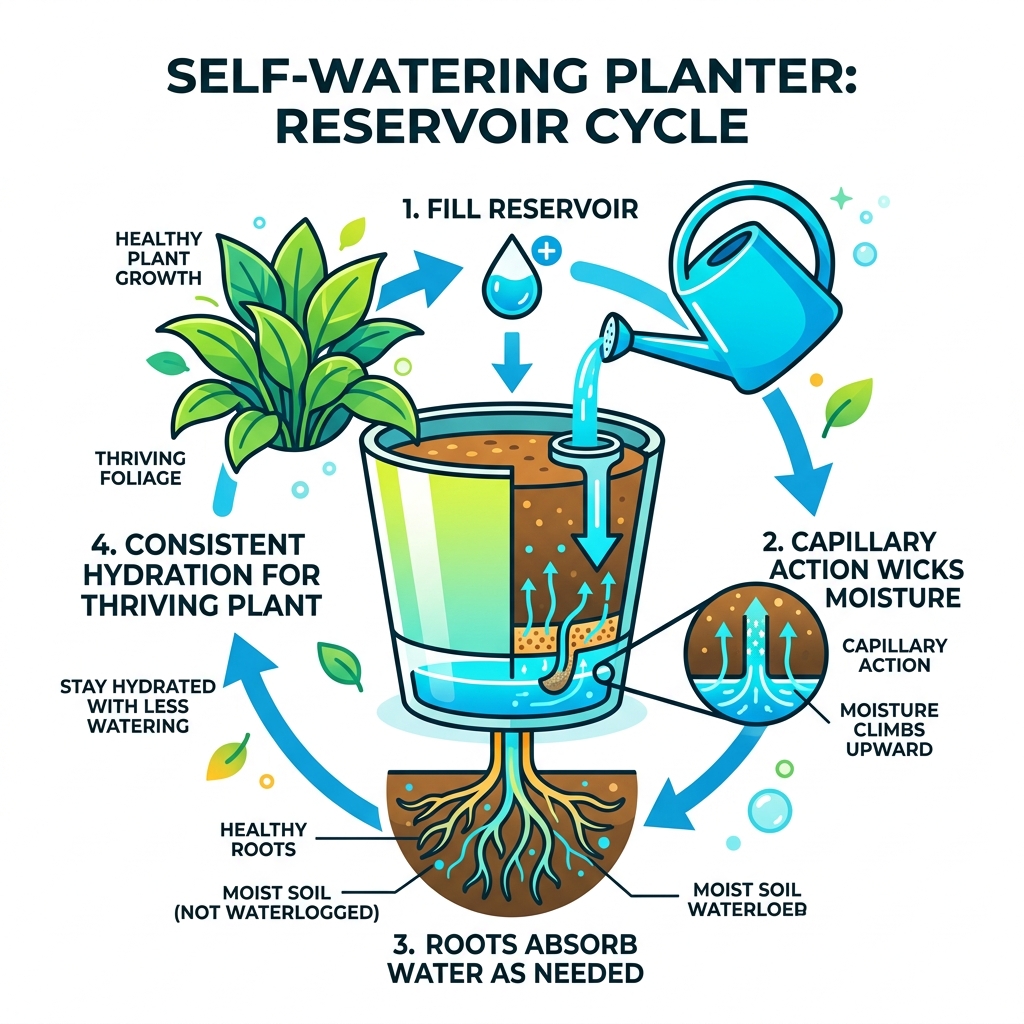
Self-watering planters solve this by taking the guesswork out of hydration. Instead of relying on a schedule, the plant draws water up from a reservoir below the soil as it needs it. The roots stay moist but not waterlogged.
For anyone living in a small apartment, working long hours, or just starting out with indoor plants, that’s a big deal. You get a lush, thriving plant without hovering over it every other day.
And modern self-watering planters aren’t just practical — they look great too. From sleek ceramic styles to minimalist plastic sets, there’s an option for every space and budget.
The Science and Benefits of Self-Watering Systems
To understand why these pots are so effective, we have to look at how nature intended plants to drink. In the wild, plants often draw moisture from the ground through their roots. Most self-watering planters for indoor plants use a method called sub-irrigation.
This system relies on capillary action. Think of it like a sponge dipping into a puddle; the moisture naturally climbs upward. In a self-watering pot, a wick (often a cotton string or a perforated “wicking basket”) sits in a water reservoir at the bottom of the pot. As the soil dries out, it pulls water up through the wick to keep the root zone damp but not soaked.
The benefits are numerous:
- Consistent Moisture: No more “drought and flood” cycles that stress your plants.
- Root Health: By separating the water from the soil, you prevent the roots from sitting in stagnant water, which is the primary cause of root rot.
- Nutrient Retention: When you water from the top, nutrients can wash out of the drainage holes. With sub-irrigation, the nutrients stay in the soil where the plant can use them.
- Time Savings: Some high-end systems can save you up to 3 hours of care time per plant every year!
If you’ve been struggling to keep your greenery alive, it might be time to Stop Playing God with Your Plants and Buy These Self-Watering Planters.
Comparing Traditional Pots vs. Self-Watering Technology
Traditional pots are simple, but they leave a lot of room for human error. In a standard pot, water evaporates quickly from the top of the soil, leading to frequent watering needs. If the pot lacks proper drainage, excess water pools at the bottom, “suffocating” the roots because they can’t get enough oxygen.
Self-watering technology introduces aeration. Many top-tier models, like those from LECHUZA or Greenery Unlimited, feature internal liners or “inner pots” that sit above the water line. This creates an air gap that allows roots to breathe while still accessing the moisture they need. This balance of water and oxygen is the secret to why plants in these systems often grow faster and look more vibrant than those in standard terra cotta or plastic pots.
Choosing the Best self watering planters for indoor plants
When we look for the perfect planter, we aren’t just looking for a bucket that holds water. We want something that complements our decor while providing a high-quality environment for our leafy friends.

Material Matters: Ceramic vs. Plastic
- Ceramic: Brands like Urban Dweller offer handmade ceramic pots that are both stylish and functional. Ceramic is heavy, stable, and offers a premium look for living rooms or offices.
- Plastic/Resin: These are lightweight and often more affordable. Products like the YNNICO planters are made from durable, recyclable polypropylene. They are excellent for hanging plants or shelving where weight is a concern.
- Specialty Systems: Some systems, like the Cowbell Plant Self-Watering System, use a pressure-vacuum technology with glass or high-tech polymers to deliver water with extreme precision.
Price Range and Durability
Quality self-watering planters for indoor plants typically range from $15 for small plastic sets to over $100 for large, designer ceramic pieces or advanced “smart” systems. While the initial investment is higher than a $5 basic pot, the durability and “plant insurance” they provide make them worth the cost. Many are UV-resistant and shatterproof, ensuring they last for years.
Why Beginners Love self watering planters for indoor plants
If you are a self-proclaimed “black thumb,” these pots are your best friend. They are perfect for:
- Forgetful Owners: The reservoir acts as a safety net.
- Vacation Care: Many reservoirs, like the Oasis Self-Watering Planter, can keep a plant hydrated for up to a month.
- Office Environments: Where watering schedules are often disrupted by weekends or holidays.
Ideal Sizes of self watering planters for indoor plants
Choosing the right size is crucial. You generally want a pot that is 1–2 inches larger than the current root ball of your plant.
| Planter Size | Best Plant Type | Ideal Placement |
|---|---|---|
| 5–7 inches | African Violets, Herbs, Pothos | Desks, Windowsills |
| 8–12 inches | Peace Lilies, Ferns, Monsteras | Side tables, Shelves |
| 15–24 inches | Fiddle Leaf Figs, Snake Plants | Floor corners, Entryways |
| 37+ inches | Indoor Trees (Olive, Citrus) | Large open spaces |
For a wide variety of sizes, ePlanters offers items ranging from under 12 inches to over 4 feet tall.
Key Features of Top-Rated Self-Watering Planters
What makes one planter better than another? Look for these high-performance features:
- Water Level Indicators: A floating gauge (like in the AquaTerra Planter) tells you exactly when the reservoir is low. No more sticking your finger in the dirt!
- Visible Root Zones: Some modern designs, such as the Intuitive Plants Self-Watering Planter, feature transparent inner inserts. This allows you to monitor root health and moisture levels in real-time.
- Advanced Substrates: Brands like LECHUZA include mineral substrates that help regulate water distribution and provide essential nutrients.
- Air-Pruning Technology: The Tendril Planter uses technical fabric liners to prevent plants from becoming rootbound, encouraging a denser, healthier root system.
Best Plants for Self-Watering Systems
While many plants love these pots, “thirsty” plants that prefer consistent moisture thrive the most:
- Peace Lilies: Known for dramatic wilting when dry; these pots keep them upright.
- Ferns: Love the high humidity and constant dampness these systems provide.
- Tropicals (Calatheas, Alocasias): These plants are notoriously finicky about watering; sub-irrigation mimics their natural jungle floor environment.
- Herbs: Basil and mint are water-hogs that love a deep reservoir.
Setup, Maintenance, and Common Mistakes
Setting up your new self-watering planters for indoor plants is easy, but there are a few “pro tips” to ensure success.
- The Initial Soak: When you first repot a plant, you must water it from the top once. This “primes” the soil and ensures the capillary action can start.
- Choose the Right Soil: Use a light, well-draining potting mix. Avoid heavy garden soil, which can become compacted and soggy.
- Refill Frequency: Most reservoirs need a refill every 10 to 14 days, though some can last up to 4 weeks depending on the environment.
If you’re thinking about moving your plant game outside, you can also check out our guide on Unleashing the Power of Self-Watering Pots for Balcony Gardens.
Avoiding Root Rot and Mineral Buildup
Even with a smart pot, things can go wrong if you aren’t careful.
- Ventilation: Ensure your pot has aeration holes. This allows oxygen to reach the roots, preventing the anaerobic conditions that cause rot.
- Flushing the Soil: Every few months, water your plant thoroughly from the top until water runs out the drainage holes. This washes away salt and mineral buildup from fertilizers.
- Reservoir Hygiene: Every 3 months, empty and clean the reservoir with mild soap to prevent algae growth.
Frequently Asked Questions about Self-Watering Pots
Can self-watering planters be used for succulents and cacti?
Yes, but with a twist. For drought-loving plants, let the reservoir stay empty for 1–2 weeks between refills. This allows the soil to dry out completely, mimicking the desert environment.
How often do I need to refill the water reservoir?
Typically, every 2 weeks. However, in hot, dry summers or in rooms with heavy air conditioning, you might need to refill weekly. In the winter, your plant’s metabolism slows down, and the reservoir may last a month.
Are these planters suitable for outdoor use as well?
Many are! However, if you use them outdoors, ensure they have an “overflow” hole. This prevents the reservoir from overfilling during heavy rain, which would drown your plant. Brands like LECHUZA and Greenery Unlimited offer models specifically designed for both settings.
Conclusion
At Finance Lixo, we believe that gardening should be a source of joy, not a source of stress. Investing in self-watering planters for indoor plants is one of the smartest moves you can make for your home sanctuary. By leveraging simple physics and smart design, you can ensure your plants live longer, grow faster, and stay hydrated even when life gets busy.
Whether you choose a sleek Aqua Core ceramic pot or a highly-rated YNNICO set, your plants will thank you with lush, green growth.
Ready to level up your green thumb? Visit Finance Lixo for more indoor gardening tips and find the perfect tools to help your indoor jungle thrive.
