
The Beginner Guide to Balcony Vegetable Gardening
You Can Grow Real Food on Your Balcony — Here’s How
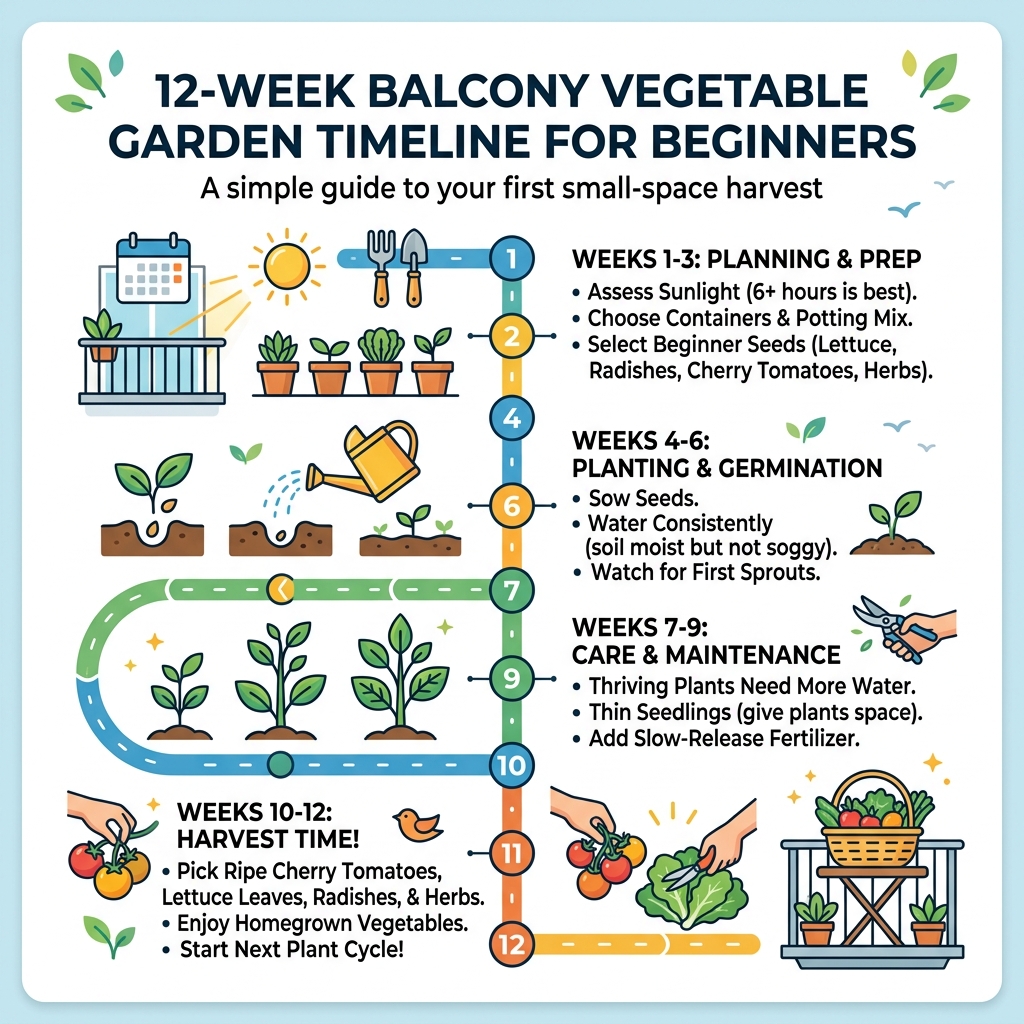
Balcony vegetable gardening for beginners is more achievable than most people think. You don’t need a backyard, a big budget, or a green thumb to get started.
Quick-start essentials:
- Sunlight: Most vegetables need 6-8 hours of direct sun per day
- Containers: Start with 3-5 pots or fabric grow bags with drainage holes
- Soil: Use quality potting mix — never garden or yard soil
- Best beginner crops: Lettuce, radishes, cherry tomatoes, basil, spinach, and green onions
- Watering: Check daily in summer; water when the top inch of soil feels dry
- Fertilizer: Mix slow-release fertilizer into soil at planting, then feed every 2-4 weeks
Even a small 6×8 foot balcony can hold 8-12 medium containers. A single cherry tomato plant in a 5-gallon pot can yield several pounds of fruit in one season. Radishes can be ready to eat in as little as 21 days.
The biggest barrier for most beginners isn’t space or skill — it’s knowing where to start. This guide walks you through everything step by step, from assessing your balcony’s sunlight to harvesting your first crops.
Getting Started with Balcony Vegetable Gardening for Beginners
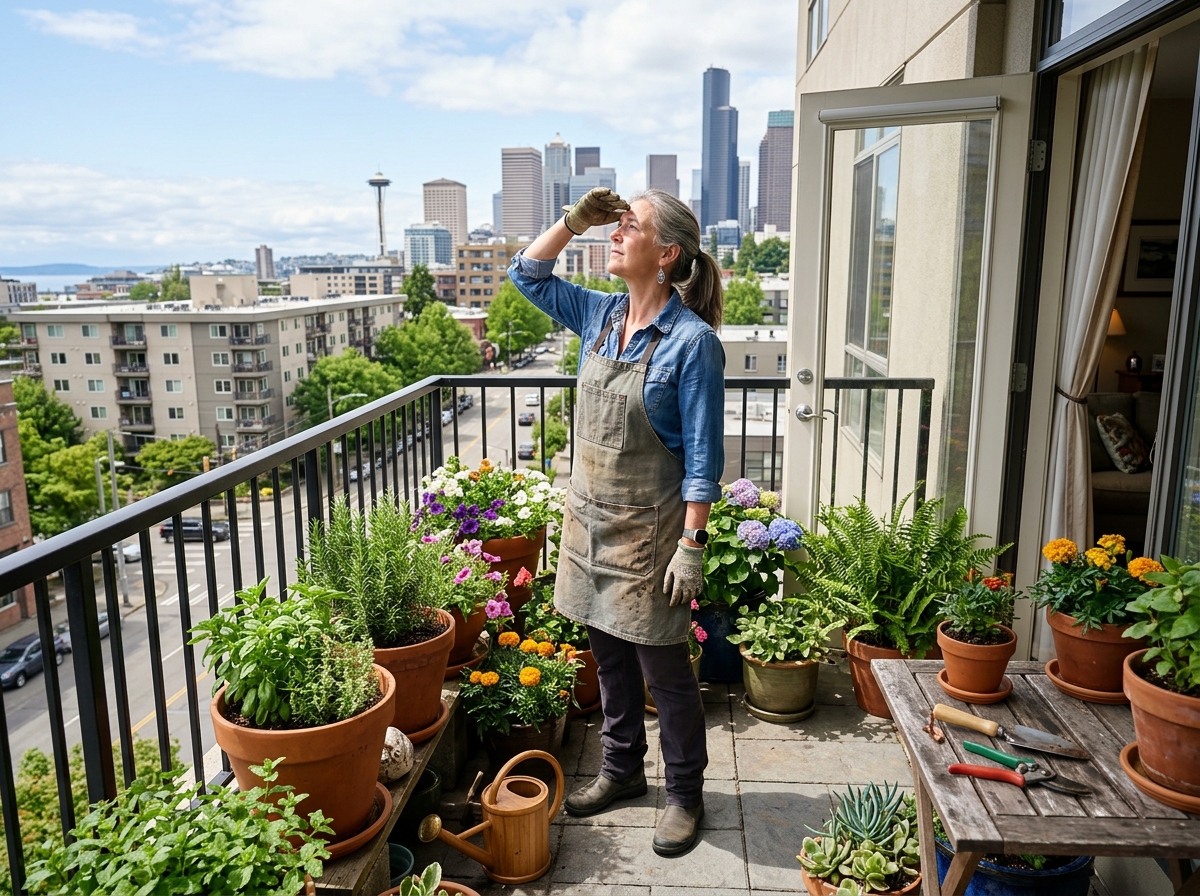
Before we go out and buy every cute ceramic pot in the garden center, we need to perform a “Balcony Audit.” Unlike a traditional backyard garden, a balcony is a microclimate with its own set of rules regarding wind, weight, and light.
Assessing Sunlight: The 6-Hour Rule
Most vegetables are sun-worshippers. To thrive, they generally require 6 to 8 hours of full sun each day. However, we know that urban buildings can cast long shadows. To get an accurate reading, we recommend checking your balcony at several points throughout the day—ideally at 9 AM, 12 PM, and 3 PM.
If you want to get technical, tools like SunCalc can help you visualize the sun’s trajectory near your home. If your space is north-facing or heavily shaded, don’t panic! You can still succeed by successfully growing lettuce on a balcony or focusing on leafy greens like spinach and Swiss chard, which can tolerate as little as 3-5 hours of light.
Understanding Your Microclimate
Balconies are often windier and hotter than the ground level. High-rise balconies, in particular, face “wind tunnel” effects that can dry out soil in hours. If your balcony is exposed, we suggest using trellises or larger, heavier pots as windbreaks to protect delicate seedlings.
Also, consider the material of your balcony floor and walls. Darker surfaces absorb and radiate heat, which can be a blessing in early spring but may “cook” your plants in the height of summer.
Weight Limits and Safety
This is the part where we put on our responsible adult hats. Soil is heavy. A single cubic foot of wet soil can weigh between 75 and 80 pounds. Most modern balconies are rated for 40-60 lbs per square foot, so we must be mindful of the load.
To keep things light, we suggest:
- Using resin, plastic, or fabric grow bags instead of heavy ceramic or stone.
- Using a high-quality potting mix (which is fluffier and lighter than dirt).
- Spreading the weight out rather than clustering all large pots in one corner.
Selecting the Right Containers and Soil
When it comes to balcony vegetable gardening for beginners, your container is your plant’s entire world. It needs to provide enough space for roots to stretch and enough drainage to prevent “wet feet” (root rot).
The Soil Secret: Potting Mix Only
If there is one rule we want you to remember, it is this: Never use yard or garden soil in a container. Garden soil is too dense; it will compact in a pot, suffocating the roots and preventing water from draining. Instead, we use a “soilless” potting mix.
A great DIY recipe for balcony success is:
- 60% high-quality potting mix
- 30% organic compost (for nutrients)
- 10% perlite or pumice (for extra drainage)
We also recommend adding a bit of garden lime to your mix if you are growing tomatoes, as the extra calcium helps prevent blossom end rot.
Container Types: Which is Best?
Not all pots are created equal. Here is a quick comparison to help us choose the right home for our veggies:
| Container Type | Pros | Cons | Best For |
|---|---|---|---|
| Fabric Grow Bags | Lightweight, excellent drainage, “air prunes” roots for health. | Dries out faster, less “decorative” look. | Tomatoes, potatoes, peppers. |
| Plastic/Resin | Retains moisture well, very lightweight, affordable. | Can become brittle in sun over years. | Lettuce, herbs, cucumbers. |
| Self-Watering | Maintains stable moisture, great for busy people. | Can be expensive and heavy when full. | Heavy feeders like tomatoes. |
| Terracotta | Beautiful, breathable. | Very heavy, dries out extremely fast, can crack in frost. | Herbs like rosemary and thyme. |
Regardless of the material, ensure your pots are deep enough. We suggest at least 12-18 inches of depth for most vegetables to prevent them from becoming rootbound. Large planters, like the Keter Easy Grow, provide about 32 gallons of volume—enough to support three massive tomato plants comfortably.
The Best Crops for Small Spaces
We want to maximize our limited square footage by choosing “high-value” crops—things that are expensive at the store or taste significantly better when grown at home. Focusing on compact, “bush,” or “patio” varieties is the key to balcony vegetable gardening for beginners.
Top Beginner Picks
- Cherry Tomatoes: Varieties like ‘Terenzo F1’ or ‘Tiny Tim’ stay compact but push out hundreds of fruits.
- Cucumbers: Look for ‘Bush Slicer’ varieties that only grow 2-3 feet instead of sprawling 10 feet.
- Radishes: The ‘Cherry Belle’ variety can be harvested in just 21 days!
- Leafy Greens: Lettuce and spinach are “cut-and-come-again,” meaning you can harvest the outer leaves and the plant will keep growing.
For more inspiration, check out our list of easy vegetables to grow on your balcony. If you’re feeling ambitious, you can even look into dwarf fruit trees perfect for balconies, like Meyer lemons or columnar apples.
Essential Herbs for Balcony Vegetable Gardening for Beginners
Herbs are the gateway drug of gardening. They are incredibly productive in small spaces and can be tucked into the base of larger plants.
- Basil: Loves the heat and sun. Pinch off the flower buds to keep the leaves coming.
- Mint: Warning! Mint is a bully. Always grow it in its own separate pot, or it will take over everything.
- Cilantro: Prefers the cooler weather of spring and fall.
- Chili Peppers: These are chili peppers perfect for balconies because they are highly decorative and produce a lot of spice from a small footprint.
Pro Tip: Plant some flowers like Nasturtiums or Petunias alongside your veggies. They add a splash of color and attract pollinators, which you’ll need if you want your cucumbers and peppers to produce fruit.
Starting Seeds for Balcony Vegetable Gardening for Beginners
Should we buy seeds or starts (young plants)?
Starting from seeds is much cheaper—a packet of 20 ‘Peacevine’ cherry tomato seeds might cost $3.00, while a single seedling at a nursery could be $5.00. It also gives us access to heirloom varieties that you can’t find at the store. Heirlooms are seeds that have been saved for generations and often have superior flavor.
However, if we are starting late in the season, buying seedlings is a great shortcut. If you do start from seed indoors, remember the “Hardening Off” process. We can’t just move a pampered indoor seedling directly into the wind and sun of a balcony. We must move them outside for an hour the first day, two hours the second, and so on, over the course of a week.
When you’re ready to move them to their permanent home, follow our guide on growing tomatoes in balcony pots for the best transplanting techniques.
Long-Term Care and Maintenance
Once the garden is planted, the real fun begins. Maintenance in a balcony garden is mostly about consistency. Because pots have limited soil, they can’t hold onto water or nutrients as long as the ground can.
The Art of Watering
In the heat of summer, a balcony pot can dry out in a single day. We should check our plants every morning. Stick your finger an inch into the soil; if it feels dry, it’s time to water.
To make life easier, we can set up a simple drip irrigation system. Using 1/2″ main lines and 1/4″ drippers attached to a digital timer, we can automate the process. This isn’t just for vacations—it ensures your plants get a steady supply of water, which prevents issues like split tomatoes. If a full system feels too complex, terracotta watering spikes or “Oya” pots are low-tech alternatives that seep water slowly into the soil.
Feeding Your Plants
Container plants are like teenagers—they are always hungry. Because we water frequently, nutrients leach out of the bottom of the pots. We recommend a two-pronged approach:
- Slow-Release: Mix organic granular fertilizer into the soil at the start of the season.
- Liquid Feed: Every 2-4 weeks, use a water-soluble fertilizer (like seaweed extract or fish emulsion) to give them a quick boost.
Pest Management and Pruning
Pests like aphids or spider mites can still find their way to the 10th floor. We should inspect our plants weekly. If we see tiny bugs or sticky residue, a spray of Neem oil or insecticidal soap usually does the trick.
Don’t be afraid to prune! For plants like how to grow strawberries on your balcony, removing dead leaves and runners helps the plant focus its energy on fruit. For herbs and greens, regular harvesting actually encourages the plant to grow bushier and more productive.
Frequently Asked Questions about Balcony Gardening
How much sunlight does my balcony need for vegetables?
For “fruiting” vegetables like tomatoes, peppers, and cucumbers, you really need 6 to 8 hours of direct sun. If you have a shadier balcony with only 3 to 5 hours of sun, stick to leafy greens (lettuce, kale, spinach), root crops (radishes, beets), and certain herbs like mint and parsley.
What are the most common mistakes beginners make?
The “Big Three” mistakes are:
- Using Garden Soil: It kills plants by suffocating roots. Use potting mix!
- Overcrowding: We know it’s tempting to put five plants in one pot, but they will fight for nutrients and all end up stunted. Follow the spacing guides on your seed packets.
- Inconsistent Watering: Letting a plant wilt completely and then drowning it causes stress and disease. Try to keep the moisture levels stable.
Can I grow root vegetables like carrots in containers?
Absolutely! The key is choosing the right variety and pot depth. For carrots, look for “short” or “round” varieties like ‘Little Finger’ or ‘Parisian Market’. Ensure your pot is at least 10-12 inches deep so the roots have room to grow straight down without hitting the bottom.
Conclusion
At Finance Lixo, we believe that balcony vegetable gardening for beginners is about more than just food—it’s about creating a sustainable urban oasis. By growing even a small portion of your own produce, you are participating in a movement that has already removed thousands of tonnes of carbon through sustainable practices.
Whether you start with a single pot of basil or a full-scale drip-irrigated tomato forest, the reward is the same: the incomparable taste of a sun-warmed harvest just steps from your kitchen. It’s time to stop dreaming about a garden and start growing one. Start your balcony garden today and see how much your small space can produce!
