
How to Start Small Balcony Gardening for Beginners
Why Small Balcony Gardening for Beginners Is Easier Than You Think
Small balcony gardening for beginners is one of the most rewarding ways to bring greenery, fresh food, and calm into an apartment lifestyle — and you need far less space than you’d imagine.
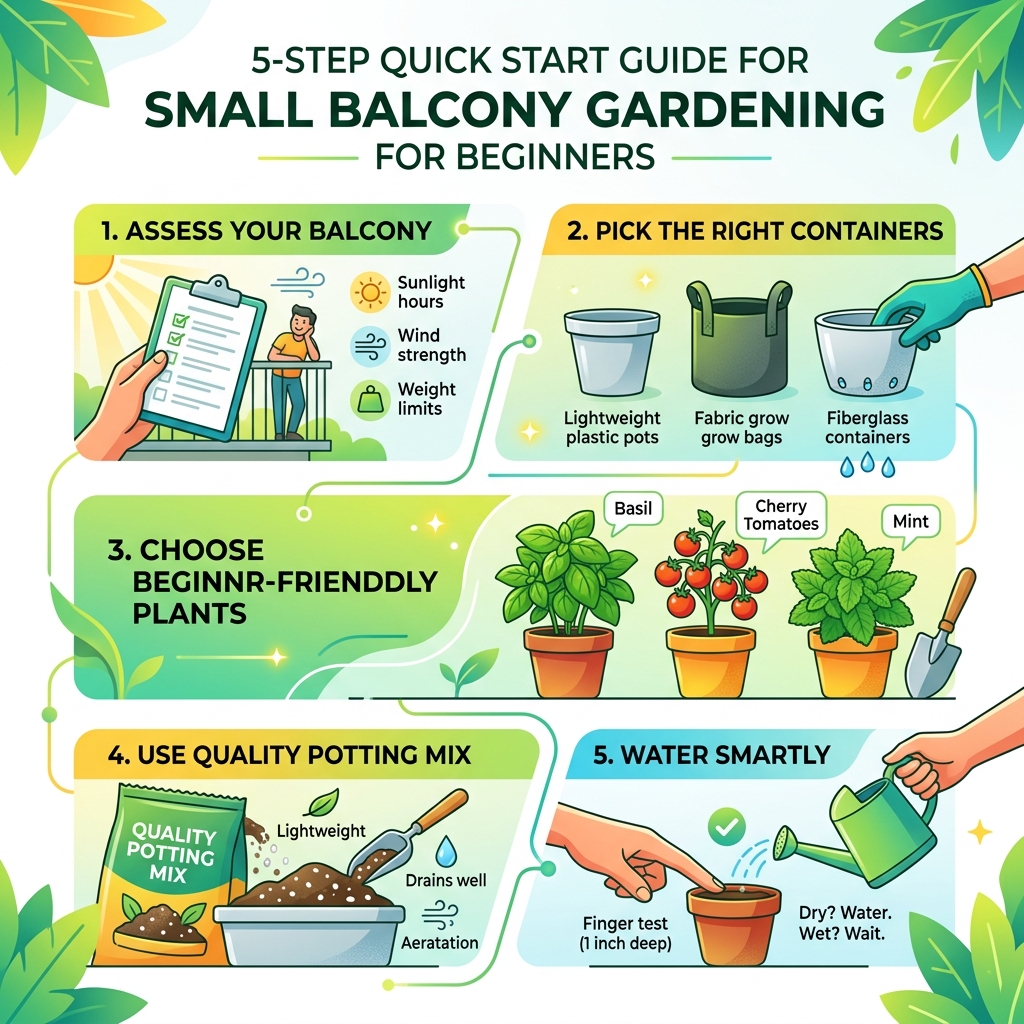
Here’s a quick-start overview to get you going:
- Assess your balcony — Check how many hours of sunlight you get, how windy it is, and whether your building has weight restrictions.
- Pick the right containers — Use lightweight plastic, fabric grow bags, or fiberglass pots with drainage holes.
- Choose beginner-friendly plants — Herbs like basil and mint, leafy greens, and cherry tomatoes are great starting points.
- Use quality potting mix — Never use garden soil in containers. A lightweight potting mix with perlite drains much better.
- Water smartly — Stick your finger an inch into the soil. If it feels dry, water. If not, wait.
That’s the core of it. A few pots, the right plants, and about 5-10 minutes of daily care is genuinely all it takes to get started.
Many first-time balcony gardeners are surprised by how quickly things grow. Within four to six weeks of planting herbs, you can be snipping fresh basil straight into your dinner. And the mental health boost — just having something green and living outside your door — kicks in even sooner.
The biggest barrier isn’t space. It’s not knowing where to begin. This guide walks you through every step, from reading your balcony’s light conditions to choosing containers and keeping your plants alive through every season.
Assessing Your Space for Small Balcony Gardening for Beginners
Before we rush out to buy every cute ceramic pot in the garden center, we need to play detective. Every balcony has its own “microclimate.” This is a fancy way of saying the environment on your third-floor balcony is very different from the ground-level garden down the street.
Sunlight: The Lifeblood of Your Garden
Sunlight is the single most important factor in small balcony gardening for beginners. Most vegetables and flowering plants are sun-worshippers, requiring at least 6 to 8 hours of direct light. However, many balconies are tucked under eaves or face directions that limit light.
To get an accurate reading, we recommend tracking the sun for a full day. You can use your phone’s compass to see which way you face:
- South-Facing: The jackpot. You’ll get intense, all-day sun.
- East-Facing: Gentle morning sun, great for leafy greens and delicate flowers.
- West-Facing: Harsh, hot afternoon sun. You’ll need heat-tolerant plants here.
- North-Facing: Mostly shade. This is the realm of ferns, hostas, and mint.
To make this even easier, Visualize sun trajectory with SunCalc. This tool lets you type in your address to see exactly how the sun moves over your building throughout the year. For a deeper dive into why this matters, check out our guide on Understanding Sunlight Needs for Balcony Plants.
Wind and Weather Exposure
Balconies are naturally windier than ground-level gardens. High winds can dry out soil in record time and even topple top-heavy plants. If you live on a high floor, you might need to install windbreaks like bamboo screens or heavy-duty lattice. We also suggest grouping pots together; they create a little pocket of humidity and support each other against the breeze.
Weight Restrictions and Safety
Wet soil is surprisingly heavy! A large 32-gallon planter filled with damp soil can weigh hundreds of pounds. Before we turn our balcony into a jungle, we must check our lease or building rules for weight limits. As a rule of thumb, we keep heavier pots closer to the structural walls or over load-bearing beams rather than at the very edge of the railing.
Water Access
Do you have an outdoor spigot? If not, you’ll be the primary “rainmaker.” Carrying heavy watering cans through the living room can get old fast. We love using collapsible watering cans or expandable hoses that can attach to a kitchen sink. If you’re a bit forgetful (we’ve all been there!), Self-Watering Pots for Balcony Gardens are a total game-changer.
Best Plants for Small Balcony Gardening for Beginners
Once we know our light and wind situation, we can pick our “green roommates.” We always suggest starting with 3 to 5 plants so we don’t feel overwhelmed.
- Culinary Herbs: These are the gateway drug of gardening. Basil, chives, and parsley are incredibly easy. Mint is great too, but it’s a bit of a bully — it will take over any pot it shares, so give it its own container! Learn more about The Best Herbs for Balcony Gardening.
- Leafy Greens: Lettuce, spinach, and Swiss chard are perfect for beginners because they grow fast. You can harvest a few leaves for a salad and the plant just keeps growing.
- Cherry Tomatoes: Traditional tomatoes get huge and heavy, but “patio” or “dwarf” varieties are bred specifically for small spaces. They provide a massive harvest from a tiny footprint. Check out other Easy Vegetables to Grow on Your Balcony.
- Pollinator Flowers: We want to invite bees and butterflies to our balcony! Marigolds are hardy and keep pests away, while Nasturtiums are beautiful, fast-growing, and even edible.
Maximizing Space with Vertical Layouts
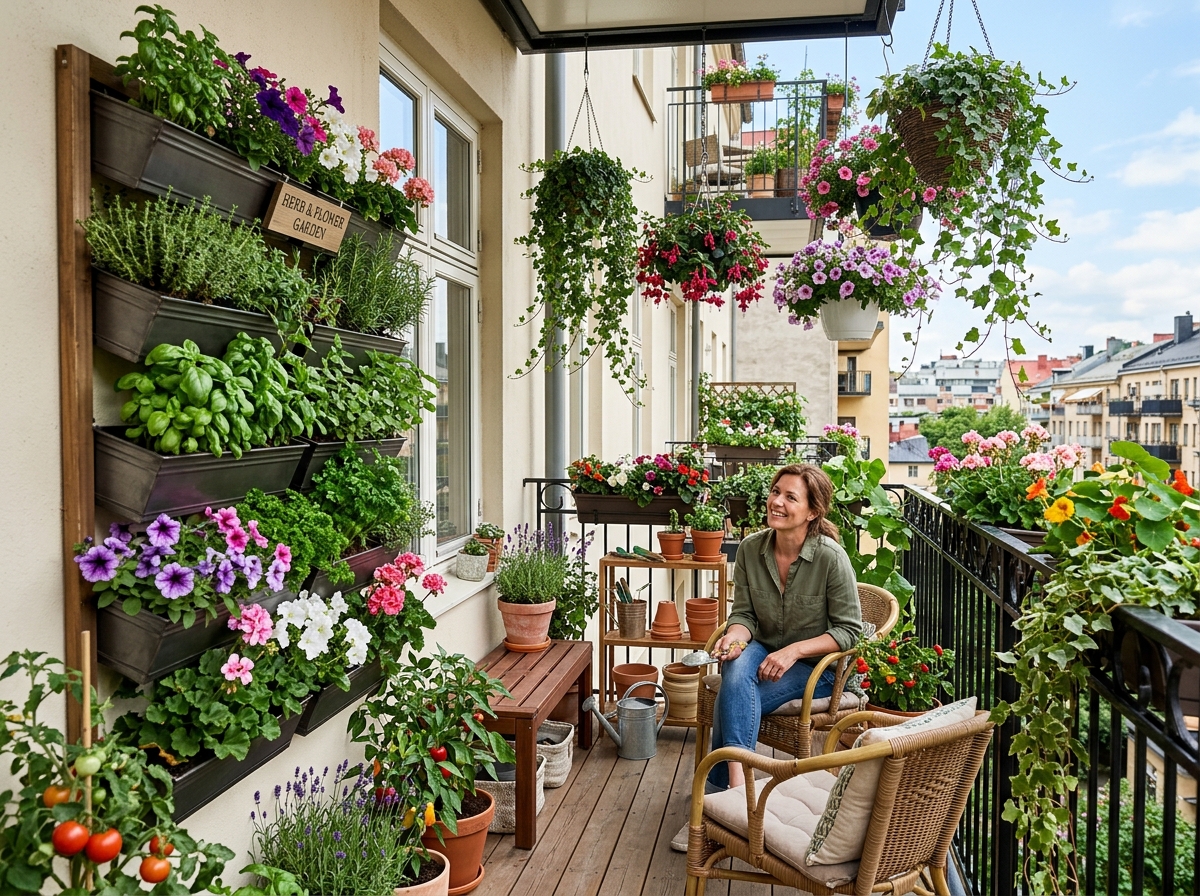
When floor space is at a premium, we look up! Vertical gardening is the secret weapon of small balcony gardening for beginners. By using the height of our walls and railings, we can triple our growing area without tripping over pots.
Railing Boxes and Hanging Baskets
Railing boxes are classic for a reason. They sit on the “dead space” of your balcony perimeter. We use them for cascading flowers like petunias or trailing herbs like thyme. Hanging baskets are another great option, but be careful — they dry out much faster than floor pots because they are exposed to air on all sides.
Tiered Shelving and Plant Stands
Using a simple ladder shelf or a tiered plant stand allows us to stack plants. We put the sun-lovers (like peppers) on the top shelf and the shade-lovers (like lettuce) on the bottom where they are shielded by the plants above. This is a great way of Maximizing Limited Space with Balcony Gardening.
Trellises and Privacy Screens
If you want to grow “climbers” like sugar snap peas, pole beans, or even small cucumbers, you’ll need a trellis. A simple bamboo structure or a mesh screen attached to the wall works wonders. Not only does this provide food, but it also creates a living privacy screen between you and the neighbors. For help picking the right setup, see our tips on Choosing the Best Vertical Garden for Balcony Spaces.
Choosing the Right Containers and Potting Mix
The container is your plant’s entire world. If the container is bad, the plant won’t thrive, no matter how much you love it.
The Container Comparison
Not all pots are created equal. Here is a quick breakdown of the most common materials we use:
| Material | Pros | Cons | Best For |
|---|---|---|---|
| Plastic | Lightweight, cheap, retains moisture well. | Can look “cheap,” may degrade in sun. | Beginners on a budget. |
| Terracotta | Beautiful, breathable, classic look. | Very heavy, dries out quickly, can crack in frost. | Drought-tolerant plants like succulents. |
| Fabric Grow Bags | Excellent drainage, prevents root circling, lightweight. | Dries out very fast, not the most “aesthetic.” | Potatoes, tomatoes, and herbs. |
| Fiberglass | Extremely light, mimics stone/ceramic, durable. | Can be expensive. | Large focal-point trees or shrubs. |
Regardless of the material, the #1 rule is: It must have drainage holes. Without holes, water pools at the bottom, the roots can’t breathe, and the plant will essentially drown. We often place coffee filters or drainage hole screens over the holes to let water out while keeping the soil in. Browse our list of Top Pots for Balcony Gardening to find your perfect match.
The “Golden” Soil Rule
We cannot stress this enough: Never use “garden soil” or “topsoil” in a balcony container. It is too heavy and dense. In a pot, it will compact like a brick, suffocating your plants.
Instead, we use a high-quality potting mix. Potting mix isn’t actually “dirt” — it’s a blend of peat moss or coco coir, pine bark, and perlite (those little white volcanic popcorn bits). This mix is designed to be fluffy and well-draining. We are big fans of brands like Ocean Forest Potting Soil because they come pre-loaded with organic nutrients like earthworm castings. If you’re looking to save money, check out our Budget-Friendly Balcony Gardening Setup.
Maintenance and Essential Tools
Now that we’re planted, how do we keep the dream alive? Small balcony gardening for beginners doesn’t require a degree in botany, but it does require a bit of consistency.
The Art of Watering
Because balcony pots are small and exposed to wind, they dry out faster than a backyard garden. In the peak of summer, you might need to water every single day.
How do you know when? Use the finger test. Stick your finger into the soil up to the second knuckle. If it feels dry, give it a drink. If it’s still damp, leave it alone. Overwatering is the most common way beginners accidentally kill their plants! We always water until we see a little bit of excess coming out of the drainage holes. For more techniques, read How to Water Balcony Plants.
Feeding Your Plants
In a pot, nutrients wash away every time we water. To keep our plants productive, we use a two-step feeding routine:
- Slow-Release Fertilizer: Mix these granules into the soil when you first plant. They act like a “multivitamin,” releasing tiny amounts of food over several months.
- Liquid Fertilizer: Every 2 to 3 weeks during the growing season, we use a water-soluble fertilizer. This is like a “protein shake” for plants, giving them an immediate boost for flowers and fruit.
Essential Supplies for Small Balcony Gardening for Beginners
You don’t need a shed full of tools. In fact, a few high-quality items will last you years.
- Hand Trowel: For digging and mixing soil.
- Pruning Shears: For snipping herbs and removing dead leaves (this is called “deadheading” and it encourages the plant to grow more).
- Watering Can: Look for one with a “rose” attachment (the shower-head tip) for a gentle flow that won’t wash away your seeds.
- Rolling Caddies: These are lifesavers for heavy pots. They allow you to move your plants to follow the sun or clean the balcony floor easily.
- Plant Mats: We love these for repotting. They snap at the corners to catch all the loose soil so you don’t end up with a muddy mess in your living room.
For a full checklist, visit Essential Balcony Garden Tools You Must Have or see the University of Illinois Extension – Container Gardens Overview for professional tips on equipment.
Frequently Asked Questions About Balcony Gardening
How much weight can a standard balcony hold?
Most modern balconies are built to support significant weight (often 40-100 lbs per square foot), but it varies wildly. Always consult your building management or lease agreement. To stay safe, use lightweight potting mixes and plastic or fabric pots. Distribute the weight by placing larger, heavier planters near the building’s walls and structural columns rather than clustering them all in the center or at the railing’s edge.
What can I grow if my balcony is always in the shade?
Don’t despair! A shady balcony is a perfect retreat for “cool-season” crops and lush foliage. Focus on:
- Leafy Greens: Arugula, lettuce, and spinach actually prefer a bit of shade.
- Herbs: Mint, chives, and cilantro can tolerate lower light.
- Ornamentals: Ferns, Hostas, and Coleus provide incredible color and texture without needing direct sun.
- Flowers: Fuchsias and Impatiens thrive in the shadows.
How do I protect my plants from high winds?
Wind is the “silent killer” of balcony gardens.
- Windbreaks: Use bamboo screens or mesh panels to filter the wind.
- Heavier Pots: Use heavy ceramic or stone pots for tall plants to prevent them from blowing over.
- Grouping: Place pots together in “huddles.”
- Mulch: Add a layer of wood chips or pebbles on top of the soil to prevent the wind from evaporating all the moisture.
Conclusion
Starting a small balcony gardening for beginners project is about more than just plants; it’s about reclaiming a piece of the outdoors for yourself. Whether you’re harvesting your first handful of cherry tomatoes or simply enjoying a morning coffee surrounded by jasmine and lavender, the benefits to your mental health and home atmosphere are immense.
At Finance Lixo, we believe in sustainable urban living. You don’t need a massive backyard or a “green thumb” to make a difference. All you need is a little curiosity and a few pots. Gardening is a journey of trial and error. Some plants will thrive, and some might not—and that’s okay! Every “mistake” is just a lesson for next season.
Start your green oasis today with Finance Lixo and transform your balcony into the productive, peaceful retreat you deserve. Happy gardening!
