
The Best Plants for Self-Watering Pots (And Which Ones to Skip)
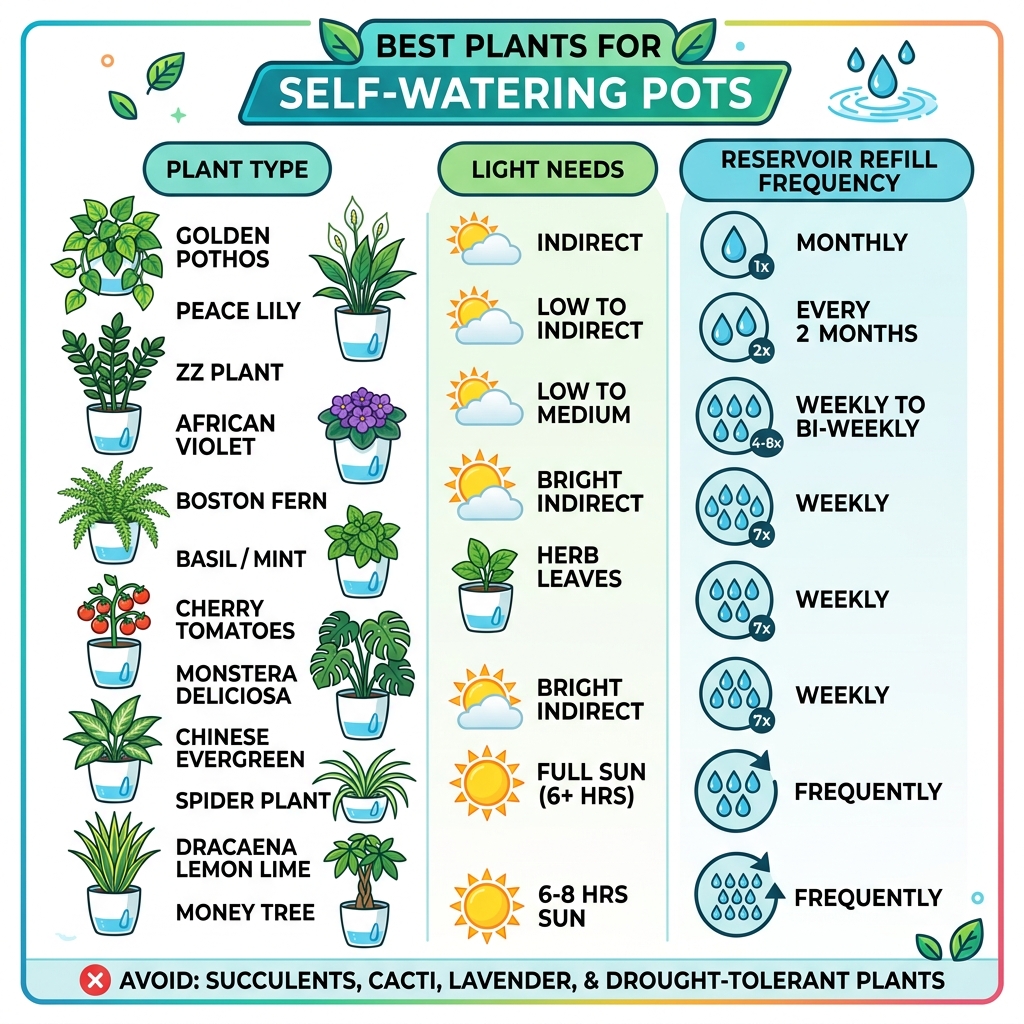
The best plants for self-watering pots are moisture-loving species that thrive with consistent hydration. Here’s a quick overview:
| Plant | Light Needs | Reservoir Refill Frequency |
|---|---|---|
| Golden Pothos | Indirect | Monthly |
| Peace Lily | Low to indirect | Monthly |
| ZZ Plant | Low to medium | Every 2 months |
| African Violet | Indirect | Weekly to bi-weekly |
| Boston Fern | Indirect | Weekly |
| Basil / Mint | Full sun (6+ hrs) | Frequently |
| Cherry Tomatoes | 6-8 hrs sun | Frequently |
| Monstera Deliciosa | Indirect | Monthly |
| Chinese Evergreen | Low to indirect | Monthly |
| Spider Plant | Indirect | Monthly |
| Dracaena Lemon Lime | Bright indirect | Monthly |
| Money Tree | Indirect | Monthly |
Avoid: Succulents, cacti, lavender, and other drought-tolerant plants.
Most of us have been there. You come home after a busy week to find your plant looking sad and droopy — or worse, you’ve accidentally drowned it with too much love. Over-watering and under-watering are the two most common reasons houseplants die.
Self-watering pots solve this problem. They use a bottom reservoir and a simple wicking system to deliver water to roots only when the plant needs it. No guesswork. No guilt.
For urban apartment dwellers with limited outdoor space, this is a game-changer. You get a lush indoor garden without the daily maintenance.
But — and this is important — not every plant belongs in a self-watering pot. The wrong match can cause root rot just as fast as overwatering by hand.
This guide covers exactly which plants thrive in self-watering pots, which ones to avoid, and what you need to know to keep them healthy.
How Self-Watering Reservoirs Transform Plant Care
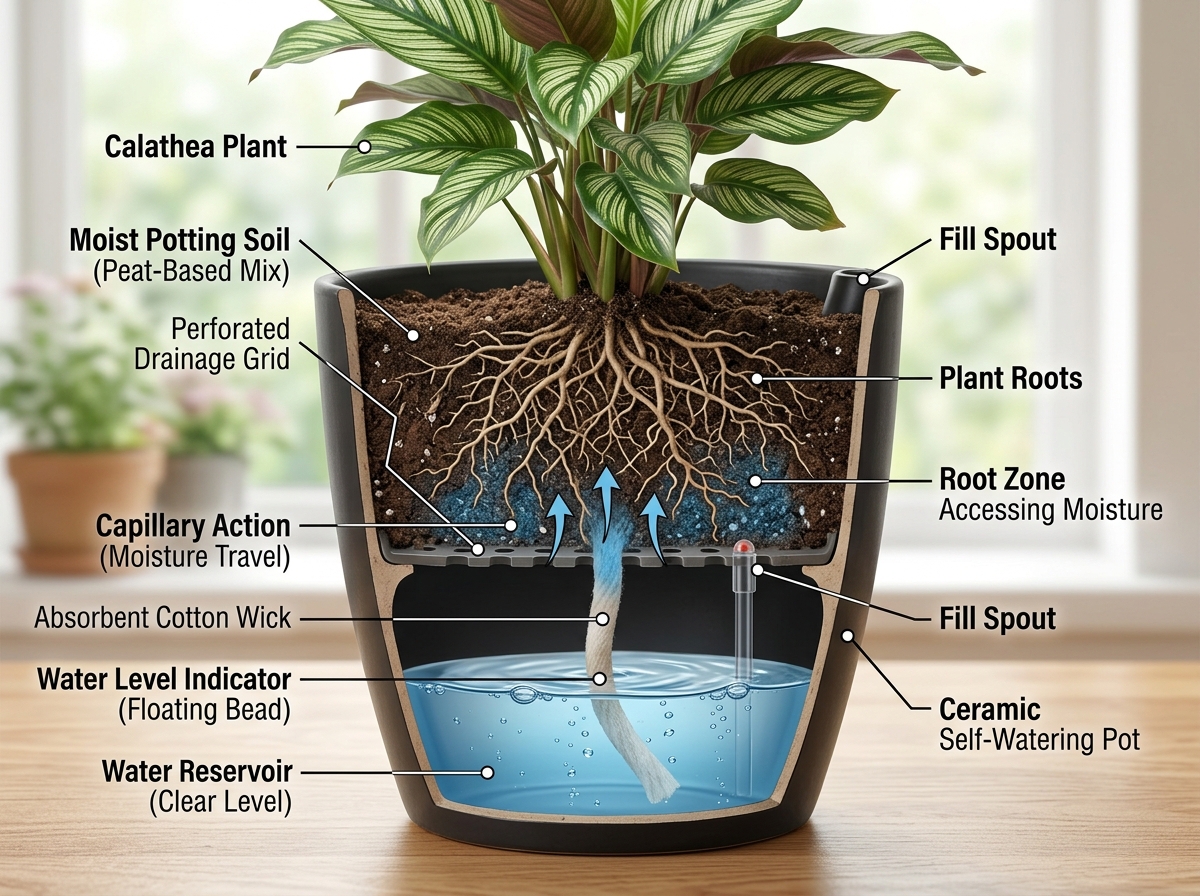
At first glance, a self-watering pot looks like any other stylish planter. However, the magic happens beneath the surface. These pots are engineered with a built-in reservoir at the base that stores water, separating it from the soil.
The secret to their success is capillary action. Think of it like a straw: a wick or a specialized soil column dips into the reservoir and “pulls” moisture upward into the root zone as the soil dries out. This creates a consistent level of hydration that mimics the natural dampness of a forest floor. If you want a deeper explanation of how moisture moves through porous materials, the concept is well described here: capillary action.
One of the biggest benefits we’ve seen is the reduction in human error. When you stop playing god with your plants and buy these self-watering planters, you eliminate the cycle of “drought and flood” that stresses most indoor greenery.
Key advantages include:
- Consistent Moisture: No more wilting or yellow leaves from forgotten watering days.
- Evaporation Reduction: Because the water is stored in a closed reservoir, less moisture is lost to the air compared to top-watering.
- Root Aeration: Many designs include an air gap between the water and the soil, ensuring roots can still “breathe,” which is vital for preventing rot.
- Overflow Protection: Most high-quality self-watering pots feature overflow holes, preventing you from accidentally overfilling the reservoir.
| Feature | Traditional Pots | Self-Watering Pots |
|---|---|---|
| Watering Frequency | 1-2 times per week | Once every 2-8 weeks |
| Risk of Overwatering | High (user error) | Low (self-regulating) |
| Root Health | Prone to drying out | Consistently hydrated |
| Maintenance Level | High | Low/Set-and-forget |
Top 11 Plants for Self-Watering Pots
While these pots are a marvel of innovation, they aren’t a “one-size-fits-all” solution. The plants for self watering pots that perform the best are typically tropical perennials and moisture-loving species. These plants evolved in humid environments where the soil stays damp but not soggy. By providing a steady stream of hydration, you optimize their growth and help them reach their full aesthetic potential.
Why Pothos are the Best Plants for Self-Watering Pots
If there were a hall of fame for indoor plants, the Pothos would be the first inductee. Whether it’s the classic Golden Pothos or the Global Green Pothos, these trailing vines are nearly indestructible.
In a traditional pot, a Pothos might need water every week. In a self-watering system, that frequency drops to once a month. They are world-class air purifiers and adapt beautifully to indirect light. Because they are vigorous growers, the consistent moisture helps them produce larger, glossier leaves that can trail up to 1.5 meters indoors.
Peace Lily (Spathiphyllum)
The Peace Lily is famously dramatic. If you miss a watering by even a few hours, it wilts as if it’s in a Shakespearean tragedy. Using a self-watering pot keeps the soil at that “just right” dampness, preventing the dramatic droop and the crispy brown tips that plague many owners. These plants are excellent for regulating indoor humidity and produce stunning white blooms when they feel supported by steady hydration.
ZZ Plant (Zamioculcas zamiifolia)
The ZZ Plant, or Zanzibar Gem, is a quiet symbol of endurance. While it is technically drought-tolerant, it performs exceptionally well in a self-watering setup.
The primary benefit here is the sheer convenience. A ZZ plant in a self-watering pot may only require a reservoir refill once every two months. It’s the ultimate “set-and-forget” plant for low-light corners, adapting to almost any environment while its waxy leaves scrub the air of pollutants.
African Violets
African Violets are the “goldilocks” of the plant world – they hate getting their leaves wet but need consistent moisture at their roots. This is why specialized self-watering planters have been used for them for decades. By using bottom-watering through a wick, the plant stays happy and blooms constantly without the risk of leaf rot. Just remember to use room-temperature water, as cold water can shock their sensitive roots.
Boston Fern
Ferns are notorious for being difficult because they demand high humidity and soil that never, ever dries out. If a Boston Fern dries out, it sheds its tiny leaflets everywhere, creating a mess. A self-watering pot is a game-changer for ferns, providing the constant dampness they need to maintain those lush, green fronds.
Edible Plants for Self-Watering Pots: Herbs and Veggies
You don’t have to stay indoors! Unleashing the power of self-watering pots for balcony gardens allows you to grow kitchen essentials with ease.
- Basil and Mint: These herbs are thirsty. In a standard pot on a hot balcony, they might wilt by noon. Self-watering pots keep the flavor consistent and the leaves tender.
- Cherry Tomatoes: Consistent moisture is the secret to great tomatoes. It prevents “blossom-end rot” and keeps the fruit from splitting due to sudden watering after a dry spell.
Monstera Deliciosa
The “Swiss Cheese Plant” is a rapid grower that loves a tropical environment. Because Monsteras can grow quite large, keeping up with their water needs can be a chore. A self-watering system ensures they have the fuel they need to produce those iconic fenestrated leaves. Just be sure to provide a moss pole or support for them to climb as they grow!
Chinese Evergreen (Aglaonema)
The Chinese Evergreen is a favorite for offices and low-light rooms. Known for its sage-green foliage and silver variegation, it’s often kept as a wellbeing charm. You can distinguish it from the similar Dieffenbachia by looking at the veins; Chinese Evergreens typically have only 5-8 lateral veins per leaf, making them a more refined, less toxic choice for the home.
Spider Plant (Chlorophytum comosum)
Spider plants are the workhorses of air purification. They have thick, tuberous roots that store water, but they truly thrive when that water is replenished consistently. They’ll reward you by sending out dozens of “plantlets” (babies) that you can easily propagate and gift to friends.
Dracaena Lemon Lime
If you want a pop of neon, the Dracaena Lemon Lime is your best bet. Native to tropical Africa, this slow-growing beauty adds about 6 inches of height per year. It prefers a warm environment (70-75°F) and bright indirect light. The self-watering system prevents the soil from compacting, which is a common issue with Dracaenas in traditional pots.
Money Tree (Pachira aquatica)
In Feng Shui, the Money Tree is said to bring good luck and positive energy. With its iconic braided trunk, it’s a centerpiece for any room. It loves the “even” moisture provided by a reservoir system, which helps prevent the leaf drop that occurs when the soil gets too dry.
Plants to Avoid and Maintenance Essentials
While we love the ease of these systems, we have to be honest: some plants simply hate them. Drought-tolerant species like cacti, lavender, and most succulents should generally stay in traditional, well-draining pots. Their roots need to dry out completely between waterings, and the constant moisture of a wick system will lead to root rot almost every time.
An interesting exception is the Aloe Vera. While it is a succulent, it can work in a specialized self-watering pot if the reservoir is only refilled once every 3 months. This extremely long interval allows the soil to dry sufficiently.
Maintenance Tips for Success:
- Choose the Right Soil: Use a well-draining potting mix. Adding extra perlite can help improve aeration and prevent the soil from becoming too heavy.
- Clean the Reservoir: Every few months, empty the reservoir and give it a quick rinse to prevent algae growth or mineral buildup.
- Watch the Indicator: Most pots have a float or a clear window. Don’t wait until it’s bone dry – refill when it hits the “low” mark.
- Light Matters: Even the best watering system can’t save a plant in the wrong light. Match your plant’s light needs (indirect vs. full sun) to its location in your home.
Frequently Asked Questions about Self-Watering Planters
How often do you need to refill the water reservoir?
It depends on the plant and the environment! For tropicals like Pothos, you’ll likely refill once a month. Thirsty herbs or plants in bright sun might need a refill every week, while a ZZ plant can go up to two months.
Can self-watering pots prevent root rot?
Yes, if used correctly. High-quality self-watering pots include an aeration layer that prevents the roots from sitting directly in water. This “air gap” allows for oxygen exchange, which is the best defense against rot. However, using them for cacti or succulents is still a risk.
Are these pots suitable for outdoor use?
Absolutely. They are fantastic for balconies and patios, especially in hot climates where pots dry out quickly. Just ensure your outdoor pot has an overflow hole so that heavy rain doesn’t flood the reservoir and drown the plant.
Conclusion
At Finance Lixo, we believe that gardening should be a source of joy, not a source of stress. By choosing the right plants for self watering pots, you are investing in a sustainable, low-maintenance way to bring nature into your home. Whether you are a busy professional or an urban gardener looking to maximize a small balcony, these systems take the guesswork out of plant care.
Ready to transform your space into a lush, green sanctuary? Start your low-maintenance garden today and enjoy the beauty of thriving plants without the constant worry of the watering can.
