
Why Vertical Garden Maintenance Tips Matter More Than You Think
Vertical garden maintenance tips are the difference between a thriving green wall and a wilting mess of dead plants.
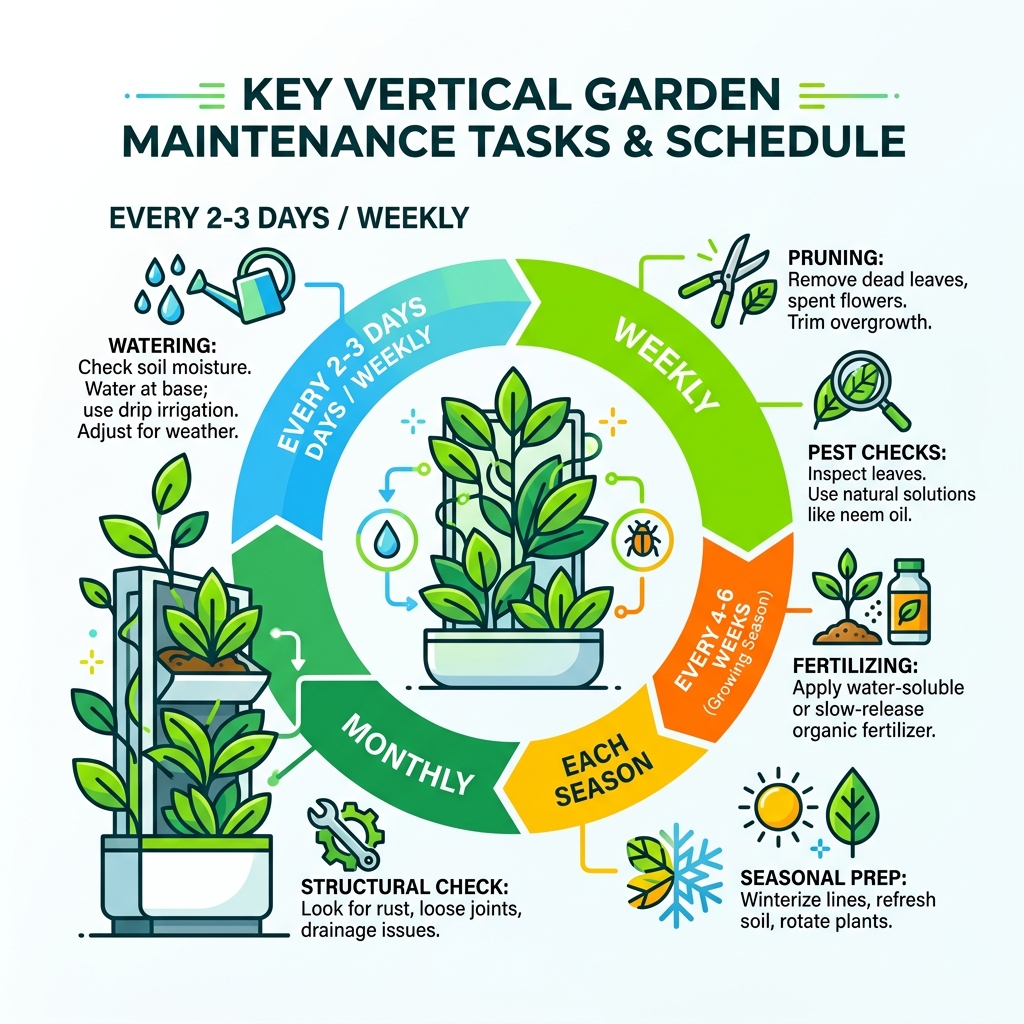
Here’s a quick overview of the core tasks to keep your vertical garden healthy:
| Task | How Often | Key Action |
|---|---|---|
| Watering | Every 2-3 days (hot weather) / weekly (cool weather) | Water at the base; use drip irrigation |
| Fertilizing | Every 4-6 weeks (growing season) | Use water-soluble or slow-release organic fertilizer |
| Pruning | Weekly | Remove dead leaves; trim overgrowth |
| Pest checks | Weekly | Inspect leaves; use neem oil or beneficial insects |
| Structural check | Monthly | Look for rust, loose joints, drainage issues |
| Seasonal prep | Each season | Winterize lines, refresh soil, rotate plants |
Vertical gardens can save up to 80% of the space used in traditional gardens. For apartment dwellers with a small balcony, that’s a game-changer.
But here’s the catch: plants grown vertically have different needs than plants in the ground. They dry out faster. Gravity pulls water unevenly. Roots can get cramped. And without regular attention, even the toughest plants will struggle.
The good news? Once you understand the basics, vertical garden care is actually simpler than traditional gardening — not harder. Many common problems like soilborne diseases and ground-level pests simply don’t apply.
This guide walks you through everything: watering, feeding, pruning, pest control, and seasonal care — all tailored for compact urban spaces.
Core Vertical Garden Maintenance Tips for Daily Success
Maintaining a vertical garden is a blend of art and science, but it doesn’t have to be daunting. The primary goal is to mimic a plant’s natural environment while accounting for the unique challenges of growing “up.” Because vertical structures are more exposed to wind and sun, they tend to dry out much faster than traditional garden beds.
One of the most important vertical garden maintenance tips is ensuring your plants get enough light. Most flowering and vegetable plants require at least 6-8 hours of sunlight daily. If you are growing indoors, you’ll likely need supplemental LED grow lights running for 12-16 hours a day to prevent “metabolic fatigue.”
Airflow is another critical factor. In a dense green wall, air can become stagnant, leading to mold and mildew. By following RHS maintenance standards, we know that regular thinning and proper spacing are essential for preventing fungal outbreaks. If you are still in the planning phase, choosing the best vertical garden for your specific microclimate—considering wind and light—will save you hours of maintenance later.
Watering Strategies: Essential Vertical Garden Maintenance Tips
Watering is the “heartbeat” of your vertical garden. Because gravity pulls water downward, the top of a vertical garden often dries out while the bottom stays soggy. To combat this, we highly recommend a drip irrigation system. Not only does it ensure consistent hydration, but a drip system can also save up to 30% of water compared to manual hosing.
| Feature | Manual Watering | Drip Irrigation |
|---|---|---|
| Efficiency | Low (water runoff) | High (targeted) |
| Consistency | Variable | High (with timers) |
| Labor | High (daily) | Low (automated) |
| Water Savings | 0% | Up to 30% |
When watering, always aim for the base of the plant. Wetting the foliage frequently can invite powdery mildew and other diseases. We suggest watering in the early morning; this allows any stray droplets on the leaves to evaporate during the day. If you’re unsure when to water, use the “finger test”—stick your finger an inch into the soil. If it’s dry, it’s time to drink. For larger setups, a WiFi-connected moisture meter can provide real-time alerts to prevent the dreaded “water cut,” which is the quickest way to lose a vertical garden.
Soil and Fertilization: Pro Vertical Garden Maintenance Tips
Vertical gardens have limited soil volume, meaning nutrients get washed away (leached) quickly during watering. To keep your plants vibrant, you must be proactive with feeding.
Start with a high-quality, lightweight potting mix rather than heavy garden soil. A mix containing peat moss, perlite, or vermiculite provides the necessary drainage while keeping the structure light. Aim for a pH between 6.0 and 7.5 for most vegetables and ornamentals.
Since nutrients vanish fast, we recommend using a water-soluble fertilizer every 4-6 weeks during the growing season. If you prefer a “set it and forget it” approach, organic slow-release granules applied every 2-4 months can work wonders. Just be careful not to over-fertilize; an excess of salts can build up in small containers, causing leaf burn and root damage.
Structural Care: Trellises and Plant Training
The skeleton of your garden—the trellises, frames, and panels—requires as much attention as the plants themselves. A collapse can be devastating, so regular structural inspections are a must.

When installing trellises, ensure they are anchored deeply. For wooden or metal structures in raised beds, we recommend pressing the base at least 12 inches into the soil for stability. If you’re using arch trellises, ensure they connect two stable points to create a “fairy tale” tunnel that can support the heavy weight of ripening melons or squash.
For those with limited room, exploring vertical balcony garden ideas can help you identify which structures, like obelisk trellises or panel trellises, fit your space best without overloading your balcony’s weight capacity.
Pruning and Shaping for Health
Pruning isn’t just about looks; it’s about survival. In a vertical environment, plants compete fiercely for light. Weekly pruning helps redirect the plant’s energy toward fruit production rather than excessive leaf growth.
By removing dead or diseased foliage, you can reduce the spread of plant diseases by up to 30%. Always use sharp, sterile shears. We recommend cleaning and taking care of your tools after every use with rubbing alcohol to prevent cross-contamination between plants.
Training Vining Plants
Vining plants like pole beans, cucumbers, and tomatoes need a “helping hand” to grow upward. If left to their own devices, they will sprawl and shade out smaller crops.
Use soft garden ties or strips of old t-shirts to loosely secure stems to your trellis. Avoid tight knots that can “strangle” the plant as it grows. For many vines, you can simply “weave” the new growth through the trellis mesh every few days. This keeps the fruit off the ground, making harvesting easier and keeping the produce clean and rot-free.
Integrated Pest Management and Disease Control
Vertical gardens are often more resistant to pests like rabbits or slugs, but they can still attract “high-rise” invaders like aphids and spider mites. We advocate for Integrated Pest Management (IPM), which focuses on natural balance before reaching for chemicals.
One of our favorite vertical garden maintenance tips is to attract “good bugs.” By planting extra flowers like marigolds or nasturtiums, you can draw in ladybugs and lacewings that eat aphids for breakfast. If you need a more direct approach, Vertical Gardening Tips suggest using organic neem oil or a simple insecticidal soap spray.
Identifying Common Pests
Keep a close eye out for these usual suspects:
- Aphids: Small, sap-sucking insects that cluster on new growth.
- Spider Mites: Tiny pests that leave fine webbing on the undersides of leaves.
- Whiteflies: Tiny white “moths” that flutter when the plant is disturbed.
Check your plants weekly. If you see an infestation, a strong blast of water from a hose can often knock them off. For persistent issues, yellow sticky traps are a great way to monitor and reduce adult insect populations.
Preventing Mold and Mildew
Mold and mildew thrive in humid, stagnant air. To prevent these issues:
- Water in the morning: This ensures leaves stay dry overnight.
- Improve spacing: Don’t overstuff your wall; plants need room to breathe.
- Remove affected leaves: At the first sign of white “powder” or gray fuzz, snip the leaf off and dispose of it (do not compost it!).
- Use a baking soda spray: A mix of water and a little baking soda can act as a mild, natural fungicide.
Seasonal Adjustments and Troubleshooting Common Issues
Your maintenance routine shouldn’t stay the same year-round. As the seasons shift, so do the needs of your vertical ecosystem.
In the summer, your main battle is heat stress. You may need to water every 2 days and provide temporary shade during the hottest part of the afternoon. In the fall, it’s time to prepare for the cold. Up to 50% of damage to vertical gardens can be avoided with regular checks and early action during winter.
For those in colder climates, “blowing out” your irrigation lines with compressed air (under 20 psi) is crucial to prevent pipes from bursting when the water freezes. You can also use frost cloths to protect sensitive perennials or move portable containers into a garage.
Signs of Overwatering and Underwatering
It’s easy to misread a plant’s signals. Use this quick guide to troubleshoot:
- Underwatering: Leaves are dry, crispy at the edges, and the soil feels like a brick. The plant may wilt but “perk up” quickly after a drink.
- Overwatering: Leaves turn yellow, feel soft or “mushy,” and the soil smells sour. This can lead to root rot, which is often fatal.
- The Fix: If overwatered, stop watering immediately and ensure drainage holes aren’t blocked. If underwatered, give the plant a deep soak until water runs out the bottom.
Refreshing and Replacing Plants
Even with perfect care, some plants in a living wall may need replacement every 6-12 months. Annuals like lettuce or petunias will naturally reach the end of their life cycle. Perennials, on the other hand, can become “root-bound” in their small containers after 2-3 years.
When a plant looks stunted or stops flowering despite being fed, it’s time to pull it out, divide the roots, and replant with fresh soil. Never reuse old potting soil for new plants, as it can harbor pathogens and is likely depleted of all its “goodies.”
Frequently Asked Questions about Vertical Garden Maintenance
What are the best vertical garden maintenance tips for beginners?
The best tip is to start small and stay consistent. Spend 10 minutes every weekend doing a “walk-through”—check the soil moisture, snip off any yellow leaves, and look for bugs. Investing in a sturdy trellis and a good in-depth gardening course can also give you a massive head start.
How often should I water my vertical garden in summer?
During hot weather, vertical gardens often need watering every 2-3 days. If your garden is in a very windy or sunny spot, you might even need to check it daily. Using mulch on the surface of the soil can help retain moisture for longer.
Can I use regular garden soil in a vertical structure?
No! Regular garden soil is too heavy and doesn’t drain well enough for containers. It can compact over time, “suffocating” the roots and potentially breaking your structure due to the weight. Always use a lightweight potting mix designed for containers or living walls.
Conclusion
At Finance Lixo, we believe that gardening shouldn’t be a chore—it should be a highlight of your day. By following these vertical garden maintenance tips, you aren’t just growing plants; you’re building a thriving urban ecosystem that cleans your air and provides a beautiful escape from the concrete jungle.
Remember to keep a simple maintenance log. Tracking when you fertilize and which plants thrive helps you become a better gardener every season. Whether you’re harvesting cucumbers at eye level or enjoying a wall of cascading flowers, consistent care is the key to success.
If you ever feel stuck, don’t forget to check out helpful tutorials on YouTube or reach out to the community on Instagram. Start your vertical garden journey today and transform your space into a green haven!
